Ciri dan struktur
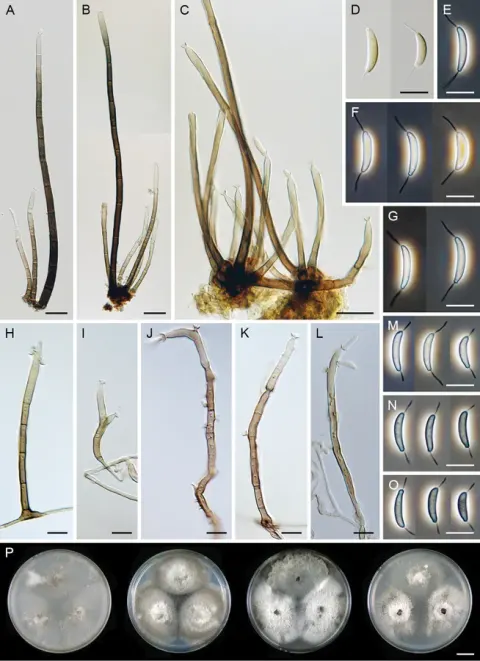
Conidiophores 190–346 μm long (x̅ = 294.1 μm, SD = 52.6, n = 20), 4.5–6.5 µm wide (x̅ = 5.5 μm, SD = 1.8, n = 20), mononematous, single, unbranched, septate, with 3-4 whorls of phialides in the mid-section and a single phialide at the apex, dark brown and paler towards the apex. Conidiogenous cells 10–14 μm long (x̅ = 12.5 μm, SD = 52.6, n = 20), 3–4 µm wide (x̅ = 5.5 μm, SD = 3.5, n = 20), cylindrical to lageniform, phialides, producing conidia from multiple entero-blastic conidiogenous loci and phialides borne on collar hyphae around the conidiophore. Conidia 3.5–4.5 μm long (x̅ = 4 μm, SD = 1.1, n = 20), 2.5–3.0 µm wide (x̅ = 2.5 μm, SD = 1.4, n = 20), globose to subglobose, aseptate and hyaline to subhyaline. Also see Fernández et al. (1999), Réblová et al. (2016b) and Luo et al. (2019).
Habitat dan peran ekologis
Type status: Other material. Occurrence: recordedBy: Chun-Sheng Long; occurrenceID: 619B5938-2358-5CCE-831B-AFAA7FA04C90; Taxon: scientificName: Chloridium gonytrichii; Location: continent: Asia; country: China; stateProvince: Guizhou; county: Luodian; locality: Hongshui River; verbatimElevation: 39 m; verbatimCoordinates: 25.2239N, 106.5340E; Identification: identifiedBy: Chun-Sheng Long, Qi-Rui Li & Jian Ma; Event: eventDate: 18/9/2021; habitat: On decaying wood; Record Level: collectionID: GMB0409 This species was originally collected on decaying wood in the Caribbean national forest and described as Melanopsammella gonytrichii F.A. Fernández & Huhndorf (Fernández and Huhndorf 2005), but later it was renamed as Chloridium gonytrichii by Réblová et al. (2016b).
- Habitat atau konteks temuan
- hutan
- Substrat
- kayu
- Peran atau konteks
- Belum dikategorikan pada rilis ini.
Reproduksi
Conidiophores 190–346 μm long (x̅ = 294.1 μm, SD = 52.6, n = 20), 4.5–6.5 µm wide (x̅ = 5.5 μm, SD = 1.8, n = 20), mononematous, single, unbranched, septate, with 3-4 whorls of phialides in the mid-section and a single phialide at the apex, dark brown and paler towards the apex. Conidiogenous cells 10–14 μm long (x̅ = 12.5 μm, SD = 52.6, n = 20), 3–4 µm wide (x̅ = 5.5 μm, SD = 3.5, n = 20), cylindrical to lageniform, phialides, producing conidia from multiple entero-blastic conidiogenous loci and phialides borne on collar hyphae around the conidiophore. Conidia 3.5–4.5 μm long (x̅ = 4 μm, SD = 1.1, n = 20), 2.5–3.0 µm wide (x̅ = 2.5 μm, SD = 1.4, n = 20), globose to subglobose, aseptate and hyaline to subhyaline.
Catatan identitas dan cakupan
- Nama diterima mengikuti Catalogue of Life Base2026-09-11; uraian mempertahankan konsep dan nama sumber aslinya.
- Preserve original treatment localities, hosts and substrate scope. Materials examined describe documented specimens, not the full global range.
- Impor dan terjemahan otomatis belum diperiksa editorial per profil. Struktur reproduktif yang disebutkan tidak membuktikan seluruh siklus hidup diketahui.
- Pengukuran pada uraian mengikuti spesimen, kultur, dan metode sumber; angka tidak diperluas ke semua populasi.
Catatan distribusi dalam narasi mengikuti sumbernya. Dokumentasi spesimen atau foto mengikuti catatan sumber. Bukti wilayah Indonesia dan penilaian konservasi tidak disimpulkan dari gambar.
Melihat dengan konteks
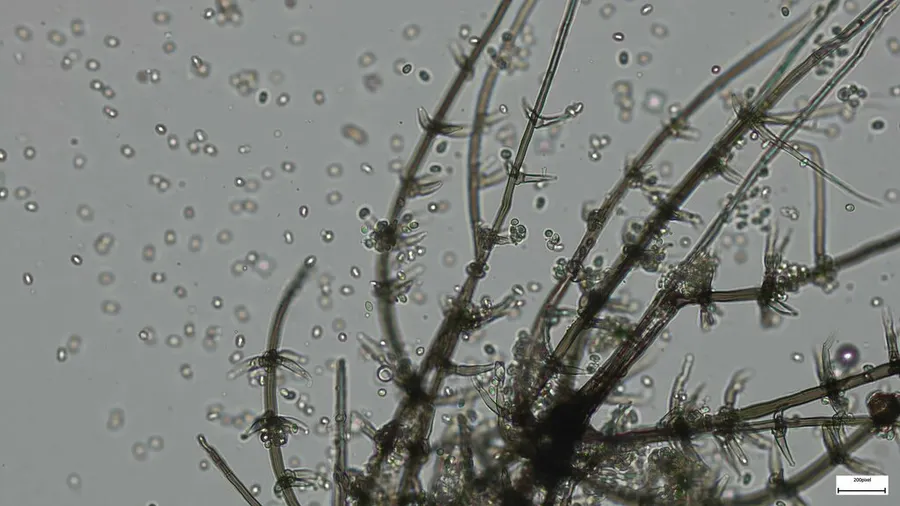
Dokumentasi Chloridium gonytrichii menurut asosiasi foto pada record takson iNaturalist. Kredit: Atsushi Nakajima. Identitas mengikuti sumber; bukan penentuan spesimen independen.
- Jenis
- Fotografi
- Kredit
- (c) Atsushi Nakajima, some rights reserved (CC BY), uploaded by Atsushi Nakajima
- Lisensi
- CC BY 4.0
- Sumber media
- Buka entri sumber
Sumber profil
- [1] Additions to hyphomycetes from Yungui Plateau, China with three new species (Ascomycota, Sordariomycetes) — Chloridium gonytrichii
- [2] Catalogue of Life Base2026-09-11 — Chloridium gonytrichii
- [3] Dokumentasi visual — Chloridium gonytrichii
Rujukan halaman ini
Fungi. Chloridium gonytrichii. Rilis data fungi-2026-10-12-expansion-2. https://fungi-atlas.mgadib.chatgpt.site/jamur/chloridium-gonytrichii/.
Status: impor sumber; pemeriksaan editorial per profil belum selesai. Untuk klaim biologis, gunakan rujukan pada bagian terkait dan periksa konteks sumber aslinya.