Ciri dan struktur
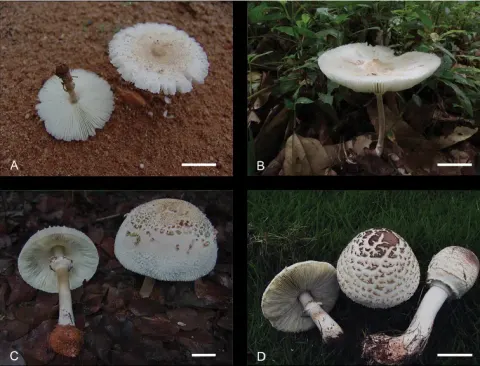
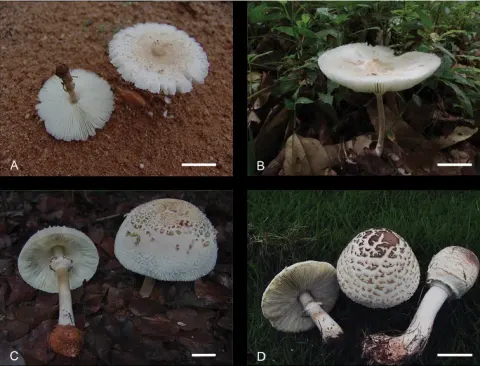
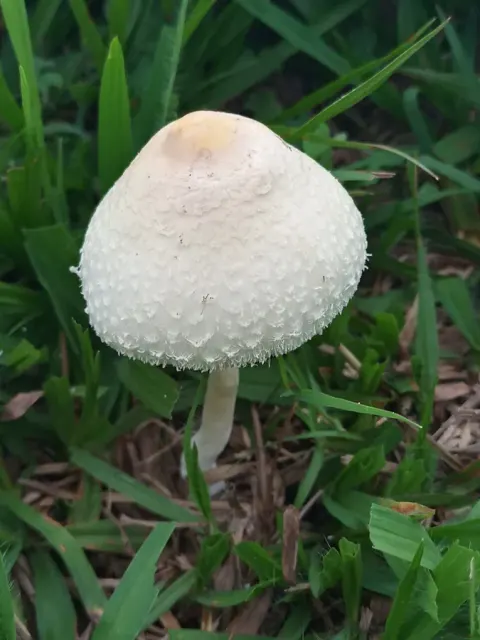
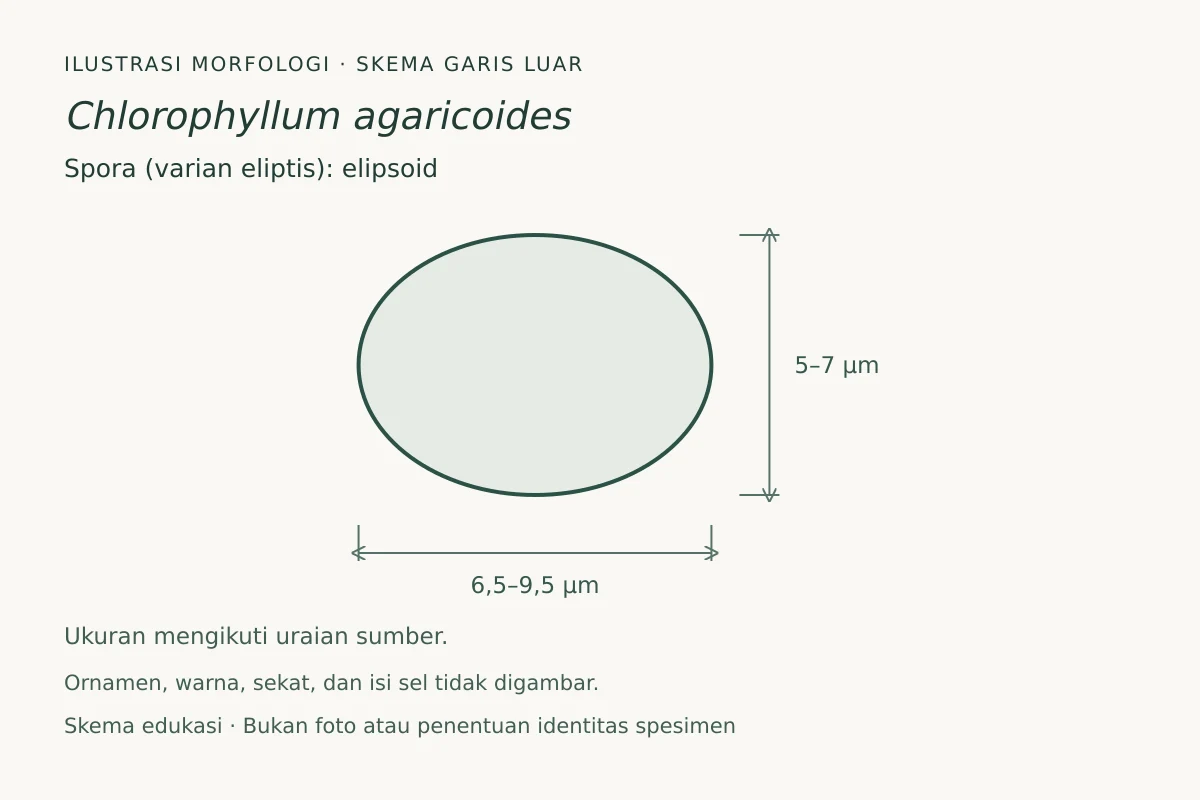
It is a secotioid mushroom, meaning its hymenium takes the form of a gleba made of underdeveloped gills, completely enclosed by the cap, which never fully opens. This protects the mushroom from desiccation. The cap is egg-shaped to spherical, often tapering upward to form a blunt, conical point 1–7 cm wide and 2–10 cm tall. It is white, and becomes brownish with age. It may have some small fibrils or develop fibrous scales. The gills are contorted, irregularly chambered, and underdeveloped, making up an enclosed gleba which is white, aging to a mustardy yellow-brown. The stipe is up to 3 cm long and 0.5–2 cm thick. There is no ring. Its odor becomes cabbagey with age. It grows singularly or in clusters mostly on cultivated land or grass, though occasionally on the forest floor. The spores are 6.5–9.5 x 5–7 μm, globose to elliptic, green to yellow-brown, turning reddish brown in Melzer's reagent. The germ pore is indistinct. Cheilocystidia and pleurocystidia are absent. Agaricus inapertus is a look-alike, although unlike C. agaricoides, it prefers forests and develops a black gleba with age.
Habitat dan peran ekologis
It has a cosmopolitan distribution, Mongolia, and Turkey. It is also a protected species in Hungary and is believed to be in decline across Europe due to habitat destruction.
- Habitat atau konteks temuan
- Informasi belum tersedia pada sumber rilis ini.
- Substrat
- Informasi belum tersedia pada sumber rilis ini.
- Peran atau konteks
- Belum dikategorikan pada rilis ini.
Reproduksi
It is a secotioid mushroom, meaning its hymenium takes the form of a gleba made of underdeveloped gills, completely enclosed by the cap, which never fully opens. This protects the mushroom from desiccation. The cap is egg-shaped to spherical, often tapering upward to form a blunt, conical point 1–7 cm wide and 2–10 cm tall. It is white, and becomes brownish with age. It may have some small fibrils or develop fibrous scales. The gills are contorted, irregularly chambered, and underdeveloped, making up an enclosed gleba which is white, aging to a mustardy yellow-brown. The stipe is up to 3 cm long and 0.5–2 cm thick. There is no ring. Its odor becomes cabbagey with age. It grows singularly or in clusters mostly on cultivated land or grass, though occasionally on the forest floor.
Catatan identitas dan cakupan
- Nama diterima mengikuti Catalogue of Life Base2026-09-11; uraian mempertahankan konsep dan nama sumber aslinya.
- Original geographic, specimen and life-cycle scope retained; source import awaits individual editorial review.
- Impor dan terjemahan otomatis belum diperiksa editorial per profil. Struktur reproduktif yang disebutkan tidak membuktikan seluruh siklus hidup diketahui.
- Pengukuran pada uraian mengikuti spesimen, kultur, dan metode sumber; angka tidak diperluas ke semua populasi.
Catatan distribusi dalam narasi mengikuti sumbernya. Dokumentasi spesimen atau foto mengikuti catatan sumber. Bukti wilayah Indonesia dan penilaian konservasi tidak disimpulkan dari gambar.
Melihat dengan konteks
Ilustrasi skematis garis luar spora (varian eliptis) Chlorophyllum agaricoides, berdasarkan uraian sumber; ukuran yang dilaporkan 6,5–9,5 × 5–7 µm. Proporsi disederhanakan, bukan salinan satu spesimen. Ornamen permukaan, warna, sekat, dan isi sel tidak direkonstruksi. Varian spora eliptis, 6,5–9,5 × 5–7 µm. Pori kecambah yang samar dan perubahan reaksi kimia tidak digambar. Ornamen, warna, sekat, dan isi sel tidak digambar. Skema edukasi, bukan alat identifikasi.
- Jenis
- Ilustrasi skematis
- Kredit
- Fungi, ilustrasi orisinal (2026); fakta morfologi berdasarkan Wikipedia contributors
- Lisensi
- CC BY-SA 4.0
- Sumber media
- Buka entri sumber
Sumber profil
- [1] Chlorophyllum agaricoides — Wikipedia (en)
- [2] Catalogue of Life Base2026-09-11 — Chlorophyllum agaricoides
Rujukan halaman ini
Fungi. Chlorophyllum agaricoides. Rilis data fungi-2026-10-12-expansion-2. https://fungi-atlas.mgadib.chatgpt.site/jamur/chlorophyllum-agaricoides/.
Status: impor sumber; pemeriksaan editorial per profil belum selesai. Untuk klaim biologis, gunakan rujukan pada bagian terkait dan periksa konteks sumber aslinya.