01 / Morfologi

Ciri dan struktur

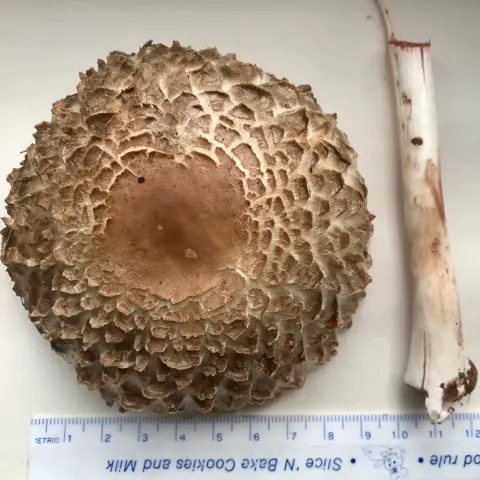
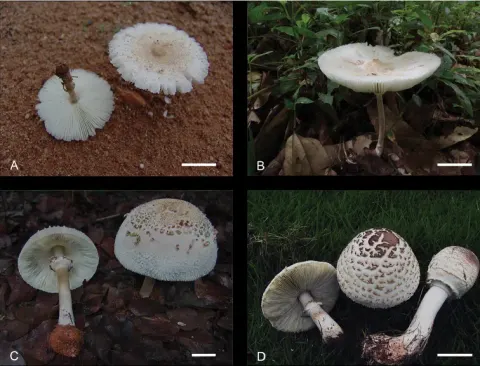
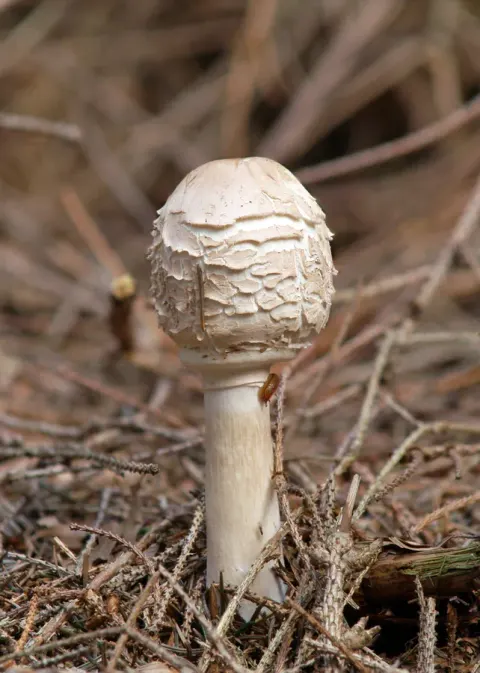
The pileus (cap) ranges from 8 to 30 cm in diameter, hemispherical and with a flattened top. The cap is whitish in colour with coarse brownish scales. The gills are free and white, usually turning dark and green with maturity. It is the only large mushroom that has a green spore print. The stipe ranges from 5 to 30 cm tall and bears a double-edged ring. The flesh is thick, and though firm at first, softens with age. It is white, though the base of the foot can sporadically become reddish-brown to pale reddish-pink or almost orange when cut or crushed.

Sebagian uraian ditampilkan dalam bahasa sumber; terjemahannya belum tersedia atau belum lolos pemeriksaan.

Rujukan: [1]

Pengukuran mengikuti objek, spesimen atau kultur, dan metode yang disebutkan sumber. Baca uraian asli untuk konteks lengkap.

02 / Kehidupan

Habitat dan peran ekologis

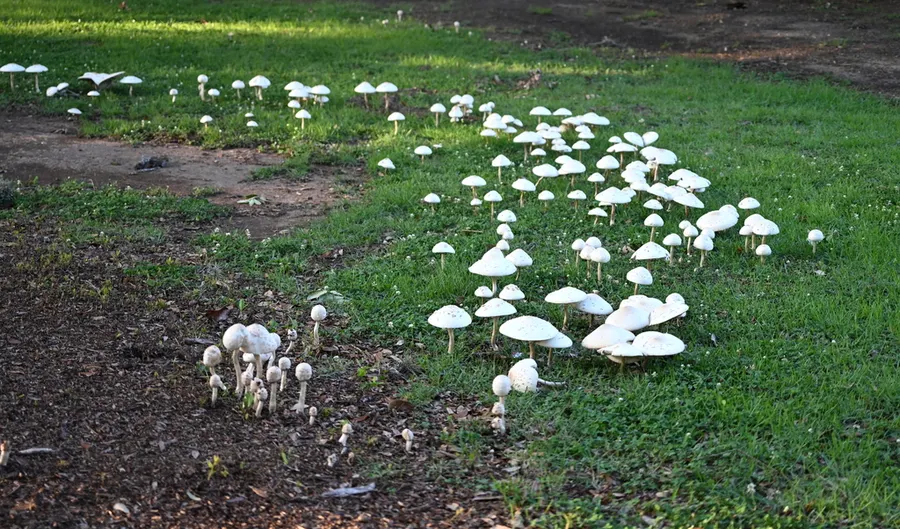
Chlorophyllum molybdites grows in meadows, lawns and parks across eastern North America, as well as temperate and subtropical regions around the world. Fruiting bodies generally appear after summer and autumn rains. It appears to have spread to other countries, with reports from Scotland, Australia, and Cyprus. Chlorophyllum molybdites is sometimes called fairy ring mushroom since it often forms fairy rings. Fairy ring on a suburban lawn 100 1851.jpg|Fairy ring about 2 meters diameter, Queensland, Australia Chlorophyllum_molybdites-fairy_ring.jpg|Fairy ring about 6 meters diameter, Arizona, US

Sebagian uraian ditampilkan dalam bahasa sumber; terjemahannya belum tersedia atau belum lolos pemeriksaan.

Rujukan: [1]

Habitat atau konteks temuan
Informasi belum tersedia pada sumber rilis ini.
Substrat
Informasi belum tersedia pada sumber rilis ini.
Peran atau konteks
Belum dikategorikan pada rilis ini.
Temukan hubungan serupa
03 / Siklus hidup

Reproduksi

The pileus (cap) ranges from 8 to 30 cm in diameter, hemispherical and with a flattened top. The cap is whitish in colour with coarse brownish scales. The gills are free and white, usually turning dark and green with maturity. It is the only large mushroom that has a green spore print. The stipe ranges from 5 to 30 cm tall and bears a double-edged ring. The flesh is thick, and though firm at first, softens with age. It is white, though the base of the foot can sporadically become reddish-brown to pale reddish-pink or almost orange when cut or crushed.

Sebagian uraian ditampilkan dalam bahasa sumber; terjemahannya belum tersedia atau belum lolos pemeriksaan.

Rujukan: [1]

Sinonim menurut acuan taksonomi rilis: Agaricus congolensis; Agaricus molybdites; Chlorophyllum esculentum; Chlorophyllum molybdites var. congolense; Chlorophyllum molybdites var. luteolosperma; Chlorophyllum molybdites var. marginatus; Lepiota esculenta; Lepiota molybdites; Lepiota molybdites var. marginata; Leucocoprinus molybdites; Macrolepiota molybdites
04 / Batas informasi

Catatan identitas dan cakupan

  • Nama diterima mengikuti Catalogue of Life Base2026-09-11; uraian mempertahankan konsep dan nama sumber aslinya.
  • Original geographic, specimen and life-cycle scope retained; source import awaits individual editorial review.
  • Impor dan terjemahan otomatis belum diperiksa editorial per profil. Struktur reproduktif yang disebutkan tidak membuktikan seluruh siklus hidup diketahui.
  • Pengukuran pada uraian mengikuti spesimen, kultur, dan metode sumber; angka tidak diperluas ke semua populasi.

Catatan distribusi dalam narasi mengikuti sumbernya. Dokumentasi spesimen atau foto mengikuti catatan sumber. Bukti wilayah Indonesia dan penilaian konservasi tidak disimpulkan dari gambar.

05 / Dokumentasi

Melihat dengan konteks

Dokumentasi Chlorophyllum molybdites menurut asosiasi foto pada record takson iNaturalist. Kredit: Amber M. King. Identitas mengikuti sumber; bukan penentuan spesimen independen.

Jenis
Fotografi
Kredit
(c) Amber M. King, some rights reserved (CC BY), uploaded by Amber M. King
Lisensi
CC BY 4.0
Sumber media
Buka entri sumber

Gambar menunjukkan objek menurut identifikasi sumber, bukan verifikasi independen spesimen oleh Fungi. Tidak ada skala baru yang ditambahkan.

06 / Rujukan

Sumber profil

  1. [1] Chlorophyllum molybdites — Wikipedia (en)Bagian sumber: Frozen revision 1379524007
    Tanggal penghimpunan sumber: 2026-10-12
    Teks sumber: CC BY-SA4.0 · Wikipedia contributors
  2. [2] Catalogue of Life Base2026-09-11 — Chlorophyllum molybditesBagian sumber: ColDP NameUsage.tsv ID 69XPN; accepted species; source 2073
    Tanggal penghimpunan sumber: 2026-10-12
  3. [3] Dokumentasi visual — Chlorophyllum molybditesBagian sumber: Individual media record; identification follows the source, not independent determination
    Tanggal penghimpunan sumber: 2026-10-12
    Media sumber: CC BY 4.0 · (c) Amber M. King, some rights reserved (CC BY), uploaded by Amber M. King

Adaptasi teks: CC BY-SA 4.0. Wikipedia contributors — Chlorophyllum molybdites — Wikipedia (en)

Uraian asli dan riwayat sumber

Riwayat atau halaman sumber

Ringkasan sumber

Chlorophyllum molybdites, commonly known as the green-spored parasol, green-gill parasol, false parasol, green-spored lepiota and vomiter, is a common species of mushroom found in temperate and subtropical meadows and lawns. The species is poisonous and causes potentially serious vomiting and diarrhea. It is the most commonly consumed poisonous mushroom in North America, often being misidentified as edible species like Chlorophyllum rhacodes (the shaggy parasol) and Macrolepiota procera (parasol mushroom).

Revisi sumber

Morfologi sumber

The pileus (cap) ranges from 8 to 30 cm in diameter, hemispherical and with a flattened top. The cap is whitish in colour with coarse brownish scales. The gills are free and white, usually turning dark and green with maturity. It is the only large mushroom that has a green spore print. The stipe ranges from 5 to 30 cm tall and bears a double-edged ring. The flesh is thick, and though firm at first, softens with age. It is white, though the base of the foot can sporadically become reddish-brown to pale reddish-pink or almost orange when cut or crushed.

Revisi sumber

Ekologi sumber

Chlorophyllum molybdites grows in meadows, lawns and parks across eastern North America, as well as temperate and subtropical regions around the world. Fruiting bodies generally appear after summer and autumn rains. It appears to have spread to other countries, with reports from Scotland, Australia, and Cyprus. Chlorophyllum molybdites is sometimes called fairy ring mushroom since it often forms fairy rings. Fairy ring on a suburban lawn 100 1851.jpg|Fairy ring about 2 meters diameter, Queensland, Australia Chlorophyllum_molybdites-fairy_ring.jpg|Fairy ring about 6 meters diameter, Arizona, US

Revisi sumber

Struktur reproduksi sumber

The pileus (cap) ranges from 8 to 30 cm in diameter, hemispherical and with a flattened top. The cap is whitish in colour with coarse brownish scales. The gills are free and white, usually turning dark and green with maturity. It is the only large mushroom that has a green spore print. The stipe ranges from 5 to 30 cm tall and bears a double-edged ring. The flesh is thick, and though firm at first, softens with age. It is white, though the base of the foot can sporadically become reddish-brown to pale reddish-pink or almost orange when cut or crushed.

Revisi sumber

Rujukan halaman ini

Fungi. Chlorophyllum molybdites. Rilis data fungi-2026-10-12-expansion-2. https://fungi-atlas.mgadib.chatgpt.site/jamur/chlorophyllum-molybdites/.

Status: impor sumber; pemeriksaan editorial per profil belum selesai. Untuk klaim biologis, gunakan rujukan pada bagian terkait dan periksa konteks sumber aslinya.