Ciri dan struktur
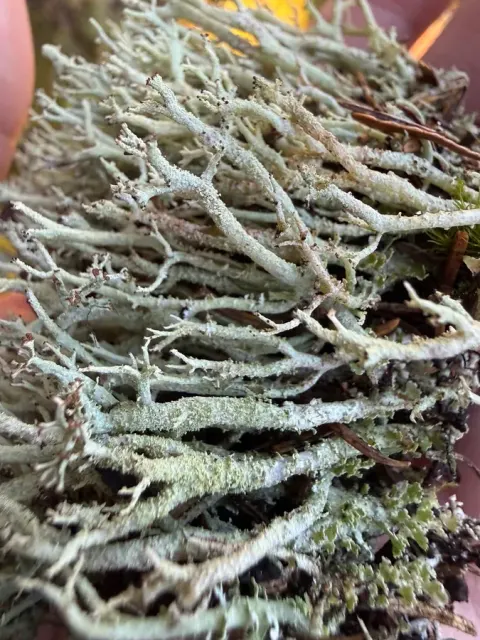
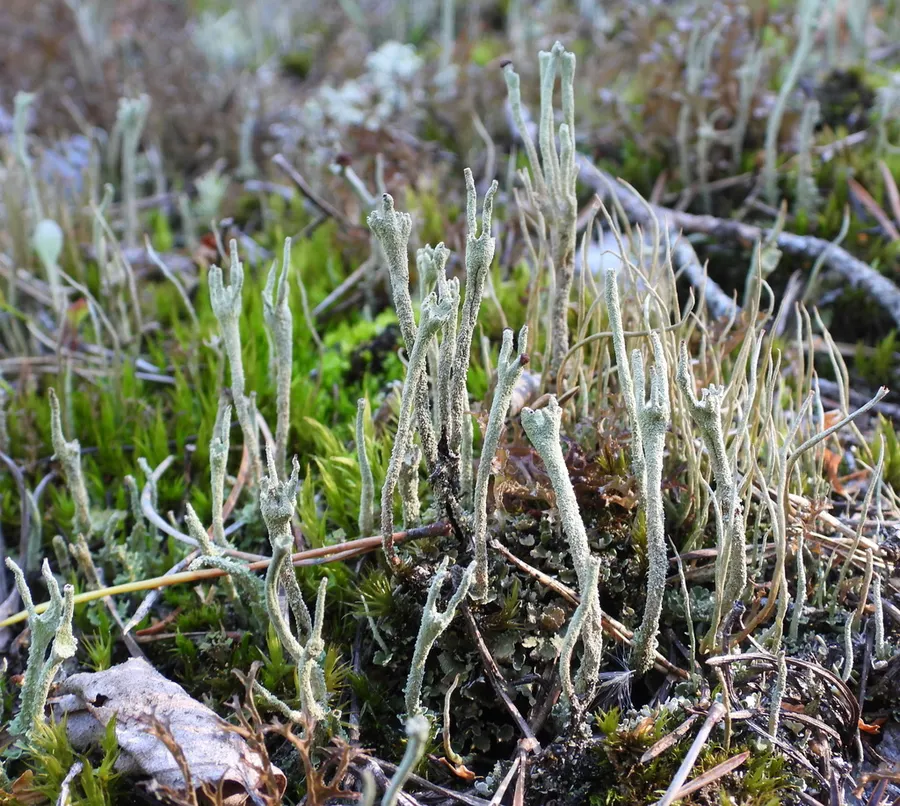
Primary squamules are small and inconspicuous, often disappearing. Podetia are gray-green to olive, sometimes browned, slender, coarsely or finely sorediate on the upper half. They have dimensions in the range of 2 – 9 cm tall by 1–2 mm (up to 3.5 mm) thick. They have with narrow, symmetrical, or, more frequently lopsided cups, proliferating at the margins to resemble a star or magic wand. Pale to dark brown apothecia are common on proliferations along the cup margins. It is prudent to take heed of Spier and Aptroot's thoughts: "There is much individual variation between the specimens, which can vary from nearly unbranched to cup-shaped, from slender (less than 1 mm thick) to robust (reaching 5 mm) and from low (average height below 2 cm) to high (height over 5 cm, clearly higher than the surrounding Cladonia species). The distribution of these forms over the chemotypes is on the whole largely similar and differentiating characteristics could not be found." Further, it is known that growth in contaminated sites can influence the growth and development of the Cladonia thalli, sometimes resulting in features that do not coincide with the normal taxonomic definition of the species. This phenomenon has been documented with Cladonia rei.
Habitat dan peran ekologis
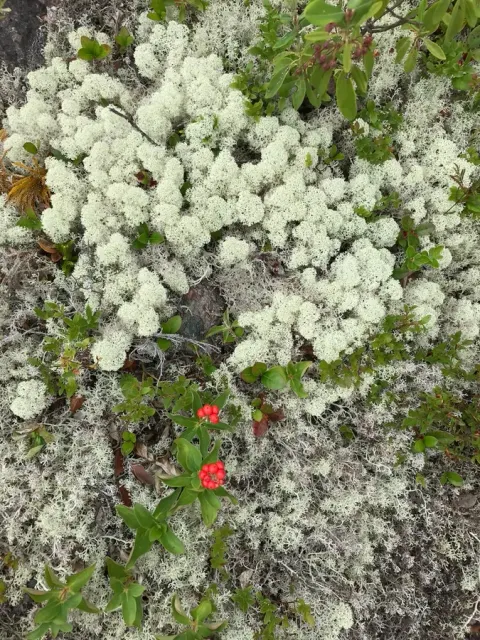
Cladonia rei is a terricolous lichen that grows in soil, although more rarely it is found on rotting wood, and there are few records of it growing on other substrates, including rock, plastic, old straw, and mosses over rocks. It prefers open areas with low humus content and a substrate with a more or less neutral soil pH. often in dry and sunny places like grasslands, heaths and wastelands. Another favoured habitat is limestone cliffs and limestone meadows, although the lichen is also found in disturbed areas, such as road embankments, gravel pits, or house ruins. It is a pioneer species: able to quickly colonise bare ground, particularly in disturbed and anthropogenic habitats. In some cases, it can grow on impoverished soil with high heavy metal content. In Krompachy (Slovakia), the lichen, along with the moss Ceratodon purpureus, was found to be very abundant in bare acid soil near copper smelters, where all vascular plants were severely damaged or have disappeared. It is prevalent in temperate or somewhat arid regions, and does not occur in the Arctic or the Antarctic. The lichen was used as a case study for a large-scale biodiversity monitoring program in Alberta, Canada. Historical records and collections suggested that the lichen was broadly distributed but rare in the province, but more recent material from surveys conducted by the Alberta Biodiversity Monitoring Institute showed that its distribution is entirely limited to the dry mixed grassland, northern fescue grassland and aspen parkland natural regions, where it is relatively common.
- Habitat atau konteks temuan
- padang rumput
- Substrat
- kayu; tanah
- Peran atau konteks
- Pembentuk liken
Reproduksi
Primary squamules are small and inconspicuous, often disappearing. Podetia are gray-green to olive, sometimes browned, slender, coarsely or finely sorediate on the upper half. They have dimensions in the range of 2 – 9 cm tall by 1–2 mm (up to 3.5 mm) thick. They have with narrow, symmetrical, or, more frequently lopsided cups, proliferating at the margins to resemble a star or magic wand. Pale to dark brown apothecia are common on proliferations along the cup margins. It is prudent to take heed of Spier and Aptroot's thoughts: "There is much individual variation between the specimens, which can vary from nearly unbranched to cup-shaped, from slender (less than 1 mm thick) to robust (reaching 5 mm) and from low (average height below 2 cm) to high (height over 5 cm, clearly higher than the surrounding Cladonia species).
Catatan identitas dan cakupan
- Nama diterima mengikuti Catalogue of Life Base2026-09-11; uraian mempertahankan konsep dan nama sumber aslinya.
- Original geographic, specimen and life-cycle scope retained; source import awaits individual editorial review.
- Impor dan terjemahan otomatis belum diperiksa editorial per profil. Struktur reproduktif yang disebutkan tidak membuktikan seluruh siklus hidup diketahui.
- Pengukuran pada uraian mengikuti spesimen, kultur, dan metode sumber; angka tidak diperluas ke semua populasi.
Catatan distribusi dalam narasi mengikuti sumbernya. Dokumentasi spesimen atau foto mengikuti catatan sumber. Bukti wilayah Indonesia dan penilaian konservasi tidak disimpulkan dari gambar.
Melihat dengan konteks
Dokumentasi Cladonia rei menurut asosiasi foto pada record takson iNaturalist. Kredit: Vesa Oikonen. Identitas mengikuti sumber; bukan penentuan spesimen independen.
- Jenis
- Fotografi
- Kredit
- no rights reserved, uploaded by Vesa Oikonen
- Lisensi
- CC0 1.0
- Sumber media
- Buka entri sumber
Dokumentasi tambahan
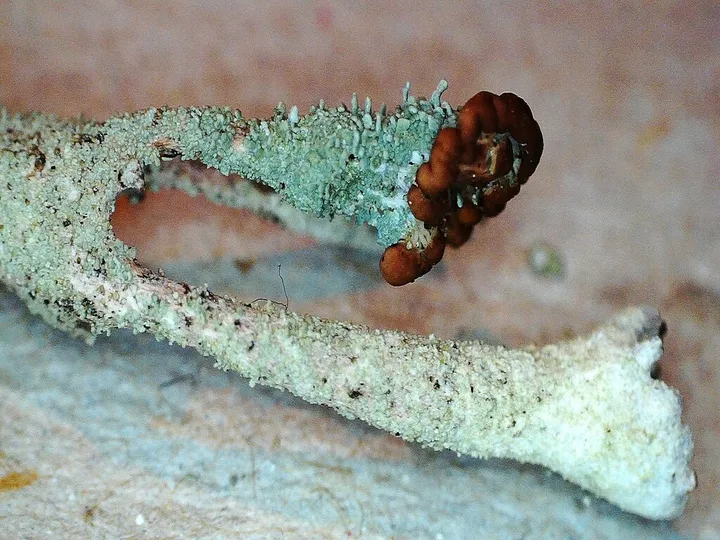
Foto yang diasosiasikan dengan Cladonia rei pada iNaturalist. Identifikasi mengikuti sumber; bukan penentuan spesimen independen.
Kredit dan penggunaan
no rights reserved, uploaded by Vesa Oikonen
Ukuran dan format gambar disesuaikan tanpa pemotongan, retus, atau penambahan skala. Lisensi sumber dipertahankan.
Sumber profil
- [1] Cladonia rei — Wikipedia (en)
- [2] Catalogue of Life Base2026-09-11 — Cladonia rei
- [3] Dokumentasi visual — Cladonia rei
- [4] Dokumentasi visual — Cladonia rei
Rujukan halaman ini
Fungi. Cladonia rei. Rilis data fungi-2026-10-12-expansion-2. https://fungi-atlas.mgadib.chatgpt.site/jamur/cladonia-rei/.
Status: impor sumber; pemeriksaan editorial per profil belum selesai. Untuk klaim biologis, gunakan rujukan pada bagian terkait dan periksa konteks sumber aslinya.