Ciri dan struktur
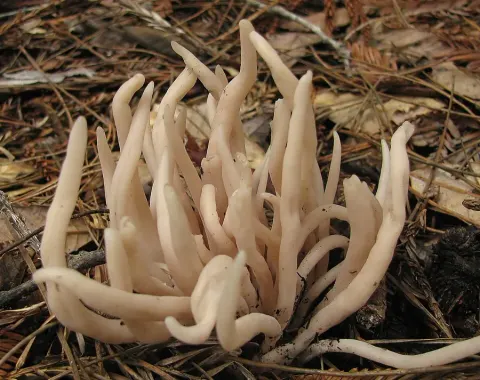
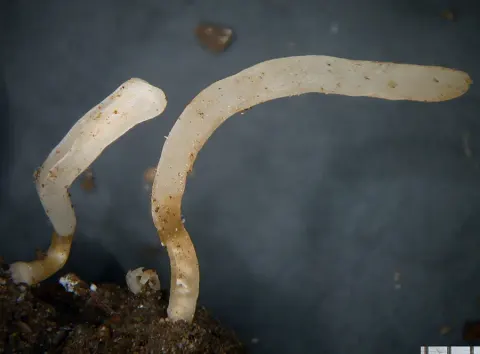
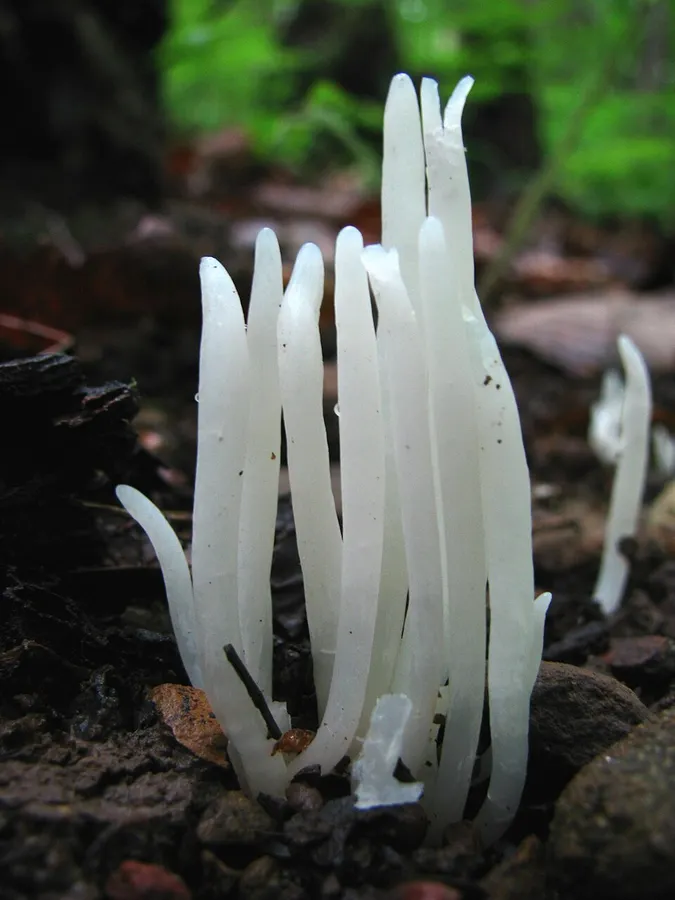
The fruit bodies of are irregularly tubular, smooth to furrowed, sometimes compressed, very fragile, white, and up to 15 cm tall by 7 mm thick. They typically grow in dense clusters. The tip of the fruit body tapers to a point, and may yellow and curve with age. There is no distinct stalk, although it is evident as a short, semitransparent zone of tissue at the base of the club. Microscopically, the hyphae of the flesh are swollen up to 12 μm wide and lack clamp connections. The spores are smooth, colourless, ellipsoid to oblong, measuring 5–7 by 3–4 μm. The spores are white in deposit. The basidia (spore bearing cells) measure 40–50 by 6–8 μm, and lack clamps at their bases.
Habitat dan peran ekologis
Spesies ini ditemukan di seluruh belahan bumi utara, di Eropa (dari July to Oktober), Asia, dan Amerika Utara. Di Amerika Utara, ini lebih umum di timur Pegunungan Rocky. It has also been recorded from Australia and South Africa. Dalam 2006, laporan itu dilaporkan dari Arctic zone Pegunungan Ural, di Rusia. Jamur ini tumbuh di hutan dan rumput di tanah lembap, dan diperkirakan saprobik, membusukkan sampah daun yang jatuh dan batang rumput mati. Tubuh buah cenderung tumbuh dalam kelompok, tuft atau kelompok. Although they dapat tumbuh secara terpisah, mereka biasanya tidak terlihat kecuali dalam kelompok.
- Habitat atau konteks temuan
- hutan; padang rumput
- Substrat
- Informasi belum tersedia pada sumber rilis ini.
- Peran atau konteks
- Pengurai
Reproduksi
The fruit bodies of are irregularly tubular, smooth to furrowed, sometimes compressed, very fragile, white, and up to 15 cm tall by 7 mm thick. They typically grow in dense clusters. The tip of the fruit body tapers to a point, and may yellow and curve with age. There is no distinct stalk, although it is evident as a short, semitransparent zone of tissue at the base of the club. Microscopically, the hyphae of the flesh are swollen up to 12 μm wide and lack clamp connections. The spores are smooth, colourless, ellipsoid to oblong, measuring 5–7 by 3–4 μm. The spores are white in deposit. The basidia (spore bearing cells) measure 40–50 by 6–8 μm, and lack clamps at their bases.
Catatan identitas dan cakupan
- Nama diterima mengikuti Catalogue of Life Base2026-09-11; uraian mempertahankan konsep dan nama sumber aslinya.
- Original geographic, specimen and life-cycle scope retained; source import awaits individual editorial review.
- Impor dan terjemahan otomatis belum diperiksa editorial per profil. Struktur reproduktif yang disebutkan tidak membuktikan seluruh siklus hidup diketahui.
- Pengukuran pada uraian mengikuti spesimen, kultur, dan metode sumber; angka tidak diperluas ke semua populasi.
Catatan distribusi dalam narasi mengikuti sumbernya. Dokumentasi spesimen atau foto mengikuti catatan sumber. Bukti wilayah Indonesia dan penilaian konservasi tidak disimpulkan dari gambar.
Melihat dengan konteks
Dokumentasi Clavaria fragilis dari Wikimedia Commons. The coral fungus Clavaria fragilis Fries. Specimen photographed in Wayne National Forest, Athens Co., Ohio, USA. Identifikasi mengikuti record berkas sumber.
- Jenis
- Fotografi
- Kredit
- This image was created by user Dan Molter (shroomydan) at Mushroom Observer , a source for mycological images. You can contact this user here .
- Lisensi
- CC BY-SA 3.0
- Sumber media
- Buka entri sumber
Sumber profil
- [1] Clavaria fragilis — Wikipedia (en)
- [2] Catalogue of Life Base2026-09-11 — Clavaria fragilis
- [3] Dokumentasi visual — Clavaria fragilis
Rujukan halaman ini
Fungi. Clavaria fragilis. Rilis data fungi-2026-10-12-expansion-2. https://fungi-atlas.mgadib.chatgpt.site/jamur/clavaria-fragilis/.
Status: impor sumber; pemeriksaan editorial per profil belum selesai. Untuk klaim biologis, gunakan rujukan pada bagian terkait dan periksa konteks sumber aslinya.