01 / Morfologi

Ciri dan struktur

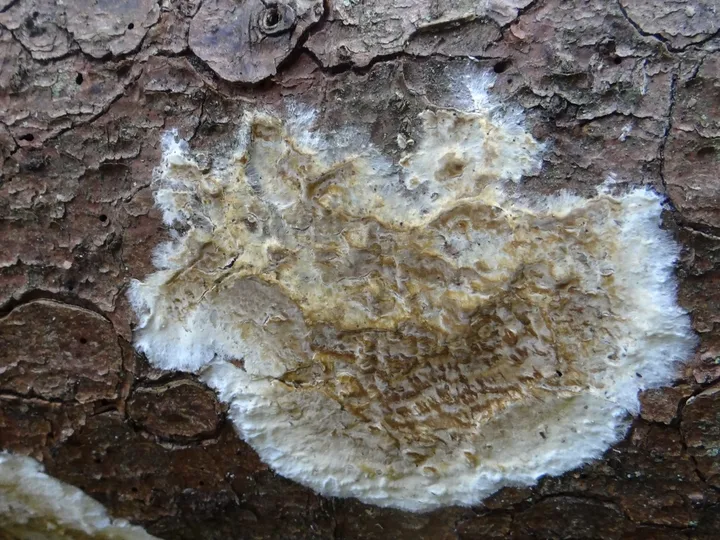
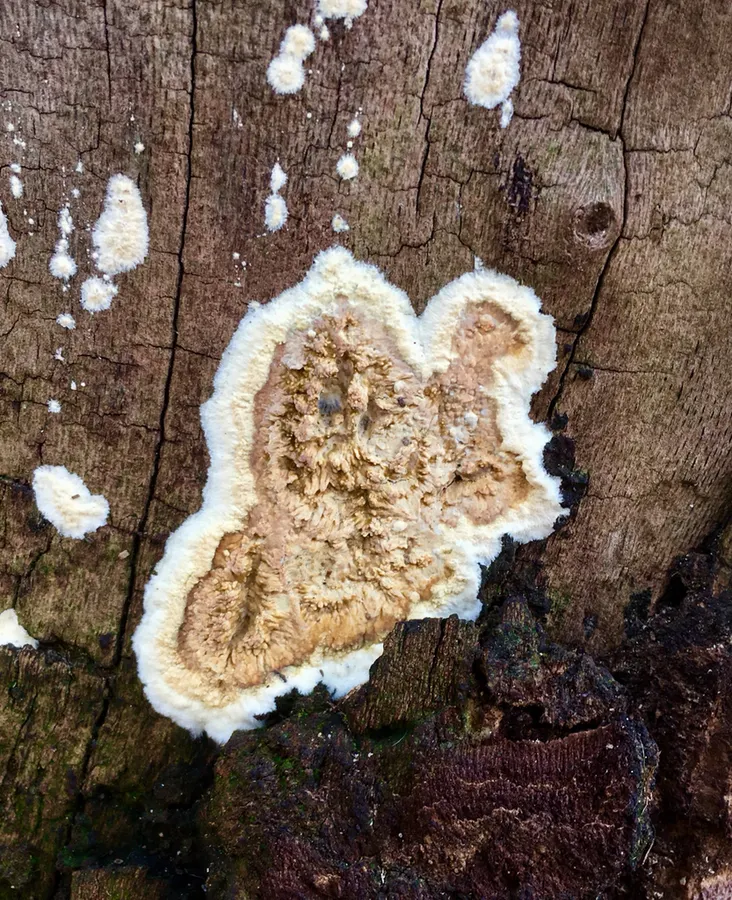
Coniophora puteana (commonly known as a cellar fungus) is a wet rot (specifically brown rot fungus belonging to the division Basidiomycota. It has the appearance of large brown patches surrounded by white edges typically found in humid areas on pine as well as hardwood. The mycelium of C. puteana is not always present and often leaves a very thin layer of healthy wood making the fungus very difficult to detect before the structure becomes instable. Contrary to most brown rot fungi C. puteana behaves more like a white-rot fungi in the way it decays, such as the thinning of the cell walls and leaving cavities within the substrate. Unlike other common wet rot fungi, C. puteana is a fungus that requires high humidity averaging around 50-60%. Because of this C. puteana can be found in wood near water leakage or naturally humid areas not limiting it to the common areas such as cellars. Coniophora puteana unlike other brown-rot fungi can completely degrade the secondary cell wall of its substrate through the 2 types of hyphae that it possesses. While one type of hyphae can completely degrade the entire cell wall the other can only modify the lignin within. Given the vast ability to degrade the entire cell wall C. puteana can cause immense damage to the substrate leading to structural instability especially in old buildings that are made mostly out of wood. Given the difficulty of detecting C. puteana it can lead to severe instability before being noticed. The lack of visible mycelium can actually make C. puteana easier to identify if noticed before it widely spreads. The high humidity requirement for growth makes C. puteana grow predominantly near water leaks or areas with high humidity or high precipitation.

Sebagian uraian ditampilkan dalam bahasa sumber; terjemahannya belum tersedia atau belum lolos pemeriksaan.

Rujukan: [1]

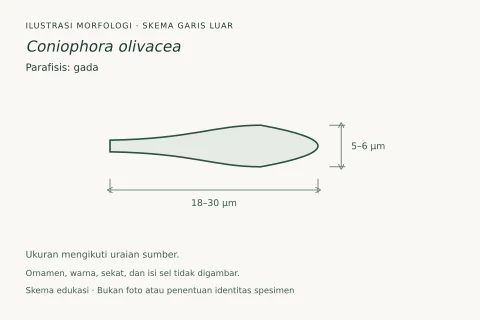
Pengukuran mengikuti objek, spesimen atau kultur, dan metode yang disebutkan sumber. Baca uraian asli untuk konteks lengkap.

02 / Kehidupan

Habitat dan peran ekologis

Coniophora puteana (commonly known as a cellar fungus) is a wet rot (specifically brown rot fungus belonging to the division Basidiomycota. It has the appearance of large brown patches surrounded by white edges typically found in humid areas on pine as well as hardwood. The mycelium of C. puteana is not always present and often leaves a very thin layer of healthy wood making the fungus very difficult to detect before the structure becomes instable. Contrary to most brown rot fungi C. puteana behaves more like a white-rot fungi in the way it decays, such as the thinning of the cell walls and leaving cavities within the substrate. Unlike other common wet rot fungi, C. puteana is a fungus that requires high humidity averaging around 50-60%. Because of this C. puteana can be found in wood near water leakage or naturally humid areas not limiting it to the common areas such as cellars. Coniophora puteana has a very widespread distribution being found on most continents including North America, South America, Europe, India, Africa, Australia, and Asia. C. puteana is most predominantly found in eastern North America as well as western Europe. C. puteana is most commonly found during autumn in the month of October.

Sebagian uraian ditampilkan dalam bahasa sumber; terjemahannya belum tersedia atau belum lolos pemeriksaan.

Rujukan: [1]

Habitat atau konteks temuan
Informasi belum tersedia pada sumber rilis ini.
Substrat
Informasi belum tersedia pada sumber rilis ini.
Peran atau konteks
Belum dikategorikan pada rilis ini.
Temukan hubungan serupa
03 / Siklus hidup

Reproduksi

Coniophora puteana (commonly known as a cellar fungus) is a wet rot (specifically brown rot fungus belonging to the division Basidiomycota. It has the appearance of large brown patches surrounded by white edges typically found in humid areas on pine as well as hardwood.

Sebagian uraian ditampilkan dalam bahasa sumber; terjemahannya belum tersedia atau belum lolos pemeriksaan.

Rujukan: [1]

Sinonim menurut acuan taksonomi rilis: Coniophora arida var. lurida; Coniophora brunnea; Coniophora cellaris; Coniophora cerebella; Coniophora cerebella f. campestris; Coniophora cerebella f. corallina; Coniophora cerebella f. globularis; Coniophora cerebella subsp. laxa; Coniophora cuticularis; Coniophora incrustans; Coniophora incrustata; Coniophora laxa; Coniophora leioplaca; Coniophora lurida; Coniophora luteocincta; Coniophora membranacea; Coniophora membranacea var. leioplaca; Coniophora piceae; Coniophora puteana f. laxa; Coniophora puteana subsp. areolatum; Coniophora puteana var. areolata; Coniophora puteana var. cellaris; Coniophora puteana var. cerebella; Coniophora puteana var. incrustata; Coniophora puteana var. rimosa; Coniophora puteana var. tuberculosa; Corticium cellare; Corticium cerebella; Corticium luteocinctum; Corticium membranaceum; Corticium puteanum; Corticium puteanum var. areolatum; Coryne sarcoides var. cellaris; Fibrillaria ramosissima; Himantia ramosissima; Hypochnus brunneus; Hypochnus laxus; Merulius polychromus; Thelephora cerebella; Thelephora laxa; Thelephora luteocincta; Thelephora puteana; Thelephora puteana var. areolata; Thelephora puteana var. cellaris; Thelephora puteana var. cerebella; Thelephora puteana var. colliculosa; Tomentella brunnea
04 / Batas informasi

Catatan identitas dan cakupan

  • Nama diterima mengikuti Catalogue of Life Base2026-09-11; uraian mempertahankan konsep dan nama sumber aslinya.
  • Original geographic, specimen and life-cycle scope retained; source import awaits individual editorial review.
  • Impor dan terjemahan otomatis belum diperiksa editorial per profil. Struktur reproduktif yang disebutkan tidak membuktikan seluruh siklus hidup diketahui.
  • Pengukuran pada uraian mengikuti spesimen, kultur, dan metode sumber; angka tidak diperluas ke semua populasi.

Catatan distribusi dalam narasi mengikuti sumbernya. Dokumentasi spesimen atau foto mengikuti catatan sumber. Bukti wilayah Indonesia dan penilaian konservasi tidak disimpulkan dari gambar.

05 / Dokumentasi

Melihat dengan konteks

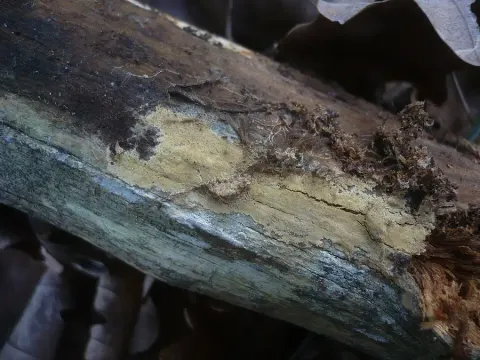
Dokumentasi Coniophora puteana menurut asosiasi foto pada record takson iNaturalist. Kredit: Paul Cook. Identitas mengikuti sumber; bukan penentuan spesimen independen.

Jenis
Fotografi
Kredit
(c) Paul Cook, some rights reserved (CC BY), uploaded by Paul Cook
Lisensi
CC BY 4.0
Sumber media
Buka entri sumber

Gambar menunjukkan objek menurut identifikasi sumber, bukan verifikasi independen spesimen oleh Fungi. Tidak ada skala baru yang ditambahkan.

Dokumentasi tambahan

06 / Rujukan

Sumber profil

  1. [1] Coniophora puteana — Wikipedia (en)Bagian sumber: Frozen revision 1331319989
    Tanggal penghimpunan sumber: 2026-10-12
    Teks sumber: CC BY-SA4.0 · Wikipedia contributors
  2. [2] Catalogue of Life Base2026-09-11 — Coniophora puteanaBagian sumber: ColDP NameUsage.tsv ID XML5; accepted species; source 2073
    Tanggal penghimpunan sumber: 2026-10-12
  3. [3] Dokumentasi visual — Coniophora puteanaBagian sumber: Identitas mengikuti sumber dokumentasi; bukan penentuan spesimen independen.
    Tanggal penghimpunan sumber: 2026-10-17
    Media sumber: CC BY 4.0 · (c) Paul Cook, some rights reserved (CC BY), uploaded by Paul Cook
  4. [4] Dokumentasi visual — Coniophora puteanaBagian sumber: Identitas mengikuti sumber dokumentasi; bukan penentuan spesimen independen.
    Tanggal penghimpunan sumber: 2026-10-17
    Teks sumber: CC BY-SA 4.0 · (c) Jerzy Opioła, some rights reserved (CC BY-SA)

Adaptasi teks: CC BY-SA 4.0. Wikipedia contributors — Coniophora puteana — Wikipedia (en)

Uraian asli dan riwayat sumber

Riwayat atau halaman sumber

Ringkasan sumber

Coniophora puteana (commonly known as a cellar fungus) is a wet rot (specifically brown rot fungus belonging to the division Basidiomycota. It has the appearance of large brown patches surrounded by white edges typically found in humid areas on pine as well as hardwood. The mycelium of C. puteana is not always present and often leaves a very thin layer of healthy wood making the fungus very difficult to detect before the structure becomes instable. Contrary to most brown rot fungi C. puteana behaves more like a white-rot fungi in the way it decays, such as the thinning of the cell walls and leaving cavities within the substrate.

Revisi sumber

Morfologi sumber

Coniophora puteana (commonly known as a cellar fungus) is a wet rot (specifically brown rot fungus belonging to the division Basidiomycota. It has the appearance of large brown patches surrounded by white edges typically found in humid areas on pine as well as hardwood. The mycelium of C. puteana is not always present and often leaves a very thin layer of healthy wood making the fungus very difficult to detect before the structure becomes instable. Contrary to most brown rot fungi C. puteana behaves more like a white-rot fungi in the way it decays, such as the thinning of the cell walls and leaving cavities within the substrate. Unlike other common wet rot fungi, C. puteana is a fungus that requires high humidity averaging around 50-60%. Because of this C. puteana can be found in wood near water leakage or naturally humid areas not limiting it to the common areas such as cellars. Coniophora puteana unlike other brown-rot fungi can completely degrade the secondary cell wall of its substrate through the 2 types of hyphae that it possesses. While one type of hyphae can completely degrade the entire cell wall the other can only modify the lignin within. Given the vast ability to degrade the entire cell wall C. puteana can cause immense damage to the substrate leading to structural instability especially in old buildings that are made mostly out of wood. Given the difficulty of detecting C. puteana it can lead to severe instability before being noticed. The lack of visible mycelium can actually make C. puteana easier to identify if noticed before it widely spreads. The high humidity requirement for growth makes C. puteana grow predominantly near water leaks or areas with high humidity or high precipitation.

Revisi sumber

Ekologi sumber

Coniophora puteana (commonly known as a cellar fungus) is a wet rot (specifically brown rot fungus belonging to the division Basidiomycota. It has the appearance of large brown patches surrounded by white edges typically found in humid areas on pine as well as hardwood. The mycelium of C. puteana is not always present and often leaves a very thin layer of healthy wood making the fungus very difficult to detect before the structure becomes instable. Contrary to most brown rot fungi C. puteana behaves more like a white-rot fungi in the way it decays, such as the thinning of the cell walls and leaving cavities within the substrate. Unlike other common wet rot fungi, C. puteana is a fungus that requires high humidity averaging around 50-60%. Because of this C. puteana can be found in wood near water leakage or naturally humid areas not limiting it to the common areas such as cellars. Coniophora puteana has a very widespread distribution being found on most continents including North America, South America, Europe, India, Africa, Australia, and Asia. C. puteana is most predominantly found in eastern North America as well as western Europe. C. puteana is most commonly found during autumn in the month of October.

Revisi sumber

Struktur reproduksi sumber

Coniophora puteana (commonly known as a cellar fungus) is a wet rot (specifically brown rot fungus belonging to the division Basidiomycota. It has the appearance of large brown patches surrounded by white edges typically found in humid areas on pine as well as hardwood.

Revisi sumber

Rujukan halaman ini

Fungi. Coniophora puteana. Rilis data fungi-2026-10-12-expansion-2. https://fungi-atlas.mgadib.chatgpt.site/jamur/coniophora-puteana/.

Status: impor sumber; pemeriksaan editorial per profil belum selesai. Untuk klaim biologis, gunakan rujukan pada bagian terkait dan periksa konteks sumber aslinya.