01 / Morfologi

Ciri dan struktur

Constrictolumina cinchonae has a thin, whitish thallus. Its fruiting bodies (ascomata) are solitary, 0.4–0.6 mm across, and range from partly immersed to raised above the surface. They are hemispherical to somewhat flattened, with apical openings, and are often surrounded by a distinct grey ring. The ascomatal wall is absent below. The asci are usually narrowly , sometimes nearly cylindrical, and measure (85–)100–125 by 17–22 micrometres (μm). Each ascus contains 4–8 ascospores arranged in two overlapping rows or sometimes nearly in a single line. The ascospores are narrowly egg-shaped, divided by a single septum, and the lower cell may occasionally show a slight constriction in the middle. They have a well-developed and measure 20–30 by 7–11 μm. Asexual reproductive structures (pycnidia) are often present. These produce rod-shaped conidia about 4–5 by 1 μm. Both the thallus and ascomata give negative reactions in standard chemical spot tests (UV and K), and thin-layer chromatography has not detected any secondary metabolites.

Sebagian uraian ditampilkan dalam bahasa sumber; terjemahannya belum tersedia atau belum lolos pemeriksaan.

Rujukan: [1]

Pengukuran mengikuti objek, spesimen atau kultur, dan metode yang disebutkan sumber. Baca uraian asli untuk konteks lengkap.

02 / Kehidupan

Habitat dan peran ekologis

Constrictolumina cinchonae has a pantropical distribution, occurring across the Americas, Africa, and Asia. In the Western Hemisphere it has been reported from the United States, Mexico, Bermuda, the Bahamas, Cuba, Puerto Rico, Dominica, French Guiana, Ecuador, Brazil, and Argentina. In the Old World it is known from Kenya, the Maldives, India, Sri Lanka, China, Indonesia (Java), the Philippines, Papua New Guinea, and Japan. It typically grows on bark in warm, humid environments characteristic of tropical and subtropical regions.

Sebagian uraian ditampilkan dalam bahasa sumber; terjemahannya belum tersedia atau belum lolos pemeriksaan.

Rujukan: [1]

Habitat atau konteks temuan
Informasi belum tersedia pada sumber rilis ini.
Substrat
kulit kayu
Peran atau konteks
Pembentuk liken
Temukan hubungan serupa
03 / Siklus hidup

Reproduksi

The asci are usually narrowly , sometimes nearly cylindrical, and measure (85–)100–125 by 17–22 micrometres (μm). Each ascus contains 4–8 ascospores arranged in two overlapping rows or sometimes nearly in a single line. The ascospores are narrowly egg-shaped, divided by a single septum, and the lower cell may occasionally show a slight constriction in the middle. They have a well-developed and measure 20–30 by 7–11 μm. Asexual reproductive structures (pycnidia) are often present. These produce rod-shaped conidia about 4–5 by 1 μm. Both the thallus and ascomata give negative reactions in standard chemical spot tests (UV and K), and thin-layer chromatography has not detected any secondary metabolites.

Sebagian uraian ditampilkan dalam bahasa sumber; terjemahannya belum tersedia atau belum lolos pemeriksaan.

Rujukan: [1]

Sinonim menurut acuan taksonomi rilis: Arthopyrenia cinchonae; Didymella cinchonae; Leiophloea cinchonae; Pyrenula cinchonae; Spermatodium cinchonae; Verrucaria cinchonae
04 / Batas informasi

Catatan identitas dan cakupan

  • Nama diterima mengikuti Catalogue of Life Base2026-09-11; uraian mempertahankan konsep dan nama sumber aslinya.
  • Original geographic, specimen and life-cycle scope retained; source import awaits individual editorial review.
  • Impor dan terjemahan otomatis belum diperiksa editorial per profil. Struktur reproduktif yang disebutkan tidak membuktikan seluruh siklus hidup diketahui.
  • Pengukuran pada uraian mengikuti spesimen, kultur, dan metode sumber; angka tidak diperluas ke semua populasi.

Catatan distribusi dalam narasi mengikuti sumbernya. Dokumentasi spesimen atau foto mengikuti catatan sumber. Bukti wilayah Indonesia dan penilaian konservasi tidak disimpulkan dari gambar.

05 / Dokumentasi

Melihat dengan konteks

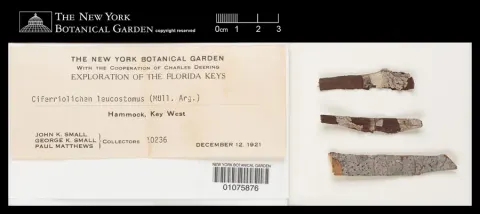
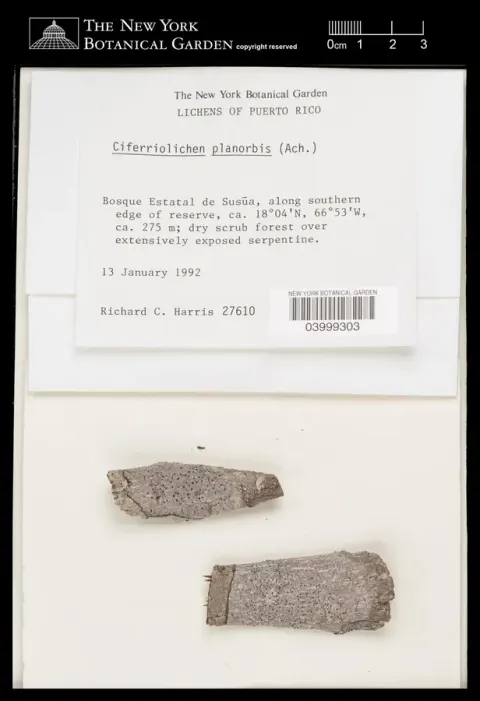
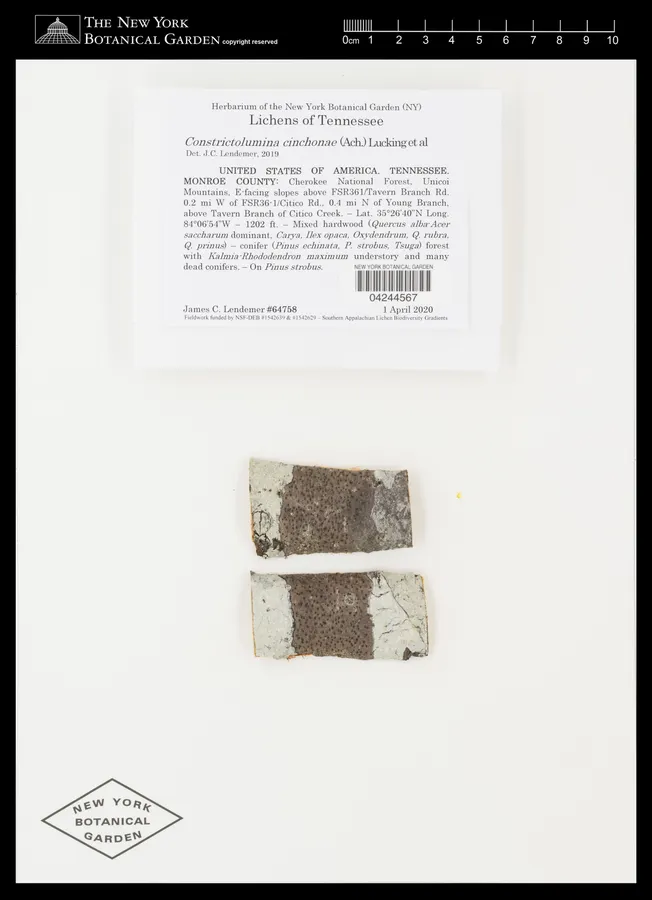
Voucher herbarium Constrictolumina cinchonae (04244567), The New York Botanical Garden. Identifikasi mengikuti record spesimen sumber. Foto bahan, kemasan, atau label herbarium sebagaimana tersedia pada record institusi; bukan foto lapangan atau penentuan spesimen independen.

Jenis
Voucher herbarium
Kredit
The New York Botanical Garden
Lisensi
CC BY 4.0
Sumber media
Buka entri sumber

Gambar menunjukkan objek menurut identifikasi sumber, bukan verifikasi independen spesimen oleh Fungi. Tidak ada skala baru yang ditambahkan.

06 / Rujukan

Sumber profil

  1. [1] Constrictolumina cinchonae — Wikipedia (en)Bagian sumber: Frozen revision 1315374706
    Tanggal penghimpunan sumber: 2026-10-12
    Teks sumber: CC BY-SA4.0 · Wikipedia contributors
  2. [2] Catalogue of Life Base2026-09-11 — Constrictolumina cinchonaeBagian sumber: ColDP NameUsage.tsv ID 5ZVSX; accepted species; source 2073
    Tanggal penghimpunan sumber: 2026-10-12
  3. [3] Dokumentasi visual — Constrictolumina cinchonaeBagian sumber: Individual media record; identification follows the source, not independent determination
    Tanggal penghimpunan sumber: 2026-10-12
    Media sumber: CC BY 4.0 · The New York Botanical Garden

Adaptasi teks: CC BY-SA 4.0. Wikipedia contributors — Constrictolumina cinchonae — Wikipedia (en)

Uraian asli dan riwayat sumber

Riwayat atau halaman sumber

Ringkasan sumber

Constrictolumina cinchonae is a species of corticolous (bark-dwelling) crustose lichen in the family Trypetheliaceae. This widespread tropical lichen forms thin, whitish crusts on tree bark and produces small, hemispherical fruiting bodies that are often surrounded by distinctive grey rings. It has a pantropical distribution, being found across warm, humid regions of the Americas, Africa, and Asia, making it one of the most widely distributed members of its genus. The species was originally discovered growing on cinchona bark, which is reflected in its scientific name.

Revisi sumber

Morfologi sumber

Constrictolumina cinchonae has a thin, whitish thallus. Its fruiting bodies (ascomata) are solitary, 0.4–0.6 mm across, and range from partly immersed to raised above the surface. They are hemispherical to somewhat flattened, with apical openings, and are often surrounded by a distinct grey ring. The ascomatal wall is absent below. The asci are usually narrowly , sometimes nearly cylindrical, and measure (85–)100–125 by 17–22 micrometres (μm). Each ascus contains 4–8 ascospores arranged in two overlapping rows or sometimes nearly in a single line. The ascospores are narrowly egg-shaped, divided by a single septum, and the lower cell may occasionally show a slight constriction in the middle. They have a well-developed and measure 20–30 by 7–11 μm. Asexual reproductive structures (pycnidia) are often present. These produce rod-shaped conidia about 4–5 by 1 μm. Both the thallus and ascomata give negative reactions in standard chemical spot tests (UV and K), and thin-layer chromatography has not detected any secondary metabolites.

Revisi sumber

Ekologi sumber

Constrictolumina cinchonae has a pantropical distribution, occurring across the Americas, Africa, and Asia. In the Western Hemisphere it has been reported from the United States, Mexico, Bermuda, the Bahamas, Cuba, Puerto Rico, Dominica, French Guiana, Ecuador, Brazil, and Argentina. In the Old World it is known from Kenya, the Maldives, India, Sri Lanka, China, Indonesia (Java), the Philippines, Papua New Guinea, and Japan. It typically grows on bark in warm, humid environments characteristic of tropical and subtropical regions.

Revisi sumber

Struktur reproduksi sumber

The asci are usually narrowly , sometimes nearly cylindrical, and measure (85–)100–125 by 17–22 micrometres (μm). Each ascus contains 4–8 ascospores arranged in two overlapping rows or sometimes nearly in a single line. The ascospores are narrowly egg-shaped, divided by a single septum, and the lower cell may occasionally show a slight constriction in the middle. They have a well-developed and measure 20–30 by 7–11 μm. Asexual reproductive structures (pycnidia) are often present. These produce rod-shaped conidia about 4–5 by 1 μm. Both the thallus and ascomata give negative reactions in standard chemical spot tests (UV and K), and thin-layer chromatography has not detected any secondary metabolites.

Revisi sumber

Rujukan halaman ini

Fungi. Constrictolumina cinchonae. Rilis data fungi-2026-10-12-expansion-2. https://fungi-atlas.mgadib.chatgpt.site/jamur/constrictolumina-cinchonae/.

Status: impor sumber; pemeriksaan editorial per profil belum selesai. Untuk klaim biologis, gunakan rujukan pada bagian terkait dan periksa konteks sumber aslinya.