01 / Morfologi

Ciri dan struktur

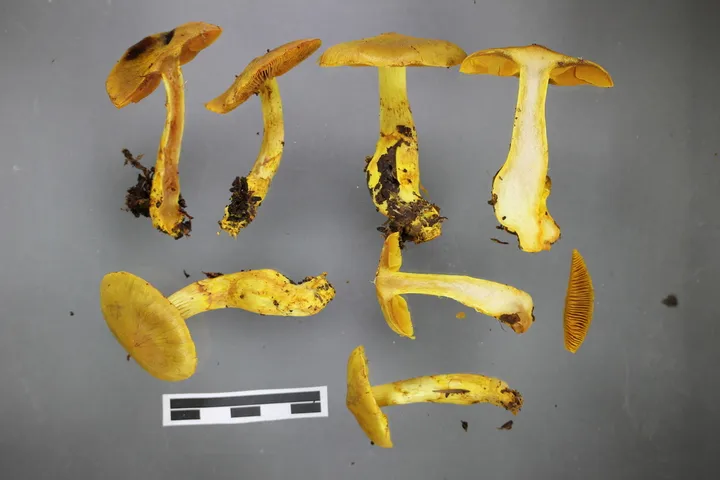
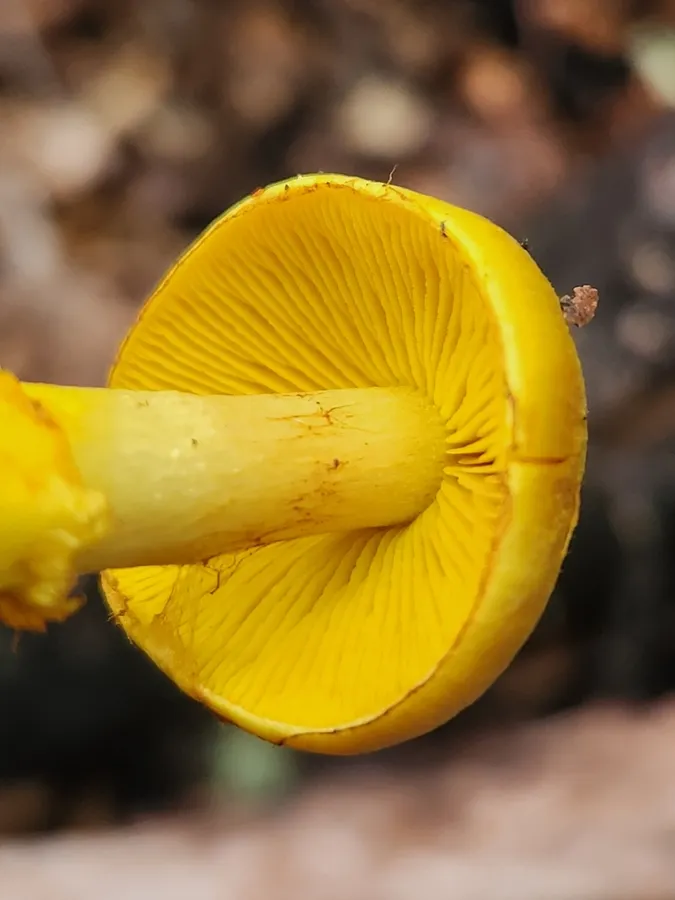
Pileus -60 (-80) mm, hemispherical becoming convex, centre broadly umbonate to campanulate or flat and expanded, margin inrolled; brilliant yellow turning yellow-brown (especially at disk) with age; dry, neither hygrophanous nor striate, minutely to coarsely innate-fibrillose or subsquamulose (in dry condition), in young specimens margin covered by yellow fibrillose veil remnants. - Lamellae crowded, emarginate, sometimes decurrent with short tooth; golden yellow turning mustard yellow then brown-yellow, edges entire, concolorous. - Stipe -80 x -30 mm, fusoid to bulbous with root-like base, rarely cylindrical; yellow, yellow-brown in aged specimens; dry, below yellow cortina with 1-3 persistent, membranaceous, yellow to yellow-brown belts of veil, at first solid becoming hollow, single, rarely cespitose. - Context yellow to orange-yellow. - Odour none. - Taste bitter. - Chemical reactions on pileus: KOH - red to red-brown, NH3-pink to pale orange, HCl - negative. Spore print (yellow-)brown with rusty shade. - Spores (7-) 7.5-8.5(-9) x 4-5 µm, ovoid, yellow-brown with rusty tinge, minutely asperulate at apex, ± smooth in immature spores, membrane thinwalled. - Basidia 20-35 x 6-8 µm, 4-spored. - Cystidia absent, but edge of lamellae often covered with articulate cells, terminal cell clavate to vesiculose (10-35 x 6-10 µm), membrane hyaline, pigment absent. - Pileipellis a cutis composed of cylindrical hyphae (5-10 µm diam.), terminal cells rarely fusoid, membranes thin-walled, not gelatinized, smooth, with red to orange plasmatic pigment dissolving in KOH, rarely also with encrusting and/or intercellular pigment. - Clamp connections present.

Sebagian uraian ditampilkan dalam bahasa sumber; terjemahannya belum tersedia atau belum lolos pemeriksaan.

Rujukan: [1]

Pengukuran mengikuti objek, spesimen atau kultur, dan metode yang disebutkan sumber. Baca uraian asli untuk konteks lengkap.

02 / Kehidupan

Habitat dan peran ekologis

On soil among litter in Nothofagus-forests (N. solandri var. cliffortioides, N. menziesii and/or N. fusca; often in association with conifers viz. Libocedrus bidwillii, Phyllocladus alpinus, Ph. glaucus, Podocarpus nivalis both in Sphagnum swamps and on dry sites), rarely also under Leptospermum scoparium. - New Zealand.

Sebagian uraian ditampilkan dalam bahasa sumber; terjemahannya belum tersedia atau belum lolos pemeriksaan.

Rujukan: [1]

Habitat atau konteks temuan
hutan
Substrat
tanah
Peran atau konteks
Belum dikategorikan pada rilis ini.
Temukan hubungan serupa
03 / Siklus hidup

Reproduksi

Pileus -60 (-80) mm, hemispherical becoming convex, centre broadly umbonate to campanulate or flat and expanded, margin inrolled; brilliant yellow turning yellow-brown (especially at disk) with age; dry, neither hygrophanous nor striate, minutely to coarsely innate-fibrillose or subsquamulose (in dry condition), in young specimens margin covered by yellow fibrillose veil remnants. - Lamellae crowded, emarginate, sometimes decurrent with short tooth; golden yellow turning mustard yellow then brown-yellow, edges entire, concolorous. - Stipe -80 x -30 mm, fusoid to bulbous with root-like base, rarely cylindrical; yellow, yellow-brown in aged specimens; dry, below yellow cortina with 1-3 persistent, membranaceous, yellow to yellow-brown belts of veil, at first solid becoming hollow, single, rarely cespitose. - Context yellow to orange-yellow. - Odour none. - Taste bitter. - Chemical reactions on pileus: KOH - red to red-brown, NH3-pink to pale orange, HCl - negative.

Sebagian uraian ditampilkan dalam bahasa sumber; terjemahannya belum tersedia atau belum lolos pemeriksaan.

Rujukan: [1]

Sinonim menurut acuan taksonomi rilis: Dermocybe canaria
04 / Batas informasi

Catatan identitas dan cakupan

  • Nama diterima mengikuti Catalogue of Life Base2026-09-11; uraian mempertahankan konsep dan nama sumber aslinya.
  • Historical description as cited by BiotaNZ. Preserve explicit New Zealand/locality, host and specimen qualifiers. Distribution is the cited source scope, not a current global range.
  • Impor dan terjemahan otomatis belum diperiksa editorial per profil. Struktur reproduktif yang disebutkan tidak membuktikan seluruh siklus hidup diketahui.
  • Pengukuran pada uraian mengikuti spesimen, kultur, dan metode sumber; angka tidak diperluas ke semua populasi.

Catatan distribusi dalam narasi mengikuti sumbernya. Dokumentasi spesimen atau foto mengikuti catatan sumber. Bukti wilayah Indonesia dan penilaian konservasi tidak disimpulkan dari gambar.

05 / Dokumentasi

Melihat dengan konteks

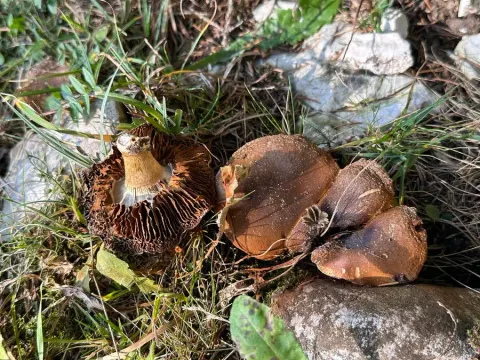
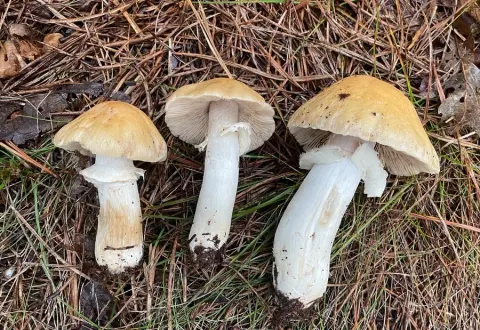
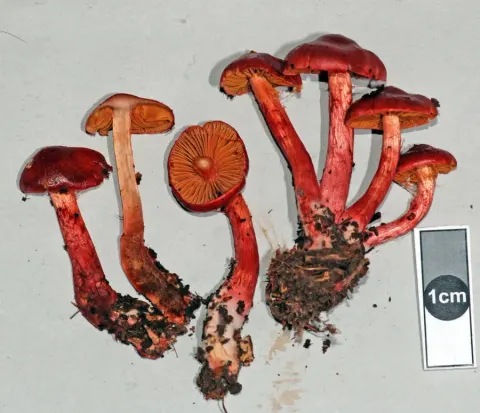
Dokumentasi Cortinarius canarius menurut asosiasi foto pada record takson iNaturalist. Kredit: Chelsea Haley. Identitas mengikuti sumber; bukan penentuan spesimen independen.

Jenis
Fotografi
Kredit
no rights reserved, uploaded by Chelsea Haley
Lisensi
CC0 1.0
Sumber media
Buka entri sumber

Gambar menunjukkan objek menurut identifikasi sumber, bukan verifikasi independen spesimen oleh Fungi. Tidak ada skala baru yang ditambahkan.

Dokumentasi tambahan

06 / Rujukan

Sumber profil

  1. [1] Horak, E. 1988: New species of Dermocybe (Agaricales) from New Zealand. Sydowia 40: 81-112. — Dermocybe canariaBagian sumber: biota:1cb0eeb9-36b9-11d5-9548-00d0592d548c:1cb186b9-36b9-11d5-9548-00d0592d548c
    Tanggal penghimpunan sumber: 2026-10-12
    Teks sumber: CC BY 4.0 · Horak, E. 1988: New species of Dermocybe (Agaricales) from New Zealand. Sydowia 40: 81-112.
  2. [2] Catalogue of Life Base2026-09-11 — Cortinarius canariusBagian sumber: ColDP NameUsage.tsv ID YKBH; accepted species; source 2073
    Tanggal penghimpunan sumber: 2026-10-12
  3. [3] Dokumentasi visual — Cortinarius canariusBagian sumber: Identitas mengikuti sumber dokumentasi; bukan penentuan spesimen independen.
    Tanggal penghimpunan sumber: 2026-10-17
    Media sumber: CC0 1.0 · no rights reserved, uploaded by Chelsea Haley
  4. [4] Dokumentasi visual — Cortinarius canariusBagian sumber: Identitas mengikuti sumber dokumentasi; bukan penentuan spesimen independen.
    Tanggal penghimpunan sumber: 2026-10-17
    Teks sumber: CC BY 4.0 · (c) David Orlovich, some rights reserved (CC BY), uploaded by David Orlovich

Adaptasi teks: CC BY 4.0. Horak, E. 1988: New species of Dermocybe (Agaricales) from New Zealand. Sydowia 40: 81-112. — Horak, E. 1988: New species of Dermocybe (Agaricales) from New Zealand. Sydowia 40: 81-112. — Dermocybe canaria

Uraian asli dan riwayat sumber

Riwayat atau halaman sumber

Ringkasan sumber

Pileus -60 (-80) mm, hemispherical becoming convex, centre broadly umbonate to campanulate or flat and expanded, margin inrolled; brilliant yellow turning yellow-brown (especially at disk) with age; dry, neither hygrophanous nor striate, minutely to coarsely innate-fibrillose or subsquamulose (in dry condition), in young specimens margin covered by yellow fibrillose veil remnants. - Lamellae crowded, emarginate, sometimes decurrent with short tooth; golden yellow turning mustard yellow then brown-yellow, edges entire, concolorous. - Stipe -80 x -30 mm, fusoid to bulbous with root-like base, rarely cylindrical; yellow, yellow-brown in aged specimens; dry, below yellow cortina with 1-3 persistent, membranaceous, yellow to yellow-brown belts of veil, at first solid becoming hollow, single, rarely cespitose. - Context yellow to orange-yellow. - Odour none. - Taste bitter. - Chemical reactions on pileus: KOH - red to red-brown, NH3-pink to pale orange, HCl - negative.

Revisi sumber

Morfologi sumber

Pileus -60 (-80) mm, hemispherical becoming convex, centre broadly umbonate to campanulate or flat and expanded, margin inrolled; brilliant yellow turning yellow-brown (especially at disk) with age; dry, neither hygrophanous nor striate, minutely to coarsely innate-fibrillose or subsquamulose (in dry condition), in young specimens margin covered by yellow fibrillose veil remnants. - Lamellae crowded, emarginate, sometimes decurrent with short tooth; golden yellow turning mustard yellow then brown-yellow, edges entire, concolorous. - Stipe -80 x -30 mm, fusoid to bulbous with root-like base, rarely cylindrical; yellow, yellow-brown in aged specimens; dry, below yellow cortina with 1-3 persistent, membranaceous, yellow to yellow-brown belts of veil, at first solid becoming hollow, single, rarely cespitose. - Context yellow to orange-yellow. - Odour none. - Taste bitter. - Chemical reactions on pileus: KOH - red to red-brown, NH3-pink to pale orange, HCl - negative. Spore print (yellow-)brown with rusty shade. - Spores (7-) 7.5-8.5(-9) x 4-5 µm, ovoid, yellow-brown with rusty tinge, minutely asperulate at apex, ± smooth in immature spores, membrane thinwalled. - Basidia 20-35 x 6-8 µm, 4-spored. - Cystidia absent, but edge of lamellae often covered with articulate cells, terminal cell clavate to vesiculose (10-35 x 6-10 µm), membrane hyaline, pigment absent. - Pileipellis a cutis composed of cylindrical hyphae (5-10 µm diam.), terminal cells rarely fusoid, membranes thin-walled, not gelatinized, smooth, with red to orange plasmatic pigment dissolving in KOH, rarely also with encrusting and/or intercellular pigment. - Clamp connections present.

Revisi sumber

Ekologi sumber

On soil among litter in Nothofagus-forests (N. solandri var. cliffortioides, N. menziesii and/or N. fusca; often in association with conifers viz. Libocedrus bidwillii, Phyllocladus alpinus, Ph. glaucus, Podocarpus nivalis both in Sphagnum swamps and on dry sites), rarely also under Leptospermum scoparium. - New Zealand.

Revisi sumber

Struktur reproduksi sumber

Pileus -60 (-80) mm, hemispherical becoming convex, centre broadly umbonate to campanulate or flat and expanded, margin inrolled; brilliant yellow turning yellow-brown (especially at disk) with age; dry, neither hygrophanous nor striate, minutely to coarsely innate-fibrillose or subsquamulose (in dry condition), in young specimens margin covered by yellow fibrillose veil remnants. - Lamellae crowded, emarginate, sometimes decurrent with short tooth; golden yellow turning mustard yellow then brown-yellow, edges entire, concolorous. - Stipe -80 x -30 mm, fusoid to bulbous with root-like base, rarely cylindrical; yellow, yellow-brown in aged specimens; dry, below yellow cortina with 1-3 persistent, membranaceous, yellow to yellow-brown belts of veil, at first solid becoming hollow, single, rarely cespitose. - Context yellow to orange-yellow. - Odour none. - Taste bitter. - Chemical reactions on pileus: KOH - red to red-brown, NH3-pink to pale orange, HCl - negative.

Revisi sumber

Rujukan halaman ini

Fungi. Cortinarius canarius. Rilis data fungi-2026-10-12-expansion-2. https://fungi-atlas.mgadib.chatgpt.site/jamur/cortinarius-canarius/.

Status: impor sumber; pemeriksaan editorial per profil belum selesai. Untuk klaim biologis, gunakan rujukan pada bagian terkait dan periksa konteks sumber aslinya.