Ciri dan struktur
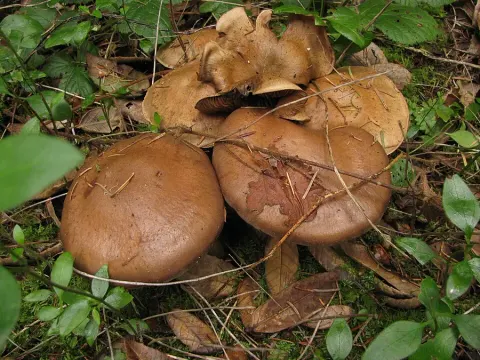
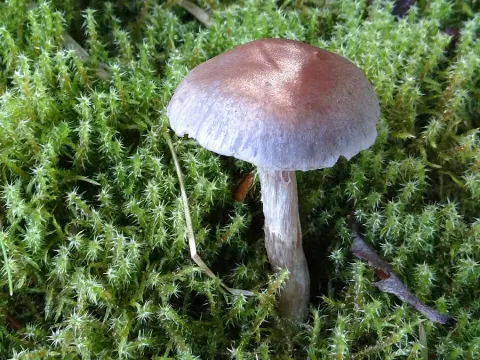
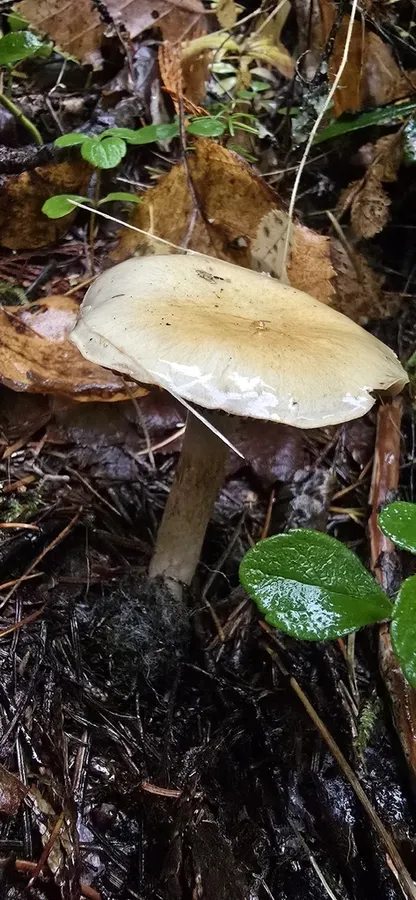
Cortinarius infractiflavus bears a convex, somewhat sticky and hygrophanous pileus measuring 20–80 mm in diameter, its margin initially inrolled. The cap surface is glutinous when moist and changes appearance as it dries, ranging in colour from yellow-brown to nearly yellow with an olivaceous-grey marginal zone. The lamellae are distinctively paler than those of typical C. infractus, adopting an olivaceous-brown hue. The stipe measures 25–70 mm in length and 10–16 mm in thickness, swelling to a bulb 12–20 mm wide at the base. Young specimens display a yellowish cortina that later weathers to greyish-brown with an olivaceous cast and fine fibrils. Remnants of the veil are whitish. The flesh (context) is pale olive-buff to tilleul buff, with marbled greyish tones in the stipe, and emits a very faint cedar-wood or fungoid odour. The taste is only mildly bitter, markedly less so than that of C. infractus. Microscopically, basidiospores measure 6.7–8.5 × 5.4–6.1 μm (mean 7.6 × 5.4 μm), varying from drop-shaped to nearly spherical or lightly almond-shaped, with a length-to-width ratio of 1.25–1.6 (mean 1.4). The basidia are clavate, four-spored and measure 30–32 × 7.5–8 μm. The gill trama comprises hyphae 5–7 (–8) μm wide—colourless to pale yellowish-grey—with the central layer containing hyphae up to 12 μm wide. The pileipellis is formed by a dense layer of hyphae 5.5–8 μm wide, with pale yellow walls and clamp connections. Chemical spot tests on the flesh and gill surfaces are negative with potassium hydroxide (KOH) solution and ammonium hydroxide (NH4OH), turn dingy brown with ferrous sulphate and blackish with silver nitrate.
Habitat dan peran ekologis
Cortinarius infractiflavus has a much wider distribution than initially recognized, occurring across Northern Hemisphere boreal and mountainous regions. While first documented in the Greater Yellowstone ecosystem of Wyoming (USA), where it appears to be the common form of the C. infractus complex, molecular studies have confirmed its presence across North America and Eurasia. The species typically grows in coniferous forests dominated by spruce (Picea species) and fir (Abies species). In North America, it has been documented in subalpine forests with Engelmann spruce (Picea engelmannii) and subalpine fir (Abies lasiocarpa) in Wyoming, as well as in British Columbia, Canada. In Europe, the fungus has been found in diverse forest habitats. Collections include specimens from Finland's boreal forests, where it was found in a mixed forest of Scots pine (Pinus sylvestris), Norway spruce (Picea abies), juniper (Juniperus), birch (Betula), poplar (Populus), and alder (Alnus) on dolomite substrate. It has also been documented at elevations of 1600 metres in Bulgaria's Pirin mountains under Norway spruce. This transcontinental distribution pattern, confirmed through DNA sequencing, demonstrates that C. infractiflavus is a widespread species throughout the northern coniferous forest biome rather than a localized variant.
- Habitat atau konteks temuan
- hutan
- Substrat
- Informasi belum tersedia pada sumber rilis ini.
- Peran atau konteks
- Belum dikategorikan pada rilis ini.
Reproduksi
Microscopically, basidiospores measure 6.7–8.5 × 5.4–6.1 μm (mean 7.6 × 5.4 μm), varying from drop-shaped to nearly spherical or lightly almond-shaped, with a length-to-width ratio of 1.25–1.6 (mean 1.4). The basidia are clavate, four-spored and measure 30–32 × 7.5–8 μm. The gill trama comprises hyphae 5–7 (–8) μm wide—colourless to pale yellowish-grey—with the central layer containing hyphae up to 12 μm wide. The pileipellis is formed by a dense layer of hyphae 5.5–8 μm wide, with pale yellow walls and clamp connections.
Catatan identitas dan cakupan
- Nama diterima mengikuti Catalogue of Life Base2026-09-11; uraian mempertahankan konsep dan nama sumber aslinya.
- Original geographic, specimen and life-cycle scope retained; source import awaits individual editorial review.
- Impor dan terjemahan otomatis belum diperiksa editorial per profil. Struktur reproduktif yang disebutkan tidak membuktikan seluruh siklus hidup diketahui.
- Pengukuran pada uraian mengikuti spesimen, kultur, dan metode sumber; angka tidak diperluas ke semua populasi.
Catatan distribusi dalam narasi mengikuti sumbernya. Dokumentasi spesimen atau foto mengikuti catatan sumber. Bukti wilayah Indonesia dan penilaian konservasi tidak disimpulkan dari gambar.
Melihat dengan konteks
Dokumentasi Cortinarius infractiflavus menurut asosiasi foto pada record takson iNaturalist. Kredit: Fotografer tidak dicantumkan. Sumber observasi iNaturalist; pengunggah: Leanne Stacy Reitan. Identitas mengikuti sumber; bukan penentuan spesimen independen.
- Jenis
- Fotografi
- Kredit
- Fotografer tidak dicantumkan. Sumber observasi iNaturalist; pengunggah: Leanne Stacy Reitan
- Lisensi
- CC0 1.0
- Sumber media
- Buka entri sumber
Dokumentasi tambahan
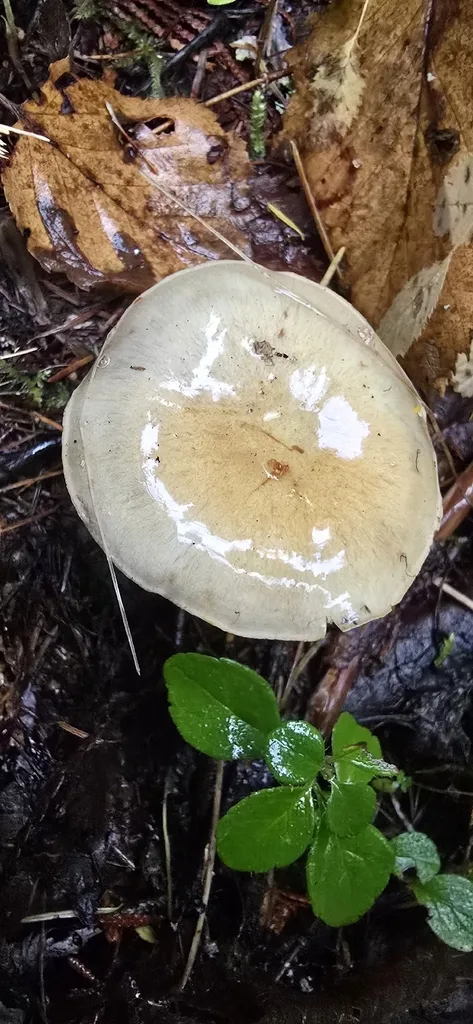
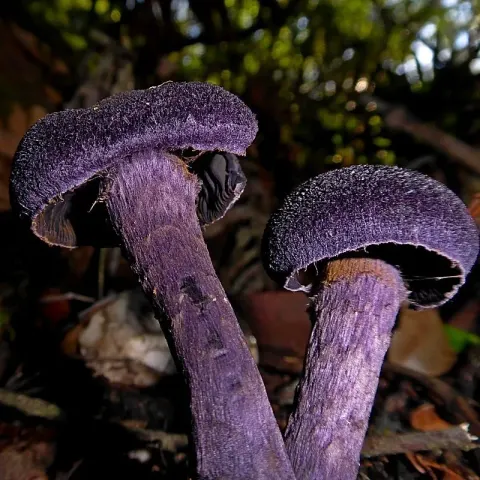
Foto yang diasosiasikan dengan Cortinarius infractiflavus pada iNaturalist. Identifikasi mengikuti sumber; bukan penentuan spesimen independen.
Kredit dan penggunaan
no rights reserved
Ukuran dan format gambar disesuaikan tanpa pemotongan, retus, atau penambahan skala. Lisensi sumber dipertahankan.
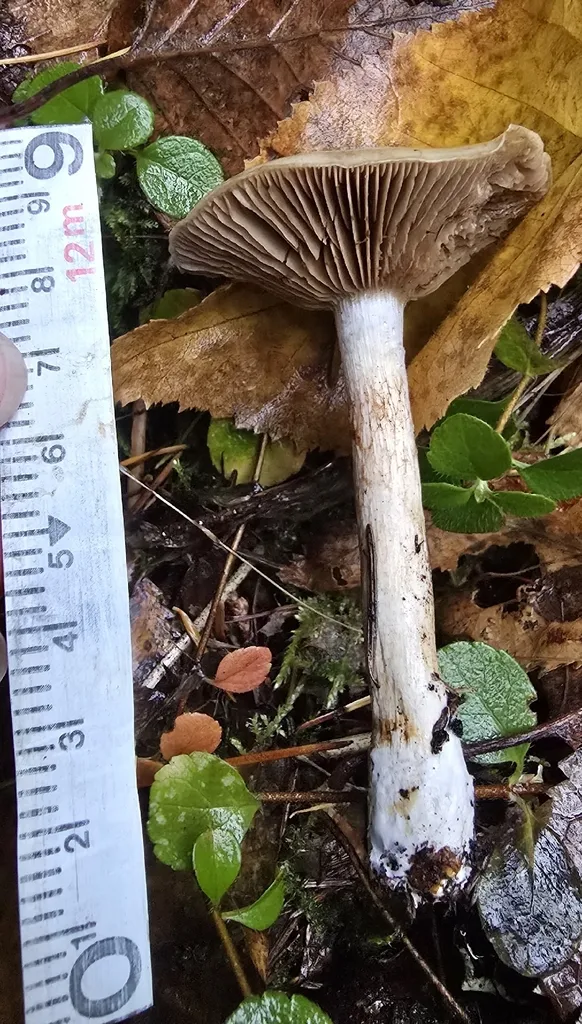
Foto yang diasosiasikan dengan Cortinarius infractiflavus pada iNaturalist. Identifikasi mengikuti sumber; bukan penentuan spesimen independen.
Kredit dan penggunaan
no rights reserved
Ukuran dan format gambar disesuaikan tanpa pemotongan, retus, atau penambahan skala. Lisensi sumber dipertahankan.
Sumber profil
- [1] Cortinarius infractiflavus — Wikipedia (en)
- [2] Catalogue of Life Base2026-09-11 — Cortinarius infractiflavus
- [3] Dokumentasi visual — Cortinarius infractiflavus
- [4] Dokumentasi visual — Cortinarius infractiflavus
- [5] Dokumentasi visual — Cortinarius infractiflavus
Rujukan halaman ini
Fungi. Cortinarius infractiflavus. Rilis data fungi-2026-10-12-expansion-2. https://fungi-atlas.mgadib.chatgpt.site/jamur/cortinarius-infractiflavus/.
Status: impor sumber; pemeriksaan editorial per profil belum selesai. Untuk klaim biologis, gunakan rujukan pada bagian terkait dan periksa konteks sumber aslinya.