01 / Morfologi

Ciri dan struktur

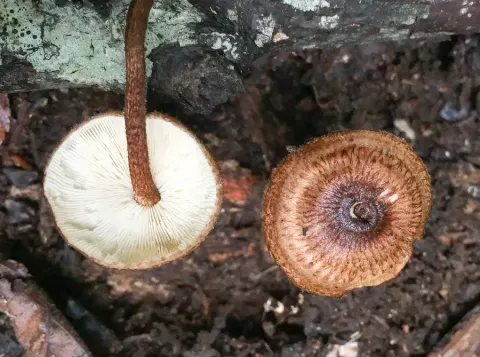
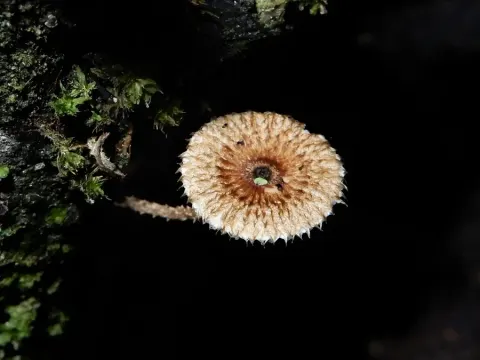
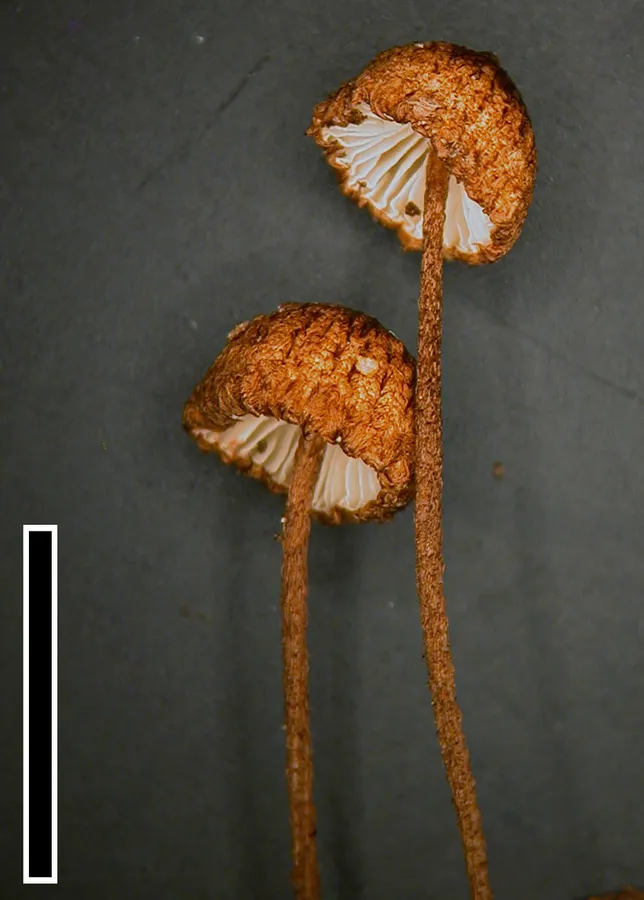
The holotype specimen consists of 6 intact basidiomes in fair condition. As dried: Pileus 4–8 mm diam., conical with a conical papilla surrounded by a zone of long tufted hairs, margin with shorter and smaller tufts, yellowish brown to orangish brown. Lamellae free, close with 1 series of lamellulae, narrow, cream-colored. Stipe 60–100 × 1 mm, pubescent, greyish brown; rhizomorphs absent.Basidiospores (7.7–) 8–9.6 × 4.2–5.5 μm [xm = 8.8 ± 0.5 × 4.7 ± 0.4 μm, Q = 1.7–2.2, Qm = 1.9 ± 0.1, n = 20 spores per 1 collection], ellipsoid, smooth, hyaline, inamyloid, thin-walled. Basidia 2- and 4-sterigmate, clavate, clamped. Basidioles subfusoid. Pleurocystidia absent. Cheilocystidia common, lamellar edge sterile; main body 11–20 × 4.5–8 μm, irregularly cylindrical to clavate with numerous apical appendages; apical appendages 1.5–6.5 (–10) × 1–3 μm, finger-like or irregular in outline, obtuse, sometimes forked, hyaline, inamyloid, thin-walled. Pileipellis of tangled to parallel and agglutinated, thick-walled hairs. Hairs up to 700 μm long × 2.5–4.5 (–5) μm diam., cylindrical, gradually narrowed to a subacute tip; walls smooth, 0.5–2 μm thick, hyaline to yellow, inamyloid to dextrinoid. Stipitipellis with hairs like the pileipellis. This represents a good species of Crinipellis distinctive because of the conical-papillate, ochraceous pileus, long greyish brown stipe (up to 100 mm), setulose cheilocystidia, and the absence of rhizomorphs. It is allied with C. setipes (Peck) Singer from North America. Status: Crinipellis procera is known currently only from New Zealand.

Sebagian uraian ditampilkan dalam bahasa sumber; terjemahannya belum tersedia atau belum lolos pemeriksaan.

Rujukan: [1]

Pengukuran mengikuti objek, spesimen atau kultur, dan metode yang disebutkan sumber. Baca uraian asli untuk konteks lengkap.

02 / Kehidupan

Habitat dan peran ekologis

Inserted on dead twigs of forest litter. The holotype specimen consists of 6 intact basidiomes in fair condition. As dried: Pileus 4–8 mm diam., conical with a conical papilla surrounded by a zone of long tufted hairs, margin with shorter and smaller tufts, yellowish brown to orangish brown. Lamellae free, close with 1 series of lamellulae, narrow, cream-colored. Stipe 60–100 × 1 mm, pubescent, greyish brown; rhizomorphs absent.Basidiospores (7.7–) 8–9.6 × 4.2–5.5 μm [xm = 8.8 ± 0.5 × 4.7 ± 0.4 μm, Q = 1.7–2.2, Qm = 1.9 ± 0.1, n = 20 spores per 1 collection], ellipsoid, smooth, hyaline, inamyloid, thin-walled. Basidia 2- and 4-sterigmate, clavate, clamped. Basidioles subfusoid. Pleurocystidia absent. Cheilocystidia common, lamellar edge sterile; main body 11–20 × 4.5–8 μm, irregularly cylindrical to clavate with numerous apical appendages; apical appendages 1.5–6.5 (–10) × 1–3 μm, finger-like or irregular in outline, obtuse, sometimes forked, hyaline, inamyloid, thin-walled. Pileipellis of tangled to parallel and agglutinated, thick-walled hairs. Hairs up to 700 μm long × 2.5–4.5 (–5) μm diam., cylindrical, gradually narrowed to a subacute tip; walls smooth, 0.5–2 μm thick, hyaline to yellow, inamyloid to dextrinoid.

Sebagian uraian ditampilkan dalam bahasa sumber; terjemahannya belum tersedia atau belum lolos pemeriksaan.

Rujukan: [1]

Habitat atau konteks temuan
hutan
Substrat
Informasi belum tersedia pada sumber rilis ini.
Peran atau konteks
Belum dikategorikan pada rilis ini.
Temukan hubungan serupa
03 / Siklus hidup

Reproduksi

The holotype specimen consists of 6 intact basidiomes in fair condition. As dried: Pileus 4–8 mm diam., conical with a conical papilla surrounded by a zone of long tufted hairs, margin with shorter and smaller tufts, yellowish brown to orangish brown. Lamellae free, close with 1 series of lamellulae, narrow, cream-colored. Stipe 60–100 × 1 mm, pubescent, greyish brown; rhizomorphs absent.Basidiospores (7.7–) 8–9.6 × 4.2–5.5 μm [xm = 8.8 ± 0.5 × 4.7 ± 0.4 μm, Q = 1.7–2.2, Qm = 1.9 ± 0.1, n = 20 spores per 1 collection], ellipsoid, smooth, hyaline, inamyloid, thin-walled. Basidia 2- and 4-sterigmate, clavate, clamped. Basidioles subfusoid. Pleurocystidia absent. Cheilocystidia common, lamellar edge sterile; main body 11–20 × 4.5–8 μm, irregularly cylindrical to clavate with numerous apical appendages; apical appendages 1.5–6.5 (–10) × 1–3 μm, finger-like or irregular in outline, obtuse, sometimes forked, hyaline, inamyloid, thin-walled.

Sebagian uraian ditampilkan dalam bahasa sumber; terjemahannya belum tersedia atau belum lolos pemeriksaan.

Rujukan: [1]

04 / Batas informasi

Catatan identitas dan cakupan

  • Nama diterima mengikuti Catalogue of Life Base2026-09-11; uraian mempertahankan konsep dan nama sumber aslinya.
  • Historical description as cited by BiotaNZ. Preserve explicit New Zealand/locality, host and specimen qualifiers. Distribution is the cited source scope, not a current global range.
  • Impor dan terjemahan otomatis belum diperiksa editorial per profil. Struktur reproduktif yang disebutkan tidak membuktikan seluruh siklus hidup diketahui.
  • Pengukuran pada uraian mengikuti spesimen, kultur, dan metode sumber; angka tidak diperluas ke semua populasi.

Catatan distribusi dalam narasi mengikuti sumbernya. Dokumentasi spesimen atau foto mengikuti catatan sumber. Bukti wilayah Indonesia dan penilaian konservasi tidak disimpulkan dari gambar.

05 / Dokumentasi

Melihat dengan konteks

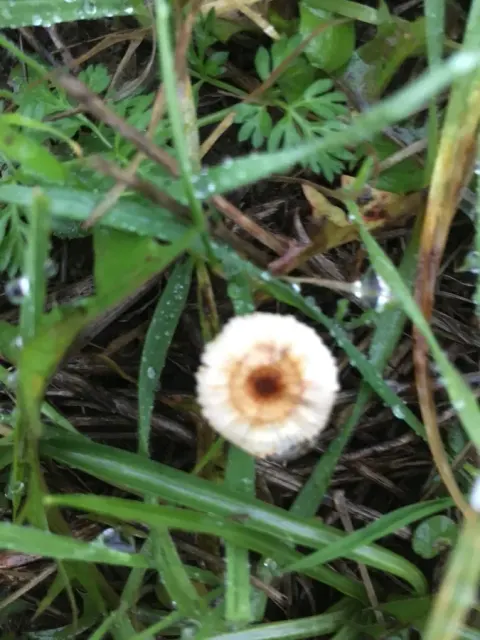
Dokumentasi Crinipellis procera menurut asosiasi foto pada record takson iNaturalist. Kredit: Jerry Cooper. Identitas mengikuti sumber; bukan penentuan spesimen independen.

Jenis
Fotografi
Kredit
(c) Jerry Cooper, some rights reserved (CC BY), uploaded by Jerry Cooper
Lisensi
CC BY 4.0
Sumber media
Buka entri sumber

Gambar menunjukkan objek menurut identifikasi sumber, bukan verifikasi independen spesimen oleh Fungi. Tidak ada skala baru yang ditambahkan.

06 / Rujukan

Sumber profil

  1. [1] Kerekes, J.F.; Desjardin, D.E.: A monograph of the genera Crinipellis and Moniliophthora from Southeast Asia including a molecular phylogeny of the nrITS region. Fungal Diversity 37: 101-152. — Crinipellis proceraBagian sumber: biota:4c9b4c48-f838-4c9f-8374-b23dbee1c729:1cb18560-36b9-11d5-9548-00d0592d548c
    Tanggal penghimpunan sumber: 2026-10-12
    Teks sumber: CC BY 4.0 · Kerekes, J.F.; Desjardin, D.E.: A monograph of the genera Crinipellis and Moniliophthora from Southeast Asia including a molecular phylogeny of the nrITS region. Fungal Diversity 37: 101-152.
  2. [2] Catalogue of Life Base2026-09-11 — Crinipellis proceraBagian sumber: ColDP NameUsage.tsv ID ZGGY; accepted species; source 2073
    Tanggal penghimpunan sumber: 2026-10-12
  3. [3] Dokumentasi visual — Crinipellis proceraBagian sumber: Individual media record; identification follows the source, not independent determination
    Tanggal penghimpunan sumber: 2026-10-12
    Media sumber: CC BY 4.0 · (c) Jerry Cooper, some rights reserved (CC BY), uploaded by Jerry Cooper

Adaptasi teks: CC BY 4.0. Kerekes, J.F.; Desjardin, D.E.: A monograph of the genera Crinipellis and Moniliophthora from Southeast Asia including a molecular phylogeny of the nrITS region. Fungal Diversity 37: 101-152. — Kerekes, J.F.; Desjardin, D.E.: A monograph of the genera Crinipellis and Moniliophthora from Southeast Asia including a molecular phylogeny of the nrITS region. Fungal Diversity 37: 101-152. — Crinipellis procera

Uraian asli dan riwayat sumber

Riwayat atau halaman sumber

Ringkasan sumber

The holotype specimen consists of 6 intact basidiomes in fair condition. As dried: Pileus 4–8 mm diam., conical with a conical papilla surrounded by a zone of long tufted hairs, margin with shorter and smaller tufts, yellowish brown to orangish brown. Lamellae free, close with 1 series of lamellulae, narrow, cream-colored. Stipe 60–100 × 1 mm, pubescent, greyish brown; rhizomorphs absent.Basidiospores (7.7–) 8–9.6 × 4.2–5.5 μm [xm = 8.8 ± 0.5 × 4.7 ± 0.4 μm, Q = 1.7–2.2, Qm = 1.9 ± 0.1, n = 20 spores per 1 collection], ellipsoid, smooth, hyaline, inamyloid, thin-walled.

Revisi sumber

Morfologi sumber

The holotype specimen consists of 6 intact basidiomes in fair condition. As dried: Pileus 4–8 mm diam., conical with a conical papilla surrounded by a zone of long tufted hairs, margin with shorter and smaller tufts, yellowish brown to orangish brown. Lamellae free, close with 1 series of lamellulae, narrow, cream-colored. Stipe 60–100 × 1 mm, pubescent, greyish brown; rhizomorphs absent.Basidiospores (7.7–) 8–9.6 × 4.2–5.5 μm [xm = 8.8 ± 0.5 × 4.7 ± 0.4 μm, Q = 1.7–2.2, Qm = 1.9 ± 0.1, n = 20 spores per 1 collection], ellipsoid, smooth, hyaline, inamyloid, thin-walled. Basidia 2- and 4-sterigmate, clavate, clamped. Basidioles subfusoid. Pleurocystidia absent. Cheilocystidia common, lamellar edge sterile; main body 11–20 × 4.5–8 μm, irregularly cylindrical to clavate with numerous apical appendages; apical appendages 1.5–6.5 (–10) × 1–3 μm, finger-like or irregular in outline, obtuse, sometimes forked, hyaline, inamyloid, thin-walled. Pileipellis of tangled to parallel and agglutinated, thick-walled hairs. Hairs up to 700 μm long × 2.5–4.5 (–5) μm diam., cylindrical, gradually narrowed to a subacute tip; walls smooth, 0.5–2 μm thick, hyaline to yellow, inamyloid to dextrinoid. Stipitipellis with hairs like the pileipellis. This represents a good species of Crinipellis distinctive because of the conical-papillate, ochraceous pileus, long greyish brown stipe (up to 100 mm), setulose cheilocystidia, and the absence of rhizomorphs. It is allied with C. setipes (Peck) Singer from North America. Status: Crinipellis procera is known currently only from New Zealand.

Revisi sumber

Ekologi sumber

Inserted on dead twigs of forest litter. The holotype specimen consists of 6 intact basidiomes in fair condition. As dried: Pileus 4–8 mm diam., conical with a conical papilla surrounded by a zone of long tufted hairs, margin with shorter and smaller tufts, yellowish brown to orangish brown. Lamellae free, close with 1 series of lamellulae, narrow, cream-colored. Stipe 60–100 × 1 mm, pubescent, greyish brown; rhizomorphs absent.Basidiospores (7.7–) 8–9.6 × 4.2–5.5 μm [xm = 8.8 ± 0.5 × 4.7 ± 0.4 μm, Q = 1.7–2.2, Qm = 1.9 ± 0.1, n = 20 spores per 1 collection], ellipsoid, smooth, hyaline, inamyloid, thin-walled. Basidia 2- and 4-sterigmate, clavate, clamped. Basidioles subfusoid. Pleurocystidia absent. Cheilocystidia common, lamellar edge sterile; main body 11–20 × 4.5–8 μm, irregularly cylindrical to clavate with numerous apical appendages; apical appendages 1.5–6.5 (–10) × 1–3 μm, finger-like or irregular in outline, obtuse, sometimes forked, hyaline, inamyloid, thin-walled. Pileipellis of tangled to parallel and agglutinated, thick-walled hairs. Hairs up to 700 μm long × 2.5–4.5 (–5) μm diam., cylindrical, gradually narrowed to a subacute tip; walls smooth, 0.5–2 μm thick, hyaline to yellow, inamyloid to dextrinoid.

Revisi sumber

Struktur reproduksi sumber

The holotype specimen consists of 6 intact basidiomes in fair condition. As dried: Pileus 4–8 mm diam., conical with a conical papilla surrounded by a zone of long tufted hairs, margin with shorter and smaller tufts, yellowish brown to orangish brown. Lamellae free, close with 1 series of lamellulae, narrow, cream-colored. Stipe 60–100 × 1 mm, pubescent, greyish brown; rhizomorphs absent.Basidiospores (7.7–) 8–9.6 × 4.2–5.5 μm [xm = 8.8 ± 0.5 × 4.7 ± 0.4 μm, Q = 1.7–2.2, Qm = 1.9 ± 0.1, n = 20 spores per 1 collection], ellipsoid, smooth, hyaline, inamyloid, thin-walled. Basidia 2- and 4-sterigmate, clavate, clamped. Basidioles subfusoid. Pleurocystidia absent. Cheilocystidia common, lamellar edge sterile; main body 11–20 × 4.5–8 μm, irregularly cylindrical to clavate with numerous apical appendages; apical appendages 1.5–6.5 (–10) × 1–3 μm, finger-like or irregular in outline, obtuse, sometimes forked, hyaline, inamyloid, thin-walled.

Revisi sumber

Rujukan halaman ini

Fungi. Crinipellis procera. Rilis data fungi-2026-10-12-expansion-2. https://fungi-atlas.mgadib.chatgpt.site/jamur/crinipellis-procera/.

Status: impor sumber; pemeriksaan editorial per profil belum selesai. Untuk klaim biologis, gunakan rujukan pada bagian terkait dan periksa konteks sumber aslinya.