Ciri dan struktur
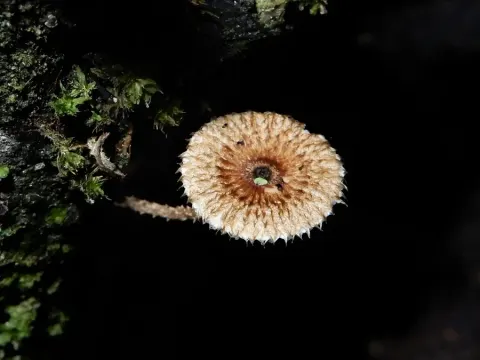
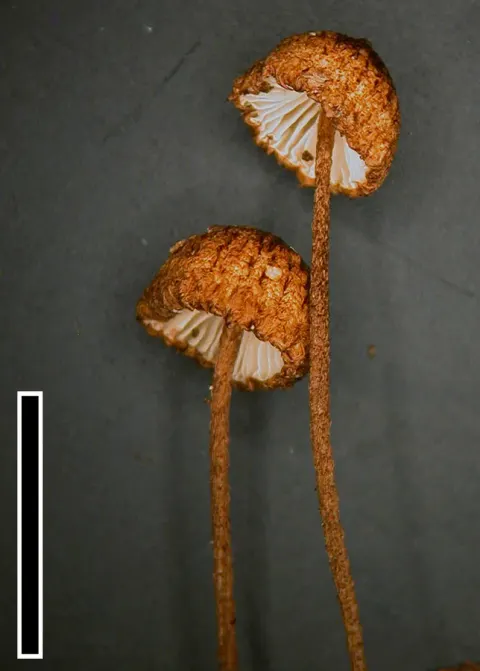
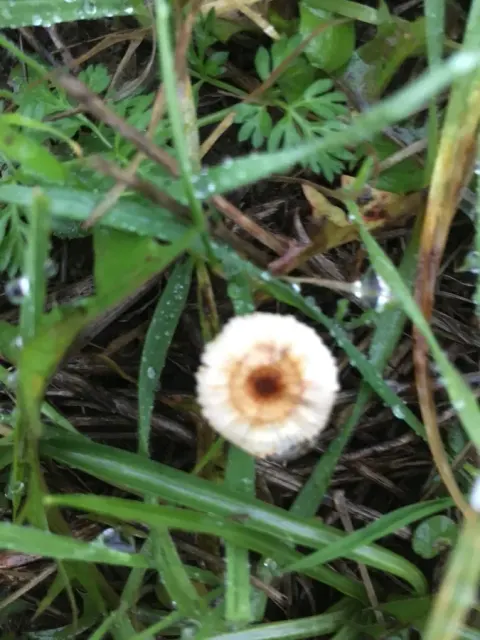
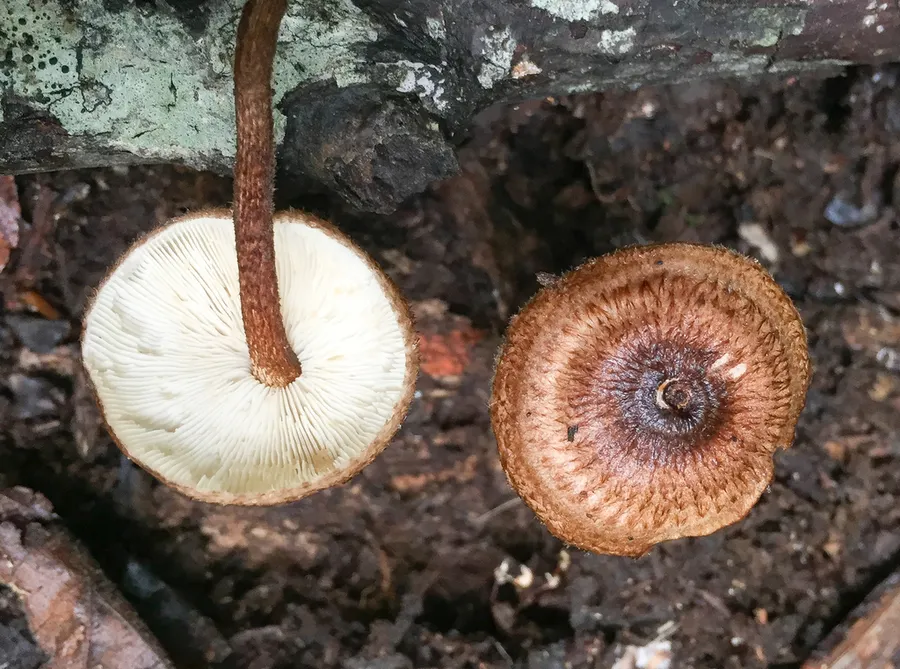
Crinipellis zonata is a little brown mushroom with a cap of 1 to 2.5 cm in diameter, which is convex (sometimes approaching flat) in shape. Typically, it has a small, distinctive depression in the centre, while the whole cap is densely hairy and dry. There are often concentric zones of both color and texture. The cap is tawny or cream, while the hairs (which are set in lines) are tawny. The white gills are close and narrow, and free or nearly free from the stem. The gills do not discolor. The stem is between 25 and 50 mm in height, by 1 to 2 mm thick. Like the cap, it is densely covered in tawny hairs. Although the stem is hollow, the cap has an insubstantial layer of white flesh. The spore print is white, and the smooth, elliptical spores are 4–6 by 3–5 μm in size. The basidia (spore-bearing cells) are four-spored, club-shaped, and measure 25–30 by 6.0–6.5 μm. C. zonata has basidioles—basidium-like cells in the hymenium that lack the slender projections known as sterigmata that attach to spores. The basidioles are 15–28 by 3.0–8.0 μm, and range in shape from club-shaped to cylindrical to fusoid (fuse-like). The cheilocystidia (cystidia found on the edges of gills) are 20–45 by 5.0–9.0 μm, cylindrical, club-shaped or fusoid, irregular, and branched or coral-like. Pleurocystidia (cystidia found on the gill face) are absent. The "hairs" on the cap surface are about 50–800 by 4.0–10 μm, and roughly cylindrical with an irregular base; the hairs on the stem are similar to the cap hairs. The cap and stem hairs are dextrinoid, meaning that they are stained yellowish-brown or reddish-brown by the iodine of Melzer's reagent.
Habitat dan peran ekologis
Crinipellis zonata adalah saprobik, hidup pada puing-puing atau akar kayu keras; mengandung enzim yang membusuk kayu yang dapat memecah pyrene hidrokarbon aromatik polisiklik. Jamur tumbuh secara individual atau dalam kelompok kecil, dan ditemukan antara August and September. Di Amerika Utara, ia tersebar di timur Pegunungan Rocky, dan telah tercatat sejauh barat Indiana and Texas. Di Eropa, telah dikumpulkan di Portugal. Hal ini juga telah dikumpulkan di Korea Selatan.
- Habitat atau konteks temuan
- Informasi belum tersedia pada sumber rilis ini.
- Substrat
- Informasi belum tersedia pada sumber rilis ini.
- Peran atau konteks
- Pengurai
Reproduksi
The spore print is white, and the smooth, elliptical spores are 4–6 by 3–5 μm in size. The basidia (spore-bearing cells) are four-spored, club-shaped, and measure 25–30 by 6.0–6.5 μm. C. zonata has basidioles—basidium-like cells in the hymenium that lack the slender projections known as sterigmata that attach to spores. The basidioles are 15–28 by 3.0–8.0 μm, and range in shape from club-shaped to cylindrical to fusoid (fuse-like). The cheilocystidia (cystidia found on the edges of gills) are 20–45 by 5.0–9.0 μm, cylindrical, club-shaped or fusoid, irregular, and branched or coral-like. Pleurocystidia (cystidia found on the gill face) are absent. The "hairs" on the cap surface are about 50–800 by 4.0–10 μm, and roughly cylindrical with an irregular base; the hairs on the stem are similar to the cap hairs.
Catatan identitas dan cakupan
- Nama diterima mengikuti Catalogue of Life Base2026-09-11; uraian mempertahankan konsep dan nama sumber aslinya.
- Original geographic, specimen and life-cycle scope retained; source import awaits individual editorial review.
- Impor dan terjemahan otomatis belum diperiksa editorial per profil. Struktur reproduktif yang disebutkan tidak membuktikan seluruh siklus hidup diketahui.
- Pengukuran pada uraian mengikuti spesimen, kultur, dan metode sumber; angka tidak diperluas ke semua populasi.
Catatan distribusi dalam narasi mengikuti sumbernya. Dokumentasi spesimen atau foto mengikuti catatan sumber. Bukti wilayah Indonesia dan penilaian konservasi tidak disimpulkan dari gambar.
Melihat dengan konteks
Dokumentasi Crinipellis zonata menurut asosiasi foto pada record takson iNaturalist. Kredit: Bill Sheehan. Identitas mengikuti sumber; bukan penentuan spesimen independen.
- Jenis
- Fotografi
- Kredit
- (c) Bill Sheehan, some rights reserved (CC BY-SA), uploaded by Bill Sheehan
- Lisensi
- CC BY-SA 4.0
- Sumber media
- Buka entri sumber
Dokumentasi tambahan
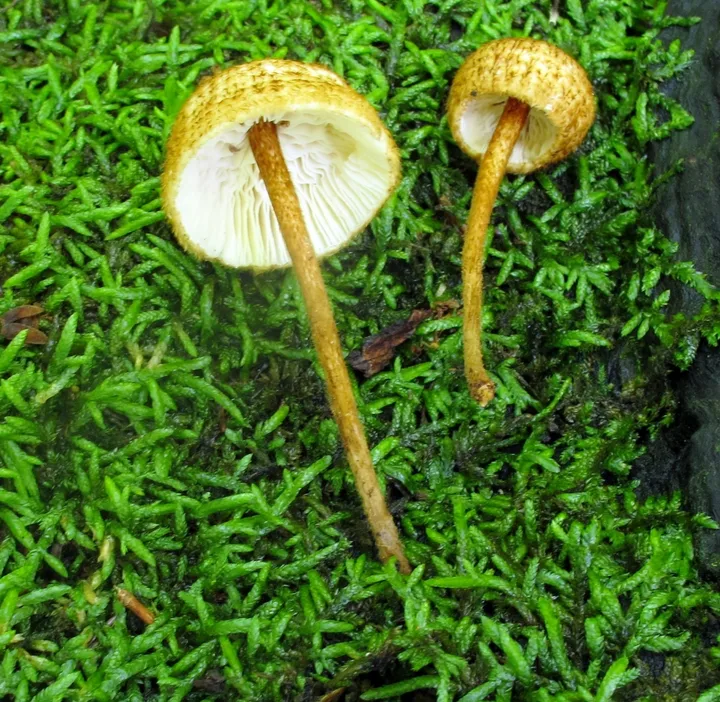
Foto yang diasosiasikan dengan Crinipellis zonata pada iNaturalist. Identifikasi mengikuti sumber; bukan penentuan spesimen independen.
Kredit dan penggunaan
(c) mycowalt, some rights reserved (CC BY-SA), uploaded by mycowalt
Ukuran dan format gambar disesuaikan tanpa pemotongan, retus, atau penambahan skala. Lisensi sumber dipertahankan.
Sumber profil
- [1] Crinipellis zonata — Wikipedia (en)
- [2] Catalogue of Life Base2026-09-11 — Crinipellis zonata
- [3] Dokumentasi visual — Crinipellis zonata
- [4] Dokumentasi visual — Crinipellis zonata
Rujukan halaman ini
Fungi. Crinipellis zonata. Rilis data fungi-2026-10-12-expansion-2. https://fungi-atlas.mgadib.chatgpt.site/jamur/crinipellis-zonata/.
Status: impor sumber; pemeriksaan editorial per profil belum selesai. Untuk klaim biologis, gunakan rujukan pada bagian terkait dan periksa konteks sumber aslinya.