Ciri dan struktur
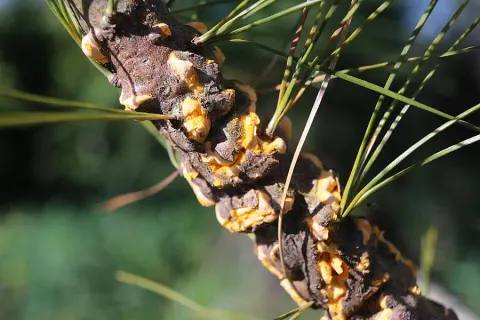
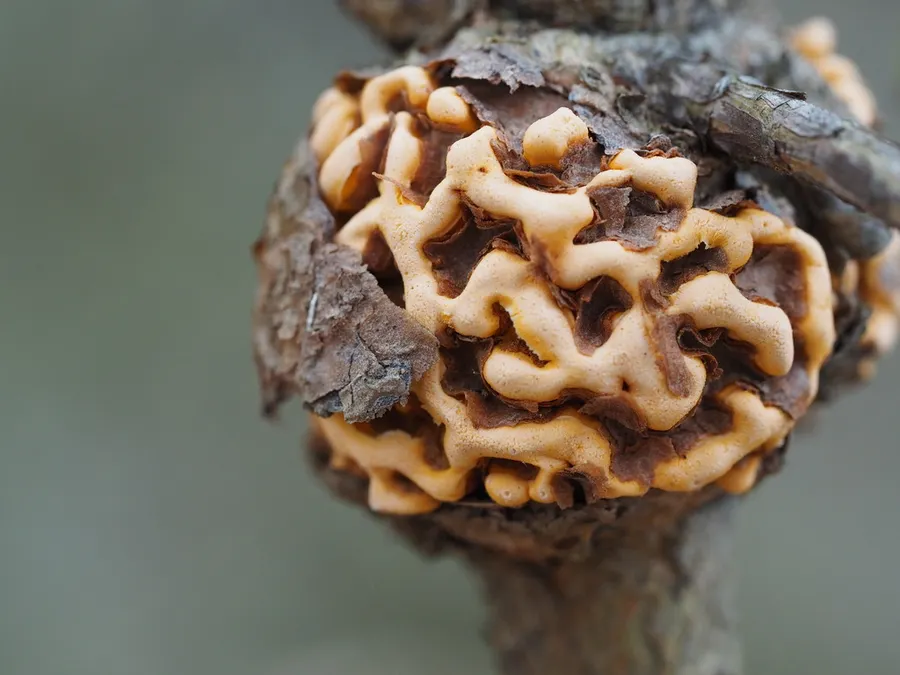
Galls start to form as slight, rounded swelling on the tree stem, then grow to become spherical and elongate. Inside the galls are hyphae which occur in rays. Hyphae are typically found in the bark, as opposed to the wood. In the spring, aecia break through the bark covering the galls. Galls that form on branches of older pine trees cause only a little damage. Although infected seedlings could have severely stunted growth or even die off. Pycnia and aecia are produced on pine host in the spring and early summer one to several years after infection. The aecia usually appear one year after the pycnia arise. Aeciospores move by wind to infect the telial host (Quercus). Because they move by wind, aeciospores are able to travel long distances to infect the telial host. The aeciospores are unable to re-infect pine species. Uredinia form on the oak species 1–3 weeks after infection, telia develop about 15 days later. Teliospores germinate and produce basidiospores. Basidiospores are also wind-dispersed and travel to infect first-year pine needles. The telial host can't be re-infected by basidiospores. Basidiospore infection occurs in summer and fall. The life cycle is complete when Pinus is infected by basidiospores. Management of pine-oak gall rust is fairly simple and straightforward. Prune out galls to reduce spreading of spores to nearby pine or oak trees. Prune galls from pine branches in the late winter or early spring.
Habitat dan peran ekologis
The pathogen requires pine and oak trees to complete its life cycle. Aecial hosts in North America are two- and three-needled Pinus species. Pinus hosts include Austrian (P. nigra), Jack pine (P. banksiana), Mugo pine (P. mugo), Red pine (P. resinosa), Ponderosa pine (P. ponderosa), and Scots pine (P. sylvestris). Telial hosts are Quercus species. Quercus hosts are generally made up of the red oak group and include Northern pin oak (Q. ellipsoidalis), Bur oak (Q. macrocarpa), Pin oak (Q. palustris), and Northern red oak (Q. rubra). Galls start to form as slight, rounded swelling on the tree stem, then grow to become spherical and elongate. Inside the galls are hyphae which occur in rays. Hyphae are typically found in the bark, as opposed to the wood. In the spring, aecia break through the bark covering the galls. Galls that form on branches of older pine trees cause only a little damage. Although infected seedlings could have severely stunted growth or even die off. Cronartium quercuum is found throughout North, Central, and South America, the Caribbean, and Asia. In North America, C. quercuum is found in Canada, the United States, and Mexico. C. quercuum is typically found in the eastern United States, spreading as far west as the Great Lakes region.
- Habitat atau konteks temuan
- Informasi belum tersedia pada sumber rilis ini.
- Substrat
- kayu
- Peran atau konteks
- Belum dikategorikan pada rilis ini.
Reproduksi
Pycnia and aecia are produced on pine host in the spring and early summer one to several years after infection. The aecia usually appear one year after the pycnia arise. Aeciospores move by wind to infect the telial host (Quercus). Because they move by wind, aeciospores are able to travel long distances to infect the telial host. The aeciospores are unable to re-infect pine species. Uredinia form on the oak species 1–3 weeks after infection, telia develop about 15 days later. Teliospores germinate and produce basidiospores. Basidiospores are also wind-dispersed and travel to infect first-year pine needles. The telial host can't be re-infected by basidiospores. Basidiospore infection occurs in summer and fall.
Catatan identitas dan cakupan
- Nama diterima mengikuti Catalogue of Life Base2026-09-11; uraian mempertahankan konsep dan nama sumber aslinya.
- Original geographic, specimen and life-cycle scope retained; source import awaits individual editorial review.
- Impor dan terjemahan otomatis belum diperiksa editorial per profil. Struktur reproduktif yang disebutkan tidak membuktikan seluruh siklus hidup diketahui.
- Pengukuran pada uraian mengikuti spesimen, kultur, dan metode sumber; angka tidak diperluas ke semua populasi.
Catatan distribusi dalam narasi mengikuti sumbernya. Dokumentasi spesimen atau foto mengikuti catatan sumber. Bukti wilayah Indonesia dan penilaian konservasi tidak disimpulkan dari gambar.
Melihat dengan konteks
Dokumentasi Cronartium quercuum menurut asosiasi foto pada record takson iNaturalist. Kredit: Clay Gibbons. Identitas mengikuti sumber; bukan penentuan spesimen independen.
- Jenis
- Fotografi
- Kredit
- (c) Clay Gibbons, some rights reserved (CC BY), uploaded by Clay Gibbons
- Lisensi
- CC BY 4.0
- Sumber media
- Buka entri sumber
Dokumentasi tambahan
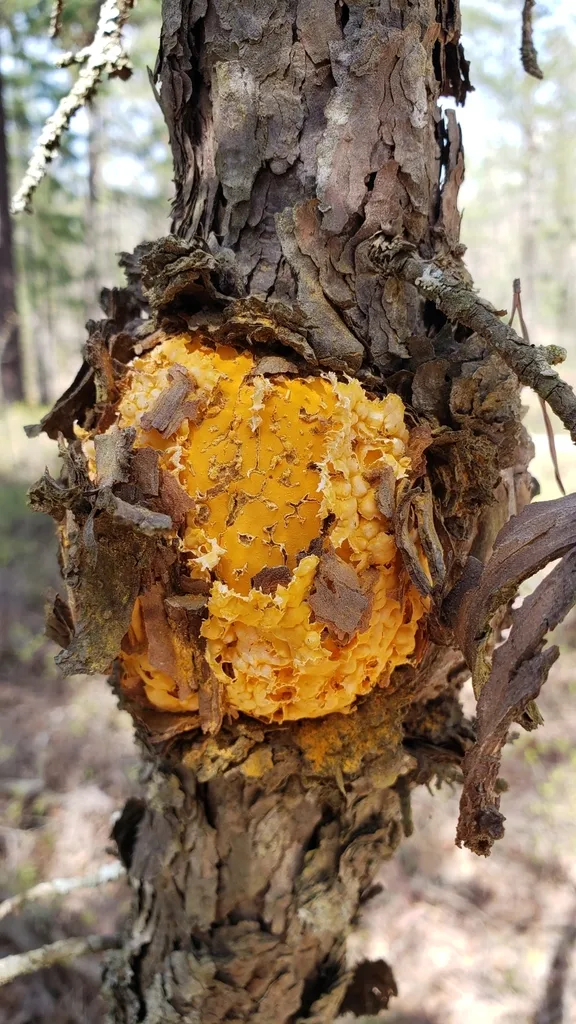
Foto yang diasosiasikan dengan Cronartium quercuum pada iNaturalist. Identifikasi mengikuti sumber; bukan penentuan spesimen independen.
Kredit dan penggunaan
(c) George Pushkal, some rights reserved (CC BY), uploaded by George Pushkal
Ukuran dan format gambar disesuaikan tanpa pemotongan, retus, atau penambahan skala. Lisensi sumber dipertahankan.
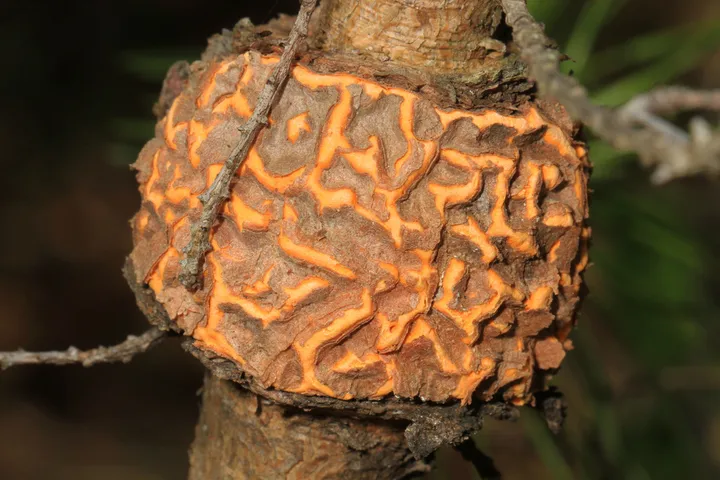
Foto yang diasosiasikan dengan Cronartium quercuum pada iNaturalist. Identifikasi mengikuti sumber; bukan penentuan spesimen independen.
Kredit dan penggunaan
(c) Judy Gallagher, some rights reserved (CC BY-SA), uploaded by Judy Gallagher
Ukuran dan format gambar disesuaikan tanpa pemotongan, retus, atau penambahan skala. Lisensi sumber dipertahankan.
Sumber profil
- [1] Cronartium quercuum — Wikipedia (en)
- [2] Catalogue of Life Base2026-09-11 — Cronartium quercuum
- [3] Dokumentasi visual — Cronartium quercuum
- [4] Dokumentasi visual — Cronartium quercuum
- [5] Dokumentasi visual — Cronartium quercuum
Rujukan halaman ini
Fungi. Cronartium quercuum. Rilis data fungi-2026-10-12-expansion-2. https://fungi-atlas.mgadib.chatgpt.site/jamur/cronartium-quercuum/.
Status: impor sumber; pemeriksaan editorial per profil belum selesai. Untuk klaim biologis, gunakan rujukan pada bagian terkait dan periksa konteks sumber aslinya.