Ciri dan struktur
Cronartium ribicola has two obligate hosts: Pinus spp and Ribes spp. Five-needle pines (Pinus spp.) are infected in the fall by basidiospores that have spread under cool, moist conditions from the alternate host, currants and gooseberries (Ribes spp.), and germinated on needles to enter with germ tubes through open stomata. Young pines are most susceptible and will die at faster rates following infection. Once spermatia have fertilized receptive hyphae in the Pinus spp. host, aecia are formed within a year, appearing as white blisters before rupture reveals the orange or yellow aeciospores within. The wind-blown aeciospores infect Ribes spp. and the fungus quickly develops uredia in less than a few weeks. Uredospores produced in this stage spread to infect other parts of the same host or other Ribes spp. hosts in the area. Next, telia are developed on the abaxial (lower) surface of leaves, where teliospores germinate to give rise to basidiospores that will complete the disease cycle by infecting Pinus spp. hosts. As is common among rusts, the life cycle of Cronartium ribicola includes two host species and goes through five spore stages. This life cycle is termed heteroecious. In the specific case of Cronartium ribicola, the aecial host of this pathogen is the white pine (Pinus subgenus Strobus, family Pinaceae) and the telial hosts are those of the genus Ribes, specifically currants and gooseberries. Species of both telial and aecial hosts have varying levels of resistance or immunity to infection. Environmentally, Cronartium ribicola prefers cooler temperatures coupled with moist conditions in low-lying areas, especially during the late summer and early fall.
Habitat dan peran ekologis
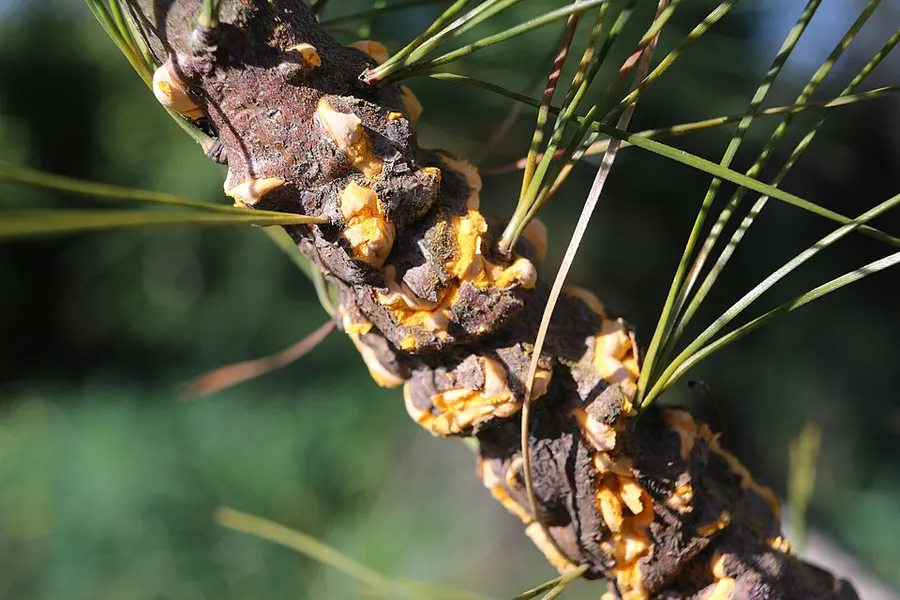
Seperti biasa di antara rusa, siklus hidup Cronartium ribicola mencakup dua spesies tuan rumah dan melewati lima tahap spora. Siklus hidup ini disebut heterocious. Dalam kasus khusus Cronartium ribicola, inang easial patogen ini adalah pinus putih (Pinus subgenus Strobus, keluarga Pinaceae) dan inang telial adalah mereka dari genus Ribes, khususnya kurant dan gooseberry. Species of baik hos telial dan aecial memiliki tingkat resistensi atau kekebalan terhadap infeksi yang berbeda. Pada inang aecial, tanda-tanda pertama C. ribicola adalah bintik-bintik kuning atau merah pada Pinus needles, tetapi ini kecil dan dapat sulit dilihat; gejala yang lebih terlihat pada inang aecial termasuk kanker abadi yang muncul di cabang dalam dua tahun setelah infeksi. Looking at tanaman yang terinfeksi secara keseluruhan, Pinus will tampak klorot, dan terhambat dengan cabang mati atau puncak yang berubah warna merah terang. Di sisi lain, inang telial, Ribes, dapat menyumbat bintik-bintik daun klorot kuning, tetapi tidak terpengaruh secara signifikan. Tanda-tanda C. ribicola pada Ribes, datang dalam bentuk patogen itu sendiri sebagai pustules oranye di bagian bawah daun.
- Habitat atau konteks temuan
- Informasi belum tersedia pada sumber rilis ini.
- Substrat
- Informasi belum tersedia pada sumber rilis ini.
- Peran atau konteks
- Belum dikategorikan pada rilis ini.
Reproduksi
Cronartium ribicola has two obligate hosts: Pinus spp and Ribes spp. Five-needle pines (Pinus spp.) are infected in the fall by basidiospores that have spread under cool, moist conditions from the alternate host, currants and gooseberries (Ribes spp.), and germinated on needles to enter with germ tubes through open stomata. Young pines are most susceptible and will die at faster rates following infection. Once spermatia have fertilized receptive hyphae in the Pinus spp. host, aecia are formed within a year, appearing as white blisters before rupture reveals the orange or yellow aeciospores within. The wind-blown aeciospores infect Ribes spp. and the fungus quickly develops uredia in less than a few weeks.
Catatan identitas dan cakupan
- Nama diterima mengikuti Catalogue of Life Base2026-09-11; uraian mempertahankan konsep dan nama sumber aslinya.
- Original geographic, specimen and life-cycle scope retained; source import awaits individual editorial review.
- Impor dan terjemahan otomatis belum diperiksa editorial per profil. Struktur reproduktif yang disebutkan tidak membuktikan seluruh siklus hidup diketahui.
- Pengukuran pada uraian mengikuti spesimen, kultur, dan metode sumber; angka tidak diperluas ke semua populasi.
Catatan distribusi dalam narasi mengikuti sumbernya. Dokumentasi spesimen atau foto mengikuti catatan sumber. Bukti wilayah Indonesia dan penilaian konservasi tidak disimpulkan dari gambar.
Melihat dengan konteks
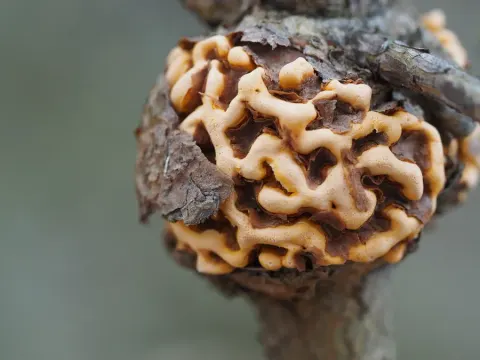
Dokumentasi Cronartium ribicola dari Wikimedia Commons. Cronartium ribicola on a pine tree Pinus strobus (white pine blister rust) Identifikasi mengikuti record berkas sumber.
- Jenis
- Fotografi
- Kredit
- Marek Argent
- Lisensi
- CC BY-SA 3.0
- Sumber media
- Buka entri sumber
Sumber profil
- [1] Cronartium ribicola — Wikipedia (en)
- [2] Catalogue of Life Base2026-09-11 — Cronartium ribicola
- [3] Dokumentasi visual — Cronartium ribicola
Rujukan halaman ini
Fungi. Cronartium ribicola. Rilis data fungi-2026-10-12-expansion-2. https://fungi-atlas.mgadib.chatgpt.site/jamur/cronartium-ribicola/.
Status: impor sumber; pemeriksaan editorial per profil belum selesai. Untuk klaim biologis, gunakan rujukan pada bagian terkait dan periksa konteks sumber aslinya.