Ciri dan struktur
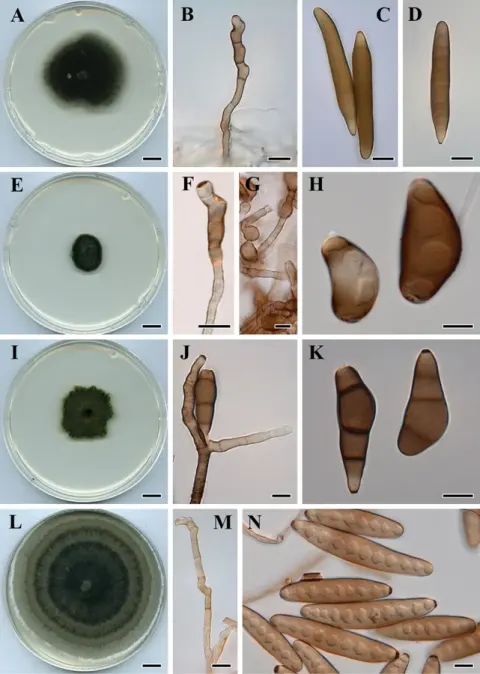
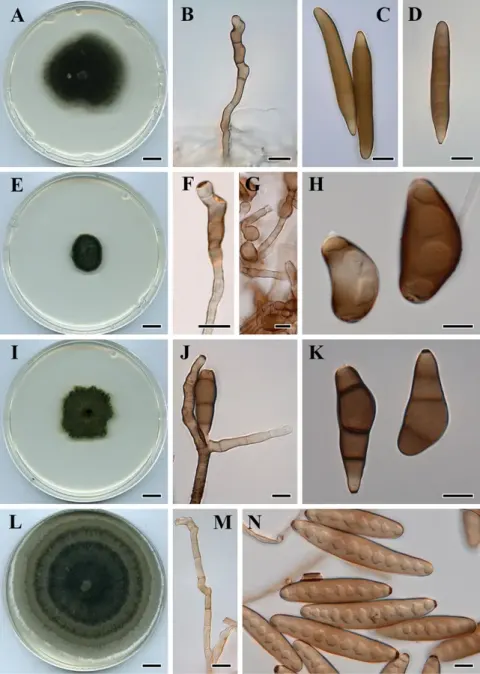
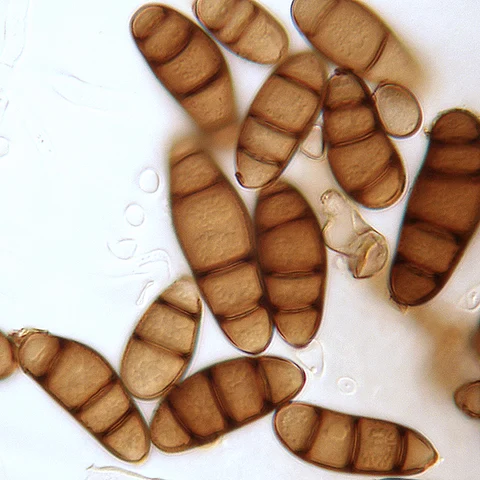
The species' spore producing cells take on a model of sympodial growth. Conidia grow through successive apices which end in a terminal prospore. Growth can be affected by static magnetic fields with field flux densities. Under these conditions, the number of conidia are able to increase by a minimum of 68 percent. Curvularia inaequalis is a filamentous fungus, with 3 to 12 densely packed filaments. The species is mostly brown in appearance, with pale brown end cells. Conidia themselves, consist of 3-5 cells with thick cell walls and a larger central cell. The diameter of the conidia ranges from 10 to 30 micrometers and have a slight leading curvature. Overall the appearance of the species is described as looking "cottony" with clear branching cells. The species can be difficult to identify due to its similar appearance to both C. and geniculate. Instead, sequencing of nuclear rRNA internal transcribed spacer regions (ITS) can be done to achieve accurate identification.
Habitat dan peran ekologis
Curvularia inaequalis is a plant saprobe that resides in temperate and subtropical environments. It is commonly found in the soils of forage grasses and grains. The species has been observed in a broad distribution of countries including Turkey, France, Canada, The United States, Japan and India. This species is dematiaceous and a hyphomycete.
- Habitat atau konteks temuan
- Informasi belum tersedia pada sumber rilis ini.
- Substrat
- Informasi belum tersedia pada sumber rilis ini.
- Peran atau konteks
- Belum dikategorikan pada rilis ini.
Reproduksi
The species' spore producing cells take on a model of sympodial growth. Conidia grow through successive apices which end in a terminal prospore. Growth can be affected by static magnetic fields with field flux densities. Under these conditions, the number of conidia are able to increase by a minimum of 68 percent. Curvularia inaequalis is a filamentous fungus, with 3 to 12 densely packed filaments. The species is mostly brown in appearance, with pale brown end cells. Conidia themselves, consist of 3-5 cells with thick cell walls and a larger central cell. The diameter of the conidia ranges from 10 to 30 micrometers and have a slight leading curvature. Overall the appearance of the species is described as looking "cottony" with clear branching cells.
Catatan identitas dan cakupan
- Nama diterima mengikuti Catalogue of Life Base2026-09-11; uraian mempertahankan konsep dan nama sumber aslinya.
- Original geographic, specimen and life-cycle scope retained; source import awaits individual editorial review.
- Impor dan terjemahan otomatis belum diperiksa editorial per profil. Struktur reproduktif yang disebutkan tidak membuktikan seluruh siklus hidup diketahui.
- Pengukuran pada uraian mengikuti spesimen, kultur, dan metode sumber; angka tidak diperluas ke semua populasi.
Catatan distribusi dalam narasi mengikuti sumbernya. Dokumentasi spesimen atau foto mengikuti catatan sumber. Bukti wilayah Indonesia dan penilaian konservasi tidak disimpulkan dari gambar.
Melihat dengan konteks
Dokumentasi visual yang memenuhi pemeriksaan subjek dan hak penggunaan belum tersedia. Foto gejala, label, dan gambar yang meragukan tidak dihitung.
Sumber profil
- [1] Curvularia inaequalis — Wikipedia (en)
- [2] Catalogue of Life Base2026-09-11 — Curvularia inaequalis
Rujukan halaman ini
Fungi. Curvularia inaequalis. Rilis data fungi-2026-10-12-expansion-2. https://fungi-atlas.mgadib.chatgpt.site/jamur/curvularia-inaequalis/.
Status: impor sumber; pemeriksaan editorial per profil belum selesai. Untuk klaim biologis, gunakan rujukan pada bagian terkait dan periksa konteks sumber aslinya.