Ciri dan struktur
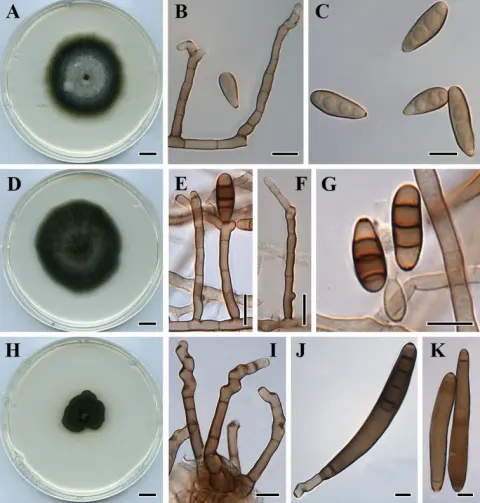
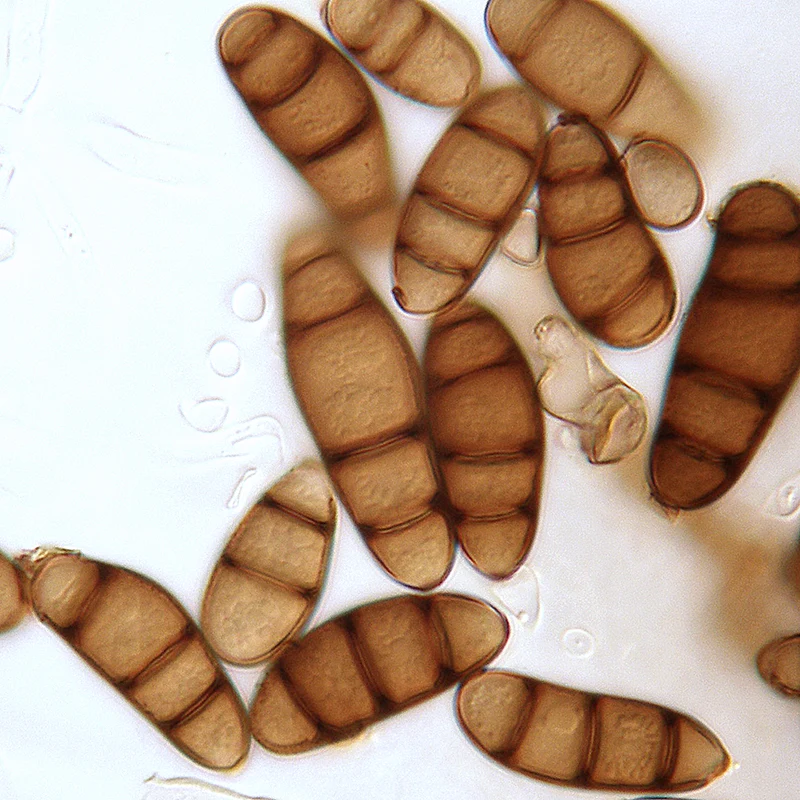
Macroscopic features of C. lunatus include brown to black colour, hairy, velvety or woolly texture, and loosely arranged and rapidly growing colonies on potato dextrose agar medium. Microscopically, the conidiophores are septate. There is great variety in the arrangement of the conidiophores, as they can be isolated or in groups, straight or bent, show simple or geniculate growth pattern, and vary in colour ranging from pale to dark brown. Conidiophore length can reach 650 μm and are often 5–9 μm wide, with swollen bases ranging from 10–15 μm in diameter. Conidia develop at the tips and sides of the spores and have a smooth texture. C. lunatus is differentiated from other Cochliobolus species by its three septa and four cells, with the first and last cell usually of a paler shade of brown than those in the middle. Conidia range from 9–15 μm in diameter and have a curved appearance.
Habitat dan peran ekologis
Cochliobolus lunatus memiliki distribusi yang luas, meskipun terutama terjadi di daerah tropis dan subtropis. Infection is disebabkan oleh udara konidia dan askospora, namun, sklerotioid C. lunatus juga dapat bertahan hidup di tanah. Suhu optimal untuk pertumbuhan in vitro dan infeksi berkisar dari 24-30 C sementara kematian akibat paparan pada 59 C selama 1 menit, atau 55 C selama 5 menit. Successful plant infeksi host membutuhkan permukaan host menjadi basah untuk 13 hours. The majority of clinical cases have been reported in India, the United States, Brazil, Japan and Australia.
- Habitat atau konteks temuan
- Informasi belum tersedia pada sumber rilis ini.
- Substrat
- Informasi belum tersedia pada sumber rilis ini.
- Peran atau konteks
- Belum dikategorikan pada rilis ini.
Reproduksi
Macroscopic features of C. lunatus include brown to black colour, hairy, velvety or woolly texture, and loosely arranged and rapidly growing colonies on potato dextrose agar medium. Microscopically, the conidiophores are septate. There is great variety in the arrangement of the conidiophores, as they can be isolated or in groups, straight or bent, show simple or geniculate growth pattern, and vary in colour ranging from pale to dark brown. Conidiophore length can reach 650 μm and are often 5–9 μm wide, with swollen bases ranging from 10–15 μm in diameter. Conidia develop at the tips and sides of the spores and have a smooth texture. C. lunatus is differentiated from other Cochliobolus species by its three septa and four cells, with the first and last cell usually of a paler shade of brown than those in the middle.
Catatan identitas dan cakupan
- Nama diterima mengikuti Catalogue of Life Base2026-09-11; uraian mempertahankan konsep dan nama sumber aslinya.
- Original geographic, specimen and life-cycle scope retained; source import awaits individual editorial review.
- Impor dan terjemahan otomatis belum diperiksa editorial per profil. Struktur reproduktif yang disebutkan tidak membuktikan seluruh siklus hidup diketahui.
- Pengukuran pada uraian mengikuti spesimen, kultur, dan metode sumber; angka tidak diperluas ke semua populasi.
Catatan distribusi dalam narasi mengikuti sumbernya. Dokumentasi spesimen atau foto mengikuti catatan sumber. Bukti wilayah Indonesia dan penilaian konservasi tidak disimpulkan dari gambar.
Melihat dengan konteks
Mikrograf Curvularia lunata yang dicatat sumber sebagai Cochliobolus lunatus, sinonim dalam profil ini. Foto: J Scott / Medmyco.
- Jenis
- Mikrograf
- Kredit
- J Scott (foto pribadi); Medmyco at English Wikipedia
- Lisensi
- CC0 1.0
- Sumber media
- Buka entri sumber
Sumber profil
- [1] Cochliobolus lunatus — Wikipedia (en)
- [2] Catalogue of Life Base2026-09-11 — Curvularia lunata
- [3] Dokumentasi visual — Curvularia lunata
Rujukan halaman ini
Fungi. Curvularia lunata. Rilis data fungi-2026-10-12-expansion-2. https://fungi-atlas.mgadib.chatgpt.site/jamur/curvularia-lunata/.
Status: impor sumber; pemeriksaan editorial per profil belum selesai. Untuk klaim biologis, gunakan rujukan pada bagian terkait dan periksa konteks sumber aslinya.