Ciri dan struktur
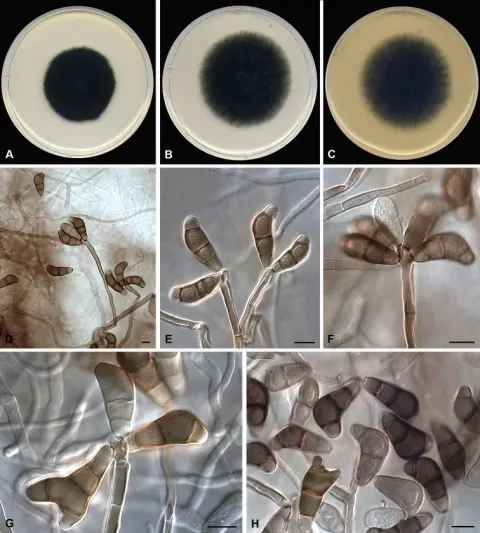
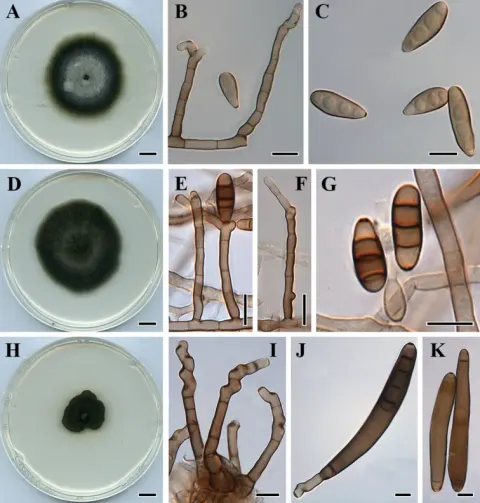
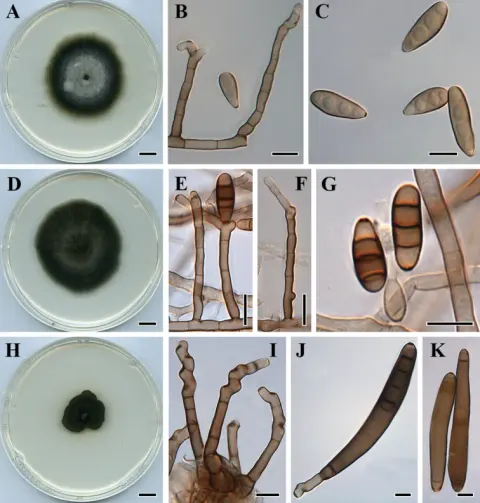
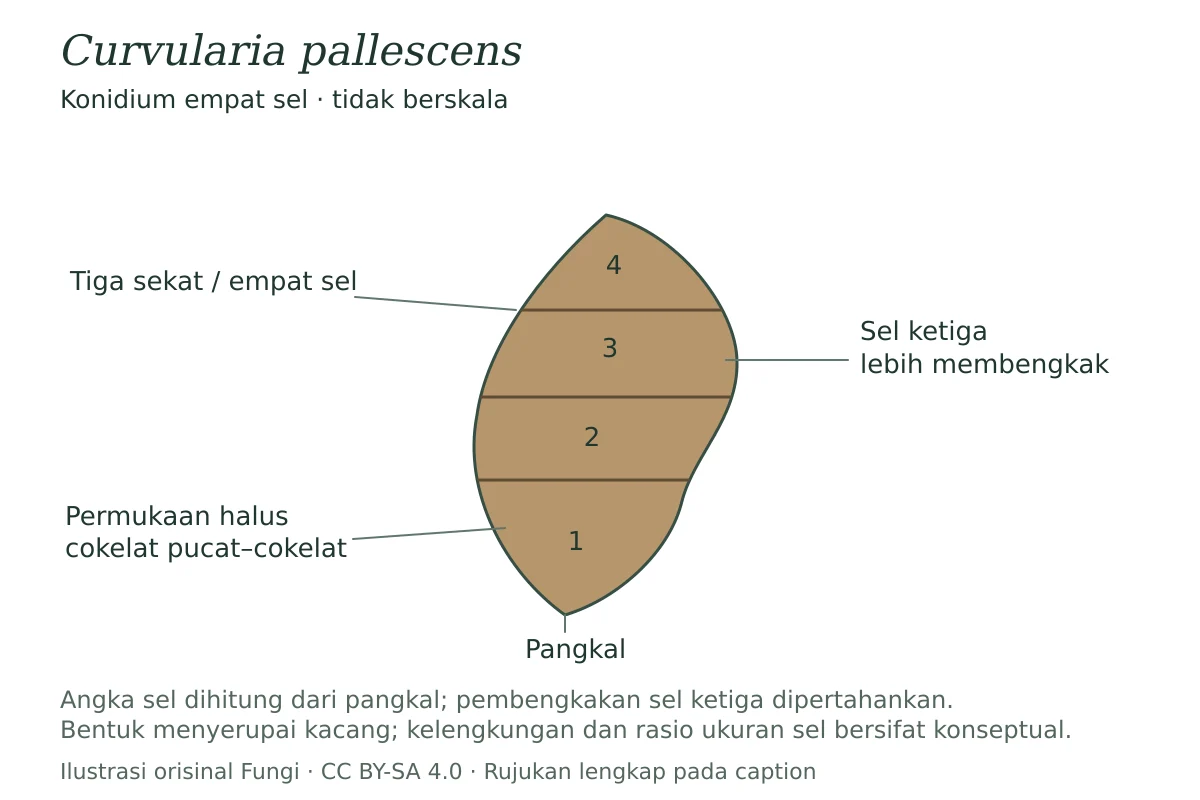
The colonies of C. pallescens differ in morphology depending on the growth medium used. On Czapek Yeast Extract Agar (CYA), colonies of C. pallescens are 50-65mm in diameter. On Malt Extract Agar (MEA), the colonies are fuzzy in texture, and pale grey to grey in colour. On the reverse side, they appear brown to dark brown. The colonies rapidly cover the entire Petri dish. On G25N, the colonies of C. pallescens are 3–6 mm in diameter, and appear grey and brown in colour. On Dichloran Chloramphenicol Malt Agar (DCMA), the colonies are 50–65 mm in diameter, and pale brownish-grey in colour. Lastly, colonies of C. pallescens grown on Phenylethyl Alcohol Agar (PEA) appear woolly at the centre. The conidiophores of C. pallescens are rarely branched, and are brown in colour. They can appear slightly bent at the apices, but otherwise they are predominately straight. The dimensions of the conidiophore vary, especially concerning its length. They can be up to 6μm wide. The conidia of C. pallescens are rugby or gridiron football- to bean-shaped, and are less curved than those of related species. They appear smooth in texture, and pale-brown to brown in colour. The three septa within each conidium give rise to four cells. The third cell from the base appears swollen in comparison to the surrounding cells. The dimensions of the conidia are 18-25 x 9-12 μm. Cochliobolus pallescens is the teleomorphic form of Curvularia pallescens. It produces spherical ascomata that are black in colour. On the surface of the ascomata, there are protruding colourless necks from which the ascospores emerge.
Habitat dan peran ekologis
Curvularia pallescens is commonly found in tropical regions, such as India. They usually grow on unharvested crops (i.e., crops that have not been dried or stored), such as grass, rice, wheat, maize, and sorghum. Optimal growth occurs at 25-30 °C, and at an aw of 0.976. The minimum aw for growth is 0.89. Germination occurs at 0.855 aw but does not result in the establishment of colonies. Sulphur and phosphorus are macronutrients involved in the production of DNA, RNA and proteins in fungal species. It has been reported that C. pallescens is able to grow and sporulate in the absence of both. Magnesium sulphide and tripotassium phosphate support the growth and sporulation of C. pallescens whereas, ammonium sulphate and ammonium phosphate do not.
- Habitat atau konteks temuan
- Informasi belum tersedia pada sumber rilis ini.
- Substrat
- Informasi belum tersedia pada sumber rilis ini.
- Peran atau konteks
- Belum dikategorikan pada rilis ini.
Reproduksi
The colonies of C. pallescens differ in morphology depending on the growth medium used. On Czapek Yeast Extract Agar (CYA), colonies of C. pallescens are 50-65mm in diameter. On Malt Extract Agar (MEA), the colonies are fuzzy in texture, and pale grey to grey in colour. On the reverse side, they appear brown to dark brown. The colonies rapidly cover the entire Petri dish. On G25N, the colonies of C. pallescens are 3–6 mm in diameter, and appear grey and brown in colour. On Dichloran Chloramphenicol Malt Agar (DCMA), the colonies are 50–65 mm in diameter, and pale brownish-grey in colour. Lastly, colonies of C. pallescens grown on Phenylethyl Alcohol Agar (PEA) appear woolly at the centre. The conidiophores of C. pallescens are rarely branched, and are brown in colour.
Catatan identitas dan cakupan
- Nama diterima mengikuti Catalogue of Life Base2026-09-11; uraian mempertahankan konsep dan nama sumber aslinya.
- Original geographic, specimen and life-cycle scope retained; source import awaits individual editorial review.
- Impor dan terjemahan otomatis belum diperiksa editorial per profil. Struktur reproduktif yang disebutkan tidak membuktikan seluruh siklus hidup diketahui.
- Pengukuran pada uraian mengikuti spesimen, kultur, dan metode sumber; angka tidak diperluas ke semua populasi.
Catatan distribusi dalam narasi mengikuti sumbernya. Dokumentasi spesimen atau foto mengikuti catatan sumber. Bukti wilayah Indonesia dan penilaian konservasi tidak disimpulkan dari gambar.
Melihat dengan konteks
Skema konidium Curvularia pallescens berbentuk menyerupai kacang, berpermukaan halus, dan berwarna cokelat pucat–cokelat. Tiga sekat membentuk empat sel; sel ketiga dari pangkal lebih membengkak. Tidak berskala; tingkat kelengkungan serta proporsi antarsel disederhanakan, bukan rekonstruksi satu spesimen.
- Jenis
- Ilustrasi skematis
- Kredit
- Ilustrasi orisinal Fungi berdasarkan uraian: Wikipedia contributors — Curvularia pallescens — Wikipedia (en). Sumber: CC BY-SA4.0. Perubahan: skema anatomi konseptual, label dan caption Indonesia; bukan penyalinan gambar sumber.
- Lisensi
- CC BY-SA 4.0
- Sumber media
- Buka entri sumber
Sumber profil
- [1] Curvularia pallescens — Wikipedia (en)
- [2] Catalogue of Life Base2026-09-11 — Curvularia pallescens
Rujukan halaman ini
Fungi. Curvularia pallescens. Rilis data fungi-2026-10-12-expansion-2. https://fungi-atlas.mgadib.chatgpt.site/jamur/curvularia-pallescens/.
Status: impor sumber; pemeriksaan editorial per profil belum selesai. Untuk klaim biologis, gunakan rujukan pada bagian terkait dan periksa konteks sumber aslinya.