01 / Morfologi

Ciri dan struktur

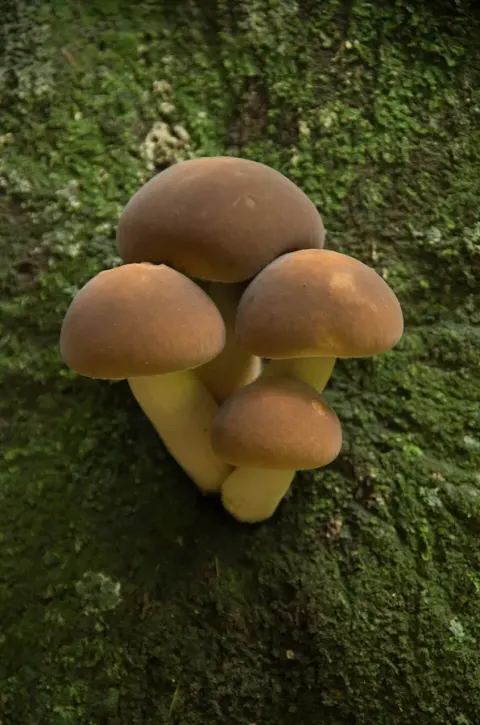
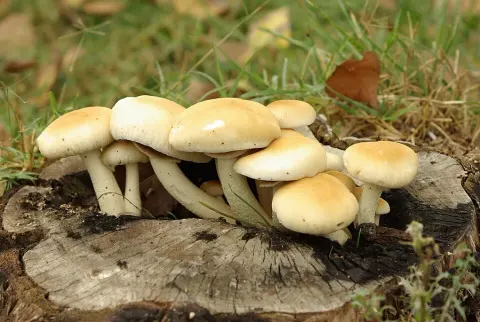
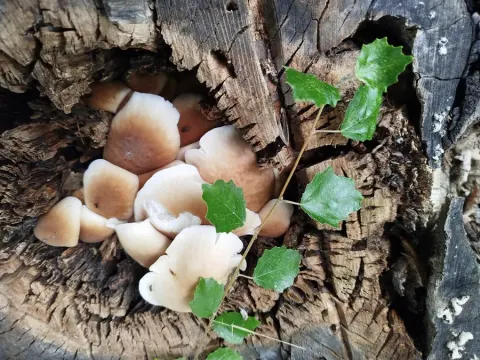
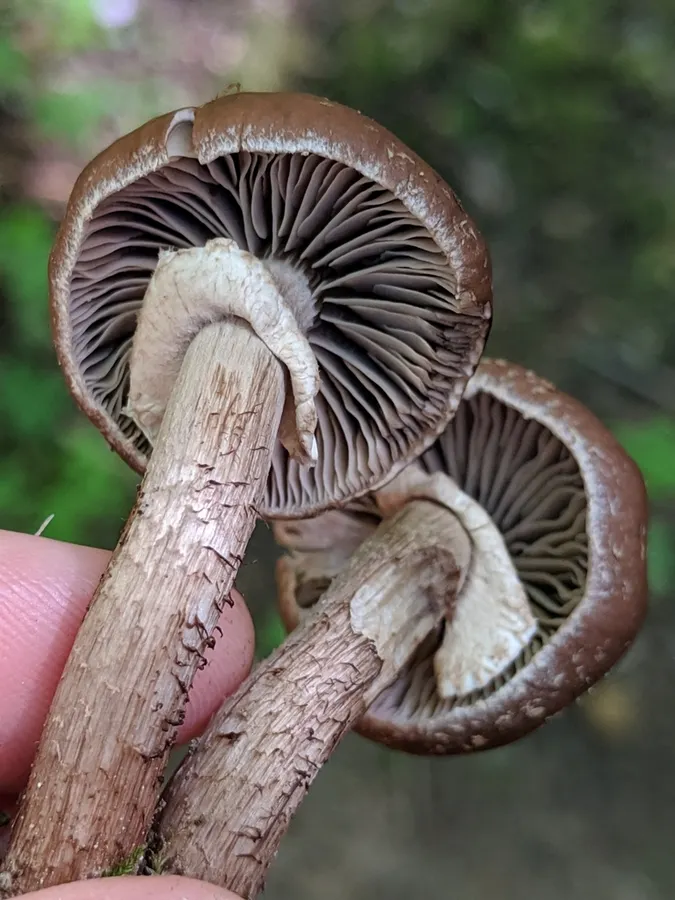
The color of the cap can range from light to dark brown. When wet, it is viscid (i.e. slimy). The cap can range from 1.5 to 5 cm in diameter; younger caps are very round. The edge of the cap is often frilled or wrinkly, and more lightly colored. Decurrent gills are present underneath the cap. They are whitish at first, but they become brown with maturity. The stipe is whitish, browning with age, 2.5-8 cm long, and 3-10 mm thick. The spore print is brown. The spores measure 10 μm–15 μm × 5 μm–7 μm, and are ellipsoid or subellipsoid, often with a snout-like end, and are brown or yellow-brown. The basidia are 2-sterigmate.

Sebagian uraian ditampilkan dalam bahasa sumber; terjemahannya belum tersedia atau belum lolos pemeriksaan.

Rujukan: [1]

Pengukuran mengikuti objek, spesimen atau kultur, dan metode yang disebutkan sumber. Baca uraian asli untuk konteks lengkap.

02 / Kehidupan

Habitat dan peran ekologis

The species occurs in the Americas, Europe, and parts of Oceania. It can be found with moisture on the ground from August to October in most of North America, and September to December on the West Coast.

Sebagian uraian ditampilkan dalam bahasa sumber; terjemahannya belum tersedia atau belum lolos pemeriksaan.

Rujukan: [1]

Habitat atau konteks temuan
Informasi belum tersedia pada sumber rilis ini.
Substrat
tanah
Peran atau konteks
Belum dikategorikan pada rilis ini.
Temukan hubungan serupa
03 / Siklus hidup

Reproduksi

The color of the cap can range from light to dark brown. When wet, it is viscid (i.e. slimy). The cap can range from 1.5 to 5 cm in diameter; younger caps are very round. The edge of the cap is often frilled or wrinkly, and more lightly colored. Decurrent gills are present underneath the cap. They are whitish at first, but they become brown with maturity. The stipe is whitish, browning with age, 2.5-8 cm long, and 3-10 mm thick. The spore print is brown. The spores measure 10 μm–15 μm × 5 μm–7 μm, and are ellipsoid or subellipsoid, often with a snout-like end, and are brown or yellow-brown.

Sebagian uraian ditampilkan dalam bahasa sumber; terjemahannya belum tersedia atau belum lolos pemeriksaan.

Rujukan: [1]

Sinonim menurut acuan taksonomi rilis: Agaricus denigratus; Agaricus denigratus var. geophilus; Agaricus erebius; Agaricus leveillianus; Agrocybe erebia; Armillaria denigrata; Clitocybe denigrata; Dryophila ombrophila var. erebia; Hylophila erebia; Inocybe annulata; Lepiota denigrata; Mastoleucomyces denigratus; Omphalia denigrata; Pholiota erebia; Pholiota erebia f. gracillima; Togaria erebia
04 / Batas informasi

Catatan identitas dan cakupan

  • Nama diterima mengikuti Catalogue of Life Base2026-09-11; uraian mempertahankan konsep dan nama sumber aslinya.
  • Original geographic, specimen and life-cycle scope retained; source import awaits individual editorial review.
  • Impor dan terjemahan otomatis belum diperiksa editorial per profil. Struktur reproduktif yang disebutkan tidak membuktikan seluruh siklus hidup diketahui.
  • Pengukuran pada uraian mengikuti spesimen, kultur, dan metode sumber; angka tidak diperluas ke semua populasi.

Catatan distribusi dalam narasi mengikuti sumbernya. Dokumentasi spesimen atau foto mengikuti catatan sumber. Bukti wilayah Indonesia dan penilaian konservasi tidak disimpulkan dari gambar.

05 / Dokumentasi

Melihat dengan konteks

Dokumentasi Cyclocybe erebia menurut asosiasi foto pada record takson iNaturalist. Kredit: Sharon Squazzo. Identitas mengikuti sumber; bukan penentuan spesimen independen.

Jenis
Fotografi
Kredit
(c) Sharon Squazzo, some rights reserved (CC BY), uploaded by Sharon Squazzo
Lisensi
CC BY 4.0
Sumber media
Buka entri sumber

Gambar menunjukkan objek menurut identifikasi sumber, bukan verifikasi independen spesimen oleh Fungi. Tidak ada skala baru yang ditambahkan.

06 / Rujukan

Sumber profil

  1. [1] Cyclocybe erebia — Wikipedia (en)Bagian sumber: Frozen revision 1318842770
    Tanggal penghimpunan sumber: 2026-10-12
    Teks sumber: CC BY-SA4.0 · Wikipedia contributors
  2. [2] Catalogue of Life Base2026-09-11 — Cyclocybe erebiaBagian sumber: ColDP NameUsage.tsv ID 6C3TV; accepted species; source 2073
    Tanggal penghimpunan sumber: 2026-10-12
  3. [3] Dokumentasi visual — Cyclocybe erebiaBagian sumber: Individual media record; identification follows the source, not independent determination
    Tanggal penghimpunan sumber: 2026-10-12
    Media sumber: CC BY 4.0 · (c) Sharon Squazzo, some rights reserved (CC BY), uploaded by Sharon Squazzo

Adaptasi teks: CC BY-SA 4.0. Wikipedia contributors — Cyclocybe erebia — Wikipedia (en)

Uraian asli dan riwayat sumber

Riwayat atau halaman sumber

Ringkasan sumber

Cyclocybe erebia, also known as the dark fieldcap, or sometimes Agrocybe erebia, is a species of brown-spored agaric with a wide distribution.

Revisi sumber

Morfologi sumber

The color of the cap can range from light to dark brown. When wet, it is viscid (i.e. slimy). The cap can range from 1.5 to 5 cm in diameter; younger caps are very round. The edge of the cap is often frilled or wrinkly, and more lightly colored. Decurrent gills are present underneath the cap. They are whitish at first, but they become brown with maturity. The stipe is whitish, browning with age, 2.5-8 cm long, and 3-10 mm thick. The spore print is brown. The spores measure 10 μm–15 μm × 5 μm–7 μm, and are ellipsoid or subellipsoid, often with a snout-like end, and are brown or yellow-brown. The basidia are 2-sterigmate.

Revisi sumber

Ekologi sumber

The species occurs in the Americas, Europe, and parts of Oceania. It can be found with moisture on the ground from August to October in most of North America, and September to December on the West Coast.

Revisi sumber

Struktur reproduksi sumber

The color of the cap can range from light to dark brown. When wet, it is viscid (i.e. slimy). The cap can range from 1.5 to 5 cm in diameter; younger caps are very round. The edge of the cap is often frilled or wrinkly, and more lightly colored. Decurrent gills are present underneath the cap. They are whitish at first, but they become brown with maturity. The stipe is whitish, browning with age, 2.5-8 cm long, and 3-10 mm thick. The spore print is brown. The spores measure 10 μm–15 μm × 5 μm–7 μm, and are ellipsoid or subellipsoid, often with a snout-like end, and are brown or yellow-brown.

Revisi sumber

Rujukan halaman ini

Fungi. Cyclocybe erebia. Rilis data fungi-2026-10-12-expansion-2. https://fungi-atlas.mgadib.chatgpt.site/jamur/cyclocybe-erebia/.

Status: impor sumber; pemeriksaan editorial per profil belum selesai. Untuk klaim biologis, gunakan rujukan pada bagian terkait dan periksa konteks sumber aslinya.