01 / Morfologi

Ciri dan struktur

Armillaria tabescens tumbuh dengan cepat di 28–30 C dan lebih lambat di 5 C. If the tanahnya basah, dan buahnya banyak. Ini adalah yang pertama berbuah pada bulan September, dibandingkan dengan Armillaria mellea dan Armillaria gallica. Tubuh berbuah dapat dilihat lebih awal jika musimnya sangat basah. Armillaria tabescens tumbuh buruk di pasir dan menghasilkan rhizomorph yang lebih pendek. Rhizomorphs are struktur seperti benang dalam jamur yang terdiri dari hifa. Hyphae are struktur bercabang yang melepaskan enzim untuk menyerap nutrisi dari inang. Armillaria tabescens adalah spesies heterothal Armillaria. Heterothallic species melakukan anastomosis ketika monokaryon haploid bersentuhan satu sama lain. Anastomosis is koneksi atau pembukaan antara dua hal, dalam hal ini mycelium. Mycelium is bagian vegetatif jamur yang terdiri dari hifa. If the two monokaryons are sexually compatible they form a clamp connection. Hal ini menghasilkan mycelium yang terdiri dari sel karyot. Sel dikaryon mendominasi pada fase vegetatif. Pada basidia, karyogami terjadi sebelum meiosis dan kemudian pembentukan basidiospora. basidiospora kemudian menginfeksi tanaman inang. No rhizomorphs have been found for Armillaria tabescens in nature. Namun, Rishbeth and Kile did menemukan rhizomorphs dikubur di tanah pada inocula. Since the spesies tidak menghasilkan rhizomorphs yang umum terjadi di alam, akar yang terinfeksi harus bersentuhan dengan inang potensial lainnya agar infeksi terjadi. Jadi, transplantasi akar menyediakan jalur yang efektif untuk penyebaran patogen ini. Tsopelas conducted eksperimen menginoksikan pohon badam dengan Armillaria tabescens dan dua lainnya Armillaria species.

Sebagian uraian ditampilkan dalam bahasa sumber; terjemahannya belum tersedia atau belum lolos pemeriksaan.

Rujukan: [1]

Pengukuran mengikuti objek, spesimen atau kultur, dan metode yang disebutkan sumber. Baca uraian asli untuk konteks lengkap.

02 / Kehidupan

Habitat dan peran ekologis

Armillaria species menginfeksi berbagai jenis tanaman kayu. Dalam sebuah survei terhadap 250 plot pohon permanen di Albania, Armillaria tabescens mempengaruhi beberapa spesies pohon termasuk spesies fir, di mana ia menyerang ketika tanaman ditekan. Sebuah studi di Greece reported Armillaria tabescens untuk lebih umum di daerah di mana pohon-pohon tertekan karena kelembaban terbatas. Hasil penelitian oleh Lushaj et al. Small trees dibunuh dengan cepat oleh Armillaria tabescens dan gejala tidak terlihat sampai daun meleleh. Namun, pada pohon-pohon besar gejala muncul lebih awal dan dimulai sebagai mahkota tipis dengan daun kecil. Sebuah mahkota pohon mengacu pada cabang atau daun yang tumbuh dari batangnya. Oleh karena itu, jika mahkota menjadi lebih tipis, maka cabang dan daunnya akan berkurang. Pohon-pohon akhirnya mulai kuning dan menghapuskan daunnya, diikuti dengan cepat membakar dan mati anggota tubuh. Jamur itu putih busuk jadi membusuk lignin di kayu. Pembagian lignin menyebabkan pohon menjadi berongga. Armillaria tabescens ditemukan di daerah yang hangat dan kering, jadi, di Eropa, biasanya di daerah selatan. Hal ini juga telah ditemukan di ketinggian mulai dari permukaan laut hingga 1300 m. Armillaria tabescens tumbuh dengan cepat di 28–30 C dan lebih lambat di 5 C.

Rujukan: [1]

Habitat atau konteks temuan
Informasi belum tersedia pada sumber rilis ini.
Substrat
Informasi belum tersedia pada sumber rilis ini.
Peran atau konteks
Belum dikategorikan pada rilis ini.
Temukan hubungan serupa
03 / Siklus hidup

Reproduksi

Armillaria tabescens adalah spesies heterothal Armillaria. Heterothallic species melakukan anastomosis ketika monokaryon haploid bersentuhan satu sama lain. Anastomosis is koneksi atau pembukaan antara dua hal, dalam hal ini mycelium. Mycelium is bagian vegetatif jamur yang terdiri dari hifa. If the two monokaryons are sexually compatible they form a clamp connection. Hal ini menghasilkan mycelium yang terdiri dari sel karyot. Sel dikaryon mendominasi pada fase vegetatif. Pada basidia, karyogami terjadi sebelum meiosis dan kemudian pembentukan basidiospora. basidiospora kemudian menginfeksi tanaman inang. No rhizomorphs have been found for Armillaria tabescens in nature.

Sebagian uraian ditampilkan dalam bahasa sumber; terjemahannya belum tersedia atau belum lolos pemeriksaan.

Rujukan: [1]

Sinonim menurut acuan taksonomi rilis: Agaricus monadelphus; Agaricus tabescens; Armillaria mellea var. tabescens; Armillaria tabescens; Armillariella tabescens; Clitocybe monadelpha; Clitocybe tabescens; Collybia tabescens; Fungus tabescens
04 / Batas informasi

Catatan identitas dan cakupan

  • Nama diterima mengikuti Catalogue of Life Base2026-09-11; uraian mempertahankan konsep dan nama sumber aslinya.
  • Original geographic, specimen and life-cycle scope retained; source import awaits individual editorial review.
  • Impor dan terjemahan otomatis belum diperiksa editorial per profil. Struktur reproduktif yang disebutkan tidak membuktikan seluruh siklus hidup diketahui.
  • Pengukuran pada uraian mengikuti spesimen, kultur, dan metode sumber; angka tidak diperluas ke semua populasi.

Catatan distribusi dalam narasi mengikuti sumbernya. Dokumentasi spesimen atau foto mengikuti catatan sumber. Bukti wilayah Indonesia dan penilaian konservasi tidak disimpulkan dari gambar.

05 / Dokumentasi

Melihat dengan konteks

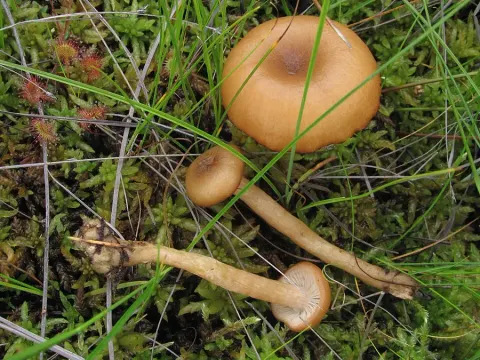
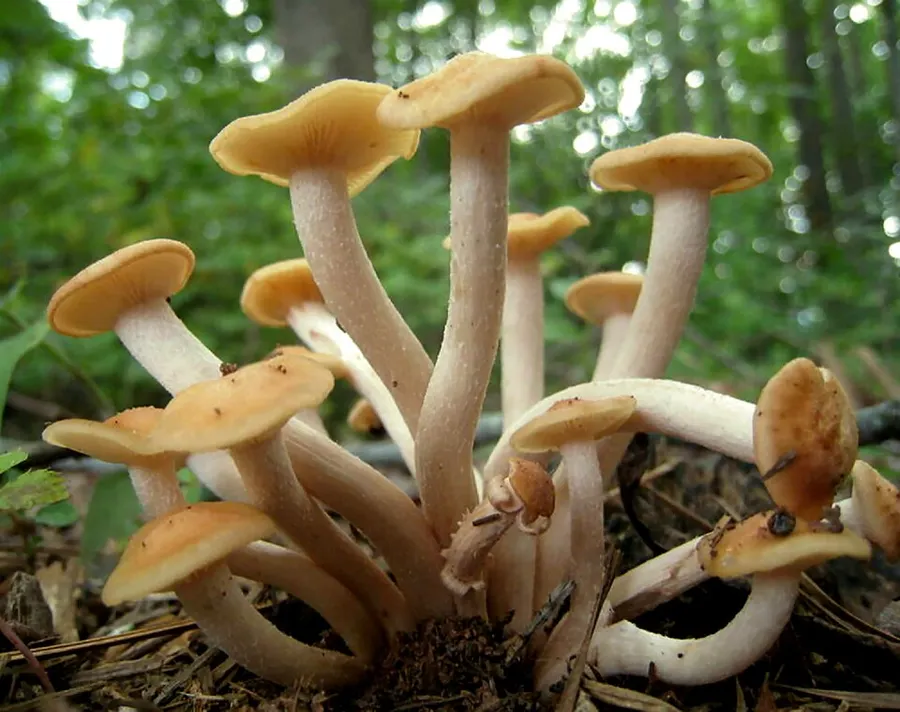
Dokumentasi Desarmillaria tabescens dari Wikimedia Commons. Armillaria tabescens Identifikasi mengikuti record berkas sumber.

Jenis
Fotografi
Kredit
Armillaria_tabescens.003..jpg : 00Amanita00 derivative work: Ak ccm ( talk )
Sumber media
Buka entri sumber

Gambar menunjukkan objek menurut identifikasi sumber, bukan verifikasi independen spesimen oleh Fungi. Tidak ada skala baru yang ditambahkan.

06 / Rujukan

Sumber profil

  1. [1] Desarmillaria tabescens — Wikipedia (en)Bagian sumber: Frozen revision 1365528185
    Tanggal penghimpunan sumber: 2026-10-12
    Teks sumber: CC BY-SA4.0 · Wikipedia contributors
  2. [2] Catalogue of Life Base2026-09-11 — Desarmillaria tabescensBagian sumber: ColDP NameUsage.tsv ID 34YZM; accepted species; source 2073
    Tanggal penghimpunan sumber: 2026-10-12
  3. [3] Dokumentasi visual — Desarmillaria tabescensBagian sumber: Individual media record; identification follows the source, not independent determination
    Tanggal penghimpunan sumber: 2026-10-12
    Media sumber: CC BY-SA 3.0 · Armillaria_tabescens.003..jpg : 00Amanita00 derivative work: Ak ccm ( talk )

Adaptasi teks: CC BY-SA 4.0. Wikipedia contributors — Desarmillaria tabescens — Wikipedia (en)

Uraian asli dan riwayat sumber

Riwayat atau halaman sumber

Ringkasan sumber

Armillaria tabescens (also known as ringless honey mushroom) is a species of fungus in the family Physalacriaceae. It is a plant pathogen. The mycelium of the fungus is bioluminescent.

Revisi sumber

Morfologi sumber

Armillaria tabescens grows quickly at 28–30 C and more slowly at 5 C. If the soil is moist, fruiting bodies are abundant. It is the first to fruit in September, compared to Armillaria mellea and Armillaria gallica. The fruiting bodies can be seen even earlier if the season has been exceptionally wet. Armillaria tabescens grows poorly on sand and produces shorter rhizomorphs. Rhizomorphs are threadlike structures in fungi that are made up of hyphae. Hyphae are branching structures that release enzymes to absorb nutrients from the host. Armillaria tabescens is a heterothallic species of Armillaria. Heterothallic species perform anastomosis when haploid monokaryon come in contact with one another. Anastomosis is the connection or opening between two things, in this case the mycelium. Mycelium is the vegetative part of the fungus that consists of hyphae. If the two monokaryons are sexually compatible they form a clamp connection. This results in a mycelium consisting of dikaryotic cells. The dikaryon cells predominate in the vegetative phase. In the basidia, karyogamy occurs before meiosis and then the formation of basidiospores. The basidiospores then infect the host plant. No rhizomorphs have been found for Armillaria tabescens in nature. However, Rishbeth and Kile did find rhizomorphs buried in the soil on inocula. Since the species does not produce rhizomorphs commonly in the nature, infected roots must come into contact with other potential hosts for infection to occur. So, root grafting provides an effective pathway for the spread of this pathogen. Tsopelas conducted an experiment of inoculating almond trees with Armillaria tabescens and two other Armillaria species.

Revisi sumber

Ekologi sumber

Armillaria species infect a wide variety of woody plants. In a survey of 250 permanent plots of trees in Albania, Armillaria tabescens affected multiple species of trees including fir species, where it invaded when the plant was stressed. A study in Greece reported Armillaria tabescens to be more prevalent in areas where the trees were stressed due to limited moisture. The results of the study by Lushaj et al. Small trees are killed rapidly by Armillaria tabescens and the symptoms aren't noticeable until the leaves wilt. However, on larger trees symptoms occur earlier and start as a thin crown with small leaves. A crown of a tree refers to any branches or foliage that are growing out from the trunk. Therefore, thinning of the crown would mean reduced branches and leaves. The trees eventually start yellowing and defoliating followed by fast wilting and dying of limbs. The fungus is a white rot so it breaks down lignin in the wood. The breaking down of the lignin leads to the trees becoming hollow. Armillaria tabescens is found in warm and dry regions, so, in Europe, it tends to be in southern areas. It has also been found in altitudes ranging from sea level to 1300 m. Armillaria tabescens grows quickly at 28–30 C and more slowly at 5 C.

Revisi sumber

Struktur reproduksi sumber

Armillaria tabescens is a heterothallic species of Armillaria. Heterothallic species perform anastomosis when haploid monokaryon come in contact with one another. Anastomosis is the connection or opening between two things, in this case the mycelium. Mycelium is the vegetative part of the fungus that consists of hyphae. If the two monokaryons are sexually compatible they form a clamp connection. This results in a mycelium consisting of dikaryotic cells. The dikaryon cells predominate in the vegetative phase. In the basidia, karyogamy occurs before meiosis and then the formation of basidiospores. The basidiospores then infect the host plant. No rhizomorphs have been found for Armillaria tabescens in nature.

Revisi sumber

Rujukan halaman ini

Fungi. Desarmillaria tabescens. Rilis data fungi-2026-10-12-expansion-2. https://fungi-atlas.mgadib.chatgpt.site/jamur/desarmillaria-tabescens/.

Status: impor sumber; pemeriksaan editorial per profil belum selesai. Untuk klaim biologis, gunakan rujukan pada bagian terkait dan periksa konteks sumber aslinya.