Ciri dan struktur
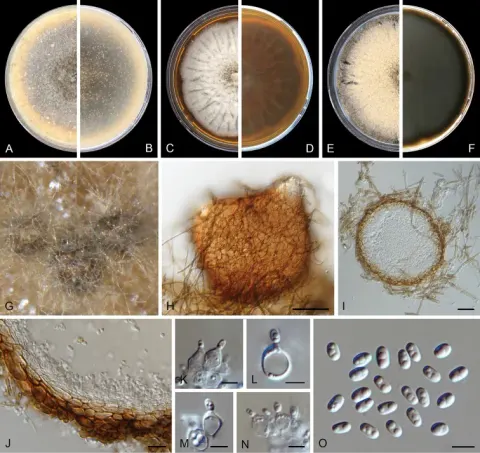
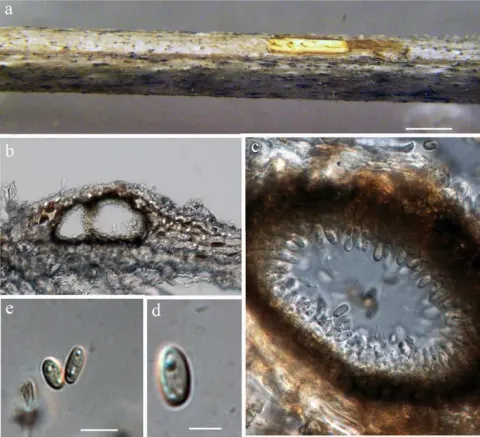
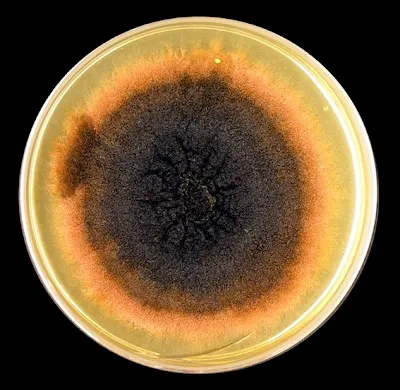
COLONY MORPHOLOGY OA: Colonies 55-80 mm diam. after 7 days. Mycelium; cottony to stringy, dark grey or dark olivaceous at centre, aerial mycelium sparse at edge with numerous pycnidia forming, often with orange conidial ooze. Reverse; dark grey. ME: Colonies 55-90 mm. Mycelium; olivaceous, very sparse or absent, surface covered with numerous pycnidia with some salmon-coloured conidial ooze starting to appear. Reverse; agar colourless or slightly olivaceous at centre, pycnidia show through as dark spots or as orange spots if oozing conidia. CHLAMYDOSPORES: Dictyochlamydospores form in chains with an Alternaria -like appearance. They may be numerous or sparse and may take several weeks to appear. CONIDIA: Uniform in shape, oblong with rounded ends. (3-)4.5-7.5(-9) x 2-2.5(-3) µm. PYCNIDIA: Solitary, often with several ostioles, or in, groups of 2-3 with confluent walls, often with ostiolar beaks c. 15 µm long.
Habitat dan peran ekologis
OCCURRENCE: Plurivorous. No inoculation tests were carried out but Boerema et al. (1977) described it as a secondary invader.
- Habitat atau konteks temuan
- Informasi belum tersedia pada sumber rilis ini.
- Substrat
- Informasi belum tersedia pada sumber rilis ini.
- Peran atau konteks
- Belum dikategorikan pada rilis ini.
Reproduksi
COLONY MORPHOLOGY OA: Colonies 55-80 mm diam. after 7 days. Mycelium; cottony to stringy, dark grey or dark olivaceous at centre, aerial mycelium sparse at edge with numerous pycnidia forming, often with orange conidial ooze. Reverse; dark grey. ME: Colonies 55-90 mm. Mycelium; olivaceous, very sparse or absent, surface covered with numerous pycnidia with some salmon-coloured conidial ooze starting to appear. Reverse; agar colourless or slightly olivaceous at centre, pycnidia show through as dark spots or as orange spots if oozing conidia. CHLAMYDOSPORES: Dictyochlamydospores form in chains with an Alternaria -like appearance. They may be numerous or sparse and may take several weeks to appear.
Catatan identitas dan cakupan
- Nama diterima mengikuti Catalogue of Life Base2026-09-11; uraian mempertahankan konsep dan nama sumber aslinya.
- Historical description as cited by BiotaNZ. Preserve explicit New Zealand/locality, host and specimen qualifiers. Distribution is the cited source scope, not a current global range.
- Impor dan terjemahan otomatis belum diperiksa editorial per profil. Struktur reproduktif yang disebutkan tidak membuktikan seluruh siklus hidup diketahui.
- Pengukuran pada uraian mengikuti spesimen, kultur, dan metode sumber; angka tidak diperluas ke semua populasi.
Catatan distribusi dalam narasi mengikuti sumbernya. Dokumentasi spesimen atau foto mengikuti catatan sumber. Bukti wilayah Indonesia dan penilaian konservasi tidak disimpulkan dari gambar.
Melihat dengan konteks
Dokumentasi Phoma glomerata dari Wikimedia Commons. Phoma glomerata after 14 days of incubation Identifikasi mengikuti record berkas sumber.
- Jenis
- Fotografi
- Kredit
- Yuri
- Lisensi
- CC BY 4.0
- Sumber media
- Buka entri sumber
Sumber profil
- [1] Johnston, P.R. 1981: Phoma on New Zealand grasses and pasture legumes. New Zealand Journal of Botany 19(2): 173-186. — Phoma glomerata
- [2] Catalogue of Life Base2026-09-11 — Didymella glomerata
- [3] Dokumentasi visual — Phoma glomerata
Rujukan halaman ini
Fungi. Didymella glomerata. Rilis data fungi-2026-10-12-expansion-2. https://fungi-atlas.mgadib.chatgpt.site/jamur/didymella-glomerata/.
Status: impor sumber; pemeriksaan editorial per profil belum selesai. Untuk klaim biologis, gunakan rujukan pada bagian terkait dan periksa konteks sumber aslinya.