Ciri dan struktur
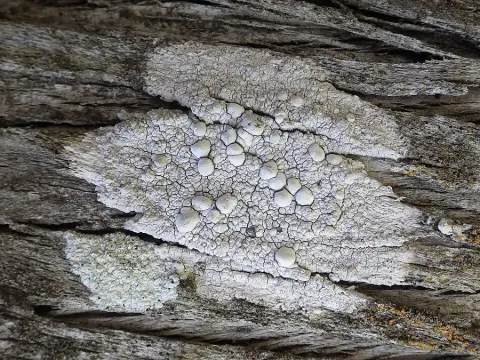
The lichen has creamy-brown to brown, crustose thallus (0.1–1.5 mm thick) with a somewhat roughened surface texture, and a chalk-like medulla. When soralia are present – typically when ascomata are absent – they are (point-like). If ascomata are present, they have a circular putline and a diameter of 0.5–2.0 mm, with a surrounded by a . The ascospores are 27–33 by 4–5 μm. The expected results of chemical spot tests are C+ (red) on the thallus surface, C− on the medulla, and C+ (red) on the apothecial disc. Dirina badia contains erythrin, lecanoric acid, and a couple of other unidentified substances as lichen products.
Habitat dan peran ekologis
The range of Dirina badia is restricted to northern Peru, where it is common on the small desert mountains. It is typically saxicolous, growing on acidic rock, but it has also been recorded growing on the bark of shrubs and small trees.
- Habitat atau konteks temuan
- Informasi belum tersedia pada sumber rilis ini.
- Substrat
- Informasi belum tersedia pada sumber rilis ini.
- Peran atau konteks
- Pembentuk liken
Reproduksi
The lichen has creamy-brown to brown, crustose thallus (0.1–1.5 mm thick) with a somewhat roughened surface texture, and a chalk-like medulla. When soralia are present – typically when ascomata are absent – they are (point-like). If ascomata are present, they have a circular putline and a diameter of 0.5–2.0 mm, with a surrounded by a . The ascospores are 27–33 by 4–5 μm. The expected results of chemical spot tests are C+ (red) on the thallus surface, C− on the medulla, and C+ (red) on the apothecial disc. Dirina badia contains erythrin, lecanoric acid, and a couple of other unidentified substances as lichen products.
Catatan identitas dan cakupan
- Nama diterima mengikuti Catalogue of Life Base2026-09-11; uraian mempertahankan konsep dan nama sumber aslinya.
- Original geographic, specimen and life-cycle scope retained; source import awaits individual editorial review.
- Impor dan terjemahan otomatis belum diperiksa editorial per profil. Struktur reproduktif yang disebutkan tidak membuktikan seluruh siklus hidup diketahui.
- Pengukuran pada uraian mengikuti spesimen, kultur, dan metode sumber; angka tidak diperluas ke semua populasi.
Catatan distribusi dalam narasi mengikuti sumbernya. Dokumentasi spesimen atau foto mengikuti catatan sumber. Bukti wilayah Indonesia dan penilaian konservasi tidak disimpulkan dari gambar.
Melihat dengan konteks
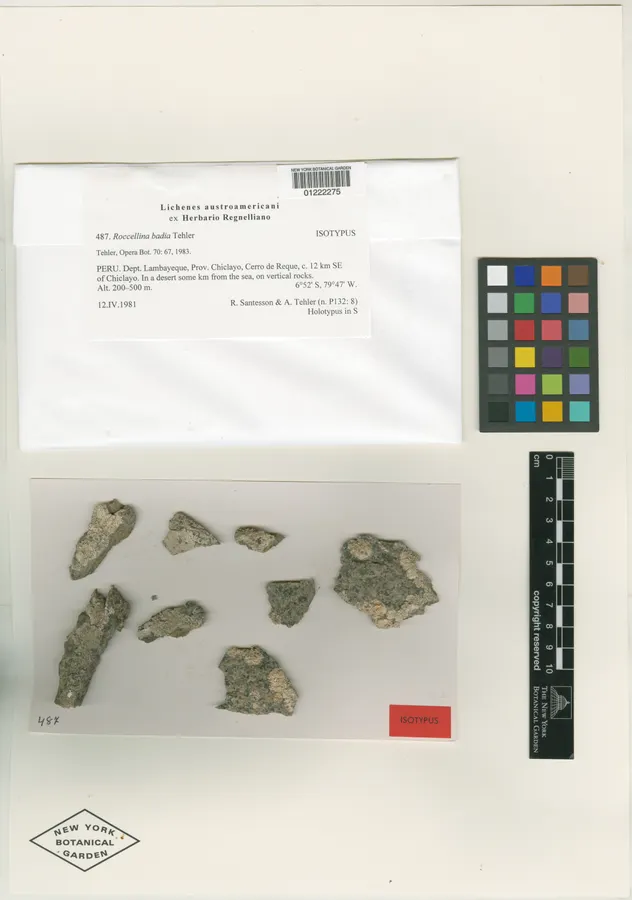
Voucher herbarium Roccellina badia (01222275), The New York Botanical Garden. Identifikasi mengikuti record spesimen sumber. Foto bahan, kemasan, atau label herbarium sebagaimana tersedia pada record institusi; bukan foto lapangan atau penentuan spesimen independen.
- Jenis
- Voucher herbarium
- Kredit
- The New York Botanical Garden
- Lisensi
- CC BY 4.0
- Sumber media
- Buka entri sumber
Sumber profil
- [1] Dirina badia — Wikipedia (en)
- [2] Catalogue of Life Base2026-09-11 — Dirina badia
- [3] Dokumentasi visual — Roccellina badia
Rujukan halaman ini
Fungi. Dirina badia. Rilis data fungi-2026-10-12-expansion-2. https://fungi-atlas.mgadib.chatgpt.site/jamur/dirina-badia/.
Status: impor sumber; pemeriksaan editorial per profil belum selesai. Untuk klaim biologis, gunakan rujukan pada bagian terkait dan periksa konteks sumber aslinya.