01 / Morfologi

Ciri dan struktur

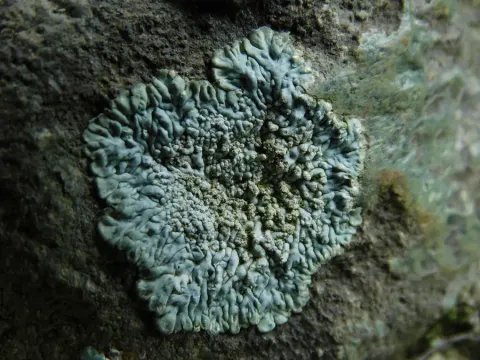
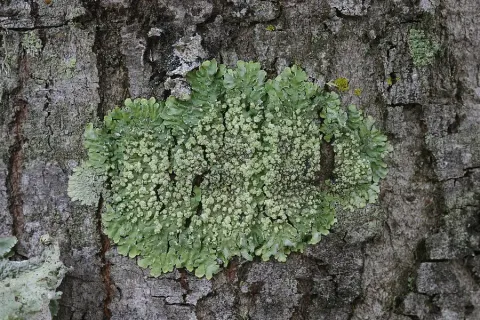
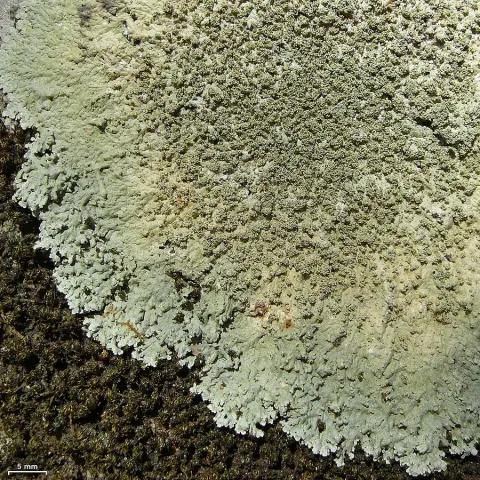
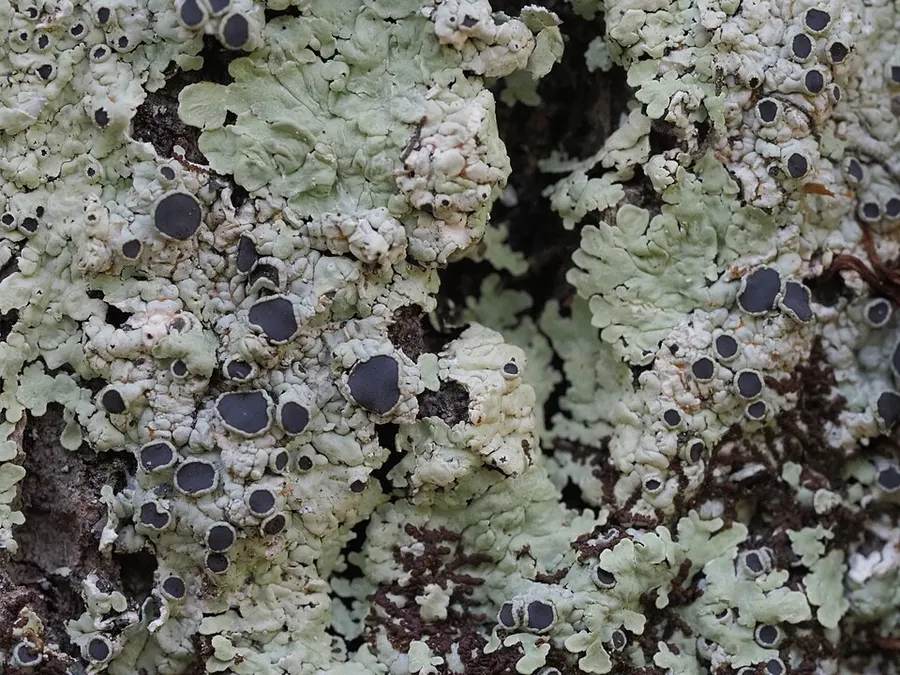
Dirinaria confluens exhibits a foliose thallus that ranges from loosely appressed to firmly agglutinated. The lobes are pinnately or subpinnately lobate, radiating, and sometimes confluent. They are typically flat or convex but may be concave towards the tips. The upper surface varies in color from gray, lead-gray, bluish-gray, yellowish gray, to almost white, often with a punctiform or powdery white pruina. Pseudocyphellae are often distinct, marginal, and laminal, while the medulla is white, sometimes with an orange hue towards the tips. The lower surface is black in the center and paler towards the tips, lacking rhizines. Apothecia are common, laminal on the thallus, with jet-black discs. Ascospores are brown, 1-septate, narrowly ellipsoid, measuring 15-19 x 6-7 μm. Pycnidia are immersed in warts, producing bacilliform conidia.

Sebagian uraian ditampilkan dalam bahasa sumber; terjemahannya belum tersedia atau belum lolos pemeriksaan.

Rujukan: [1]

Pengukuran mengikuti objek, spesimen atau kultur, dan metode yang disebutkan sumber. Baca uraian asli untuk konteks lengkap.

02 / Kehidupan

Habitat dan peran ekologis

Dirinaria confluens inhabits various substrates, including bark, wood, and rocks, spanning from sea level to the boundaries of montane rain forests. The species is distributed across all tropical regions of both hemispheres, with occasional collections noted from subtropical areas of Japan. Dirinaria confluens is predominantly found in thorn forests and areas transitioning from desert environments in Baja California, Baja California Sur, Sinaloa, and Sonora.

Sebagian uraian ditampilkan dalam bahasa sumber; terjemahannya belum tersedia atau belum lolos pemeriksaan.

Rujukan: [1]

Habitat atau konteks temuan
hutan
Substrat
Informasi belum tersedia pada sumber rilis ini.
Peran atau konteks
Pembentuk liken
Temukan hubungan serupa
03 / Siklus hidup

Reproduksi

Dirinaria confluens exhibits a foliose thallus that ranges from loosely appressed to firmly agglutinated. The lobes are pinnately or subpinnately lobate, radiating, and sometimes confluent. They are typically flat or convex but may be concave towards the tips. The upper surface varies in color from gray, lead-gray, bluish-gray, yellowish gray, to almost white, often with a punctiform or powdery white pruina. Pseudocyphellae are often distinct, marginal, and laminal, while the medulla is white, sometimes with an orange hue towards the tips. The lower surface is black in the center and paler towards the tips, lacking rhizines. Apothecia are common, laminal on the thallus, with jet-black discs.

Sebagian uraian ditampilkan dalam bahasa sumber; terjemahannya belum tersedia atau belum lolos pemeriksaan.

Rujukan: [1]

Sinonim menurut acuan taksonomi rilis: Dimelaena confluens; Parmelia confluens; Physcia confluens
04 / Batas informasi

Catatan identitas dan cakupan

  • Nama diterima mengikuti Catalogue of Life Base2026-09-11; uraian mempertahankan konsep dan nama sumber aslinya.
  • Original geographic, specimen and life-cycle scope retained; source import awaits individual editorial review.
  • Impor dan terjemahan otomatis belum diperiksa editorial per profil. Struktur reproduktif yang disebutkan tidak membuktikan seluruh siklus hidup diketahui.
  • Pengukuran pada uraian mengikuti spesimen, kultur, dan metode sumber; angka tidak diperluas ke semua populasi.

Catatan distribusi dalam narasi mengikuti sumbernya. Dokumentasi spesimen atau foto mengikuti catatan sumber. Bukti wilayah Indonesia dan penilaian konservasi tidak disimpulkan dari gambar.

05 / Dokumentasi

Melihat dengan konteks

Dokumentasi Dirinaria confluens dari Wikimedia Commons. For more information about this, see the observation page at Mushroom Observer. Identifikasi mengikuti record berkas sumber.

Jenis
Fotografi
Kredit
This image was created by user Vitaly Charny (vcharny) at Mushroom Observer , a source for mycological images. You can contact this user here .
Sumber media
Buka entri sumber

Gambar menunjukkan objek menurut identifikasi sumber, bukan verifikasi independen spesimen oleh Fungi. Tidak ada skala baru yang ditambahkan.

06 / Rujukan

Sumber profil

  1. [1] Dirinaria confluens — Wikipedia (en)Bagian sumber: Frozen revision 1354691381
    Tanggal penghimpunan sumber: 2026-10-12
    Teks sumber: CC BY-SA4.0 · Wikipedia contributors
  2. [2] Catalogue of Life Base2026-09-11 — Dirinaria confluensBagian sumber: ColDP NameUsage.tsv ID 6CYP2; accepted species; source 2073
    Tanggal penghimpunan sumber: 2026-10-12
  3. [3] Dokumentasi visual — Dirinaria confluensBagian sumber: Individual media record; identification follows the source, not independent determination
    Tanggal penghimpunan sumber: 2026-10-12
    Media sumber: CC BY-SA 3.0 · This image was created by user Vitaly Charny (vcharny) at Mushroom Observer , a source for mycological images. You can contact this user here .

Adaptasi teks: CC BY-SA 4.0. Wikipedia contributors — Dirinaria confluens — Wikipedia (en)

Uraian asli dan riwayat sumber

Riwayat atau halaman sumber

Ringkasan sumber

Dirinaria confluens is a species of foliose lichen belonging to the genus Dirinaria within the family Caliciaceae. It was originally described by D.D.Awasthi in 1975.

Revisi sumber

Morfologi sumber

Dirinaria confluens exhibits a foliose thallus that ranges from loosely appressed to firmly agglutinated. The lobes are pinnately or subpinnately lobate, radiating, and sometimes confluent. They are typically flat or convex but may be concave towards the tips. The upper surface varies in color from gray, lead-gray, bluish-gray, yellowish gray, to almost white, often with a punctiform or powdery white pruina. Pseudocyphellae are often distinct, marginal, and laminal, while the medulla is white, sometimes with an orange hue towards the tips. The lower surface is black in the center and paler towards the tips, lacking rhizines. Apothecia are common, laminal on the thallus, with jet-black discs. Ascospores are brown, 1-septate, narrowly ellipsoid, measuring 15-19 x 6-7 μm. Pycnidia are immersed in warts, producing bacilliform conidia.

Revisi sumber

Ekologi sumber

Dirinaria confluens inhabits various substrates, including bark, wood, and rocks, spanning from sea level to the boundaries of montane rain forests. The species is distributed across all tropical regions of both hemispheres, with occasional collections noted from subtropical areas of Japan. Dirinaria confluens is predominantly found in thorn forests and areas transitioning from desert environments in Baja California, Baja California Sur, Sinaloa, and Sonora.

Revisi sumber

Struktur reproduksi sumber

Dirinaria confluens exhibits a foliose thallus that ranges from loosely appressed to firmly agglutinated. The lobes are pinnately or subpinnately lobate, radiating, and sometimes confluent. They are typically flat or convex but may be concave towards the tips. The upper surface varies in color from gray, lead-gray, bluish-gray, yellowish gray, to almost white, often with a punctiform or powdery white pruina. Pseudocyphellae are often distinct, marginal, and laminal, while the medulla is white, sometimes with an orange hue towards the tips. The lower surface is black in the center and paler towards the tips, lacking rhizines. Apothecia are common, laminal on the thallus, with jet-black discs.

Revisi sumber

Rujukan halaman ini

Fungi. Dirinaria confluens. Rilis data fungi-2026-10-12-expansion-2. https://fungi-atlas.mgadib.chatgpt.site/jamur/dirinaria-confluens/.

Status: impor sumber; pemeriksaan editorial per profil belum selesai. Untuk klaim biologis, gunakan rujukan pada bagian terkait dan periksa konteks sumber aslinya.