Ciri dan struktur
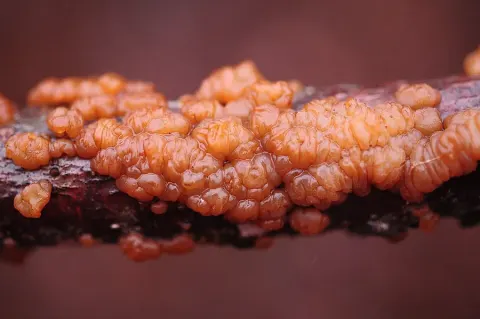
Basidiomata annual, cupulate-orbicular, up to 3 cm in diam., rarely up to 5 cm in diam., narrowly attached, later partly fusing together but remaining separable, up to 1 cm thick, gelatinous. Hymenial surface even or variably folded, rarely bearing scattered granular projections up to 0.1 mm long, at first ochraceous- to reddish-brown, later dark brown, in dry condition darkening to nearly black. Abhymenial surface rough, covered by tightly arranged dots, reddish-brown or dark brown. Margin free, concolourous with hymenial surface, entire, even or indistinctly lobate, in older basidiomata sometimes indistinctly incised. Hyphal structure monomitic, hyphae clamped; context hyphae hyaline or yellowish-brownish, occasionally encrusted, thin- to slightly thick-walled, interwoven or subparallel, anastomosing, 1–6.5 μm in diam., subhymenial hyphae hyaline or yellowish-brownish, occasionally encrusted, thin- to slightly thick-walled, predominantly interwoven, 1–4 μm in diam., basidia-bearing hyphae with a distinct wall, 1.5–4 μm in diam. Hyphidia with a hyaline or brownish, often encrusted, hyphoid or nodulose stem, 2–12 μm in diam., and hyaline apical branches, 0.5–1.2 μm in diam., covered by yellowish-brown gelatinous matrix and forming a continuous layer up to 80 μm thick. Probasidia distinctly tapering or more rarely clavate, 10.5–25 × 5–9 μm. Basidia four-celled, ellipsoid-ovoid, often somewhat tapering to the base, sometimes obliquely septate, (12–) 12.5–18 (–19) × (6.2–) 6.3–10.8 (–11.5) μm (n = 60/6), sterigmata up to 35 × 1.5–2.5 μm. Basidiospores narrowly cylindrical to allantoid, distinctly curved, (9.2–) 11.0–17.9 (–19.2) × (2.8–) 2.9–4.2 (–4.3) μm (n = 240/8), L = 13.14–15.82, W = 3.15–3.83, Q = 3.15–4.48.
Habitat dan peran ekologis
Exidia recisa is a wood-rotting species, typically found on dead attached twigs and branches. It was originally recorded on willow and most frequently occurs on this substrate, although it has also been reported on alder, and Prunus species. Exidia recisa typically fruits in autumn and winter. It is widely distributed in Europe, but its distribution elsewhere is uncertain because it has only recently been distinguished from morphologically similar species in North America and Asia. Based on DNA sequencing, it is said to be present in North America as well as the more common E. crenata.
- Habitat atau konteks temuan
- Informasi belum tersedia pada sumber rilis ini.
- Substrat
- Informasi belum tersedia pada sumber rilis ini.
- Peran atau konteks
- Belum dikategorikan pada rilis ini.
Reproduksi
Basidiomata annual, cupulate-orbicular, up to 3 cm in diam., rarely up to 5 cm in diam., narrowly attached, later partly fusing together but remaining separable, up to 1 cm thick, gelatinous. Hymenial surface even or variably folded, rarely bearing scattered granular projections up to 0.1 mm long, at first ochraceous- to reddish-brown, later dark brown, in dry condition darkening to nearly black. Abhymenial surface rough, covered by tightly arranged dots, reddish-brown or dark brown. Margin free, concolourous with hymenial surface, entire, even or indistinctly lobate, in older basidiomata sometimes indistinctly incised. Hyphal structure monomitic, hyphae clamped; context hyphae hyaline or yellowish-brownish, occasionally encrusted, thin- to slightly thick-walled, interwoven or subparallel, anastomosing, 1–6.5 μm in diam., subhymenial hyphae hyaline or yellowish-brownish, occasionally encrusted, thin- to slightly thick-walled, predominantly interwoven, 1–4 μm in diam., basidia-bearing hyphae with a distinct wall, 1.5–4 μm in diam.
Catatan identitas dan cakupan
- Nama diterima mengikuti Catalogue of Life Base2026-09-11; uraian mempertahankan konsep dan nama sumber aslinya.
- Uraian digabungkan dari sumber spesies yang sama; lingkup geografis, bahan, dan kultur setiap sumber dipertahankan. Preserve original treatment localities, hosts and substrate scope. Materials examined describe documented specimens, not the full global range. Original geographic, specimen and life-cycle scope retained; source import awaits individual editorial review.
- Impor dan terjemahan otomatis belum diperiksa editorial per profil. Struktur reproduktif yang disebutkan tidak membuktikan seluruh siklus hidup diketahui.
- Pengukuran pada uraian mengikuti spesimen, kultur, dan metode sumber; angka tidak diperluas ke semua populasi.
Catatan distribusi dalam narasi mengikuti sumbernya. Dokumentasi spesimen atau foto mengikuti catatan sumber. Bukti wilayah Indonesia dan penilaian konservasi tidak disimpulkan dari gambar.
Melihat dengan konteks
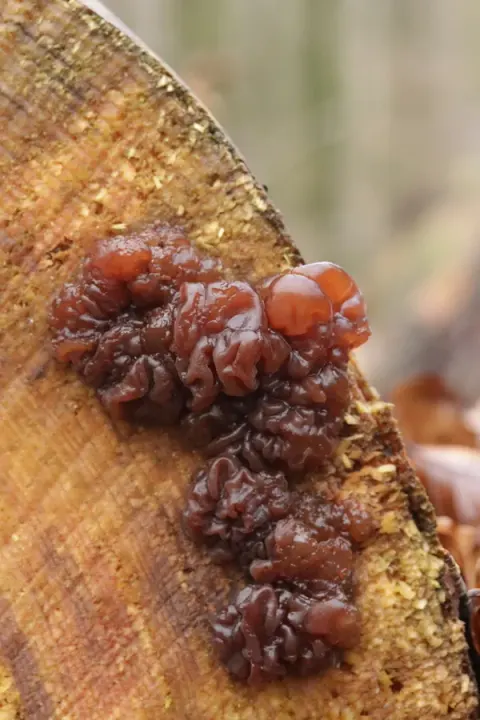
Dokumentasi Exidia recisa menurut asosiasi foto pada record takson iNaturalist. Kredit: Eugene Popov. Identitas mengikuti sumber; bukan penentuan spesimen independen.
- Jenis
- Fotografi
- Kredit
- (c) Eugene Popov, some rights reserved (CC BY), uploaded by Eugene Popov
- Lisensi
- CC BY 4.0
- Sumber media
- Buka entri sumber
Dokumentasi tambahan
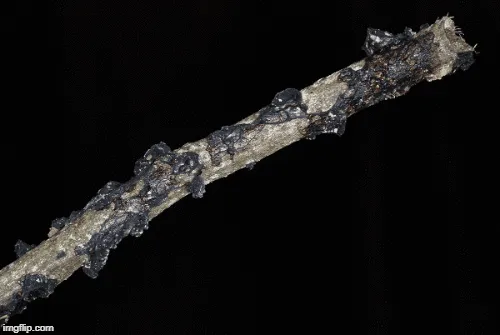
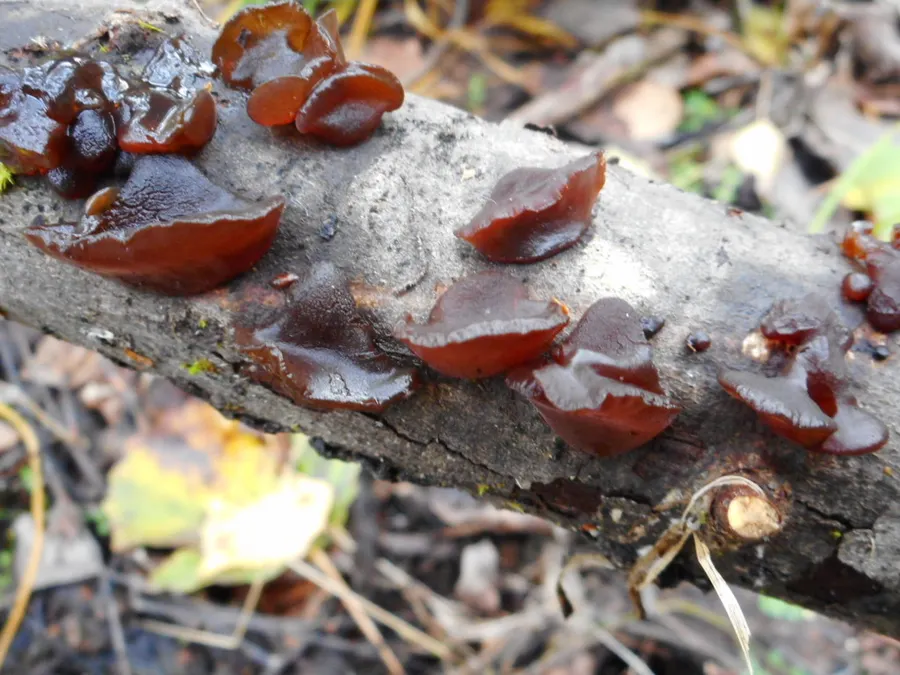
Foto yang diasosiasikan dengan Exidia recisa pada iNaturalist. Identifikasi mengikuti sumber; bukan penentuan spesimen independen.
Kredit dan penggunaan
(c) Douglas Goldman, some rights reserved (CC BY-SA), uploaded by Douglas Goldman
Ukuran dan format gambar disesuaikan tanpa pemotongan, retus, atau penambahan skala. Lisensi sumber dipertahankan.
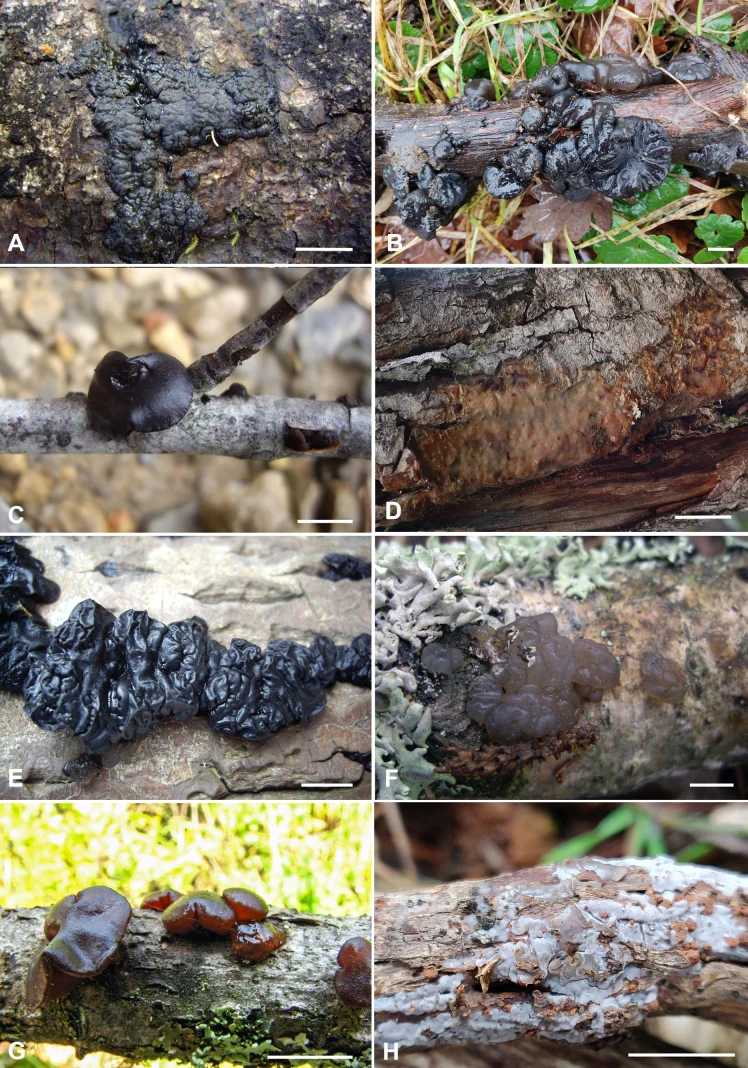
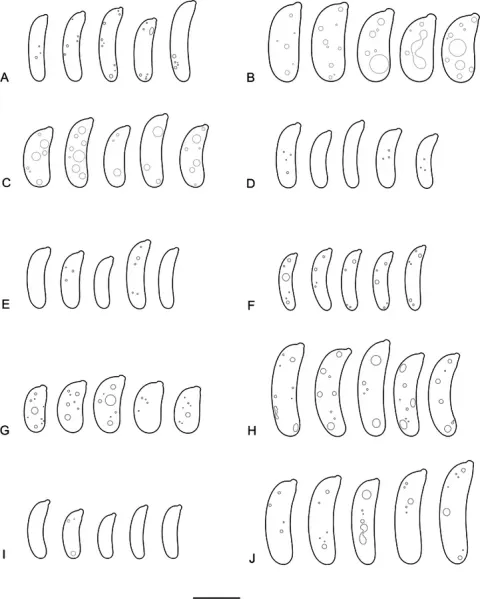
Pelat perbandingan tubuh buah. Exidia recisa ditampilkan pada panel G; panel lainnya memuat spesies pembanding. Pembagian panel mengikuti keterangan sumber.
Kredit dan penggunaan
Viacheslav Spirin, Vera Malysheva, Nathan Schoutteten, Anton Savchenko, Bernard Rivoire, Jan Olsson, Thomas Læssøe, Leif Ryvarden, Django Grootmyers, Matti Kulju, Josef Vlasák, María Victoria Vignale, Ilya Viner
Ukuran dan format gambar disesuaikan tanpa pemotongan, retus, atau penambahan skala. Lisensi sumber dipertahankan.
Sumber profil
- [1] Exidia and Exidiopsis (Auriculariales, Basidiomycota): a reconsideration — Exidia recisa
- [2] Exidia recisa — Wikipedia (en)
- [3] Catalogue of Life Base2026-09-11 — Exidia recisa
- [4] Dokumentasi visual — Exidia recisa
- [5] Dokumentasi visual — Exidia recisa
- [6] Dokumentasi visual — Exidia recisa
Rujukan halaman ini
Fungi. Exidia recisa. Rilis data fungi-2026-10-12-expansion-2. https://fungi-atlas.mgadib.chatgpt.site/jamur/exidia-recisa/.
Status: impor sumber; pemeriksaan editorial per profil belum selesai. Untuk klaim biologis, gunakan rujukan pada bagian terkait dan periksa konteks sumber aslinya.