Ciri dan struktur
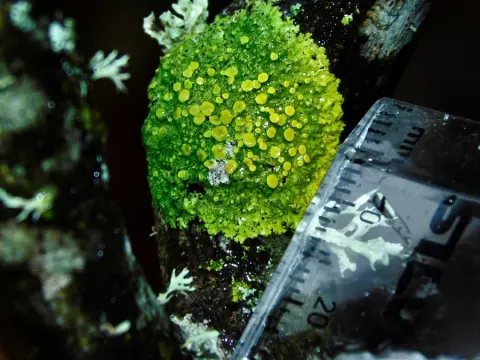
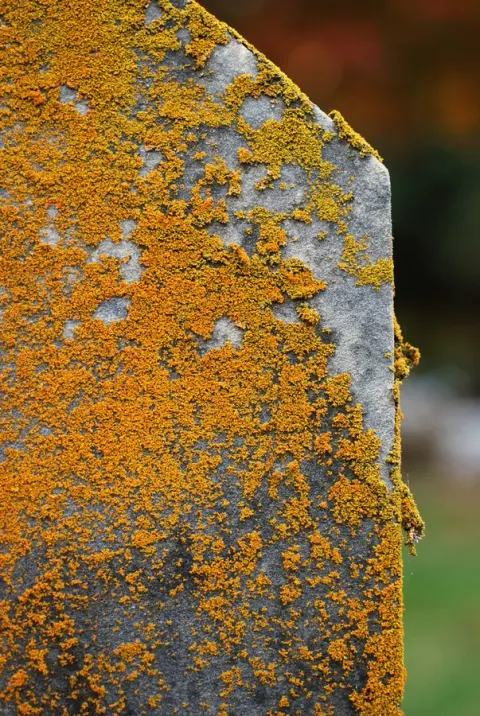
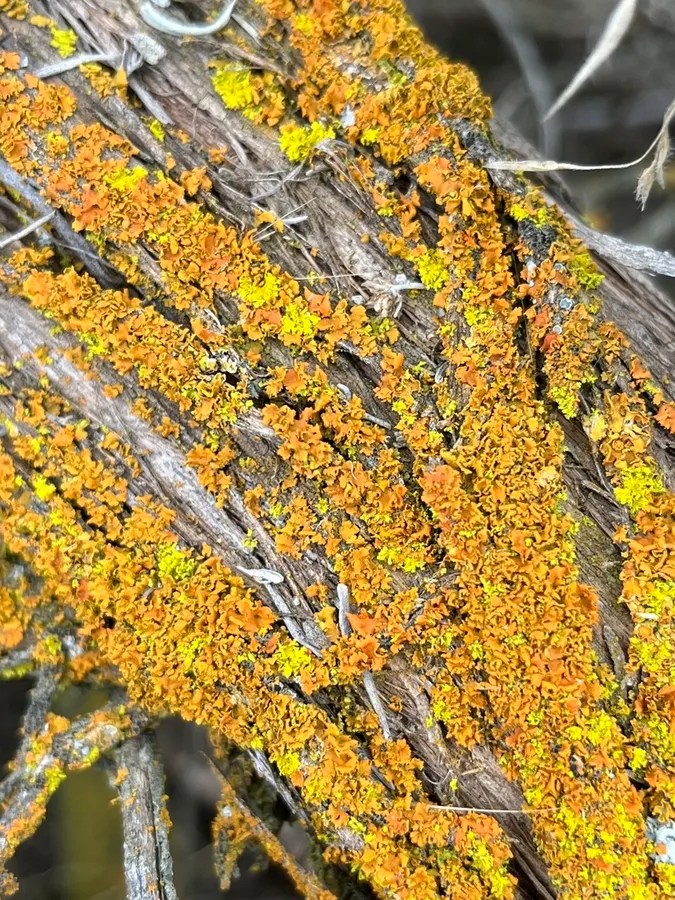
The lichen has a corticolous (bark-dwelling) thallus, foliose in nature and forming small, somewhat erect cushions with a diameter of up to 3 mm. The are typically incurved, often with a helmet-like shape due to the presence of apicolous (at the tip) soralia; young lobes are abundant and dissected, becoming truncated or rounded as they mature. Its upper surface is orange to dull orange, smooth to shiny, and very rarely shows a light dusting of (a powdery coating). The lower surface varies from white to yellow, occasionally eroded by soralia. Soralia, containing yellow to greenish yellow , form on the lower side of lobes, often under the mature lobes' helmet-shaped parts. Apothecia (fruiting bodies) have not been observed to occur in this species. Pycnidia (asexual reproductive structures producing conidia) are very rare, either immersed or slightly protruding, with conidia that are (rod-shaped), hyaline (translucent), measuring 3–5 by 1–1.5 μm.
Habitat dan peran ekologis
Gallowayella galericulata thrives on both wood and bark, frequently encountered on dry twigs of Artemisia spp., Pseudoacacia spp., Populus angustifolia, Quercus douglasii, and Sarcobatus species. Its habitat spans relatively dry areas of the western United States. Gallowayella galericulata has a distinct preference for certain tree species, notably Populus angustifolia, driven by the genetically determined characteristics of the tree's bark. Research in a controlled garden environment (the Ogden Nature Center) suggests that the genotype of Populus angustifolia plays a crucial role in the lichen's distribution, with specific factors like bark texture, levels of condensed tannins, and overall tree size being significant. This sensitivity to genetic variations within Populus angustifolia indicates a degree of heritability and suggests that even if the trees do not exert direct selective pressure on lichen coverage, their traits may still indirectly shape the lichen's evolutionary path. Studies conducted in Utah's forested ecosystems have examined the diversity and composition of lichen communities in relation to aspen cover, contrasting them across aspen, non-aspen hardwood, and coniferous environments.
- Habitat atau konteks temuan
- Informasi belum tersedia pada sumber rilis ini.
- Substrat
- Informasi belum tersedia pada sumber rilis ini.
- Peran atau konteks
- Pembentuk liken
Reproduksi
Apothecia (fruiting bodies) have not been observed to occur in this species. Pycnidia (asexual reproductive structures producing conidia) are very rare, either immersed or slightly protruding, with conidia that are (rod-shaped), hyaline (translucent), measuring 3–5 by 1–1.5 μm.
Catatan identitas dan cakupan
- Nama diterima mengikuti Catalogue of Life Base2026-09-11; uraian mempertahankan konsep dan nama sumber aslinya.
- Original geographic, specimen and life-cycle scope retained; source import awaits individual editorial review.
- Impor dan terjemahan otomatis belum diperiksa editorial per profil. Struktur reproduktif yang disebutkan tidak membuktikan seluruh siklus hidup diketahui.
- Pengukuran pada uraian mengikuti spesimen, kultur, dan metode sumber; angka tidak diperluas ke semua populasi.
Catatan distribusi dalam narasi mengikuti sumbernya. Dokumentasi spesimen atau foto mengikuti catatan sumber. Bukti wilayah Indonesia dan penilaian konservasi tidak disimpulkan dari gambar.
Melihat dengan konteks
Dokumentasi Xanthomendoza galericulata menurut asosiasi foto pada record takson iNaturalist. Kredit: Emma. Identitas mengikuti sumber; bukan penentuan spesimen independen.
- Jenis
- Fotografi
- Kredit
- (c) Emma, some rights reserved (CC BY)
- Lisensi
- CC BY 4.0
- Sumber media
- Buka entri sumber
Dokumentasi tambahan
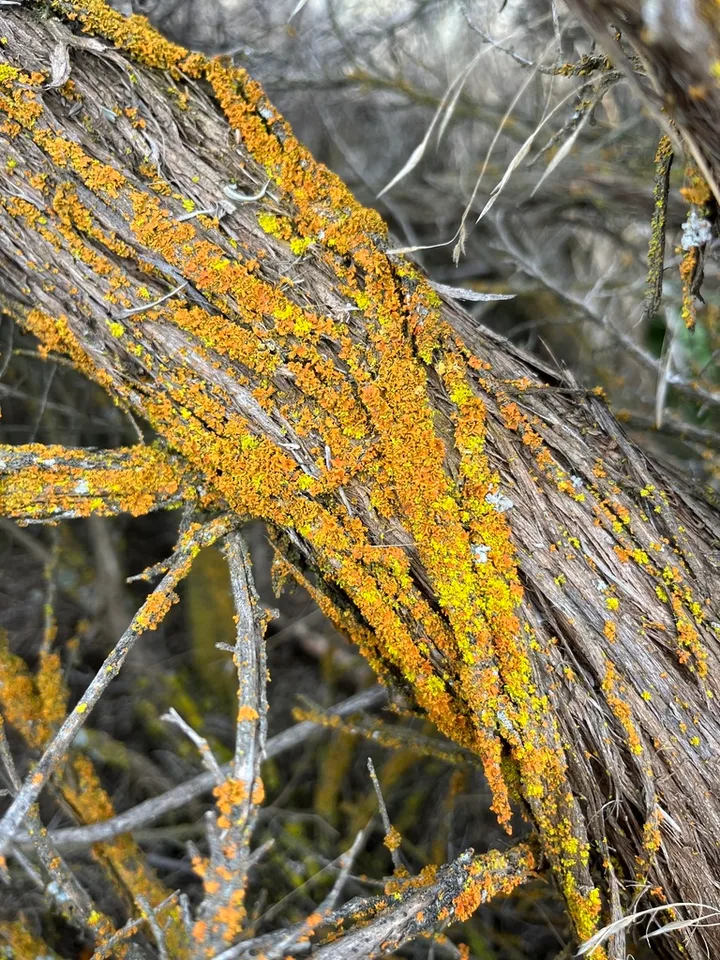
Foto yang diasosiasikan dengan Gallowayella galericulata pada iNaturalist. Identifikasi mengikuti sumber; bukan penentuan spesimen independen.
Kredit dan penggunaan
(c) Emma, some rights reserved (CC BY)
Ukuran dan format gambar disesuaikan tanpa pemotongan, retus, atau penambahan skala. Lisensi sumber dipertahankan.
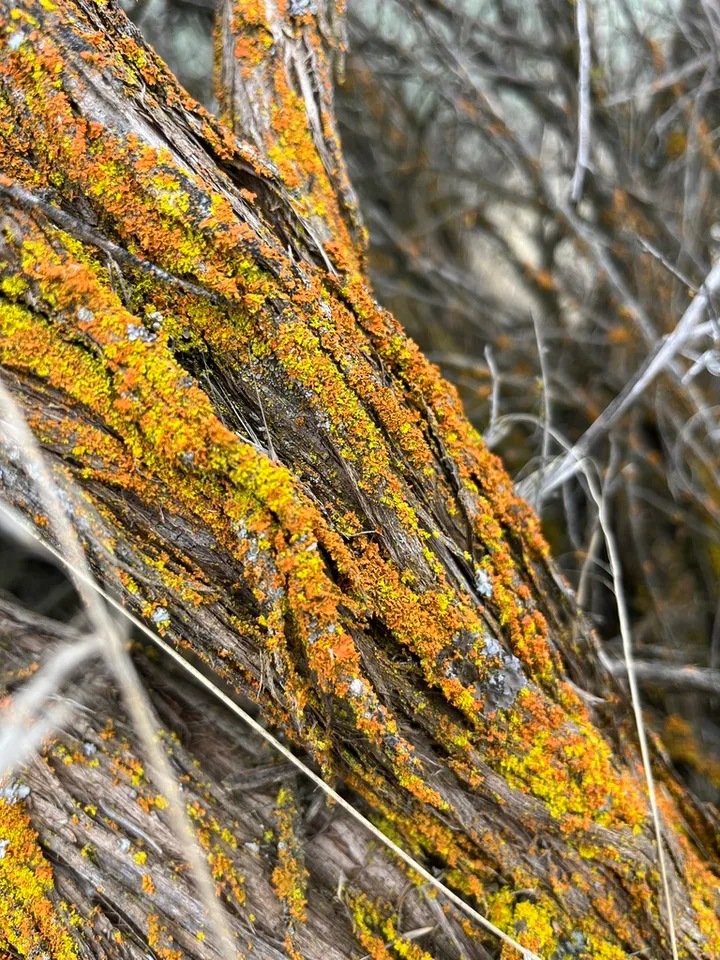
Foto yang diasosiasikan dengan Gallowayella galericulata pada iNaturalist. Identifikasi mengikuti sumber; bukan penentuan spesimen independen.
Kredit dan penggunaan
(c) Emma, some rights reserved (CC BY)
Ukuran dan format gambar disesuaikan tanpa pemotongan, retus, atau penambahan skala. Lisensi sumber dipertahankan.
Sumber profil
- [1] Gallowayella galericulata — Wikipedia (en)
- [2] Catalogue of Life Base2026-09-11 — Gallowayella galericulata
- [3] Dokumentasi visual — Gallowayella galericulata
- [4] Dokumentasi visual — Gallowayella galericulata
- [5] Dokumentasi visual — Gallowayella galericulata
Rujukan halaman ini
Fungi. Gallowayella galericulata. Rilis data fungi-2026-10-12-expansion-2. https://fungi-atlas.mgadib.chatgpt.site/jamur/gallowayella-galericulata/.
Status: impor sumber; pemeriksaan editorial per profil belum selesai. Untuk klaim biologis, gunakan rujukan pada bagian terkait dan periksa konteks sumber aslinya.