01 / Morfologi

Ciri dan struktur

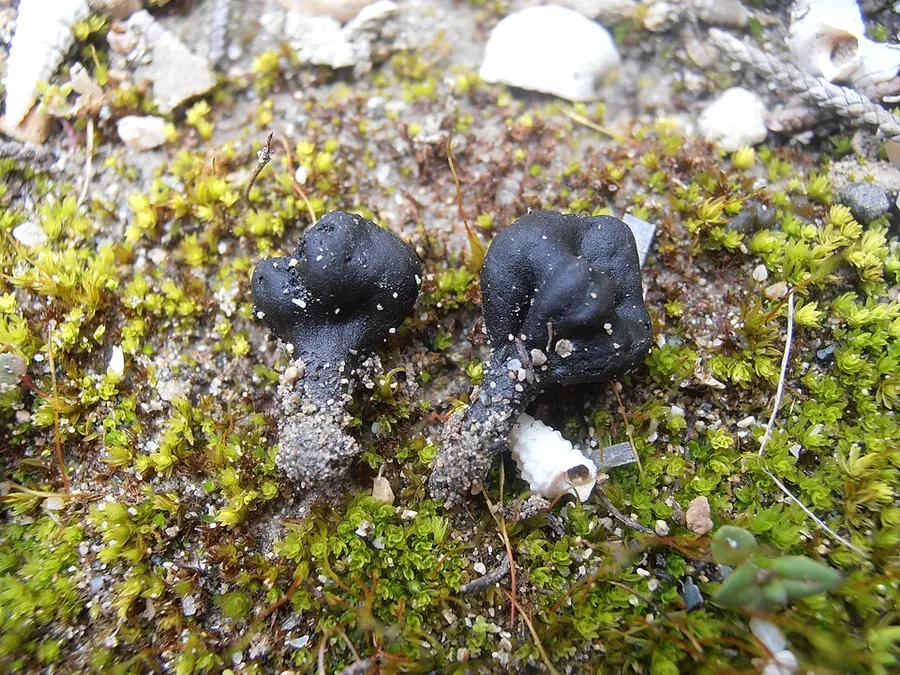
The tiny fruitbodies, measuring 1−2.3 cm by 0.8−1.1 cm, are black, dry, and consist of a lobed or club-shaped head and a minutely squamulose stipe which is usually submerged into the substrate. The spores are fusiform to subfusiform, somewhat bent, measuring (28−) 31−44 (−53) by (7−) 8−10 (−12) μm. At maturity they develop 2−3, or very rarely 1−4 septa. The paraphyses are highly polymorphic and often moniliform, hooked, branched, or contorted. The asci are large, 8-spored and have an amyloid apical pore. The trama features parallel or sometimes intertwined hyphae, resembling a textura intricata. The stipe surface is composed of brown hyphae with short, slightly clavate terminal elements 4–6 μm wide.

Sebagian uraian ditampilkan dalam bahasa sumber; terjemahannya belum tersedia atau belum lolos pemeriksaan.

Rujukan: [1]

Pengukuran mengikuti objek, spesimen atau kultur, dan metode yang disebutkan sumber. Baca uraian asli untuk konteks lengkap.

02 / Kehidupan

Habitat dan peran ekologis

On Cyprus and Malta, Geoglossum dunense grows on coastal dunes and salt marshes among Juniperus, Olea and Fumana shrubs. A 2019 British report of this species from grasslands in Hardcastle Crags (West Yorkshire), however, suggests that its ecology and distribution might be wider than previously thought.

Sebagian uraian ditampilkan dalam bahasa sumber; terjemahannya belum tersedia atau belum lolos pemeriksaan.

Rujukan: [1]

Habitat atau konteks temuan
Informasi belum tersedia pada sumber rilis ini.
Substrat
Informasi belum tersedia pada sumber rilis ini.
Peran atau konteks
Belum dikategorikan pada rilis ini.
Temukan hubungan serupa
03 / Siklus hidup

Reproduksi

The spores are fusiform to subfusiform, somewhat bent, measuring (28−) 31−44 (−53) by (7−) 8−10 (−12) μm. At maturity they develop 2−3, or very rarely 1−4 septa. The paraphyses are highly polymorphic and often moniliform, hooked, branched, or contorted. The asci are large, 8-spored and have an amyloid apical pore. The trama features parallel or sometimes intertwined hyphae, resembling a textura intricata. The stipe surface is composed of brown hyphae with short, slightly clavate terminal elements 4–6 μm wide.

Sebagian uraian ditampilkan dalam bahasa sumber; terjemahannya belum tersedia atau belum lolos pemeriksaan.

Rujukan: [1]

04 / Batas informasi

Catatan identitas dan cakupan

  • Nama diterima mengikuti Catalogue of Life Base2026-09-11; uraian mempertahankan konsep dan nama sumber aslinya.
  • Original geographic, specimen and life-cycle scope retained; source import awaits individual editorial review.
  • Impor dan terjemahan otomatis belum diperiksa editorial per profil. Struktur reproduktif yang disebutkan tidak membuktikan seluruh siklus hidup diketahui.
  • Pengukuran pada uraian mengikuti spesimen, kultur, dan metode sumber; angka tidak diperluas ke semua populasi.

Catatan distribusi dalam narasi mengikuti sumbernya. Dokumentasi spesimen atau foto mengikuti catatan sumber. Bukti wilayah Indonesia dan penilaian konservasi tidak disimpulkan dari gambar.

05 / Dokumentasi

Melihat dengan konteks

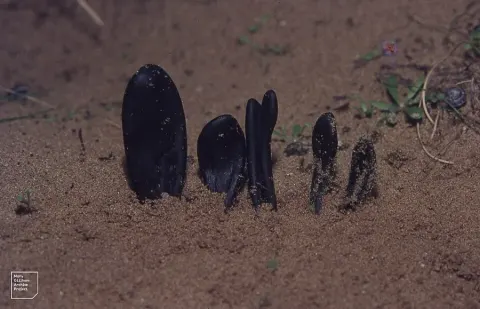
Dokumentasi Geoglossum dunense dari Wikimedia Commons. Akrotiri Lemesou, Cyprus, 7.2.2012; © M. Loizides Identifikasi mengikuti record berkas sumber.

Jenis
Fotografi
Kredit
Michael Loizides
Sumber media
Buka entri sumber

Gambar menunjukkan objek menurut identifikasi sumber, bukan verifikasi independen spesimen oleh Fungi. Tidak ada skala baru yang ditambahkan.

06 / Rujukan

Sumber profil

  1. [1] Geoglossum dunense — Wikipedia (en)Bagian sumber: Frozen revision 1250236413
    Tanggal penghimpunan sumber: 2026-10-12
    Teks sumber: CC BY-SA4.0 · Wikipedia contributors
  2. [2] Catalogue of Life Base2026-09-11 — Geoglossum dunenseBagian sumber: ColDP NameUsage.tsv ID 6KBK9; accepted species; source 2073
    Tanggal penghimpunan sumber: 2026-10-12
  3. [3] Dokumentasi visual — Geoglossum dunenseBagian sumber: Individual media record; identification follows the source, not independent determination
    Tanggal penghimpunan sumber: 2026-10-12
    Media sumber: CC BY-SA 4.0 · Michael Loizides

Adaptasi teks: CC BY-SA 4.0. Wikipedia contributors — Geoglossum dunense — Wikipedia (en)

Uraian asli dan riwayat sumber

Riwayat atau halaman sumber

Ringkasan sumber

Geoglossum dunense is an earth tongue fungus in the family Geoglossaceae, described as new to science in 2015. It is known from the island of Cyprus, where it grows in coastal dunes and salt marshes under the Phoenicean juniper (Juniperus phoenicea), but has also been documented in Malta and England following collections from diverse habitats. It produces very small fruit bodies barely exceeding 1–2 cm and has polymorphic, often moniliform paraphyses and predominantly 3-septate spores.

Revisi sumber

Morfologi sumber

The tiny fruitbodies, measuring 1−2.3 cm by 0.8−1.1 cm, are black, dry, and consist of a lobed or club-shaped head and a minutely squamulose stipe which is usually submerged into the substrate. The spores are fusiform to subfusiform, somewhat bent, measuring (28−) 31−44 (−53) by (7−) 8−10 (−12) μm. At maturity they develop 2−3, or very rarely 1−4 septa. The paraphyses are highly polymorphic and often moniliform, hooked, branched, or contorted. The asci are large, 8-spored and have an amyloid apical pore. The trama features parallel or sometimes intertwined hyphae, resembling a textura intricata. The stipe surface is composed of brown hyphae with short, slightly clavate terminal elements 4–6 μm wide.

Revisi sumber

Ekologi sumber

On Cyprus and Malta, Geoglossum dunense grows on coastal dunes and salt marshes among Juniperus, Olea and Fumana shrubs. A 2019 British report of this species from grasslands in Hardcastle Crags (West Yorkshire), however, suggests that its ecology and distribution might be wider than previously thought.

Revisi sumber

Struktur reproduksi sumber

The spores are fusiform to subfusiform, somewhat bent, measuring (28−) 31−44 (−53) by (7−) 8−10 (−12) μm. At maturity they develop 2−3, or very rarely 1−4 septa. The paraphyses are highly polymorphic and often moniliform, hooked, branched, or contorted. The asci are large, 8-spored and have an amyloid apical pore. The trama features parallel or sometimes intertwined hyphae, resembling a textura intricata. The stipe surface is composed of brown hyphae with short, slightly clavate terminal elements 4–6 μm wide.

Revisi sumber

Rujukan halaman ini

Fungi. Geoglossum dunense. Rilis data fungi-2026-10-12-expansion-2. https://fungi-atlas.mgadib.chatgpt.site/jamur/geoglossum-dunense/.

Status: impor sumber; pemeriksaan editorial per profil belum selesai. Untuk klaim biologis, gunakan rujukan pada bagian terkait dan periksa konteks sumber aslinya.