Ciri dan struktur
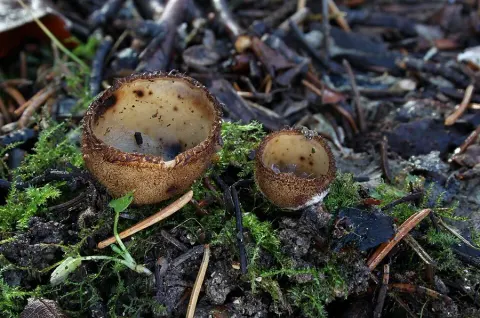
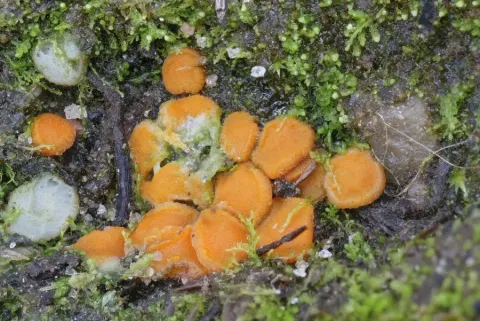
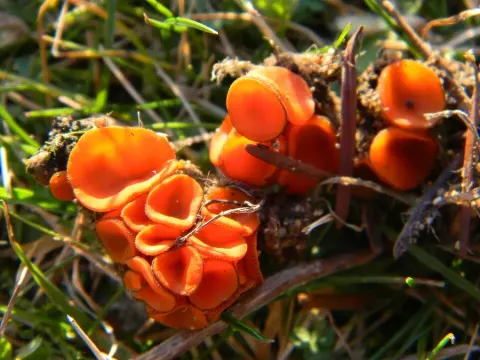
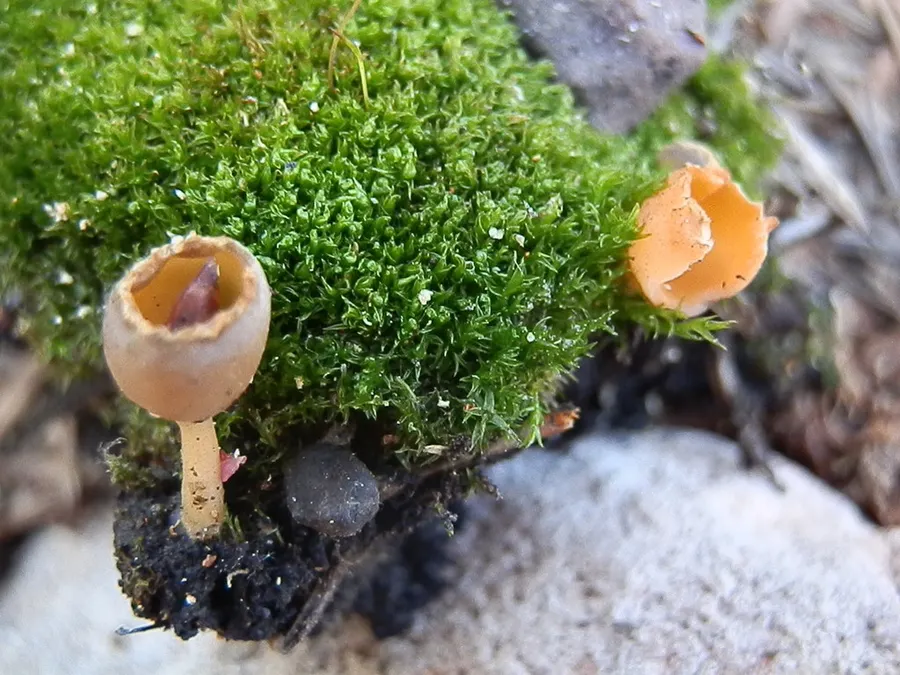
The fruitbodies (ascocarps) of Geopyxis carbonaris are cup shaped, 5–20 mm wide, and have fringed whitish margins. The inner spore-bearing surface of the cup, the hymenium, is brick red and smooth, while the exterior surface is a dull yellow, and may be either smooth or have blister-like spots (pustules). The stipe, if present, is whitish, up to 15 mm long and 2 mm wide, and expands abruptly into the cup. The brownish flesh of the fungus is thin and brittle. It does not have any distinctive taste, but has an unpleasant smell when crushed in water. In mass, the spores are whitish. The spores are elliptical, smooth, hyaline, devoid of oil droplets (eguttulate), and have dimensions of 13–18 by 7–9 μm. They are thin walled and germinate and grow rapidly in vitro in the absence of external stimuli. The asci are 190–225 by 9–10 μm. The paraphyses are slightly club-shaped, unbranched, and have irregular orange-brown granules, with tips up to 5 μm wide, and are not forked or lobed. The hypothecium, the layer of cells below the hymenium, is made of densely packed, small irregular cells.
Habitat dan peran ekologis
G. carbonaria tersebar di seluruh Utara America from Alaska south, kecuali Teluk Coast region; muncul dari March to June on Barat Coast and April to September elsewhere. Hal ini juga ditemukan di Eropa, dan di 2010, dilaporkan untuk pertama kalinya dari Turki. Jamur ini tersebar luas di tanah atau arang yang terbakar di musim semi dan sepanjang musim tumbuh. Ini adalah salah satu spesies pelopor yang paling umum ditemukan di tanah terbakar. Kotoran yang terkarat di lantai hutan meningkatkan pH tanah yang mendasarinya serta ketersediaan mineral. Fruitbodies are diproduksi dari 16 sampai 139 minggu setelah kebakaran hutan di daerah dengan pohon konifer. Most fruitbodies diproduksi pada tahun pertama setelah pembakaran. Jamur ini lebih memilih berbuah di habitat mikro dengan debu tipis setelah kebakaran dekat batang pohon yang terbakar berdiri. Geopyxis carbonaria tubuh buah sering ditemukan di tempat yang sama setelah kebakaran seperti morel, meskipun yang pertama biasanya lebih banyak. Because the pixie cup fruits earlier than morels, it may serve as an indicator of imminent morel fruiting. Jamur Other cup yang sering ditemukan berbuah di daerah yang sama dengan G. carbonaria termasuk yang dari genus Aleuria, Anthracobia, Peziza, dan Tarzetta.
- Habitat atau konteks temuan
- hutan
- Substrat
- Informasi belum tersedia pada sumber rilis ini.
- Peran atau konteks
- Belum dikategorikan pada rilis ini.
Reproduksi
The fruitbodies (ascocarps) of Geopyxis carbonaris are cup shaped, 5–20 mm wide, and have fringed whitish margins. The inner spore-bearing surface of the cup, the hymenium, is brick red and smooth, while the exterior surface is a dull yellow, and may be either smooth or have blister-like spots (pustules). The stipe, if present, is whitish, up to 15 mm long and 2 mm wide, and expands abruptly into the cup. The brownish flesh of the fungus is thin and brittle. It does not have any distinctive taste, but has an unpleasant smell when crushed in water. In mass, the spores are whitish. The spores are elliptical, smooth, hyaline, devoid of oil droplets (eguttulate), and have dimensions of 13–18 by 7–9 μm.
Catatan identitas dan cakupan
- Nama diterima mengikuti Catalogue of Life Base2026-09-11; uraian mempertahankan konsep dan nama sumber aslinya.
- Original geographic, specimen and life-cycle scope retained; source import awaits individual editorial review.
- Impor dan terjemahan otomatis belum diperiksa editorial per profil. Struktur reproduktif yang disebutkan tidak membuktikan seluruh siklus hidup diketahui.
- Pengukuran pada uraian mengikuti spesimen, kultur, dan metode sumber; angka tidak diperluas ke semua populasi.
Catatan distribusi dalam narasi mengikuti sumbernya. Dokumentasi spesimen atau foto mengikuti catatan sumber. Bukti wilayah Indonesia dan penilaian konservasi tidak disimpulkan dari gambar.
Melihat dengan konteks
Dokumentasi Geopyxis carbonaria menurut asosiasi foto pada record takson iNaturalist. Kredit: pinonbistro. Identitas mengikuti sumber; bukan penentuan spesimen independen.
- Jenis
- Fotografi
- Kredit
- (c) pinonbistro, some rights reserved (CC BY-SA), uploaded by pinonbistro
- Lisensi
- CC BY-SA 4.0
- Sumber media
- Buka entri sumber
Dokumentasi tambahan
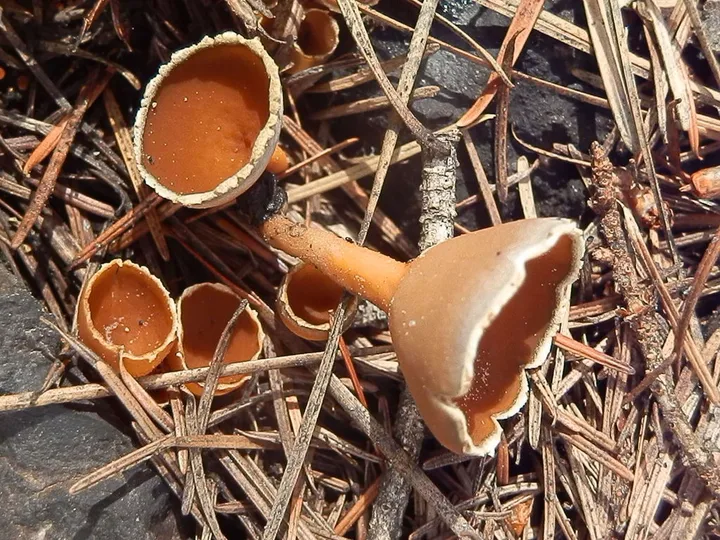
Foto yang diasosiasikan dengan Geopyxis carbonaria pada iNaturalist. Identifikasi mengikuti sumber; bukan penentuan spesimen independen.
Kredit dan penggunaan
(c) pinonbistro, some rights reserved (CC BY-SA), uploaded by pinonbistro
Ukuran dan format gambar disesuaikan tanpa pemotongan, retus, atau penambahan skala. Lisensi sumber dipertahankan.
Sumber profil
- [1] Geopyxis carbonaria — Wikipedia (en)
- [2] Catalogue of Life Base2026-09-11 — Geopyxis carbonaria
- [3] Dokumentasi visual — Geopyxis carbonaria
- [4] Dokumentasi visual — Geopyxis carbonaria
Rujukan halaman ini
Fungi. Geopyxis carbonaria. Rilis data fungi-2026-10-12-expansion-2. https://fungi-atlas.mgadib.chatgpt.site/jamur/geopyxis-carbonaria/.
Status: impor sumber; pemeriksaan editorial per profil belum selesai. Untuk klaim biologis, gunakan rujukan pada bagian terkait dan periksa konteks sumber aslinya.