01 / Morfologi

Ciri dan struktur

G. candidum colonies are thin, spreading, soft, creamy and white in the anamorph state. The fungus G. candidum is characterized by hyphae that appear creeping, mostly submerged and septate. The hyphae colour appears to be hyaline or lightly pigmented. When the hyphae becomes airborne it changes shape from arthroconidia to cylindrical or barrel-shaped or ellipsoidal. Chlamydospores are subglobose, solitary, borne on undifferentiated hyphae. Blastoconidia sometimes develop on hyphae laterally. Conidia appear arthrosporous, terminal or intercalary, aerial on an agar surface. The conidia size ranges from 4.8 to 12.5 μm x 2.4–2.5 μm. G. candidum is thought to be homothallic but most isolates are self-sterile. Sexual reproduction was first observed in strains isolated from soils in Puerto Rico. The fungus produces globose asci that contain a single, thick walled, uninucleated, globose to oval ascospore measuring 6–7 μm by 7–10 μm. The ascospores have a smooth inner wall and a furrowed outer wall. The septa are perforated by microspores, arranged in a ring structure. The colonies appear to be growing faster in the sexual stage than the asexual stage. Colonies grow at a rate of 5–7 mm daily at 24 C. Geotrichum candidum forms a fast growing colony that can grow to 5–6 cm diameter at 5 days on Sabouraud-glucose agar, wort agar and synthetic media. Microscopically, the growth is characterized by the production of dichotomously branched hyphae that resemble tuning forks along the colony margin. The condial chains become aerial, erect or decumbent and measure 6–12(−20) x 3–6(−9) μm. The fungus can grow on a variety of citrus fruits and cause Sour Rot.

Sebagian uraian ditampilkan dalam bahasa sumber; terjemahannya belum tersedia atau belum lolos pemeriksaan.

Rujukan: [1]

Pengukuran mengikuti objek, spesimen atau kultur, dan metode yang disebutkan sumber. Baca uraian asli untuk konteks lengkap.

02 / Kehidupan

Habitat dan peran ekologis

G. candidum sangat umum di tanah dan telah diisolasi dari substrat di Kanada, Amerika Serikat, Inggris, Jerman, Austria, India, Afrika Selatan, Jepang, Brazil and Peru. Hal ini juga ditemukan sebagai agen penyebab dalam kotoran asam dalam buah jeruk ⁇ kotoran lembut yang terkait dengan emisi bau buah. Jamur ini juga dikenal sebagai agen kerusakan muskmelon, squash dan mentimun setelah panen. Ini berperan dalam membusuk buah tomat ketika disimpan di 0–5 C. Ini adalah kolonist alami dari produk susu tertentu (terutama keju) dan kadang-kadang digunakan untuk menjinakkan keju kulit dan kulit berbunga.

Rujukan: [1]

Habitat atau konteks temuan
Informasi belum tersedia pada sumber rilis ini.
Substrat
tanah
Peran atau konteks
Belum dikategorikan pada rilis ini.
Temukan hubungan serupa
03 / Siklus hidup

Reproduksi

Galactomyces candidus, formerly thought to be a distinct taxon, was found to be the sexual state of G. candidum using sequence-based methods Geotrichum candidum in the broad sense comprises 3 clades, corresponding to the species G. candidum, G. clavatum and G. fici, all of which are thought to have pathogenic potential. Species of Geotrichum can be differentiated by sequence analysis of the nuclear ribosomal large subunit (18S ribosomal RNA) or the internal transcribed spacer region of the nuclear ribosomal RNA gene. G. candidum colonies are thin, spreading, soft, creamy and white in the anamorph state. The fungus G. candidum is characterized by hyphae that appear creeping, mostly submerged and septate.

Sebagian uraian ditampilkan dalam bahasa sumber; terjemahannya belum tersedia atau belum lolos pemeriksaan.

Rujukan: [1]

Sinonim menurut acuan taksonomi rilis: Acrosporium candidum; Alysidium lactis; Botrytis geotricha; Dipodascus geotrichum; Endomyces geotrichum; Endomyces lactis; Endomyces lactis var. matalensis; Galactomyces candidus; Galactomyces geotrichum; Geotrichum asteroides; Geotrichum candidum f. phytogena; Geotrichum candidum var. citri-aurantii; Geotrichum candidum var. thermoideum; Geotrichum citri-aurantii; Geotrichum javanense; Geotrichum malti-juniperini; Geotrichum matalense; Geotrichum matalense var. chapmanii; Geotrichum novakii; Geotrichum redaellii; Geotrichum versiforme; Monilia asteroides; Mycoderma asteroides; Mycoderma malti-juniperini; Mycoderma matalense; Oidium asteroides; Oidium citri-aurantii; Oidium humi; Oidium lactis; Oidium lactis var. luxurians; Oidium matalense; Oidium nubilum; Oidium obtusum; Oidium suaveolens var. minutum; Oospora citri-aurantii; Oospora fragrans var. minuta; Oospora humi; Oospora lactis; Oospora lactis var. exuberans; Oospora lactis var. obtusa; Oospora lactis var. parasitica; Oospora mali; Oospora matalensis; Oospora nubilum; Oospora pyricola; Oosporoidea lactis; Pseudomonilia matalensis; Pseudomycoderma matalense; Torula geotricha; Trichosporon matalense
04 / Batas informasi

Catatan identitas dan cakupan

  • Nama diterima mengikuti Catalogue of Life Base2026-09-11; uraian mempertahankan konsep dan nama sumber aslinya.
  • Original geographic, specimen and life-cycle scope retained; source import awaits individual editorial review.
  • Impor dan terjemahan otomatis belum diperiksa editorial per profil. Struktur reproduktif yang disebutkan tidak membuktikan seluruh siklus hidup diketahui.
  • Pengukuran pada uraian mengikuti spesimen, kultur, dan metode sumber; angka tidak diperluas ke semua populasi.

Catatan distribusi dalam narasi mengikuti sumbernya. Dokumentasi spesimen atau foto mengikuti catatan sumber. Bukti wilayah Indonesia dan penilaian konservasi tidak disimpulkan dari gambar.

05 / Dokumentasi

Melihat dengan konteks

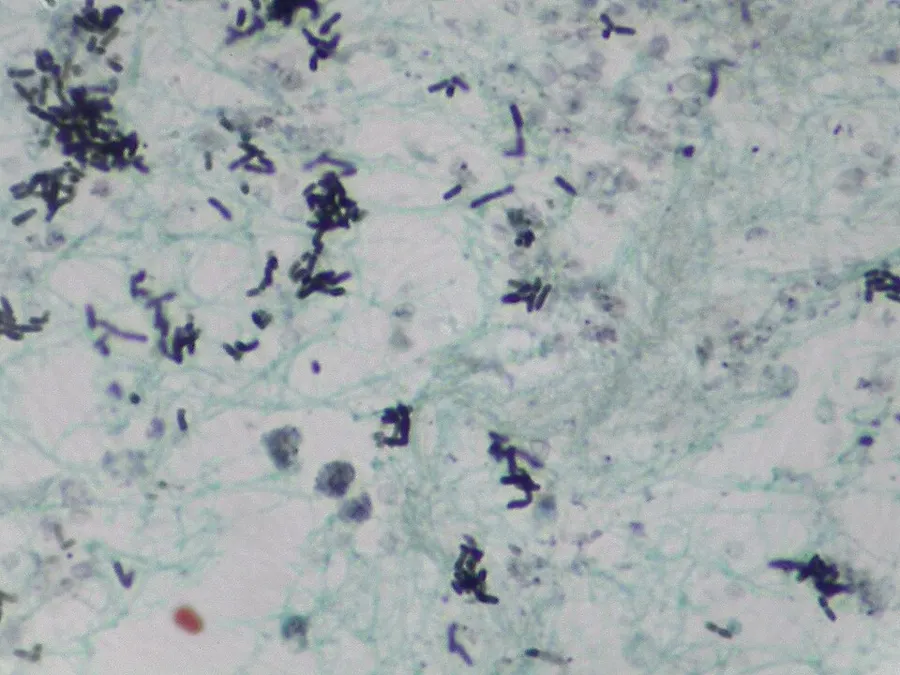
Dokumentasi Geotrichum candidum dari Wikimedia Commons. Geotrichum candidum reproduces by segmentation of hyphae into arthrospores with straight or rounded ends as seen here with the GMS stain. Identifikasi mengikuti record berkas sumber.

Jenis
Fotografi
Kredit
Yale Rosen from USA
Sumber media
Buka entri sumber

Gambar menunjukkan objek menurut identifikasi sumber, bukan verifikasi independen spesimen oleh Fungi. Tidak ada skala baru yang ditambahkan.

06 / Rujukan

Sumber profil

  1. [1] Geotrichum candidum — Wikipedia (en)Bagian sumber: Frozen revision 1374351586
    Tanggal penghimpunan sumber: 2026-10-12
    Teks sumber: CC BY-SA4.0 · Wikipedia contributors
  2. [2] Catalogue of Life Base2026-09-11 — Geotrichum candidumBagian sumber: ColDP NameUsage.tsv ID 3FT7N; accepted species; source 2073
    Tanggal penghimpunan sumber: 2026-10-12
  3. [3] Dokumentasi visual — Geotrichum candidumBagian sumber: Individual media record; identification follows the source, not independent determination
    Tanggal penghimpunan sumber: 2026-10-12
    Media sumber: CC BY-SA 2.0 · Yale Rosen from USA

Adaptasi teks: CC BY-SA 4.0. Wikipedia contributors — Geotrichum candidum — Wikipedia (en)

Uraian asli dan riwayat sumber

Riwayat atau halaman sumber

Ringkasan sumber

G. candidum colonies are thin, spreading, soft, creamy and white in the anamorph state. The fungus G. candidum is characterized by hyphae that appear creeping, mostly submerged and septate. The hyphae colour appears to be hyaline or lightly pigmented. When the hyphae becomes airborne it changes shape from arthroconidia to cylindrical or barrel-shaped or ellipsoidal. Chlamydospores are subglobose, solitary, borne on undifferentiated hyphae. Blastoconidia sometimes develop on hyphae laterally. Conidia appear arthrosporous, terminal or intercalary, aerial on an agar surface.

Revisi sumber

Morfologi sumber

G. candidum colonies are thin, spreading, soft, creamy and white in the anamorph state. The fungus G. candidum is characterized by hyphae that appear creeping, mostly submerged and septate. The hyphae colour appears to be hyaline or lightly pigmented. When the hyphae becomes airborne it changes shape from arthroconidia to cylindrical or barrel-shaped or ellipsoidal. Chlamydospores are subglobose, solitary, borne on undifferentiated hyphae. Blastoconidia sometimes develop on hyphae laterally. Conidia appear arthrosporous, terminal or intercalary, aerial on an agar surface. The conidia size ranges from 4.8 to 12.5 μm x 2.4–2.5 μm. G. candidum is thought to be homothallic but most isolates are self-sterile. Sexual reproduction was first observed in strains isolated from soils in Puerto Rico. The fungus produces globose asci that contain a single, thick walled, uninucleated, globose to oval ascospore measuring 6–7 μm by 7–10 μm. The ascospores have a smooth inner wall and a furrowed outer wall. The septa are perforated by microspores, arranged in a ring structure. The colonies appear to be growing faster in the sexual stage than the asexual stage. Colonies grow at a rate of 5–7 mm daily at 24 C. Geotrichum candidum forms a fast growing colony that can grow to 5–6 cm diameter at 5 days on Sabouraud-glucose agar, wort agar and synthetic media. Microscopically, the growth is characterized by the production of dichotomously branched hyphae that resemble tuning forks along the colony margin. The condial chains become aerial, erect or decumbent and measure 6–12(−20) x 3–6(−9) μm. The fungus can grow on a variety of citrus fruits and cause Sour Rot.

Revisi sumber

Ekologi sumber

G. candidum is extremely common in soil and has been isolated from substrates in Canada, United States, Britain, Germany, Austria, India, South Africa, Japan, Brazil and Peru. It is also found as a causal agent in sour rot in citrus fruits— a soft rot associated with the emission of a fruity odour. The fungus is also known as a post-harvest spoilage agent of muskmelon, squash and cucumber. It plays a role in tomato fruit rot when it is stored at 0–5 C. It is a naturally occurring colonist of certain dairy products (particularly cheeses) and is sometimes used to inoculate wash-rind and bloomy rind cheeses.

Revisi sumber

Struktur reproduksi sumber

Galactomyces candidus, formerly thought to be a distinct taxon, was found to be the sexual state of G. candidum using sequence-based methods Geotrichum candidum in the broad sense comprises 3 clades, corresponding to the species G. candidum, G. clavatum and G. fici, all of which are thought to have pathogenic potential. Species of Geotrichum can be differentiated by sequence analysis of the nuclear ribosomal large subunit (18S ribosomal RNA) or the internal transcribed spacer region of the nuclear ribosomal RNA gene. G. candidum colonies are thin, spreading, soft, creamy and white in the anamorph state. The fungus G. candidum is characterized by hyphae that appear creeping, mostly submerged and septate.

Revisi sumber

Rujukan halaman ini

Fungi. Geotrichum candidum. Rilis data fungi-2026-10-12-expansion-2. https://fungi-atlas.mgadib.chatgpt.site/jamur/geotrichum-candidum/.

Status: impor sumber; pemeriksaan editorial per profil belum selesai. Untuk klaim biologis, gunakan rujukan pada bagian terkait dan periksa konteks sumber aslinya.