01 / Morfologi

Ciri dan struktur

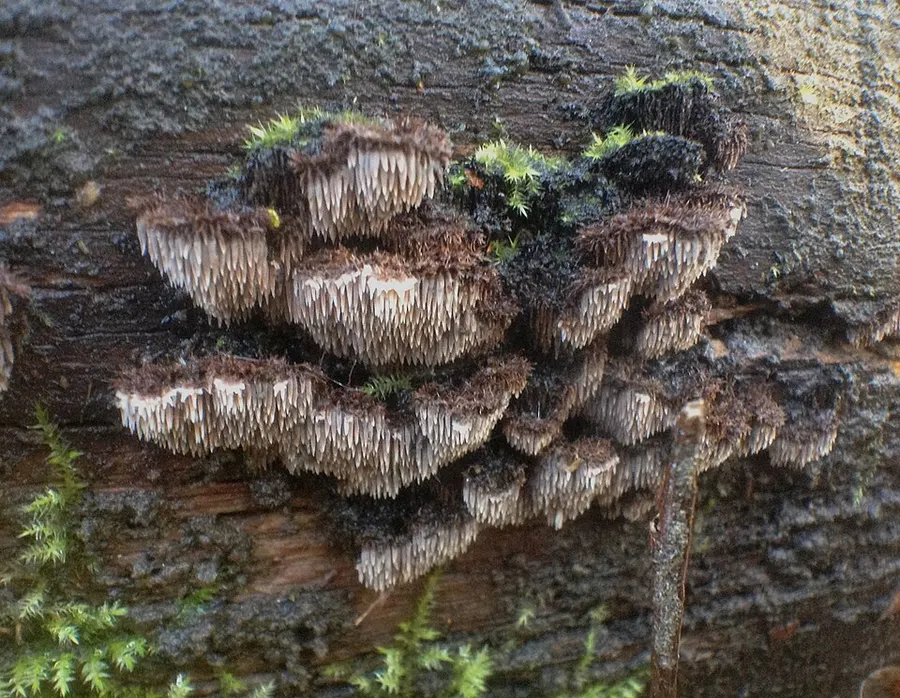
Fruiting body is pileate to resupinate, ochreaceous to greyish brown but darkening with age. Forms caps up to 3 cm and resupinate patches up to 6 cm. Pileus broadly attached and covered with stiff, shaggy, dark brown hairs, separated from the context with a thin dark zone. Hymenium with conical spines, up to 1 cm long, with a pale greyish brown colour that turns to a dark ash grey (usually covered in white spore mass) with age or under dry conditions. The hyphal system has both been described as dimitic Basidia have basal clamps and four sterigmata. Gloeocystidia are present. Gloiodon strigosus usually forms multiple caps in close approximity, often growing by the edges of resupinate patches.

Sebagian uraian ditampilkan dalam bahasa sumber; terjemahannya belum tersedia atau belum lolos pemeriksaan.

Rujukan: [1]

Pengukuran mengikuti objek, spesimen atau kultur, dan metode yang disebutkan sumber. Baca uraian asli untuk konteks lengkap.

02 / Kehidupan

Habitat dan peran ekologis

It is a saprotrophic fungus living on dead trunks of deciduous trees causing white rot. Fruiting bodies are usually growing on fairly hard wood of moss covered trunks. In Europe it is mostly associated with Populus but is also found on other deciduous trees such as Alnus and Salix. Favors older forest habitats with high humidity and a stable stand of deciduous trees.

Sebagian uraian ditampilkan dalam bahasa sumber; terjemahannya belum tersedia atau belum lolos pemeriksaan.

Rujukan: [1]

Habitat atau konteks temuan
hutan
Substrat
Informasi belum tersedia pada sumber rilis ini.
Peran atau konteks
Pengurai
Temukan hubungan serupa
03 / Siklus hidup

Reproduksi

Fruiting body is pileate to resupinate, ochreaceous to greyish brown but darkening with age. Forms caps up to 3 cm and resupinate patches up to 6 cm. Pileus broadly attached and covered with stiff, shaggy, dark brown hairs, separated from the context with a thin dark zone. Hymenium with conical spines, up to 1 cm long, with a pale greyish brown colour that turns to a dark ash grey (usually covered in white spore mass) with age or under dry conditions. The hyphal system has both been described as dimitic Basidia have basal clamps and four sterigmata. Gloeocystidia are present.

Sebagian uraian ditampilkan dalam bahasa sumber; terjemahannya belum tersedia atau belum lolos pemeriksaan.

Rujukan: [1]

Sinonim menurut acuan taksonomi rilis: Hydnum piperatum; Hydnum strigosum; Leaia piperata; Mycoleptodon strigosus; Pleurodon strigosus; Sclerodon strigosus; Steccherinum strigosum
04 / Batas informasi

Catatan identitas dan cakupan

  • Nama diterima mengikuti Catalogue of Life Base2026-09-11; uraian mempertahankan konsep dan nama sumber aslinya.
  • Original geographic, specimen and life-cycle scope retained; source import awaits individual editorial review.
  • Impor dan terjemahan otomatis belum diperiksa editorial per profil. Struktur reproduktif yang disebutkan tidak membuktikan seluruh siklus hidup diketahui.
  • Pengukuran pada uraian mengikuti spesimen, kultur, dan metode sumber; angka tidak diperluas ke semua populasi.

Catatan distribusi dalam narasi mengikuti sumbernya. Dokumentasi spesimen atau foto mengikuti catatan sumber. Bukti wilayah Indonesia dan penilaian konservasi tidak disimpulkan dari gambar.

05 / Dokumentasi

Melihat dengan konteks

Dokumentasi Gloiodon strigosus dari Wikimedia Commons. For more information about this, see the observation page at Mushroom Observer. Identifikasi mengikuti record berkas sumber.

Jenis
Fotografi
Kredit
This image was created by user Leah Bendlin (Leah Bendlin) at Mushroom Observer , a source for mycological images. You can contact this user here .
Sumber media
Buka entri sumber

Gambar menunjukkan objek menurut identifikasi sumber, bukan verifikasi independen spesimen oleh Fungi. Tidak ada skala baru yang ditambahkan.

06 / Rujukan

Sumber profil

  1. [1] Gloiodon strigosus — Wikipedia (en)Bagian sumber: Frozen revision 1362548070
    Tanggal penghimpunan sumber: 2026-10-12
    Teks sumber: CC BY-SA4.0 · Wikipedia contributors
  2. [2] Catalogue of Life Base2026-09-11 — Gloiodon strigosusBagian sumber: ColDP NameUsage.tsv ID 3GCBN; accepted species; source 2073
    Tanggal penghimpunan sumber: 2026-10-12
  3. [3] Dokumentasi visual — Gloiodon strigosusBagian sumber: Individual media record; identification follows the source, not independent determination
    Tanggal penghimpunan sumber: 2026-10-12
    Media sumber: CC BY-SA 3.0 · This image was created by user Leah Bendlin (Leah Bendlin) at Mushroom Observer , a source for mycological images. You can contact this user here .

Adaptasi teks: CC BY-SA 4.0. Wikipedia contributors — Gloiodon strigosus — Wikipedia (en)

Uraian asli dan riwayat sumber

Riwayat atau halaman sumber

Ringkasan sumber

Fruiting body is pileate to resupinate, ochreaceous to greyish brown but darkening with age. Forms caps up to 3 cm and resupinate patches up to 6 cm. Pileus broadly attached and covered with stiff, shaggy, dark brown hairs, separated from the context with a thin dark zone. Hymenium with conical spines, up to 1 cm long, with a pale greyish brown colour that turns to a dark ash grey (usually covered in white spore mass) with age or under dry conditions. The hyphal system has both been described as dimitic Basidia have basal clamps and four sterigmata.

Revisi sumber

Morfologi sumber

Fruiting body is pileate to resupinate, ochreaceous to greyish brown but darkening with age. Forms caps up to 3 cm and resupinate patches up to 6 cm. Pileus broadly attached and covered with stiff, shaggy, dark brown hairs, separated from the context with a thin dark zone. Hymenium with conical spines, up to 1 cm long, with a pale greyish brown colour that turns to a dark ash grey (usually covered in white spore mass) with age or under dry conditions. The hyphal system has both been described as dimitic Basidia have basal clamps and four sterigmata. Gloeocystidia are present. Gloiodon strigosus usually forms multiple caps in close approximity, often growing by the edges of resupinate patches.

Revisi sumber

Ekologi sumber

It is a saprotrophic fungus living on dead trunks of deciduous trees causing white rot. Fruiting bodies are usually growing on fairly hard wood of moss covered trunks. In Europe it is mostly associated with Populus but is also found on other deciduous trees such as Alnus and Salix. Favors older forest habitats with high humidity and a stable stand of deciduous trees.

Revisi sumber

Struktur reproduksi sumber

Fruiting body is pileate to resupinate, ochreaceous to greyish brown but darkening with age. Forms caps up to 3 cm and resupinate patches up to 6 cm. Pileus broadly attached and covered with stiff, shaggy, dark brown hairs, separated from the context with a thin dark zone. Hymenium with conical spines, up to 1 cm long, with a pale greyish brown colour that turns to a dark ash grey (usually covered in white spore mass) with age or under dry conditions. The hyphal system has both been described as dimitic Basidia have basal clamps and four sterigmata. Gloeocystidia are present.

Revisi sumber

Rujukan halaman ini

Fungi. Gloiodon strigosus. Rilis data fungi-2026-10-12-expansion-2. https://fungi-atlas.mgadib.chatgpt.site/jamur/gloiodon-strigosus/.

Status: impor sumber; pemeriksaan editorial per profil belum selesai. Untuk klaim biologis, gunakan rujukan pada bagian terkait dan periksa konteks sumber aslinya.