01 / Morfologi

Ciri dan struktur

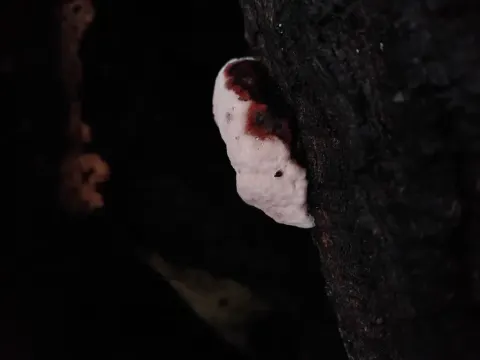
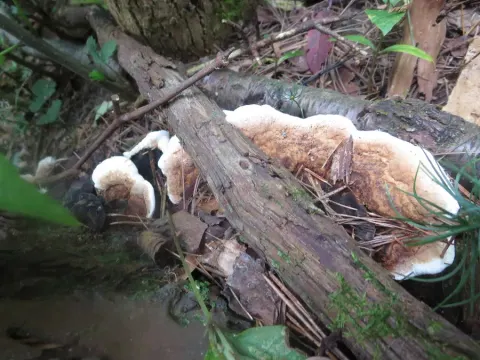
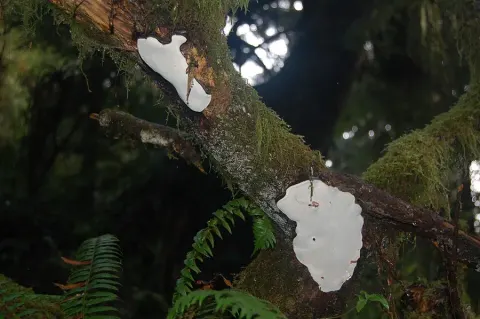
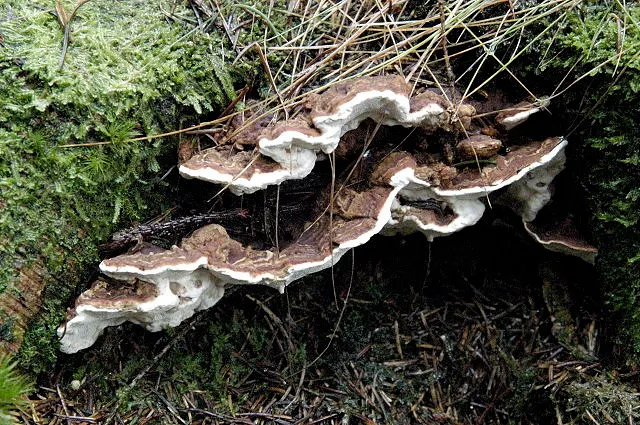
Tubuh berbuah jamur, yang juga dikenal sebagai basidiocarps, biasanya berlapis-lapis yang putih di sekitar margin dan cokelat gelap di permukaan atas yang tidak rata. They can juga memiliki bentuk resupinate, yang hanya terdiri dari kerak putih yang sesuai dengan bagian bawah pergelangan. Basidiocarps are hingga sekitar 40 cm diameter dan 3.5 cm tebal. Spor seksual yang disebut basidiospora dibuat di lapisan subur di permukaan bawah basidiocarps, sementara conidiospores terjadi di tahap asexual dan diproduksi pada mikroskopis "konidiofor" yang meletus melalui permukaan pohon inang. Conidiospores and basidiospores are both produced by this fungus, the latter being more important for infecting the conifers. Spesies ini tidak bisa dimakan.

Sebagian uraian ditampilkan dalam bahasa sumber; terjemahannya belum tersedia atau belum lolos pemeriksaan.

Rujukan: [1]

Pengukuran mengikuti objek, spesimen atau kultur, dan metode yang disebutkan sumber. Baca uraian asli untuk konteks lengkap.

02 / Kehidupan

Habitat dan peran ekologis

Pada musim panas, basidiospora, propagules infeksi utama, dilepaskan. Mereka basidiospora dibawa jauh oleh arus angin. They infect trees (usually conifers) through damage such as freshly cut stumps. Once on batang jamur mengkolonisasi dan bergerak ke akar melalui mycelium. Heterobasidion annosum bergerak jarak pendek dari akar pohon yang terinfeksi melalui tumbuhan akar dengan pohon lain. Ini juga bisa menyebar melalui serangga yang memakan akar. Since this fungus can not move very far through soil, it relies on tree roots to help it infect neighbouring trees. Di akar-akar ini, bisa tumbuh 0.1–2.0 m per tahun. Hal ini mengakibatkan penyebaran jamur dan penyakit celah di hutan. Kesenjangan penyakit ini dihasilkan ketika pohon mati dan jatuh, menciptakan kesenjangan di kanopi hutan. Kesenjangan ini mempengaruhi kelembaban dan sinar matahari yang tersedia, mengubah habitat tumbuhan dan hewan di lantai hutan. Spiniger meineckellus, nama untuk tahap asexual jamur ini, diproduksi pada batang ketika kondisi lembab, dan conidiospores yang dihasilkan akan dapat hidup di tanah hingga sepuluh bulan. Peran konidiospor tidak diketahui dalam proses infeksi dan dianggap tidak penting.

Sebagian uraian ditampilkan dalam bahasa sumber; terjemahannya belum tersedia atau belum lolos pemeriksaan.

Rujukan: [1]

Habitat atau konteks temuan
hutan
Substrat
Informasi belum tersedia pada sumber rilis ini.
Peran atau konteks
Belum dikategorikan pada rilis ini.
Temukan hubungan serupa
03 / Siklus hidup

Reproduksi

Tubuh berbuah jamur, yang juga dikenal sebagai basidiocarps, biasanya berlapis-lapis yang putih di sekitar margin dan cokelat gelap di permukaan atas yang tidak rata. They can juga memiliki bentuk resupinate, yang hanya terdiri dari kerak putih yang sesuai dengan bagian bawah pergelangan. Basidiocarps are hingga sekitar 40 cm diameter dan 3.5 cm tebal. Spor seksual yang disebut basidiospora dibuat di lapisan subur di permukaan bawah basidiocarps, sementara conidiospores terjadi di tahap asexual dan diproduksi pada mikroskopis "konidiofor" yang meletus melalui permukaan pohon inang. Conidiospores and basidiospores are both produced by this fungus, the latter being more important for infecting the conifers.

Sebagian uraian ditampilkan dalam bahasa sumber; terjemahannya belum tersedia atau belum lolos pemeriksaan.

Rujukan: [1]

Sinonim menurut acuan taksonomi rilis: Boletus annosus; Boletus cryptarum; Boletus epiphegus; Cunninghamella meineckella; Fomes annosus; Fomes annosus f. cryptarum; Fomes annosus f. makraulos; Fomes annosus f. resupinatus; Fomes annosus f. scutatus; Fomes annosus var. indicus; Fomes cryptarum; Fomitopsis annosa; Fomitopsis annosa f. multistriata; Fomitopsis annosa var. indica; Friesia annosa; Heterobasidion annosum f. cryptarum; Heterobasidion annosum f. incrustans; Heterobasidion annosum f. makraulos; Heterobasidion annosum f. scutatum; Heterobasidion annosum var. indicum; Heterobasidion annosum var. laricis; Heterobasidion annosum var. microsporum; Heterobasidion cryptarum; Inodermus cryptarum; Oedocephalum meineckellus; Physisporus makraulos; Physisporus makraulos subsp. nigromarginatus; Placodes annosus; Polyporus annosus; Polyporus annosus var. subpileatus; Polyporus batschii scutatus; Polyporus cryptarum; Polyporus cryptarum subsp. epiphegus; Polyporus makraulos; Polyporus marginatoides; Polyporus scoticus; Polyporus subpileatus; Polystictoides fuscus; Polystictus cryptarum; Poria cryptarum; Poria makraulos; Poria scutata; Scindalma annosum; Scindalma cryptarum; Spiniger meineckellus; Spongioides cryptarum; Trametes annosa; Trametes annosa var. subpileata; Trametes radiciperda; Trametes scutata; Trametes scutata var. mollis; Ungulina annosa; Ungulina annosa f. cryptarum; Ungulina annosa f. incrustans; Ungulina annosa f. makraulos
04 / Batas informasi

Catatan identitas dan cakupan

  • Nama diterima mengikuti Catalogue of Life Base2026-09-11; uraian mempertahankan konsep dan nama sumber aslinya.
  • Original geographic, specimen and life-cycle scope retained; source import awaits individual editorial review.
  • Impor dan terjemahan otomatis belum diperiksa editorial per profil. Struktur reproduktif yang disebutkan tidak membuktikan seluruh siklus hidup diketahui.
  • Pengukuran pada uraian mengikuti spesimen, kultur, dan metode sumber; angka tidak diperluas ke semua populasi.

Catatan distribusi dalam narasi mengikuti sumbernya. Dokumentasi spesimen atau foto mengikuti catatan sumber. Bukti wilayah Indonesia dan penilaian konservasi tidak disimpulkan dari gambar.

05 / Dokumentasi

Melihat dengan konteks

Dokumentasi Heterobasidion annosum dari Wikimedia Commons. Heterobasidion annosum from Commanster, Belgium. The determination of the species shown in this picture has been verified. Identifikasi mengikuti record berkas sumber.

Jenis
Fotografi
Kredit
James Lindsey — James Lindsey at Ecology of Commanster
Sumber media
Buka entri sumber

Gambar menunjukkan objek menurut identifikasi sumber, bukan verifikasi independen spesimen oleh Fungi. Tidak ada skala baru yang ditambahkan.

06 / Rujukan

Sumber profil

  1. [1] Heterobasidion annosum — Wikipedia (en)Bagian sumber: Frozen revision 1362643516
    Tanggal penghimpunan sumber: 2026-10-12
    Teks sumber: CC BY-SA4.0 · Wikipedia contributors
  2. [2] Catalogue of Life Base2026-09-11 — Heterobasidion annosumBagian sumber: ColDP NameUsage.tsv ID 3L7Q2; accepted species; source 2073
    Tanggal penghimpunan sumber: 2026-10-12
  3. [3] Dokumentasi visual — Heterobasidion annosumBagian sumber: Individual media record; identification follows the source, not independent determination
    Tanggal penghimpunan sumber: 2026-10-12
    Media sumber: CC BY-SA 3.0 · James Lindsey — James Lindsey at Ecology of Commanster

Adaptasi teks: CC BY-SA 4.0. Wikipedia contributors — Heterobasidion annosum — Wikipedia (en)

Uraian asli dan riwayat sumber

Riwayat atau halaman sumber

Ringkasan sumber

The fruiting bodies of the fungus, which are also known as basidiocarps, are normally brackets which are whitish around the margins and dark brown on the uneven, knobbly upper surface. They can also take a resupinate form, consisting only of a white crust which corresponds to the underside of the bracket. Basidiocarps are up to about 40 cm in diameter and 3.5 cm thick. Sexual spores called basidiospores are created in the fertile layer on the lower surface of the basidiocarps, whilst conidiospores occur in the asexual stage and are produced on microscopic "conidiophores" which erupt through the surface of the host tree.

Revisi sumber

Morfologi sumber

The fruiting bodies of the fungus, which are also known as basidiocarps, are normally brackets which are whitish around the margins and dark brown on the uneven, knobbly upper surface. They can also take a resupinate form, consisting only of a white crust which corresponds to the underside of the bracket. Basidiocarps are up to about 40 cm in diameter and 3.5 cm thick. Sexual spores called basidiospores are created in the fertile layer on the lower surface of the basidiocarps, whilst conidiospores occur in the asexual stage and are produced on microscopic "conidiophores" which erupt through the surface of the host tree. Conidiospores and basidiospores are both produced by this fungus, the latter being more important for infecting the conifers. The species is inedible.

Revisi sumber

Ekologi sumber

In the summertime, basidiospores, the primary infective propagules, are released. These basidiospores are carried long distances by wind currents. They infect trees (usually conifers) through damage such as freshly cut stumps. Once on the stump the fungus colonizes and moves into the root via mycelium. Heterobasidion annosum moves short distances from the roots of an infected stump through root grafts with other trees. It can also spread through insects that feed on roots. Since this fungus can not move very far through soil, it relies on tree roots to help it infect neighbouring trees. In these roots, it can grow 0.1–2.0 m per year. This results in a spread of the fungus and disease gaps in the forest. These disease gaps are produced when the trees die and fall, creating gaps in the forest canopy. These gaps affect the moisture and sunlight available, altering the habitats for plants and animals on the forest floor. Spiniger meineckellus, the name for the asexual stage of this fungus, is produced on stumps when the conditions are moist, and the conidiospores that are produced will be able to live in the soil for up to ten months. The role of conidiospores is unknown in the infection process and is not thought to be important.

Revisi sumber

Struktur reproduksi sumber

The fruiting bodies of the fungus, which are also known as basidiocarps, are normally brackets which are whitish around the margins and dark brown on the uneven, knobbly upper surface. They can also take a resupinate form, consisting only of a white crust which corresponds to the underside of the bracket. Basidiocarps are up to about 40 cm in diameter and 3.5 cm thick. Sexual spores called basidiospores are created in the fertile layer on the lower surface of the basidiocarps, whilst conidiospores occur in the asexual stage and are produced on microscopic "conidiophores" which erupt through the surface of the host tree. Conidiospores and basidiospores are both produced by this fungus, the latter being more important for infecting the conifers.

Revisi sumber

Rujukan halaman ini

Fungi. Heterobasidion annosum. Rilis data fungi-2026-10-12-expansion-2. https://fungi-atlas.mgadib.chatgpt.site/jamur/heterobasidion-annosum/.

Status: impor sumber; pemeriksaan editorial per profil belum selesai. Untuk klaim biologis, gunakan rujukan pada bagian terkait dan periksa konteks sumber aslinya.