Ciri dan struktur
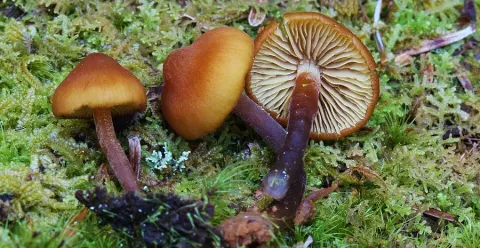
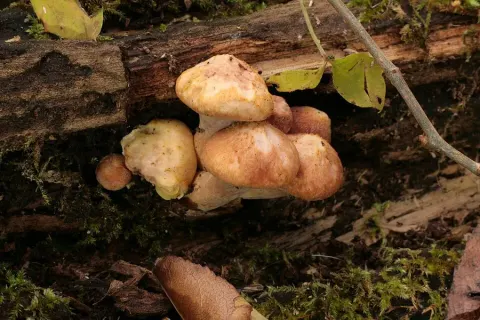
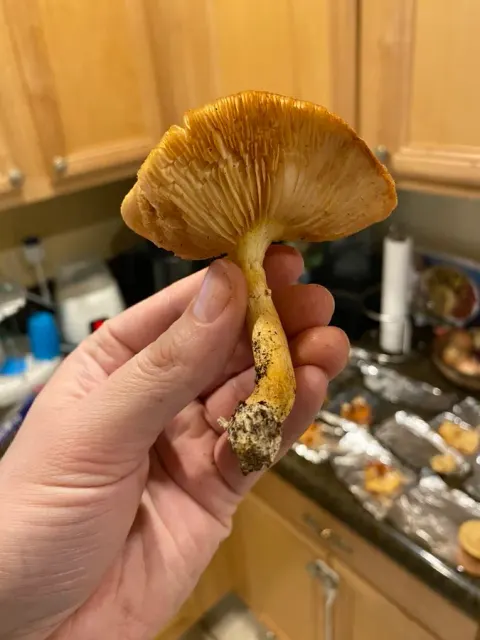
The cap is 5–15 cm across, convex with an incurved margin and expands to broadly convex to almost plane in age. The top is dry, fibrillose, and scaly, often with a blueish-green tinge when young. The color is variable, often with various bluish-green, pink, or vinaceous patches. The cap is sometimes cracked in age. The flesh is pallid to whitish, sometimes turning buff or pinkish-buff in age. The scales are tawny or reddish becoming dark brown. The gills are close or crowded, and broad. They are buff to yellow-orange or ochre, and adnexed to adnate. They are at first slightly decurrent, often seceding. The edges are even to slightly rough. The spore print is rusty to rusty-orange or rusty-cinnamon. it is flesh whitish, tinged greenish or bluish-green, becoming yellowish or pinkish-brown when dry. It is solid but becomes hollow and is sometimes striated. The spores are 6–9 μm by 3.5–4.5 μm and have no germ pore. They are roughened and elliptical. Pleurocystidia are rare and clamp connections are present. The basidia each have four spores.
Habitat dan peran ekologis
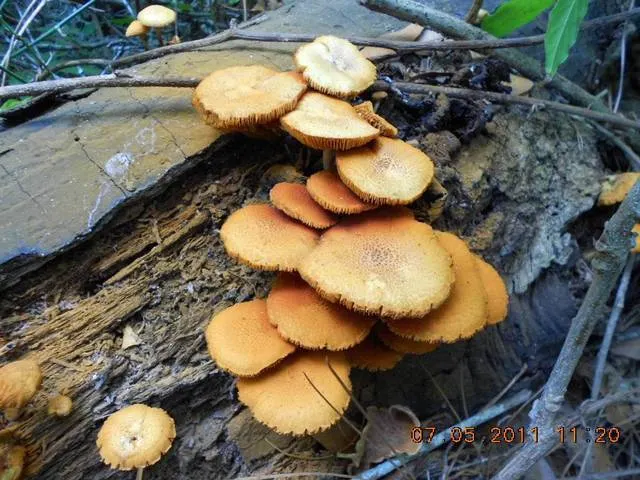
Gymnopilus aeruginosus tumbuh secara gregarious ke cespitosely pada batang, log, dan kayu lapis mulch / serbuk kayu keras dan konifer.
- Habitat atau konteks temuan
- Informasi belum tersedia pada sumber rilis ini.
- Substrat
- Informasi belum tersedia pada sumber rilis ini.
- Peran atau konteks
- Belum dikategorikan pada rilis ini.
Reproduksi
The gills are close or crowded, and broad. They are buff to yellow-orange or ochre, and adnexed to adnate. They are at first slightly decurrent, often seceding. The edges are even to slightly rough. The spore print is rusty to rusty-orange or rusty-cinnamon. it is flesh whitish, tinged greenish or bluish-green, becoming yellowish or pinkish-brown when dry. It is solid but becomes hollow and is sometimes striated. The spores are 6–9 μm by 3.5–4.5 μm and have no germ pore. They are roughened and elliptical. Pleurocystidia are rare and clamp connections are present. The basidia each have four spores.
Catatan identitas dan cakupan
- Nama diterima mengikuti Catalogue of Life Base2026-09-11; uraian mempertahankan konsep dan nama sumber aslinya.
- Original geographic, specimen and life-cycle scope retained; source import awaits individual editorial review.
- Impor dan terjemahan otomatis belum diperiksa editorial per profil. Struktur reproduktif yang disebutkan tidak membuktikan seluruh siklus hidup diketahui.
- Pengukuran pada uraian mengikuti spesimen, kultur, dan metode sumber; angka tidak diperluas ke semua populasi.
Catatan distribusi dalam narasi mengikuti sumbernya. Dokumentasi spesimen atau foto mengikuti catatan sumber. Bukti wilayah Indonesia dan penilaian konservasi tidak disimpulkan dari gambar.
Melihat dengan konteks
Dokumentasi Gymnopilus aeruginosus menurut asosiasi foto pada record takson iNaturalist. Kredit: Richard and Danielle. Identitas mengikuti sumber; bukan penentuan spesimen independen.
- Jenis
- Fotografi
- Kredit
- (c) Richard and Danielle, some rights reserved (CC BY-SA)
- Lisensi
- CC BY-SA 4.0
- Sumber media
- Buka entri sumber
Dokumentasi tambahan
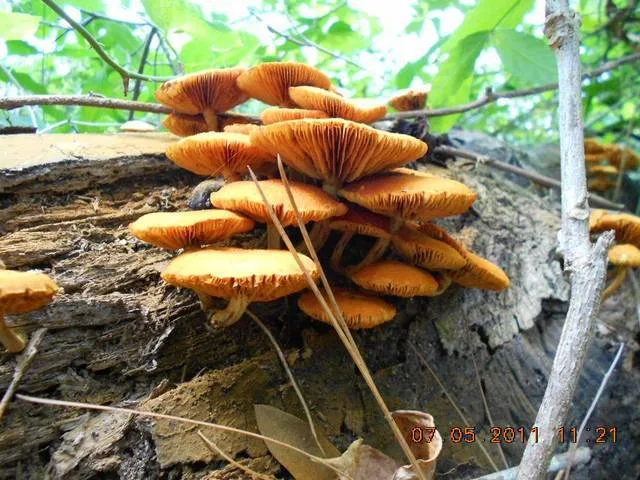
Foto yang diasosiasikan dengan Gymnopilus aeruginosus pada iNaturalist. Identifikasi mengikuti sumber; bukan penentuan spesimen independen.
Kredit dan penggunaan
(c) Richard and Danielle, some rights reserved (CC BY-SA)
Ukuran dan format gambar disesuaikan tanpa pemotongan, retus, atau penambahan skala. Lisensi sumber dipertahankan.
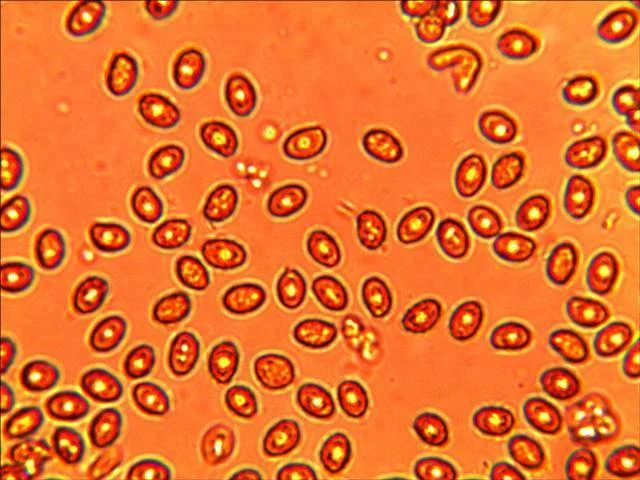
Preparat mikroskopis yang diasosiasikan dengan Gymnopilus aeruginosus pada iNaturalist. Identitas mengikuti sumber.
Kredit dan penggunaan
(c) Richard and Danielle, some rights reserved (CC BY-SA)
Ukuran dan format gambar disesuaikan tanpa pemotongan, retus, atau penambahan skala. Lisensi sumber dipertahankan.
Sumber profil
- [1] Gymnopilus aeruginosus — Wikipedia (en)
- [2] Catalogue of Life Base2026-09-11 — Gymnopilus aeruginosus
- [3] Dokumentasi visual — Gymnopilus aeruginosus
- [4] Dokumentasi visual — Gymnopilus aeruginosus
- [5] Dokumentasi visual — Gymnopilus aeruginosus
Rujukan halaman ini
Fungi. Gymnopilus aeruginosus. Rilis data fungi-2026-10-12-expansion-2. https://fungi-atlas.mgadib.chatgpt.site/jamur/gymnopilus-aeruginosus/.
Status: impor sumber; pemeriksaan editorial per profil belum selesai. Untuk klaim biologis, gunakan rujukan pada bagian terkait dan periksa konteks sumber aslinya.