Ciri dan struktur
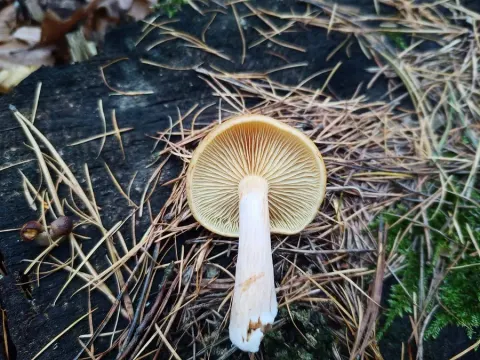
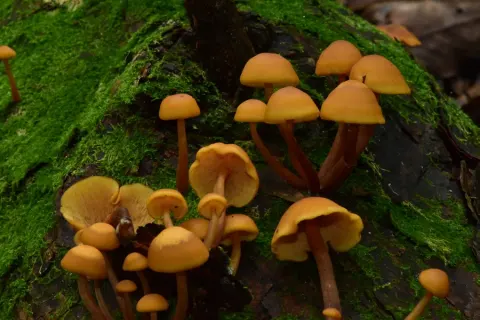
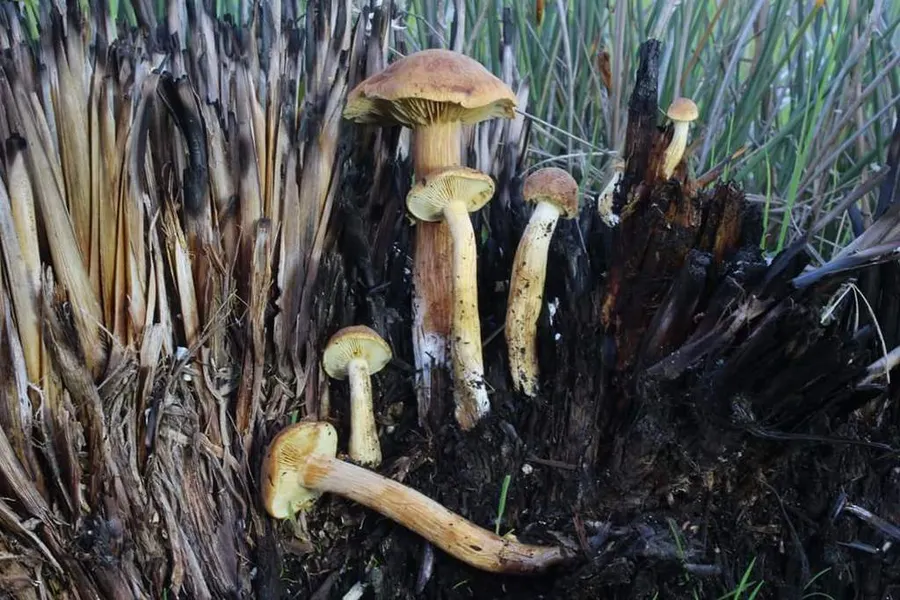
Gymnopilus maritimus mushrooms have a cap of between 15 and 70 mm in width that is convex to flattened-convex in shape. There is sometimes a broad umbo, and in older specimens, the cap is depressed in the centre. The margin of the cap is somewhat wavey. The cap surface is dry and dull, coloured red to red-orange, and yellow towards the margin. It is covered in fibrils of an orange colour, and sometimes has minute scales. The dried cap turns blackish-red when potassium hydroxide is applied. The stem is 35 to 110 mm in length by 4 to 8 mm in width. It is attached centrally to the cap, and is either completely cylindrical, with equal thickness throughout its length, or slightly narrower towards the base, where whitish or cream mycelia are sometimes visible. It is dry, with fibres and furrows. It is a yellowish colour, bruising reddish brown. The yellow (brown at the bottom of the stem) flesh can be up to 15 mm thick in the cap and does not bruise. It dries dark brown. There is no distinctive odour, and the taste is mild or slightly bitter. The thick gills can be adnate (connected to the stem by the entire depth of the gill) or sinuate (wavy, with the gills becoming shallower than deeper). They are subdistant (neither close nor distant) and swollen in the middle. In colour, they are yellow in the youngest mushrooms, turning an ochre-orange, while the oldest mushrooms they are rust. The gill edges are paler than the faces, and the gills stain orange-brown or darker. Gymnopilus maritimus leaves a rusty-brown spore print. The basidiospores can measure 7.5 - 11.5 μm in length, though the typical range is 8 - 10.5 μm.
Habitat dan peran ekologis
Gymnopilus maritimus hanya dikenal dari satu situs di Pittulongu, sebuah daerah Olbia, di Sardinia, Italia, yang merupakan lokasi tipe. Di sana, jamur ditemukan tumbuh dalam kelompok dekat dan tuft di pasir pantai sekitar 10 m dari garis pasang surut. antara akhir October and Januari. Selain koleksi di Sardinia, Contu and Vizzini speculate bahwa laporan tentang G. fulgens tumbuh di "tanah pasir-dune" di Inggris Raya, habitat yang tidak biasa untuk spesies itu, sebenarnya dapat menunjukkan adanya G. maritimus di pulau itu.
- Habitat atau konteks temuan
- Informasi belum tersedia pada sumber rilis ini.
- Substrat
- Informasi belum tersedia pada sumber rilis ini.
- Peran atau konteks
- Belum dikategorikan pada rilis ini.
Reproduksi
Gymnopilus maritimus leaves a rusty-brown spore print. The basidiospores can measure 7.5 - 11.5 μm in length, though the typical range is 8 - 10.5 μm. In width, they typically measure 5.5 - 7.5 μm, but they can be up to 8 μm wide. In shape, they are ellipsoid or sometimes broadly ellipsoid. The top of the spore (the side where it was once attached to the sterigma, the connection between the basidium and the spore) is rounded and blunt. The spores are covered with fairly large warts, measuring from 0.5 - 2 μm from the main spore in height. There is no germ pore or plage, and there is no clear depression around the hilum (the area where the spore was attached to the sterigma). The spores turn an orange-yellow to orange-brown colour in potassium hydroxide, and turn reddish-brown in Melzer's reagent and in Lugol's iodine, but they are not metachromatic.
Catatan identitas dan cakupan
- Nama diterima mengikuti Catalogue of Life Base2026-09-11; uraian mempertahankan konsep dan nama sumber aslinya.
- Original geographic, specimen and life-cycle scope retained; source import awaits individual editorial review.
- Impor dan terjemahan otomatis belum diperiksa editorial per profil. Struktur reproduktif yang disebutkan tidak membuktikan seluruh siklus hidup diketahui.
- Pengukuran pada uraian mengikuti spesimen, kultur, dan metode sumber; angka tidak diperluas ke semua populasi.
Catatan distribusi dalam narasi mengikuti sumbernya. Dokumentasi spesimen atau foto mengikuti catatan sumber. Bukti wilayah Indonesia dan penilaian konservasi tidak disimpulkan dari gambar.
Melihat dengan konteks
Dokumentasi Gymnopilus maritimus menurut asosiasi foto pada record takson iNaturalist. Kredit: Davide Puddu. Identitas mengikuti sumber; bukan penentuan spesimen independen.
- Jenis
- Fotografi
- Kredit
- (c) Davide Puddu, some rights reserved (CC BY), uploaded by Davide Puddu
- Lisensi
- CC BY 4.0
- Sumber media
- Buka entri sumber
Dokumentasi tambahan
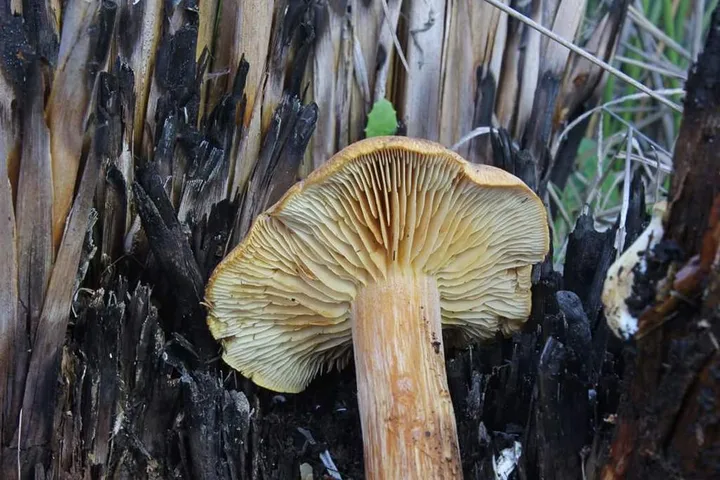
Foto yang diasosiasikan dengan Gymnopilus maritimus pada iNaturalist. Identifikasi mengikuti sumber; bukan penentuan spesimen independen.
Kredit dan penggunaan
(c) Davide Puddu, some rights reserved (CC BY), uploaded by Davide Puddu
Ukuran dan format gambar disesuaikan tanpa pemotongan, retus, atau penambahan skala. Lisensi sumber dipertahankan.
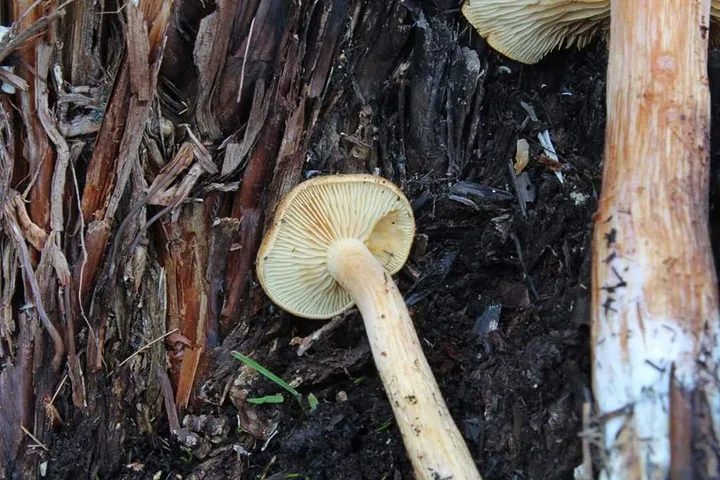
Foto yang diasosiasikan dengan Gymnopilus maritimus pada iNaturalist. Identifikasi mengikuti sumber; bukan penentuan spesimen independen.
Kredit dan penggunaan
(c) Davide Puddu, some rights reserved (CC BY), uploaded by Davide Puddu
Ukuran dan format gambar disesuaikan tanpa pemotongan, retus, atau penambahan skala. Lisensi sumber dipertahankan.
Sumber profil
- [1] Gymnopilus maritimus — Wikipedia (en)
- [2] Catalogue of Life Base2026-09-11 — Gymnopilus maritimus
- [3] Dokumentasi visual — Gymnopilus maritimus
- [4] Dokumentasi visual — Gymnopilus maritimus
- [5] Dokumentasi visual — Gymnopilus maritimus
Rujukan halaman ini
Fungi. Gymnopilus maritimus. Rilis data fungi-2026-10-12-expansion-2. https://fungi-atlas.mgadib.chatgpt.site/jamur/gymnopilus-maritimus/.
Status: impor sumber; pemeriksaan editorial per profil belum selesai. Untuk klaim biologis, gunakan rujukan pada bagian terkait dan periksa konteks sumber aslinya.