01 / Morfologi

Ciri dan struktur

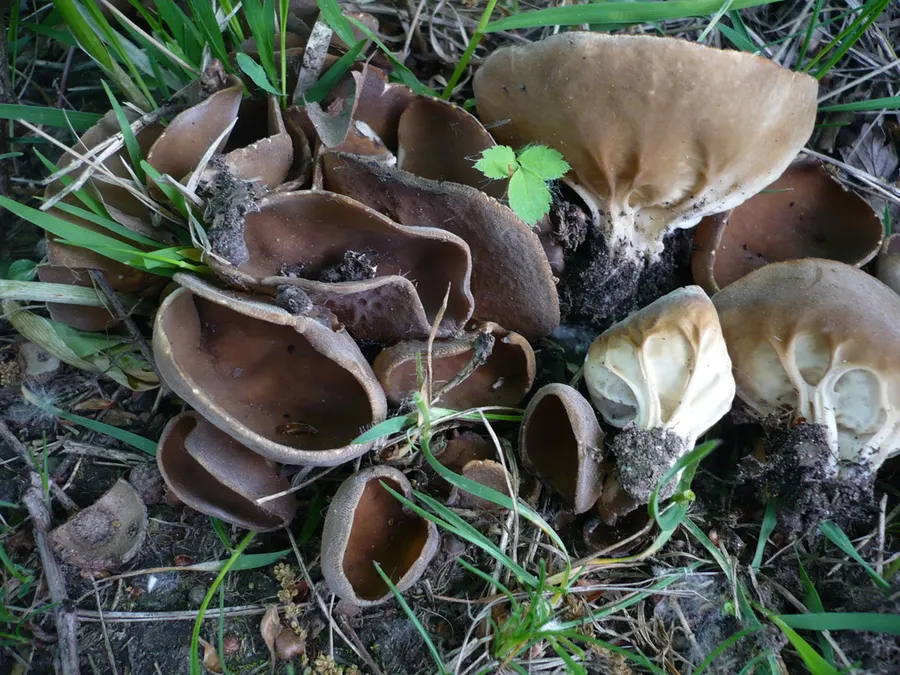
Helvella acetabulum has a deeply cup-shaped fruit body (technically an apothecium) that is up to 8 cm in diameter, and 4 cm deep. The cream-colored stem is typically 1 to 6 cm tall by 1 to 3 cm thick, with ribs extending almost to the top of the fruit body. The fruit body's exterior surface is cream-colored towards the stem and may feel subtly grainy near the margin. The inner spore-bearing surface, the hymenium, is brownish and possibly smooth or slightly wavy. The mushroom's odor and taste are not distinctive. The spores are smooth, elliptical, translucent (hyaline), and contain a single central oil droplet; they have dimensions of 18–20 by 12–14 μm. The spore-bearing cells, the asci, are 350–400 by 15–20 μm, are operculate—meaning they have an apical "lid" that releases the spores. The tips of the asci are inamyloid, so they do not adsorb iodine when stained with Melzer's reagent. The paraphyses are club-shaped, and have a pale brown color, with tips that are up to 10 μm thick.

Sebagian uraian ditampilkan dalam bahasa sumber; terjemahannya belum tersedia atau belum lolos pemeriksaan.

Rujukan: [1]

Pengukuran mengikuti objek, spesimen atau kultur, dan metode yang disebutkan sumber. Baca uraian asli untuk konteks lengkap.

02 / Kehidupan

Habitat dan peran ekologis

This fungus is widespread in North America and Europe. In North America, the distribution extends north to Alberta, Canada. In Mexico, it has been collected from State of Mexico, Guanajuato, Guerrero, and Tlaxcala. It is also found in Israel, Jordan, Turkey, Iran China (Xinjiang) and Japan. The fruit bodies grows solitary, scattered, or clustered together on soil in both coniferous and deciduous woods, typically in spring and summer. A preference for growing in association with coast live oak (Quercus agrifolia) has been noted for Californian populations.

Sebagian uraian ditampilkan dalam bahasa sumber; terjemahannya belum tersedia atau belum lolos pemeriksaan.

Rujukan: [1]

Habitat atau konteks temuan
Informasi belum tersedia pada sumber rilis ini.
Substrat
tanah
Peran atau konteks
Belum dikategorikan pada rilis ini.
Temukan hubungan serupa
03 / Siklus hidup

Reproduksi

Helvella acetabulum has a deeply cup-shaped fruit body (technically an apothecium) that is up to 8 cm in diameter, and 4 cm deep. The cream-colored stem is typically 1 to 6 cm tall by 1 to 3 cm thick, with ribs extending almost to the top of the fruit body. The fruit body's exterior surface is cream-colored towards the stem and may feel subtly grainy near the margin. The inner spore-bearing surface, the hymenium, is brownish and possibly smooth or slightly wavy. The mushroom's odor and taste are not distinctive. The spores are smooth, elliptical, translucent (hyaline), and contain a single central oil droplet; they have dimensions of 18–20 by 12–14 μm. The spore-bearing cells, the asci, are 350–400 by 15–20 μm, are operculate—meaning they have an apical "lid" that releases the spores.

Sebagian uraian ditampilkan dalam bahasa sumber; terjemahannya belum tersedia atau belum lolos pemeriksaan.

Rujukan: [1]

Sinonim menurut acuan taksonomi rilis: Acetabula acetabulum; Acetabula barlae; Acetabula vulgaris; Acetabula vulgaris f. barlae; Acetabula vulgaris f. pallescens; Acetabula vulgaris var. alba; Aleuria acetabulum; Macroscyphus acetabuliforme; Paxina acetabulum; Paxina barlae; Peziza acetabulum; Peziza acetabulum var. velutina; Phleboscyphus acetabulum; Phleboscyphus vulgaris
04 / Batas informasi

Catatan identitas dan cakupan

  • Nama diterima mengikuti Catalogue of Life Base2026-09-11; uraian mempertahankan konsep dan nama sumber aslinya.
  • Original geographic, specimen and life-cycle scope retained; source import awaits individual editorial review.
  • Impor dan terjemahan otomatis belum diperiksa editorial per profil. Struktur reproduktif yang disebutkan tidak membuktikan seluruh siklus hidup diketahui.
  • Pengukuran pada uraian mengikuti spesimen, kultur, dan metode sumber; angka tidak diperluas ke semua populasi.

Catatan distribusi dalam narasi mengikuti sumbernya. Dokumentasi spesimen atau foto mengikuti catatan sumber. Bukti wilayah Indonesia dan penilaian konservasi tidak disimpulkan dari gambar.

05 / Dokumentasi

Melihat dengan konteks

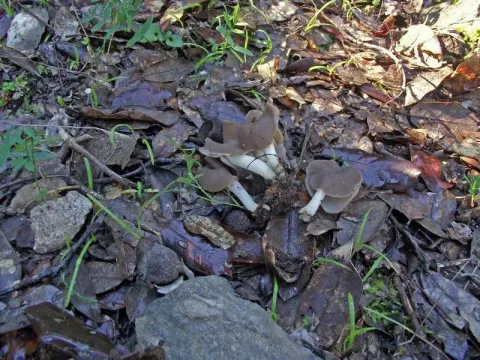
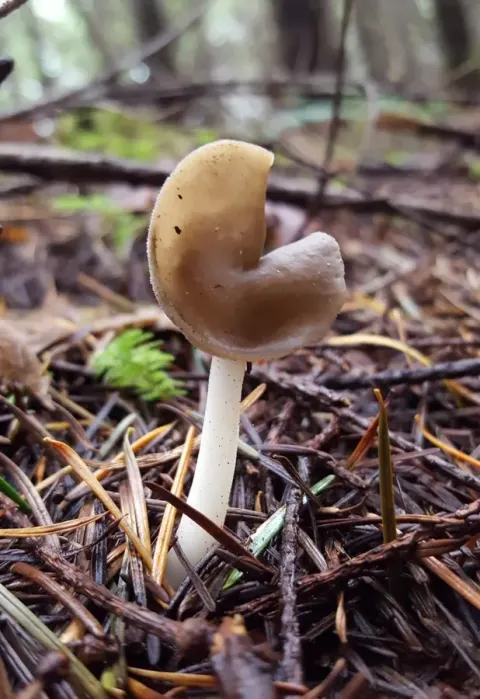
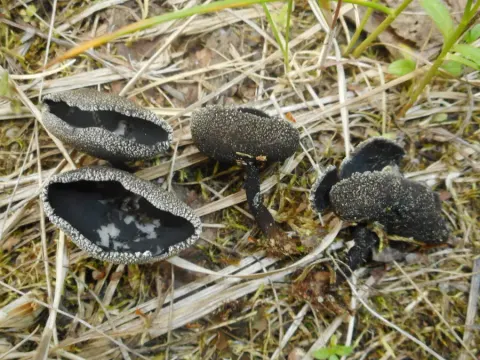
Dokumentasi Helvella acetabulum menurut asosiasi foto pada record takson iNaturalist. Kredit: anonymous. Identitas mengikuti sumber; bukan penentuan spesimen independen.

Jenis
Fotografi
Kredit
(c) anonymous, some rights reserved (CC BY-SA)
Sumber media
Buka entri sumber

Gambar menunjukkan objek menurut identifikasi sumber, bukan verifikasi independen spesimen oleh Fungi. Tidak ada skala baru yang ditambahkan.

06 / Rujukan

Sumber profil

  1. [1] Helvella acetabulum — Wikipedia (en)Bagian sumber: Frozen revision 1314289817
    Tanggal penghimpunan sumber: 2026-10-12
    Teks sumber: CC BY-SA4.0 · Wikipedia contributors
  2. [2] Catalogue of Life Base2026-09-11 — Helvella acetabulumBagian sumber: ColDP NameUsage.tsv ID 3KJV4; accepted species; source 2073
    Tanggal penghimpunan sumber: 2026-10-12
  3. [3] Dokumentasi visual — Helvella acetabulumBagian sumber: Individual media record; identification follows the source, not independent determination
    Tanggal penghimpunan sumber: 2026-10-12
    Media sumber: CC BY-SA 4.0 · (c) anonymous, some rights reserved (CC BY-SA)

Adaptasi teks: CC BY-SA 4.0. Wikipedia contributors — Helvella acetabulum — Wikipedia (en)

Uraian asli dan riwayat sumber

Riwayat atau halaman sumber

Ringkasan sumber

Helvella acetabulum is a species of fungus in the family Helvellaceae, order Pezizales. This relatively large cup-shaped fungus is characterized by a tan fruit body with prominent branching ribs resembling a cabbage leaf; for this reason it is commonly known as the cabbage leaf Helvella. Other colloquial names include the vinegar cup and the brown ribbed elfin cup. The fruit bodies reaches dimensions of 8 cm by 4 cm tall. It is found in Eurasia and North America, where it grows in sandy soils, under both coniferous and deciduous trees.

Revisi sumber

Morfologi sumber

Helvella acetabulum has a deeply cup-shaped fruit body (technically an apothecium) that is up to 8 cm in diameter, and 4 cm deep. The cream-colored stem is typically 1 to 6 cm tall by 1 to 3 cm thick, with ribs extending almost to the top of the fruit body. The fruit body's exterior surface is cream-colored towards the stem and may feel subtly grainy near the margin. The inner spore-bearing surface, the hymenium, is brownish and possibly smooth or slightly wavy. The mushroom's odor and taste are not distinctive. The spores are smooth, elliptical, translucent (hyaline), and contain a single central oil droplet; they have dimensions of 18–20 by 12–14 μm. The spore-bearing cells, the asci, are 350–400 by 15–20 μm, are operculate—meaning they have an apical "lid" that releases the spores. The tips of the asci are inamyloid, so they do not adsorb iodine when stained with Melzer's reagent. The paraphyses are club-shaped, and have a pale brown color, with tips that are up to 10 μm thick.

Revisi sumber

Ekologi sumber

This fungus is widespread in North America and Europe. In North America, the distribution extends north to Alberta, Canada. In Mexico, it has been collected from State of Mexico, Guanajuato, Guerrero, and Tlaxcala. It is also found in Israel, Jordan, Turkey, Iran China (Xinjiang) and Japan. The fruit bodies grows solitary, scattered, or clustered together on soil in both coniferous and deciduous woods, typically in spring and summer. A preference for growing in association with coast live oak (Quercus agrifolia) has been noted for Californian populations.

Revisi sumber

Struktur reproduksi sumber

Helvella acetabulum has a deeply cup-shaped fruit body (technically an apothecium) that is up to 8 cm in diameter, and 4 cm deep. The cream-colored stem is typically 1 to 6 cm tall by 1 to 3 cm thick, with ribs extending almost to the top of the fruit body. The fruit body's exterior surface is cream-colored towards the stem and may feel subtly grainy near the margin. The inner spore-bearing surface, the hymenium, is brownish and possibly smooth or slightly wavy. The mushroom's odor and taste are not distinctive. The spores are smooth, elliptical, translucent (hyaline), and contain a single central oil droplet; they have dimensions of 18–20 by 12–14 μm. The spore-bearing cells, the asci, are 350–400 by 15–20 μm, are operculate—meaning they have an apical "lid" that releases the spores.

Revisi sumber

Rujukan halaman ini

Fungi. Helvella acetabulum. Rilis data fungi-2026-10-12-expansion-2. https://fungi-atlas.mgadib.chatgpt.site/jamur/helvella-acetabulum/.

Status: impor sumber; pemeriksaan editorial per profil belum selesai. Untuk klaim biologis, gunakan rujukan pada bagian terkait dan periksa konteks sumber aslinya.