01 / Morfologi

Ciri dan struktur

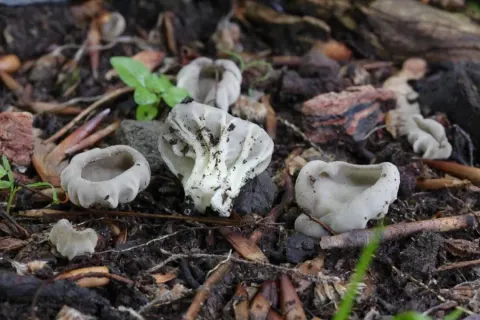
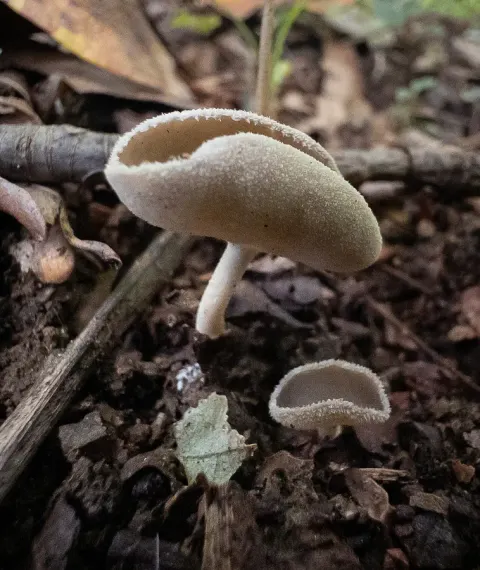
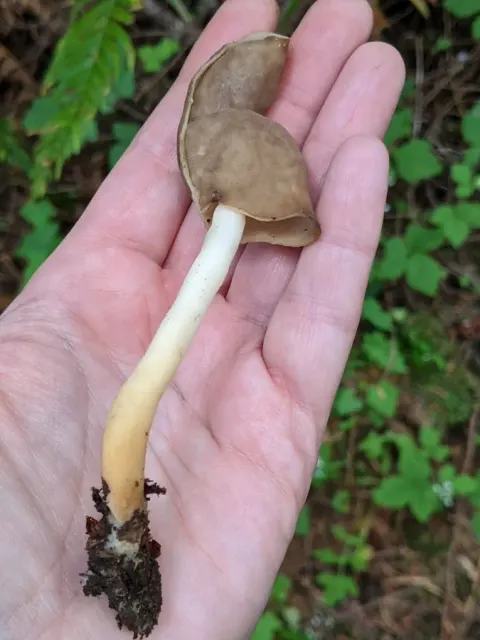
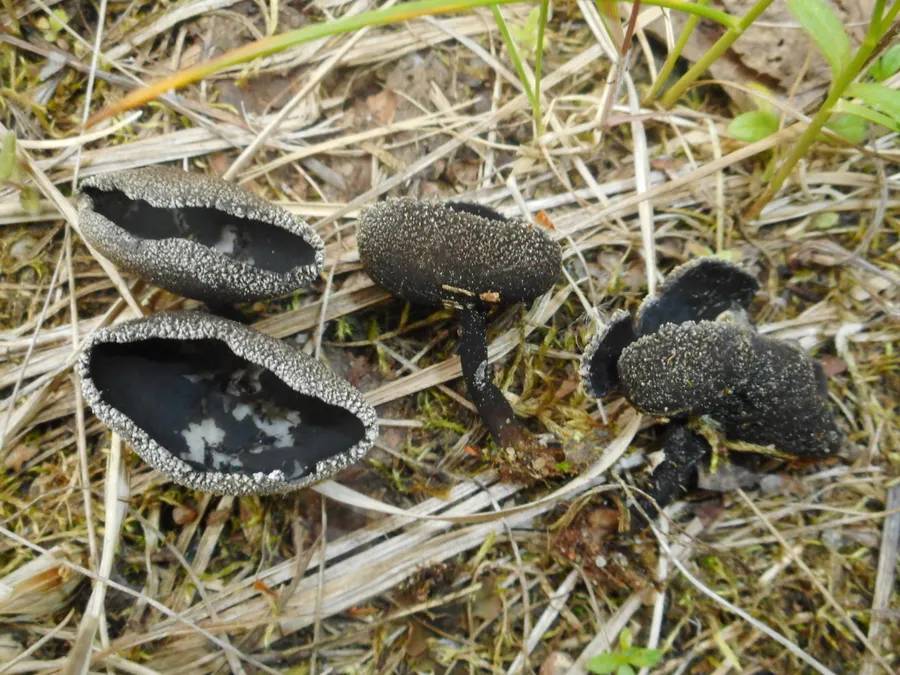
The black fruit body (technically called an apothecium) is cup-shaped, covered with either scales or small silk-like surface fibrils (fibrillose), and up to 5 cm in diameter. The upper margin of the fruit body cup may be rounded with scalloped or lobed edges (crenate). The short, slender stipe (typically 0.6 to 1.8 cm tall) is black on the upper part, but gray at the base; it is cylindrical and tapering (terete) with rounded ribs at its base. The odor and taste are not distinctive. The spores are ellipsoid in shape, and measure 17–21 by 10–12 μm. They are hyaline (translucent), and contain a single central oil drop (guttulate). The spore-bearing cells, the asci, are 225–250 by 12–17 μm.

Sebagian uraian ditampilkan dalam bahasa sumber; terjemahannya belum tersedia atau belum lolos pemeriksaan.

Rujukan: [1]

Pengukuran mengikuti objek, spesimen atau kultur, dan metode yang disebutkan sumber. Baca uraian asli untuk konteks lengkap.

02 / Kehidupan

Habitat dan peran ekologis

Helvella corium has been collected from Asia, Europe, and North America. It is uncommon despite the scope of its distribution. Fruit bodies grow solitary, scattered, or clustered in groups. It is often found in association with the trees Populus tremuloides or Thuja plicata, or with shrubs from genus Salix (such as Salix herbacea and Salix glauca), Shepherdia canadensis or shrubs from the genus Dryas. Jordan notes a preference for growing on sandy soils or in dunes. This mushroom appears to have a high tolerance for otherwise inhospitable growing conditions, as it has been found growing on caustic spoil mounds (the end-product of many mining and manufacturing operations) of a alkali factory in Kraków, Poland, as well as on abandoned uranium tailings in Ontario, Canada.

Sebagian uraian ditampilkan dalam bahasa sumber; terjemahannya belum tersedia atau belum lolos pemeriksaan.

Rujukan: [1]

Habitat atau konteks temuan
Informasi belum tersedia pada sumber rilis ini.
Substrat
Informasi belum tersedia pada sumber rilis ini.
Peran atau konteks
Belum dikategorikan pada rilis ini.
Temukan hubungan serupa
03 / Siklus hidup

Reproduksi

The spores are ellipsoid in shape, and measure 17–21 by 10–12 μm. They are hyaline (translucent), and contain a single central oil drop (guttulate). The spore-bearing cells, the asci, are 225–250 by 12–17 μm.

Sebagian uraian ditampilkan dalam bahasa sumber; terjemahannya belum tersedia atau belum lolos pemeriksaan.

Rujukan: [1]

Sinonim menurut acuan taksonomi rilis: Aleuria corium; Cowlesia corium; Cyathipodia corium; Cyathipodia corium var. alpestris; Fuckelina corium; Helvella alpestris; Helvella arctica var. macrosperma; Helvella corium f. alpestris; Helvella corium var. macrosperma; Helvella macrosperma; Lachnea corium; Leptopodia alpestris; Leptopodia corium; Leptopodia murina var. alpestris; Macropodia corium; Paxina corium; Peziza corium; Sarcoscypha corium
04 / Batas informasi

Catatan identitas dan cakupan

  • Nama diterima mengikuti Catalogue of Life Base2026-09-11; uraian mempertahankan konsep dan nama sumber aslinya.
  • Original geographic, specimen and life-cycle scope retained; source import awaits individual editorial review.
  • Impor dan terjemahan otomatis belum diperiksa editorial per profil. Struktur reproduktif yang disebutkan tidak membuktikan seluruh siklus hidup diketahui.
  • Pengukuran pada uraian mengikuti spesimen, kultur, dan metode sumber; angka tidak diperluas ke semua populasi.

Catatan distribusi dalam narasi mengikuti sumbernya. Dokumentasi spesimen atau foto mengikuti catatan sumber. Bukti wilayah Indonesia dan penilaian konservasi tidak disimpulkan dari gambar.

05 / Dokumentasi

Melihat dengan konteks

Dokumentasi Helvella corium menurut asosiasi foto pada record takson iNaturalist. Kredit: Eugene Popov. Identitas mengikuti sumber; bukan penentuan spesimen independen.

Jenis
Fotografi
Kredit
(c) Eugene Popov, some rights reserved (CC BY), uploaded by Eugene Popov
Lisensi
CC BY 4.0
Sumber media
Buka entri sumber

Gambar menunjukkan objek menurut identifikasi sumber, bukan verifikasi independen spesimen oleh Fungi. Tidak ada skala baru yang ditambahkan.

06 / Rujukan

Sumber profil

  1. [1] Helvella corium — Wikipedia (en)Bagian sumber: Frozen revision 1223709023
    Tanggal penghimpunan sumber: 2026-10-12
    Teks sumber: CC BY-SA4.0 · Wikipedia contributors
  2. [2] Catalogue of Life Base2026-09-11 — Helvella coriumBagian sumber: ColDP NameUsage.tsv ID 3KJWZ; accepted species; source 2073
    Tanggal penghimpunan sumber: 2026-10-12
  3. [3] Dokumentasi visual — Helvella coriumBagian sumber: Individual media record; identification follows the source, not independent determination
    Tanggal penghimpunan sumber: 2026-10-12
    Media sumber: CC BY 4.0 · (c) Eugene Popov, some rights reserved (CC BY), uploaded by Eugene Popov

Adaptasi teks: CC BY-SA 4.0. Wikipedia contributors — Helvella corium — Wikipedia (en)

Uraian asli dan riwayat sumber

Riwayat atau halaman sumber

Ringkasan sumber

Helvella corium is a species of fungus in the family Helvellaceae of the order Pezizales. This inedible cup-shaped fungus is black, and grows on the ground often near willows in deciduous or mixed forests.

Revisi sumber

Morfologi sumber

The black fruit body (technically called an apothecium) is cup-shaped, covered with either scales or small silk-like surface fibrils (fibrillose), and up to 5 cm in diameter. The upper margin of the fruit body cup may be rounded with scalloped or lobed edges (crenate). The short, slender stipe (typically 0.6 to 1.8 cm tall) is black on the upper part, but gray at the base; it is cylindrical and tapering (terete) with rounded ribs at its base. The odor and taste are not distinctive. The spores are ellipsoid in shape, and measure 17–21 by 10–12 μm. They are hyaline (translucent), and contain a single central oil drop (guttulate). The spore-bearing cells, the asci, are 225–250 by 12–17 μm.

Revisi sumber

Ekologi sumber

Helvella corium has been collected from Asia, Europe, and North America. It is uncommon despite the scope of its distribution. Fruit bodies grow solitary, scattered, or clustered in groups. It is often found in association with the trees Populus tremuloides or Thuja plicata, or with shrubs from genus Salix (such as Salix herbacea and Salix glauca), Shepherdia canadensis or shrubs from the genus Dryas. Jordan notes a preference for growing on sandy soils or in dunes. This mushroom appears to have a high tolerance for otherwise inhospitable growing conditions, as it has been found growing on caustic spoil mounds (the end-product of many mining and manufacturing operations) of a alkali factory in Kraków, Poland, as well as on abandoned uranium tailings in Ontario, Canada.

Revisi sumber

Struktur reproduksi sumber

The spores are ellipsoid in shape, and measure 17–21 by 10–12 μm. They are hyaline (translucent), and contain a single central oil drop (guttulate). The spore-bearing cells, the asci, are 225–250 by 12–17 μm.

Revisi sumber

Rujukan halaman ini

Fungi. Helvella corium. Rilis data fungi-2026-10-12-expansion-2. https://fungi-atlas.mgadib.chatgpt.site/jamur/helvella-corium/.

Status: impor sumber; pemeriksaan editorial per profil belum selesai. Untuk klaim biologis, gunakan rujukan pada bagian terkait dan periksa konteks sumber aslinya.