Ciri dan struktur
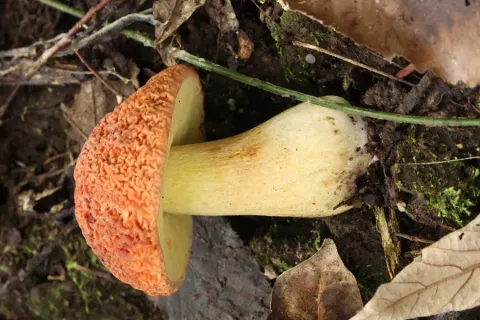
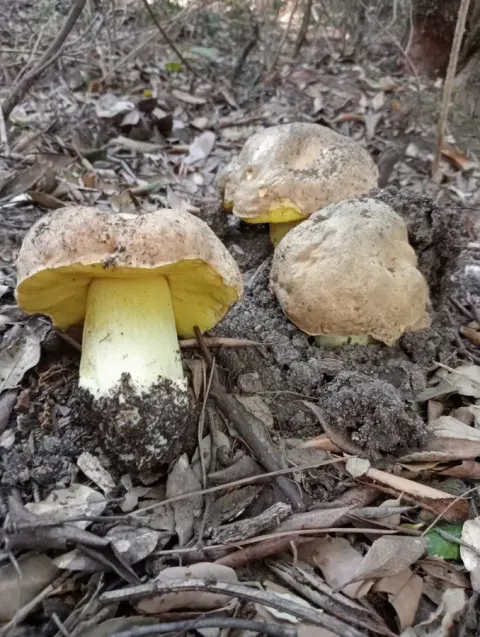
Diagnosis: Differs from other Hemileccinum species by the combined characters of the dense fine-grained scales on the stipe surface, the shorter basidiospores measuring 9–11 × 4–5 µm and small basidia measuring 18.5–27.0 × 8–11 µm. Description: Basidioma stipitate-pileate, fleshy, small to medium-sized. Pileus 9 cm diam, glabrous to slightly subtomentose, dry, convex to planate, pale yellow-brown (2A3) to pale red-brown (7A5); context yellowish (3A5–3A6), unchanging when bruised. Hymenophoral surface and tubes concolorous, flash yellow (3A8) to dull yellow (3B3–3B4), unchanging when bruised, pores roundish, 1.0–1.5/mm, tubes 11 mm long, unchanging when injured. Stipe 13–15 cm long, 2.0–2.3 cm wide, subcyclindrical, surface of stipe cream (2A2–3A2) to yellowish (2A4–2A5) at upper part, pale yellow-brown to yellow-brown (6C8) at lower part, covered with small yellowish brown (5D8) dotted scales, context of stipe cream to pale yellow (1A2–1A3), unchanging when bruised. Basal mycelium white to cream (2A2–3A2).
Habitat dan peran ekologis
Habitat and distribution: Scattered in subtropical forests dominated by the families Fagaceae (Castanopsis calathiformis, Ca. indica, Ca. orthacantha, Lithocarpus hancei, L. mairei and Quercus griffithii) and Pinaceae (Pinus yunnanensis or P. armandii); on acidic or slightly alkaline, loamy soils; rather rare; fruiting in July to August in southwestern to northwestern Yunnan between 1700 and 2120 m altitude.
- Habitat atau konteks temuan
- hutan
- Substrat
- Informasi belum tersedia pada sumber rilis ini.
- Peran atau konteks
- Belum dikategorikan pada rilis ini.
Reproduksi
Diagnosis: Differs from other Hemileccinum species by the combined characters of the dense fine-grained scales on the stipe surface, the shorter basidiospores measuring 9–11 × 4–5 µm and small basidia measuring 18.5–27.0 × 8–11 µm. Description: Basidioma stipitate-pileate, fleshy, small to medium-sized. Pileus 9 cm diam, glabrous to slightly subtomentose, dry, convex to planate, pale yellow-brown (2A3) to pale red-brown (7A5); context yellowish (3A5–3A6), unchanging when bruised. Hymenophoral surface and tubes concolorous, flash yellow (3A8) to dull yellow (3B3–3B4), unchanging when bruised, pores roundish, 1.0–1.5/mm, tubes 11 mm long, unchanging when injured. Stipe 13–15 cm long, 2.0–2.3 cm wide, subcyclindrical, surface of stipe cream (2A2–3A2) to yellowish (2A4–2A5) at upper part, pale yellow-brown to yellow-brown (6C8) at lower part, covered with small yellowish brown (5D8) dotted scales, context of stipe cream to pale yellow (1A2–1A3), unchanging when bruised.
Catatan identitas dan cakupan
- Nama diterima mengikuti Catalogue of Life Base2026-09-11; uraian mempertahankan konsep dan nama sumber aslinya.
- Preserve original treatment localities, hosts and substrate scope. Materials examined describe documented specimens, not the full global range.
- Impor dan terjemahan otomatis belum diperiksa editorial per profil. Struktur reproduktif yang disebutkan tidak membuktikan seluruh siklus hidup diketahui.
- Pengukuran pada uraian mengikuti spesimen, kultur, dan metode sumber; angka tidak diperluas ke semua populasi.
Catatan distribusi dalam narasi mengikuti sumbernya. Dokumentasi spesimen atau foto mengikuti catatan sumber. Bukti wilayah Indonesia dan penilaian konservasi tidak disimpulkan dari gambar.
Melihat dengan konteks
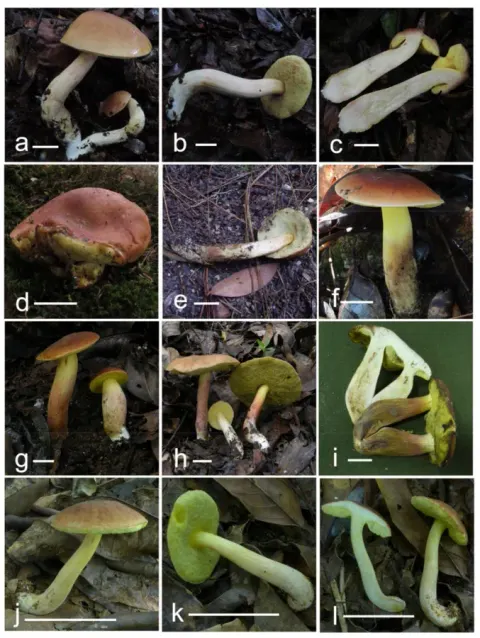
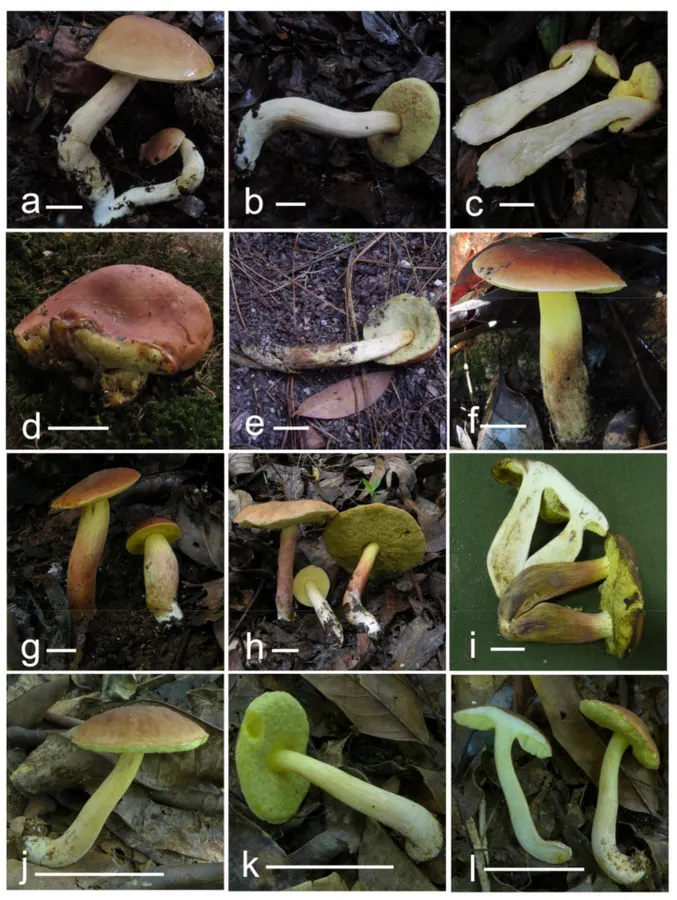
Fresh basidiomata of Hemileccinum species. (a – c) H. albidum ((a, b) Type, KUN-HKAS81120, (c) KUN-HKAS87225); (d – f) H. brevisporum ((d) KUN-HKAS67896, (e) KUN-HKAS59445, (f) Type, KUN-HKAS89150); (g – i) H. ferrugineipes ((g, h) Type, KUN-HKAS115554, (i) KUN-HKAS75054); (j – l) H. parvum ((j – l) Type, KUN-HKAS115553) Bars = 30 mm.
- Jenis
- Pelat ilmiah
- Kredit
- © 2021 by the authors.
- Lisensi
- CC BY 4.0
- Sumber media
- Buka entri sumber
Dokumentasi tambahan
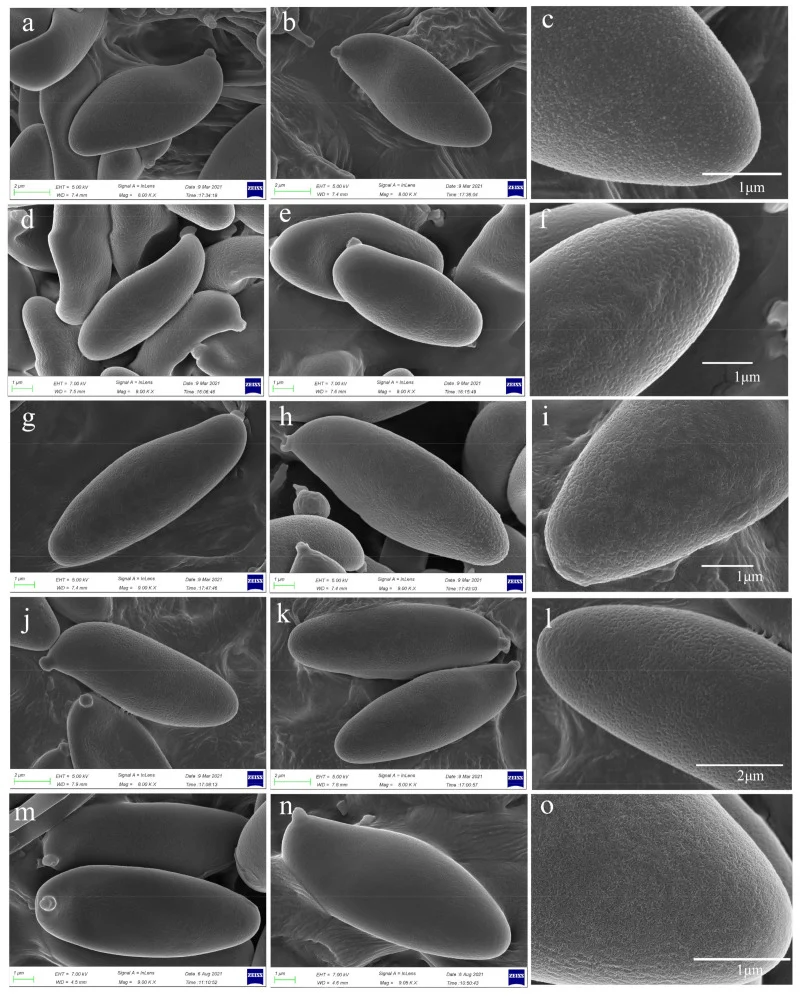
Pelat perbandingan basidiospora pada SEM. Hemileccinum brevisporum ditampilkan pada panel d–f; panel lainnya memuat spesies pembanding. Pembagian panel mengikuti keterangan sumber.
Kredit dan penggunaan
© 2021 by the authors.
Ukuran dan format gambar disesuaikan tanpa pemotongan, retus, atau penambahan skala. Lisensi sumber dipertahankan.
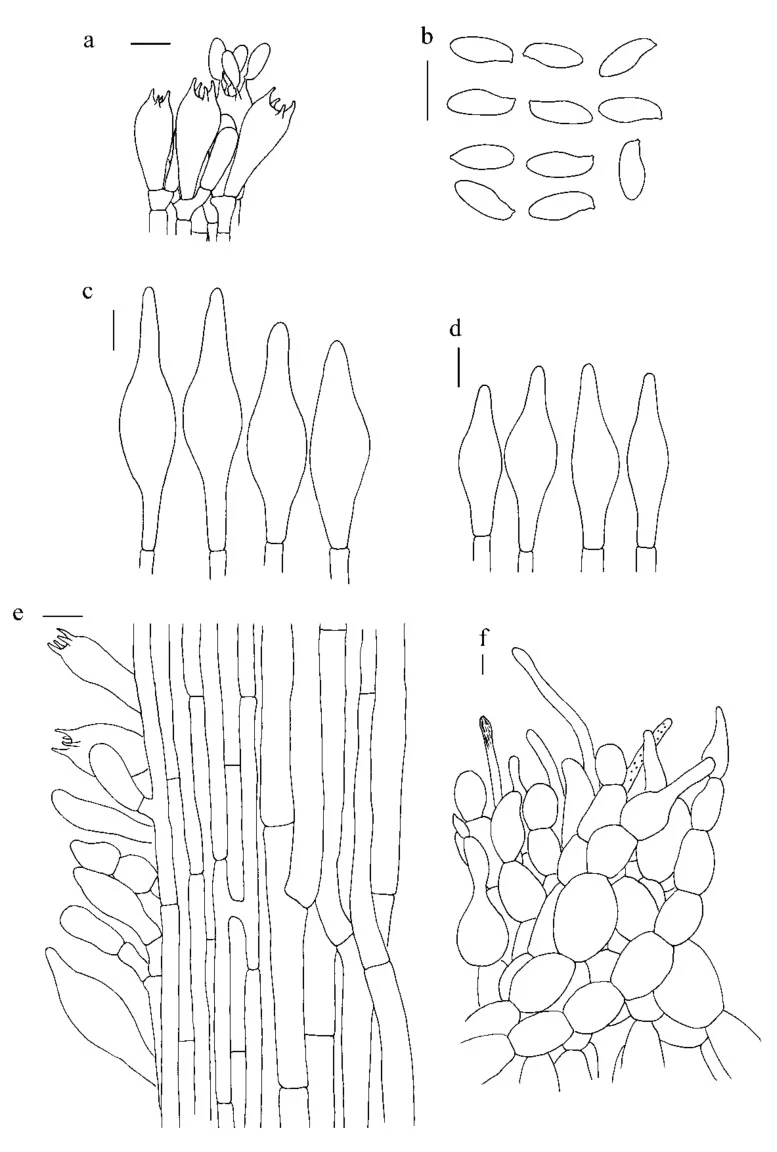
Microscopic features of H. brevisporum (Type, KUN-HKAS89150). (a). Hymenium and subhymenium; (b). Basidiospores; (c). Pleurocystidia; (d). Cheilocystidia; (e). Stipitipellis; (f). Pileipellis. Bars: a = 20 µm, b = 30 µm, c–e = 20 µm, f = 10 µm.
Kredit dan penggunaan
© 2021 by the authors.
Ukuran dan format gambar disesuaikan tanpa pemotongan, retus, atau penambahan skala. Lisensi sumber dipertahankan.
Sumber profil
- [1] Four New Species of Hemileccinum (Xerocomoideae, Boletaceae) from Southwestern China — Hemileccinum brevisporum
- [2] Catalogue of Life Base2026-09-11 — Hemileccinum brevisporum
- [3] Dokumentasi visual — Hemileccinum brevisporum
- [4] Dokumentasi visual — Hemileccinum brevisporum
- [5] Dokumentasi visual — Hemileccinum brevisporum
Rujukan halaman ini
Fungi. Hemileccinum brevisporum. Rilis data fungi-2026-10-12-expansion-2. https://fungi-atlas.mgadib.chatgpt.site/jamur/hemileccinum-brevisporum/.
Status: impor sumber; pemeriksaan editorial per profil belum selesai. Untuk klaim biologis, gunakan rujukan pada bagian terkait dan periksa konteks sumber aslinya.