01 / Morfologi

Ciri dan struktur

Morphologically very similar to other taxa within H. virescens sensu lato, but forming a distinct species supported by ITS data. The ITS sequence shares 95.8–97.9% identity with H. virescens s.l. from Harmonia axyridis, and 96.5–95.4% with H. virescens s.l. from Adalia bipunctata / A. decempunctata. Unique molecular synapomorphies in the ITS at positions 478, 517, 652. Thallus 335–453 μm long from foot to perithecial apex; colored yellow except for a somewhat darker region right above the foot. Cell I obtriangular, 2.0–2.5× longer than broad, broadening distally, with very oblique septum I–II. Cell II longer than broad, 23–28 × 16–21 µm, subtrapezoidal in section. Cell III always smaller than cell II, 14–20 × 14–19 µm, with inflated dorsal cell wall. Primary appendage consisting of 4 superposed cells, 61–67 μm long; in the same axis as cells I and III, separated from the latter by the constricted primary septum; its basal cell somewhat longer than broad, longer than each of the remaining cells of the appendage; second to fourth cells carrying a single antherium externally, the fourth cell also carrying a second upwardly directed antherium. Antheridia flask-shaped, with slightly (dorsally and/or basally) curved efferent necks, the upper antheridium carrying at its dorsal side a pointed process, which represents the original ascospore apex. Cell VI with subparallel margins to broadening distally, 33–70 × 23–33 μm. Perithecium 194–291 × 62–86 μm (not including basal cells), symmetric or with the anterior margin convex and the posterior one almost straight or concave; broadest near the upper third, then gradually tapering towards the apex; apex complex with 2 short lower lobes, 2 upper (terminal) lobes, and 2 prominent lips surrounding the ostiole; lower lobes tapering to a rounded tip, the ventral lobe outwardly directed; terminal lobes unicellular, elongated, 29–42 μm in length, curved upwards and outwardly; ostiole with two lips, 25–29 μm in length, one lip triangular, the other slightly shorter, blunt or rounded, basally carrying the remainder of the trichogyne.

Sebagian uraian ditampilkan dalam bahasa sumber; terjemahannya belum tersedia atau belum lolos pemeriksaan.

Rujukan: [1]

Pengukuran mengikuti objek, spesimen atau kultur, dan metode yang disebutkan sumber. Baca uraian asli untuk konteks lengkap.

02 / Kehidupan

Habitat dan peran ekologis

On Halyzia sedecimguttata from Belgium and the Netherlands. Previously reported as H. virescens (Haelewaters and van Wielink 2016, Haelewaters et al. 2017) and H. virescens sensu lato (De Kesel et al. 2020). One unverified record is available from France (Justamond 2019).

Sebagian uraian ditampilkan dalam bahasa sumber; terjemahannya belum tersedia atau belum lolos pemeriksaan.

Rujukan: [1]

Habitat atau konteks temuan
Informasi belum tersedia pada sumber rilis ini.
Substrat
Informasi belum tersedia pada sumber rilis ini.
Peran atau konteks
Pembentuk liken
Temukan hubungan serupa
03 / Siklus hidup

Reproduksi

Thallus 335–453 μm long from foot to perithecial apex; colored yellow except for a somewhat darker region right above the foot. Cell I obtriangular, 2.0–2.5× longer than broad, broadening distally, with very oblique septum I–II. Cell II longer than broad, 23–28 × 16–21 µm, subtrapezoidal in section. Cell III always smaller than cell II, 14–20 × 14–19 µm, with inflated dorsal cell wall. Primary appendage consisting of 4 superposed cells, 61–67 μm long; in the same axis as cells I and III, separated from the latter by the constricted primary septum; its basal cell somewhat longer than broad, longer than each of the remaining cells of the appendage; second to fourth cells carrying a single antherium externally, the fourth cell also carrying a second upwardly directed antherium.

Sebagian uraian ditampilkan dalam bahasa sumber; terjemahannya belum tersedia atau belum lolos pemeriksaan.

Rujukan: [1]

04 / Batas informasi

Catatan identitas dan cakupan

  • Nama diterima mengikuti Catalogue of Life Base2026-09-11; uraian mempertahankan konsep dan nama sumber aslinya.
  • Preserve original treatment localities, hosts and substrate scope. Materials examined describe documented specimens, not the full global range.
  • Impor dan terjemahan otomatis belum diperiksa editorial per profil. Struktur reproduktif yang disebutkan tidak membuktikan seluruh siklus hidup diketahui.
  • Pengukuran pada uraian mengikuti spesimen, kultur, dan metode sumber; angka tidak diperluas ke semua populasi.

Catatan distribusi dalam narasi mengikuti sumbernya. Dokumentasi spesimen atau foto mengikuti catatan sumber. Bukti wilayah Indonesia dan penilaian konservasi tidak disimpulkan dari gambar.

05 / Dokumentasi

Melihat dengan konteks

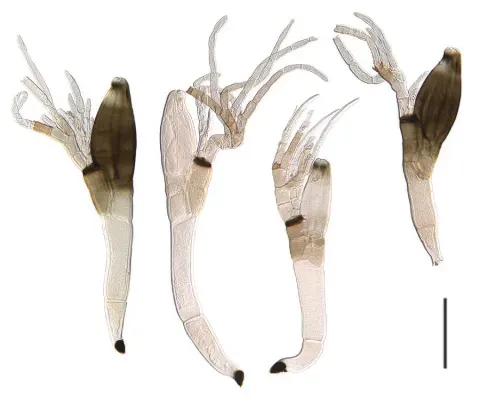
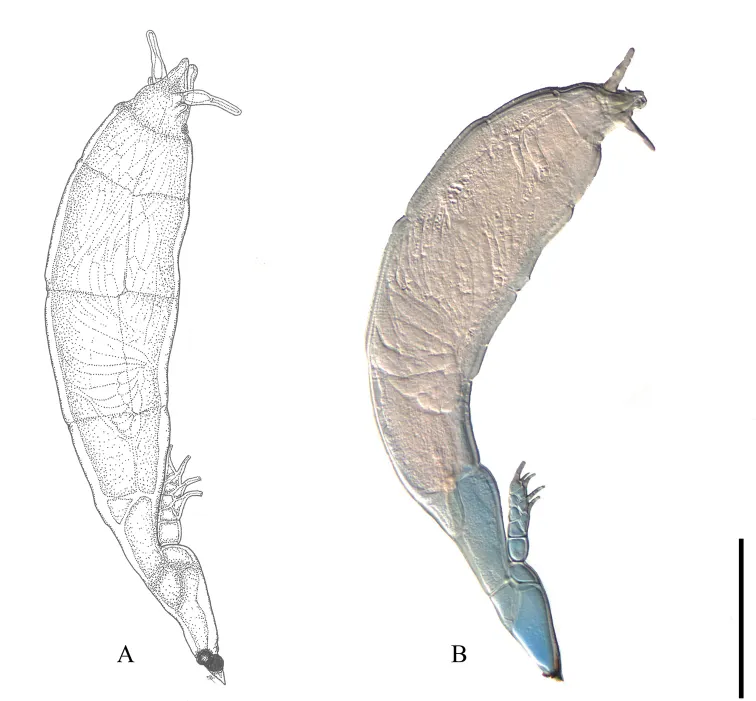
Hesperomyces halyziae Haelew. & De Kesel from Halyzia sedecimguttata A mature thallus from slide D. Haelew. 955a, holotype B mature thallus from slide BR5020212156406V. Scale bar: 100 µm.

Jenis
Pelat ilmiah
Kredit
Danny Haelewaters, André De Kesel
Lisensi
CC BY 4.0
Sumber media
Buka entri sumber

Gambar menunjukkan objek menurut identifikasi sumber, bukan verifikasi independen spesimen oleh Fungi. Tidak ada skala baru yang ditambahkan.

06 / Rujukan

Sumber profil

  1. [1] Checklist of thallus-forming Laboulbeniomycetes from Belgium and the Netherlands, including Hesperomyces halyziae and Laboulbenia quarantenae spp. nov. — Hesperomyces halyziaeBagian sumber: PMC7410850_section_9
    Tanggal penghimpunan sumber: 2026-10-12
    Teks sumber: CC BY 4.0 · Haelewaters D, Kesel A.
  2. [2] Catalogue of Life Base2026-09-11 — Hesperomyces halyziaeBagian sumber: ColDP NameUsage.tsv ID 9Z8VV; accepted species; source 2073
    Tanggal penghimpunan sumber: 2026-10-12
  3. [3] Dokumentasi visual — Hesperomyces halyziaeBagian sumber: Individual media record; identification follows the source, not independent determination
    Tanggal penghimpunan sumber: 2026-10-12
    Media sumber: CC BY 4.0 · Danny Haelewaters, André De Kesel

Adaptasi teks: CC BY 4.0. Haelewaters D, Kesel A. — Checklist of thallus-forming Laboulbeniomycetes from Belgium and the Netherlands, including Hesperomyces halyziae and Laboulbenia quarantenae spp. nov. — Hesperomyces halyziae

Uraian asli dan riwayat sumber

Riwayat atau halaman sumber

Ringkasan sumber

Morphologically very similar to other taxa within H. virescens sensu lato, but forming a distinct species supported by ITS data. The ITS sequence shares 95.8–97.9% identity with H. virescens s.l. from Harmonia axyridis, and 96.5–95.4% with H. virescens s.l. from Adalia bipunctata / A. decempunctata. Unique molecular synapomorphies in the ITS at positions 478, 517, 652. Thallus 335–453 μm long from foot to perithecial apex; colored yellow except for a somewhat darker region right above the foot. Cell I obtriangular, 2.0–2.5× longer than broad, broadening distally, with very oblique septum I–II.

Revisi sumber

Morfologi sumber

Morphologically very similar to other taxa within H. virescens sensu lato, but forming a distinct species supported by ITS data. The ITS sequence shares 95.8–97.9% identity with H. virescens s.l. from Harmonia axyridis, and 96.5–95.4% with H. virescens s.l. from Adalia bipunctata / A. decempunctata. Unique molecular synapomorphies in the ITS at positions 478, 517, 652. Thallus 335–453 μm long from foot to perithecial apex; colored yellow except for a somewhat darker region right above the foot. Cell I obtriangular, 2.0–2.5× longer than broad, broadening distally, with very oblique septum I–II. Cell II longer than broad, 23–28 × 16–21 µm, subtrapezoidal in section. Cell III always smaller than cell II, 14–20 × 14–19 µm, with inflated dorsal cell wall. Primary appendage consisting of 4 superposed cells, 61–67 μm long; in the same axis as cells I and III, separated from the latter by the constricted primary septum; its basal cell somewhat longer than broad, longer than each of the remaining cells of the appendage; second to fourth cells carrying a single antherium externally, the fourth cell also carrying a second upwardly directed antherium. Antheridia flask-shaped, with slightly (dorsally and/or basally) curved efferent necks, the upper antheridium carrying at its dorsal side a pointed process, which represents the original ascospore apex. Cell VI with subparallel margins to broadening distally, 33–70 × 23–33 μm. Perithecium 194–291 × 62–86 μm (not including basal cells), symmetric or with the anterior margin convex and the posterior one almost straight or concave; broadest near the upper third, then gradually tapering towards the apex; apex complex with 2 short lower lobes, 2 upper (terminal) lobes, and 2 prominent lips surrounding the ostiole; lower lobes tapering to a rounded tip, the ventral lobe outwardly directed; terminal lobes unicellular, elongated, 29–42 μm in length, curved upwards and outwardly; ostiole with two lips, 25–29 μm in length, one lip triangular, the other slightly shorter, blunt or rounded, basally carrying the remainder of the trichogyne.

Revisi sumber

Ekologi sumber

On Halyzia sedecimguttata from Belgium and the Netherlands. Previously reported as H. virescens (Haelewaters and van Wielink 2016, Haelewaters et al. 2017) and H. virescens sensu lato (De Kesel et al. 2020). One unverified record is available from France (Justamond 2019).

Revisi sumber

Struktur reproduksi sumber

Thallus 335–453 μm long from foot to perithecial apex; colored yellow except for a somewhat darker region right above the foot. Cell I obtriangular, 2.0–2.5× longer than broad, broadening distally, with very oblique septum I–II. Cell II longer than broad, 23–28 × 16–21 µm, subtrapezoidal in section. Cell III always smaller than cell II, 14–20 × 14–19 µm, with inflated dorsal cell wall. Primary appendage consisting of 4 superposed cells, 61–67 μm long; in the same axis as cells I and III, separated from the latter by the constricted primary septum; its basal cell somewhat longer than broad, longer than each of the remaining cells of the appendage; second to fourth cells carrying a single antherium externally, the fourth cell also carrying a second upwardly directed antherium.

Revisi sumber

Rujukan halaman ini

Fungi. Hesperomyces halyziae. Rilis data fungi-2026-10-12-expansion-2. https://fungi-atlas.mgadib.chatgpt.site/jamur/hesperomyces-halyziae/.

Status: impor sumber; pemeriksaan editorial per profil belum selesai. Untuk klaim biologis, gunakan rujukan pada bagian terkait dan periksa konteks sumber aslinya.