01 / Morfologi

Ciri dan struktur

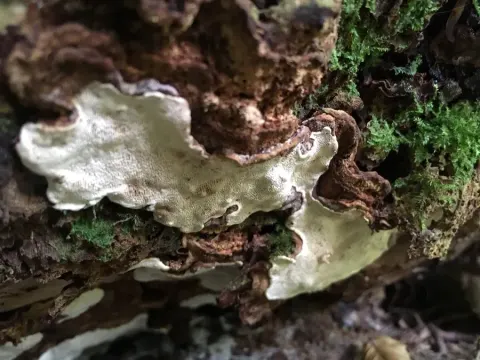
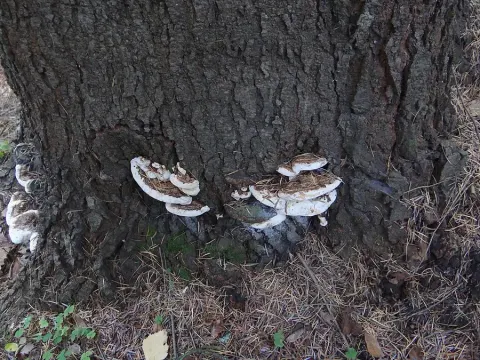
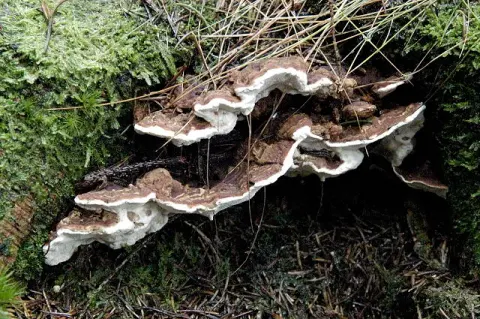
The cap is usually wider (and commonly taller) than its depth from the wood. It is 2-15 cm wide, sometimes fuzzy when young and knobby when old. The upper surface of the small shelf or "conk" is dark brown to black, and the margin has an irregular edge. The larger base is covered with white spore tubes. The flesh is whitish and displays annual tube layers. Identification in affected wood, known as white pocket rot, includes symptoms in the form of dark discolouration around the heartwood near the base. Heavily diseased wood will be soft, stringy, and fibrous that may contain black specks parallel to the grain. Quick identification of affected wood can be done by wrapping suspect wood in damp paper towels and left for 5–6 days for the tell-tale formation of the conidial anamorph, Spiniger meineckellus. The basidiospores are spherical to ellipsoid, distinctive of the family Bondarzewiaceae.

Sebagian uraian ditampilkan dalam bahasa sumber; terjemahannya belum tersedia atau belum lolos pemeriksaan.

Rujukan: [1]

Pengukuran mengikuti objek, spesimen atau kultur, dan metode yang disebutkan sumber. Baca uraian asli untuk konteks lengkap.

02 / Kehidupan

Habitat dan peran ekologis

H. occidentale is found in Western North America from Alaska to Southern Mexico. It is found as far inland as Colorado and Montana, but has not been observed east of the Rocky Mountains. The incidence is of highest importance in stands of intensive silviculture, such as Christmas tree plantations. It is also of high importance to the Abies religiosa forests in Central Mexico that are the winter home for the monarch butterfly (Danaus plexipus). The perennial basidiocarps tend to form near the forest floor of affected trees, either on the base or roots of living or dead specimens, and thus may be hidden in the forest duff. H. occidentale affects several species of trees including major hosts including Douglas-fir (Pseudotsuga menziesii), western hemlock (Tsuga heterophylla), and various fir (Abies) species. Other notable hosts include sitka spruce (Picea sitchensis) as well as numerous deciduous trees such as red alder (Alnus rubra), bigleaf maple (Acer macrophyllum) and pacific madrone (Arbutus menziesii). Ornamental and landscape trees are seldom affected. This contrasts the Eurasian S-type species, H. parviporum, which has a fairly strict host range of spruce, fir, and larch. Heterobasidion can be spread through conidia, basidiospores, and mycelia.

Sebagian uraian ditampilkan dalam bahasa sumber; terjemahannya belum tersedia atau belum lolos pemeriksaan.

Rujukan: [1]

Habitat atau konteks temuan
hutan
Substrat
Informasi belum tersedia pada sumber rilis ini.
Peran atau konteks
Belum dikategorikan pada rilis ini.
Temukan hubungan serupa
03 / Siklus hidup

Reproduksi

The cap is usually wider (and commonly taller) than its depth from the wood. It is 2-15 cm wide, sometimes fuzzy when young and knobby when old. The upper surface of the small shelf or "conk" is dark brown to black, and the margin has an irregular edge. The larger base is covered with white spore tubes. The flesh is whitish and displays annual tube layers. Identification in affected wood, known as white pocket rot, includes symptoms in the form of dark discolouration around the heartwood near the base. Heavily diseased wood will be soft, stringy, and fibrous that may contain black specks parallel to the grain. Quick identification of affected wood can be done by wrapping suspect wood in damp paper towels and left for 5–6 days for the tell-tale formation of the conidial anamorph, Spiniger meineckellus.

Sebagian uraian ditampilkan dalam bahasa sumber; terjemahannya belum tersedia atau belum lolos pemeriksaan.

Rujukan: [1]

04 / Batas informasi

Catatan identitas dan cakupan

  • Nama diterima mengikuti Catalogue of Life Base2026-09-11; uraian mempertahankan konsep dan nama sumber aslinya.
  • Original geographic, specimen and life-cycle scope retained; source import awaits individual editorial review.
  • Impor dan terjemahan otomatis belum diperiksa editorial per profil. Struktur reproduktif yang disebutkan tidak membuktikan seluruh siklus hidup diketahui.
  • Pengukuran pada uraian mengikuti spesimen, kultur, dan metode sumber; angka tidak diperluas ke semua populasi.

Catatan distribusi dalam narasi mengikuti sumbernya. Dokumentasi spesimen atau foto mengikuti catatan sumber. Bukti wilayah Indonesia dan penilaian konservasi tidak disimpulkan dari gambar.

05 / Dokumentasi

Melihat dengan konteks

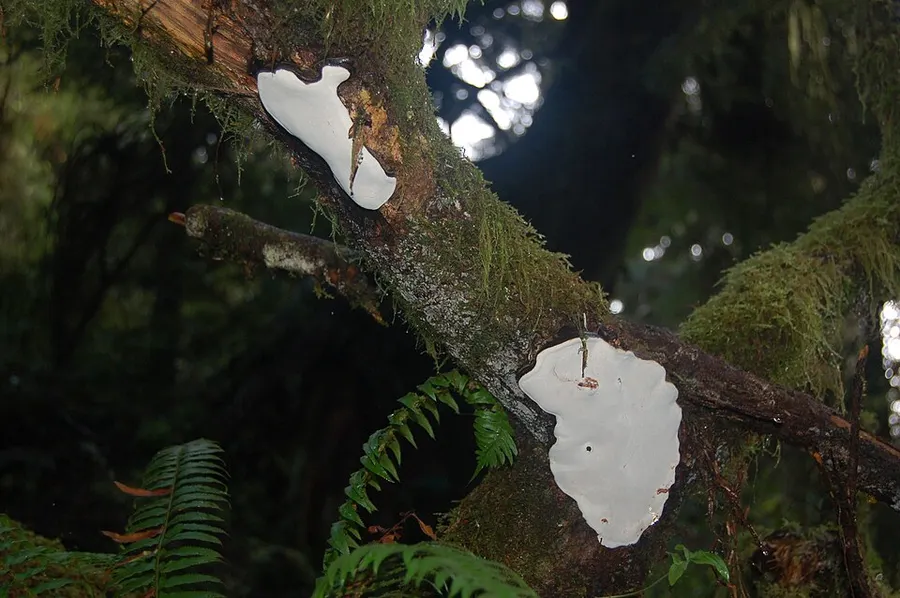
Dokumentasi Heterobasidion occidentale dari Wikimedia Commons. Picture of Heterobasidion occidentale fruiting body Identifikasi mengikuti record berkas sumber.

Jenis
Fotografi
Kredit
Melbourne132
Sumber media
Buka entri sumber

Gambar menunjukkan objek menurut identifikasi sumber, bukan verifikasi independen spesimen oleh Fungi. Tidak ada skala baru yang ditambahkan.

06 / Rujukan

Sumber profil

  1. [1] Heterobasidion occidentale — Wikipedia (en)Bagian sumber: Frozen revision 1278872612
    Tanggal penghimpunan sumber: 2026-10-12
    Teks sumber: CC BY-SA4.0 · Wikipedia contributors
  2. [2] Catalogue of Life Base2026-09-11 — Heterobasidion occidentaleBagian sumber: ColDP NameUsage.tsv ID 6M39H; accepted species; source 2073
    Tanggal penghimpunan sumber: 2026-10-12
  3. [3] Dokumentasi visual — Heterobasidion occidentaleBagian sumber: Individual media record; identification follows the source, not independent determination
    Tanggal penghimpunan sumber: 2026-10-12
    Media sumber: CC BY-SA 3.0 · Melbourne132

Adaptasi teks: CC BY-SA 4.0. Wikipedia contributors — Heterobasidion occidentale — Wikipedia (en)

Uraian asli dan riwayat sumber

Riwayat atau halaman sumber

Ringkasan sumber

The cap is usually wider (and commonly taller) than its depth from the wood. It is 2-15 cm wide, sometimes fuzzy when young and knobby when old. The upper surface of the small shelf or "conk" is dark brown to black, and the margin has an irregular edge. The larger base is covered with white spore tubes. The flesh is whitish and displays annual tube layers. Identification in affected wood, known as white pocket rot, includes symptoms in the form of dark discolouration around the heartwood near the base.

Revisi sumber

Morfologi sumber

The cap is usually wider (and commonly taller) than its depth from the wood. It is 2-15 cm wide, sometimes fuzzy when young and knobby when old. The upper surface of the small shelf or "conk" is dark brown to black, and the margin has an irregular edge. The larger base is covered with white spore tubes. The flesh is whitish and displays annual tube layers. Identification in affected wood, known as white pocket rot, includes symptoms in the form of dark discolouration around the heartwood near the base. Heavily diseased wood will be soft, stringy, and fibrous that may contain black specks parallel to the grain. Quick identification of affected wood can be done by wrapping suspect wood in damp paper towels and left for 5–6 days for the tell-tale formation of the conidial anamorph, Spiniger meineckellus. The basidiospores are spherical to ellipsoid, distinctive of the family Bondarzewiaceae.

Revisi sumber

Ekologi sumber

H. occidentale is found in Western North America from Alaska to Southern Mexico. It is found as far inland as Colorado and Montana, but has not been observed east of the Rocky Mountains. The incidence is of highest importance in stands of intensive silviculture, such as Christmas tree plantations. It is also of high importance to the Abies religiosa forests in Central Mexico that are the winter home for the monarch butterfly (Danaus plexipus). The perennial basidiocarps tend to form near the forest floor of affected trees, either on the base or roots of living or dead specimens, and thus may be hidden in the forest duff. H. occidentale affects several species of trees including major hosts including Douglas-fir (Pseudotsuga menziesii), western hemlock (Tsuga heterophylla), and various fir (Abies) species. Other notable hosts include sitka spruce (Picea sitchensis) as well as numerous deciduous trees such as red alder (Alnus rubra), bigleaf maple (Acer macrophyllum) and pacific madrone (Arbutus menziesii). Ornamental and landscape trees are seldom affected. This contrasts the Eurasian S-type species, H. parviporum, which has a fairly strict host range of spruce, fir, and larch. Heterobasidion can be spread through conidia, basidiospores, and mycelia.

Revisi sumber

Struktur reproduksi sumber

The cap is usually wider (and commonly taller) than its depth from the wood. It is 2-15 cm wide, sometimes fuzzy when young and knobby when old. The upper surface of the small shelf or "conk" is dark brown to black, and the margin has an irregular edge. The larger base is covered with white spore tubes. The flesh is whitish and displays annual tube layers. Identification in affected wood, known as white pocket rot, includes symptoms in the form of dark discolouration around the heartwood near the base. Heavily diseased wood will be soft, stringy, and fibrous that may contain black specks parallel to the grain. Quick identification of affected wood can be done by wrapping suspect wood in damp paper towels and left for 5–6 days for the tell-tale formation of the conidial anamorph, Spiniger meineckellus.

Revisi sumber

Rujukan halaman ini

Fungi. Heterobasidion occidentale. Rilis data fungi-2026-10-12-expansion-2. https://fungi-atlas.mgadib.chatgpt.site/jamur/heterobasidion-occidentale/.

Status: impor sumber; pemeriksaan editorial per profil belum selesai. Untuk klaim biologis, gunakan rujukan pada bagian terkait dan periksa konteks sumber aslinya.