Ciri dan struktur
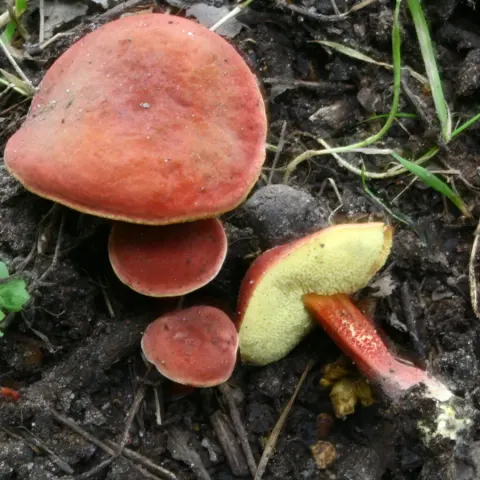
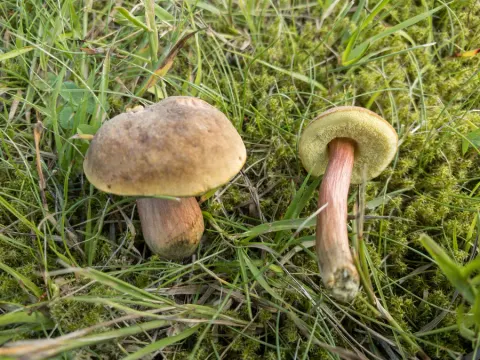
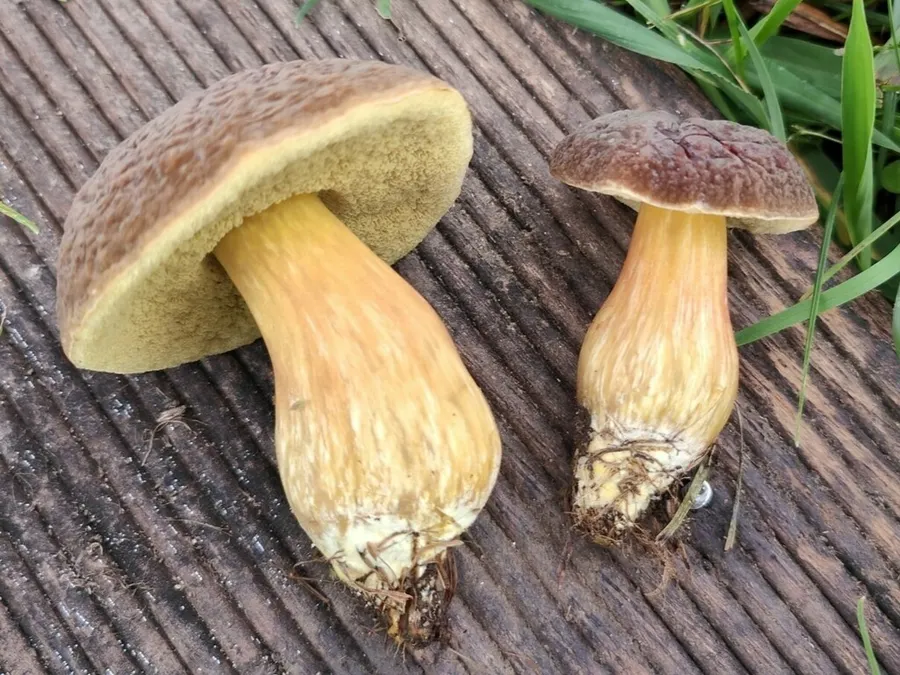
Basidiomes pileate-stipitate, xerocomoid, epigeal, small to medium-small sized. Ontogenetic development gymnocarpic. Pileus (4–)5–13(–15) cm broad, nearly hemispherical at first, then convex, pulvinate to applanate, also slightly depressed at centre, sometimes irregularly shaped; surface matt, dry, ± finely tomentose to sometimes rugulose, finely areolate towards the peripheral zone or with minute to coarse cracks over the whole surface especially with dry weather and showing a yellowish or somewhat pinkish subpellis layer resembling some areolate Xerocomellus species (Simonini 1998b); margin initially involute then extended or even uplifted, regular to wavy-lobed, acute and slightly exceeding the pileal context, whitish at the very beginning for a thin strip, but soon concolourous; of extremely variable colours, but generally dark brown up to black-brown at the beginning, then fading to ochraceous, ochraceous yellow, buff, yellowish-brown, olivaceous brown, greyish-brown, olive grey, grey or also pinkish-red, orange-red, ochraceous red, ochraceous pink, reddish-brown, typically fading in age, although some basidiomes maintain a carmine red tint over the entire life-cycle; unchanging or becoming slightly darker on handling or when injured. Tubes up to 15 mm long, at first adnate, later emarginate or slightly decurrent with a tooth, initially lemon or chrome yellow, later greenish-yellow to olive brown, unchangeable to weakly bluing when injured. Pores large, wider than 1 mm (up to 1.5–3 mm) in old basidiomes, roundish to angular, concolourous with the tubes, in mature basidiomes with orange-rusty spots, unchangeable to weakly bluing when bruised and later becoming dirty brownish.
Habitat dan peran ekologis
solitary, gregarious in small groups or even subcaespitose, growing on bare soil, on litter or in the grass, often in anthropogenic environments, shrublands, less frequently in undisturbed forests, under a large array of ectomycorrhizal broadleaved trees and shrubs, including preferably Quercus spp. (Q. cerris, Q. coccifera, Q. frainetto, Q. ilex, Q. incana, Q. robur, Q. petraea, Q. pubescens, Q. suber), Fagus sylvatica, Tilia spp. (T. cordata, T. platyphyllos), Carpinus spp. (C. betulus, C. orientalis), sometimes also Betula spp., Castanea sativa, Corylus avellana, Halimium halimifolium, Pinus spp. (P. halepensis, P. pinea, P. sylvestris, P. wallichiana), and Populus spp. (P. alba, P. tremula) (Engel et al. (1996); Ladurner and Simonini (2003); Peintner et al. (2003), GP; Krpata et al. (2008), GP; Sarwar et al. (2016), GP; Leonardi et al. (2020), GP; pers. obs., GP). Some collections of H. engelii have been found in mixed forests with the presence of Picea abies and Ostrya carpinifolia, but there are no findings in monodominant forest communities formed by these tree species alone. Moreover, there are some indications of a possible association with Cedrus deodara (Kjøller in litt.; Szmidla et al. in litt.; pers. obs.), but these data have not yet been confirmed by molecular studies nor by our examined material.
- Habitat atau konteks temuan
- hutan
- Substrat
- Informasi belum tersedia pada sumber rilis ini.
- Peran atau konteks
- Mitra tumbuhan
Reproduksi
Basidiomes pileate-stipitate, xerocomoid, epigeal, small to medium-small sized. Ontogenetic development gymnocarpic. Pileus (4–)5–13(–15) cm broad, nearly hemispherical at first, then convex, pulvinate to applanate, also slightly depressed at centre, sometimes irregularly shaped; surface matt, dry, ± finely tomentose to sometimes rugulose, finely areolate towards the peripheral zone or with minute to coarse cracks over the whole surface especially with dry weather and showing a yellowish or somewhat pinkish subpellis layer resembling some areolate Xerocomellus species (Simonini 1998b); margin initially involute then extended or even uplifted, regular to wavy-lobed, acute and slightly exceeding the pileal context, whitish at the very beginning for a thin strip, but soon concolourous; of extremely variable colours, but generally dark brown up to black-brown at the beginning, then fading to ochraceous, ochraceous yellow, buff, yellowish-brown, olivaceous brown, greyish-brown, olive grey, grey or also pinkish-red, orange-red, ochraceous red, ochraceous pink, reddish-brown, typically fading in age, although some basidiomes maintain a carmine red tint over the entire life-cycle; unchanging or becoming slightly darker on handling or when injured.
Catatan identitas dan cakupan
- Nama diterima mengikuti Catalogue of Life Base2026-09-11; uraian mempertahankan konsep dan nama sumber aslinya.
- Preserve original treatment localities, hosts and substrate scope. Materials examined describe documented specimens, not the full global range.
- Impor dan terjemahan otomatis belum diperiksa editorial per profil. Struktur reproduktif yang disebutkan tidak membuktikan seluruh siklus hidup diketahui.
- Pengukuran pada uraian mengikuti spesimen, kultur, dan metode sumber; angka tidak diperluas ke semua populasi.
Catatan distribusi dalam narasi mengikuti sumbernya. Dokumentasi spesimen atau foto mengikuti catatan sumber. Bukti wilayah Indonesia dan penilaian konservasi tidak disimpulkan dari gambar.
Melihat dengan konteks
Dokumentasi Hortiboletus engelii menurut asosiasi foto pada record takson iNaturalist. Kredit: Davide Puddu. Identitas mengikuti sumber; bukan penentuan spesimen independen.
- Jenis
- Fotografi
- Kredit
- (c) Davide Puddu, some rights reserved (CC BY)
- Lisensi
- CC BY 4.0
- Sumber media
- Buka entri sumber
Dokumentasi tambahan
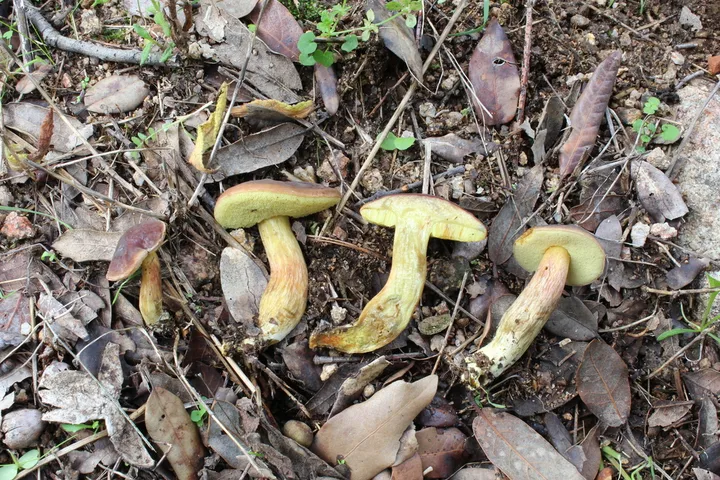
Foto yang diasosiasikan dengan Hortiboletus engelii pada iNaturalist. Identifikasi mengikuti sumber; bukan penentuan spesimen independen.
Kredit dan penggunaan
(c) Davide Puddu, some rights reserved (CC BY), uploaded by Davide Puddu
Ukuran dan format gambar disesuaikan tanpa pemotongan, retus, atau penambahan skala. Lisensi sumber dipertahankan.
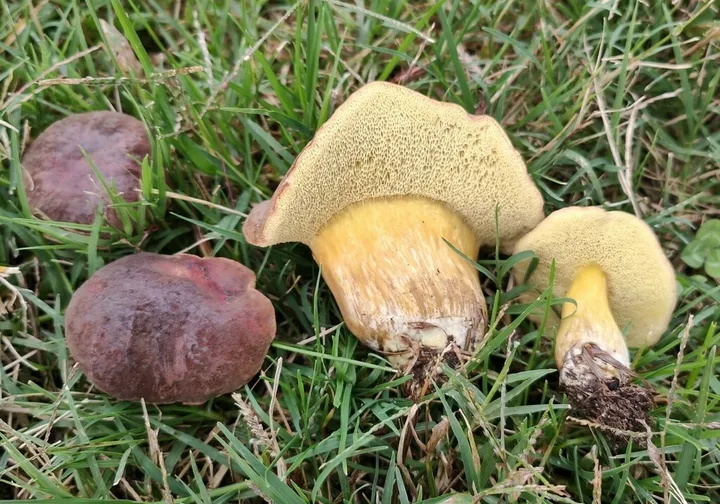
Foto yang diasosiasikan dengan Hortiboletus engelii pada iNaturalist. Identifikasi mengikuti sumber; bukan penentuan spesimen independen.
Kredit dan penggunaan
(c) Davide Puddu, some rights reserved (CC BY)
Ukuran dan format gambar disesuaikan tanpa pemotongan, retus, atau penambahan skala. Lisensi sumber dipertahankan.
Sumber profil
- [1] Morphological and molecular re-assessment of European and Levantine species of the genus Hortiboletus (Boletaceae) — Hortiboletus engelii
- [2] Catalogue of Life Base2026-09-11 — Hortiboletus engelii
- [3] Dokumentasi visual — Hortiboletus engelii
- [4] Dokumentasi visual — Hortiboletus engelii
- [5] Dokumentasi visual — Hortiboletus engelii
Rujukan halaman ini
Fungi. Hortiboletus engelii. Rilis data fungi-2026-10-12-expansion-2. https://fungi-atlas.mgadib.chatgpt.site/jamur/hortiboletus-engelii/.
Status: impor sumber; pemeriksaan editorial per profil belum selesai. Untuk klaim biologis, gunakan rujukan pada bagian terkait dan periksa konteks sumber aslinya.