Ciri dan struktur
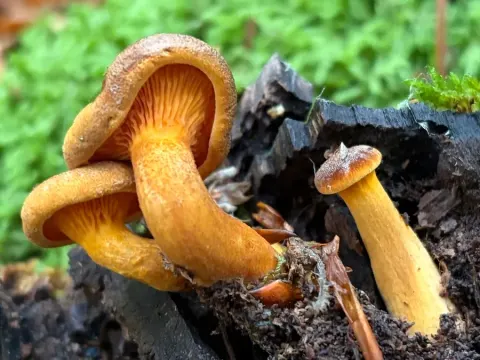
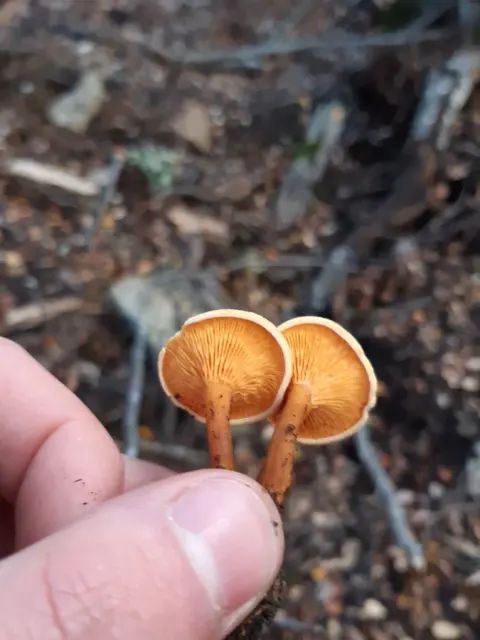
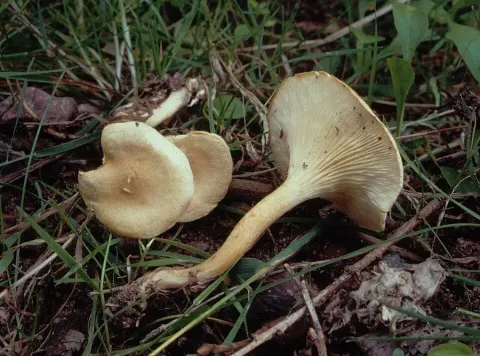
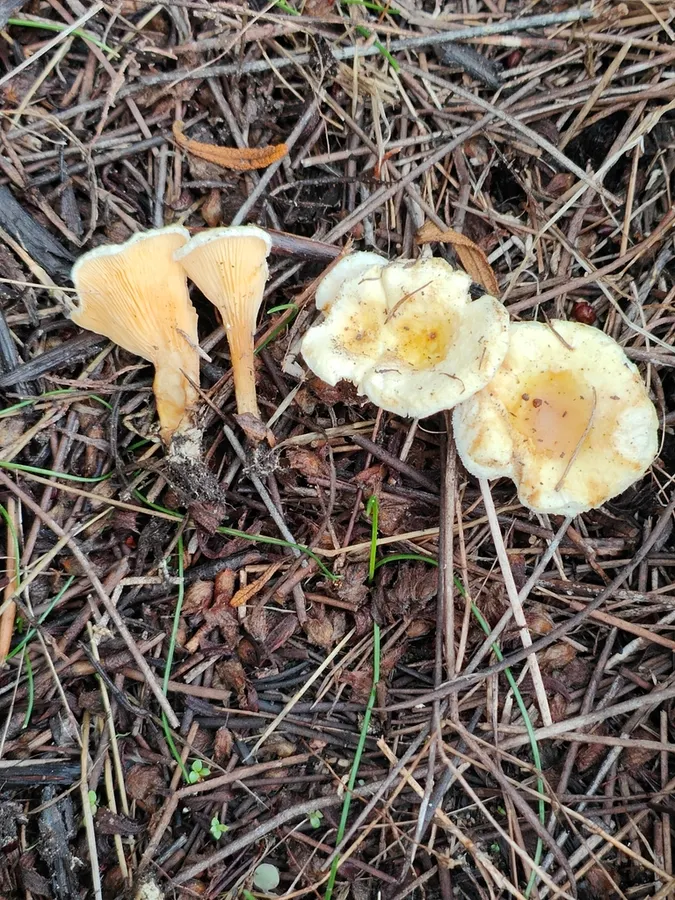
The fruit body bears a cap (pileus) 2–6.7 cm across, fleshy and at first convex before flattening or developing a slight central bump (umbo). The margin remains rolled inwards when young and is never striate. The cap surface is dry, finely tomentose (covered in short hairs) and varies from pale yellow to ochre‑yellow. Beneath the cap are numerous thin, closely spaced gills (lamellae) that fork and run down the stipe (decurrent), coloured a pale yellow‑orange. The stipe measures 1.5–6.5 cm in length and 0.3–0.5 cm in thickness, tapering towards a rooting base and matching the cap in hue except for a darker ochre‑brown at its base, where greyish mycelium is often visible. The flesh is firm, pale yellow‑orange, turning brownish when handled, with a mild, fruity odour and taste. The spore print is white. Microscopically, spores are 5.2–6.3 by 3–4.2 μm, smooth, hyaline (translucent) and cyanophilic (staining blue with certain dyes), non‑dextrinoid (not staining reddish‑brown in Melzer's reagent), elliptical to oblong‑cylindrical and bearing a small apiculus (point of attachment). Basidia are four‑spored and clamp connections are absent. Cystidia (specialised sterile cells) are not present. The cap cuticle (pileipellis) consists of loosely interwoven hyphae containing vacuolar pigments.
Habitat dan peran ekologis
Hygrophoropsis ochraceolutea fruits gregariously in autumn beneath poplar species in moist, shaded locations. At the time of its original publication, it had only been recorded from central and southern Sardinia, where it is considered uncommon.
- Habitat atau konteks temuan
- Informasi belum tersedia pada sumber rilis ini.
- Substrat
- Informasi belum tersedia pada sumber rilis ini.
- Peran atau konteks
- Belum dikategorikan pada rilis ini.
Reproduksi
Beneath the cap are numerous thin, closely spaced gills (lamellae) that fork and run down the stipe (decurrent), coloured a pale yellow‑orange. The stipe measures 1.5–6.5 cm in length and 0.3–0.5 cm in thickness, tapering towards a rooting base and matching the cap in hue except for a darker ochre‑brown at its base, where greyish mycelium is often visible. The flesh is firm, pale yellow‑orange, turning brownish when handled, with a mild, fruity odour and taste. The spore print is white. Microscopically, spores are 5.2–6.3 by 3–4.2 μm, smooth, hyaline (translucent) and cyanophilic (staining blue with certain dyes), non‑dextrinoid (not staining reddish‑brown in Melzer's reagent), elliptical to oblong‑cylindrical and bearing a small apiculus (point of attachment).
Catatan identitas dan cakupan
- Nama diterima mengikuti Catalogue of Life Base2026-09-11; uraian mempertahankan konsep dan nama sumber aslinya.
- Original geographic, specimen and life-cycle scope retained; source import awaits individual editorial review.
- Impor dan terjemahan otomatis belum diperiksa editorial per profil. Struktur reproduktif yang disebutkan tidak membuktikan seluruh siklus hidup diketahui.
- Pengukuran pada uraian mengikuti spesimen, kultur, dan metode sumber; angka tidak diperluas ke semua populasi.
Catatan distribusi dalam narasi mengikuti sumbernya. Dokumentasi spesimen atau foto mengikuti catatan sumber. Bukti wilayah Indonesia dan penilaian konservasi tidak disimpulkan dari gambar.
Melihat dengan konteks
Dokumentasi Hygrophoropsis ochraceolutea menurut asosiasi foto pada record takson iNaturalist. Kredit: Davide Puddu. Identitas mengikuti sumber; bukan penentuan spesimen independen.
- Jenis
- Fotografi
- Kredit
- (c) Davide Puddu, some rights reserved (CC BY), uploaded by Davide Puddu
- Lisensi
- CC BY 4.0
- Sumber media
- Buka entri sumber
Dokumentasi tambahan
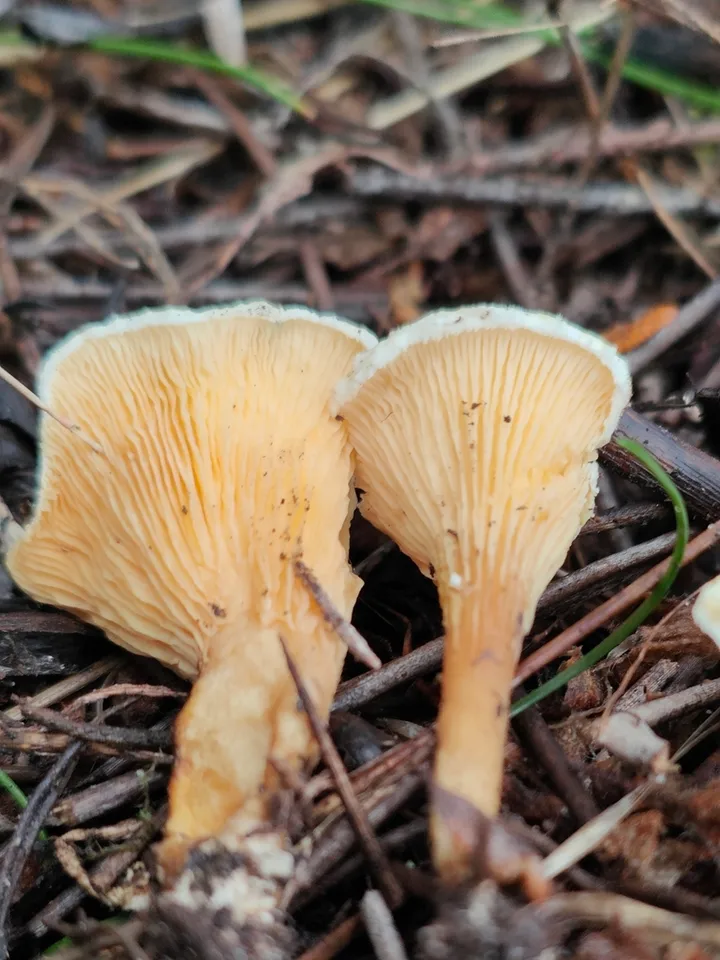
Foto yang diasosiasikan dengan Hygrophoropsis ochraceolutea pada iNaturalist. Identifikasi mengikuti sumber; bukan penentuan spesimen independen.
Kredit dan penggunaan
(c) Davide Puddu, some rights reserved (CC BY), uploaded by Davide Puddu
Ukuran dan format gambar disesuaikan tanpa pemotongan, retus, atau penambahan skala. Lisensi sumber dipertahankan.
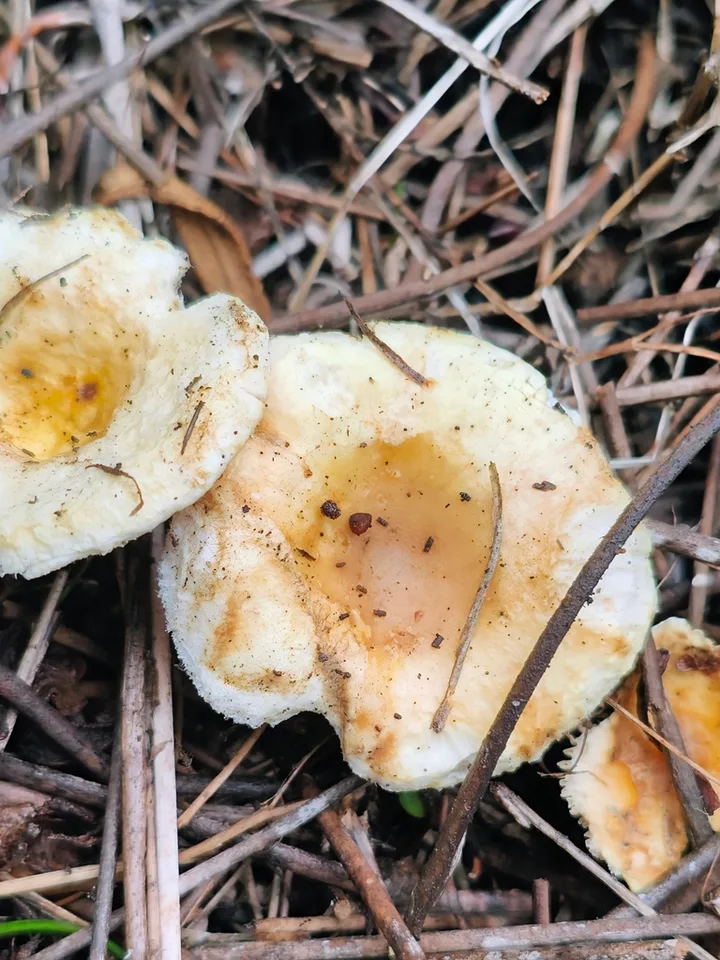
Foto yang diasosiasikan dengan Hygrophoropsis ochraceolutea pada iNaturalist. Identifikasi mengikuti sumber; bukan penentuan spesimen independen.
Kredit dan penggunaan
(c) Davide Puddu, some rights reserved (CC BY), uploaded by Davide Puddu
Ukuran dan format gambar disesuaikan tanpa pemotongan, retus, atau penambahan skala. Lisensi sumber dipertahankan.
Sumber profil
- [1] Hygrophoropsis ochraceolutea — Wikipedia (en)
- [2] Catalogue of Life Base2026-09-11 — Hygrophoropsis ochraceolutea
- [3] Dokumentasi visual — Hygrophoropsis ochraceolutea
- [4] Dokumentasi visual — Hygrophoropsis ochraceolutea
- [5] Dokumentasi visual — Hygrophoropsis ochraceolutea
Rujukan halaman ini
Fungi. Hygrophoropsis ochraceolutea. Rilis data fungi-2026-10-12-expansion-2. https://fungi-atlas.mgadib.chatgpt.site/jamur/hygrophoropsis-ochraceolutea/.
Status: impor sumber; pemeriksaan editorial per profil belum selesai. Untuk klaim biologis, gunakan rujukan pada bagian terkait dan periksa konteks sumber aslinya.