Ciri dan struktur
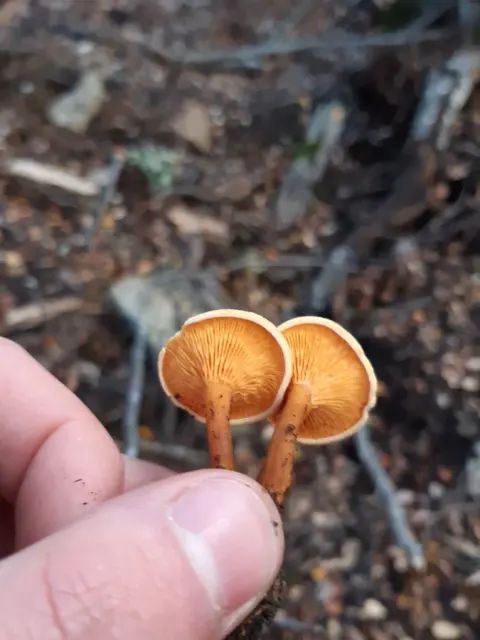
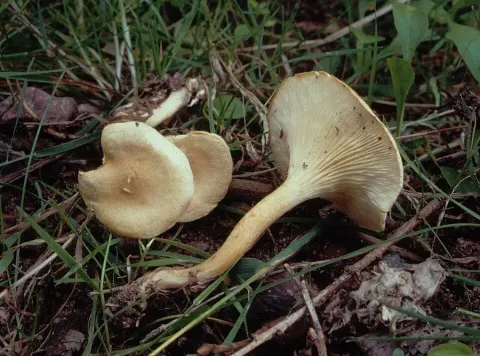
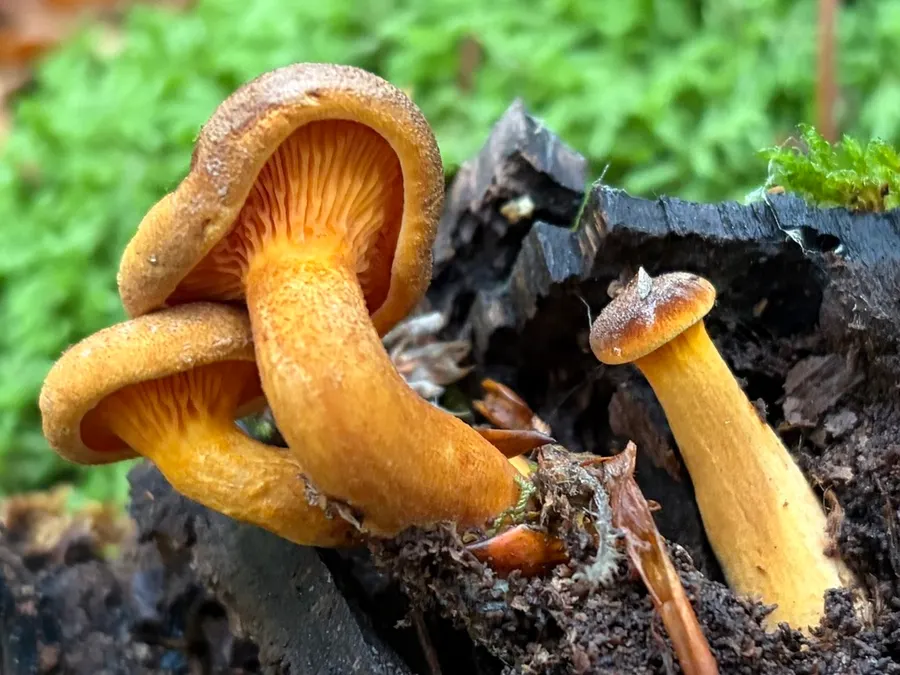
The fruit body has an orange- to dark brown cap, which is up to 10 cm (4 in) across. The stipe, flesh and decurrent gills are all orange. The gills are forked. Hygrophoropsis rufa can have a penetrating ozone-like smell, reportedly reminiscent of an orchid species Oncidium ornithorhynchum or a photocopier. Spores of H. rufa are thick-walled and have an ellipsoid shape, and measure 5.6–6.4 by 3.6–4.4 micrometres (μm). They have a strongly dextrinoid staining reaction with Melzer's reagent (resulting in a reddish-brown colour), although not all spores will react. Microscopically, the cells of the cap cuticle are arranged in the form of a trichoderm, where the outermost hyphae emerge roughly parallel, like hairs, perpendicular to the cap surface. These hyphae are of three types: broad, thick-walled and hyaline (translucent); filiform (threadlike); or with granular golden-brown contents. In contrast, the cap cuticle of H. aurantiaca is arranged as a uniformly tangled cutis (with hyphae parallel to the pileus surface).
Habitat dan peran ekologis
A rare species, H. rufa has been recorded in the United Kingdom, Austria, Germany, and Denmark, although unconfirmed internet photos suggest a wider range that includes France and Slovakia. A saprophytic fungus, it fruits on woodchips or near conifer stumps.
- Habitat atau konteks temuan
- Informasi belum tersedia pada sumber rilis ini.
- Substrat
- Informasi belum tersedia pada sumber rilis ini.
- Peran atau konteks
- Belum dikategorikan pada rilis ini.
Reproduksi
Spores of H. rufa are thick-walled and have an ellipsoid shape, and measure 5.6–6.4 by 3.6–4.4 micrometres (μm). They have a strongly dextrinoid staining reaction with Melzer's reagent (resulting in a reddish-brown colour), although not all spores will react. Microscopically, the cells of the cap cuticle are arranged in the form of a trichoderm, where the outermost hyphae emerge roughly parallel, like hairs, perpendicular to the cap surface. These hyphae are of three types: broad, thick-walled and hyaline (translucent); filiform (threadlike); or with granular golden-brown contents. In contrast, the cap cuticle of H. aurantiaca is arranged as a uniformly tangled cutis (with hyphae parallel to the pileus surface).
Catatan identitas dan cakupan
- Nama diterima mengikuti Catalogue of Life Base2026-09-11; uraian mempertahankan konsep dan nama sumber aslinya.
- Original geographic, specimen and life-cycle scope retained; source import awaits individual editorial review.
- Impor dan terjemahan otomatis belum diperiksa editorial per profil. Struktur reproduktif yang disebutkan tidak membuktikan seluruh siklus hidup diketahui.
- Pengukuran pada uraian mengikuti spesimen, kultur, dan metode sumber; angka tidak diperluas ke semua populasi.
Catatan distribusi dalam narasi mengikuti sumbernya. Dokumentasi spesimen atau foto mengikuti catatan sumber. Bukti wilayah Indonesia dan penilaian konservasi tidak disimpulkan dari gambar.
Melihat dengan konteks
Dokumentasi Hygrophoropsis rufa menurut asosiasi foto pada record takson iNaturalist. Kredit: Lucian Clanet. Identitas mengikuti sumber; bukan penentuan spesimen independen.
- Jenis
- Fotografi
- Kredit
- (c) Lucian Clanet, some rights reserved (CC BY)
- Lisensi
- CC BY 4.0
- Sumber media
- Buka entri sumber
Dokumentasi tambahan
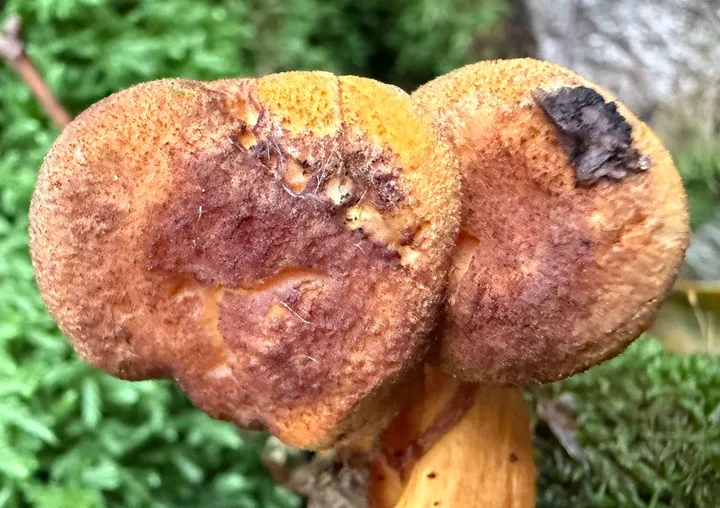
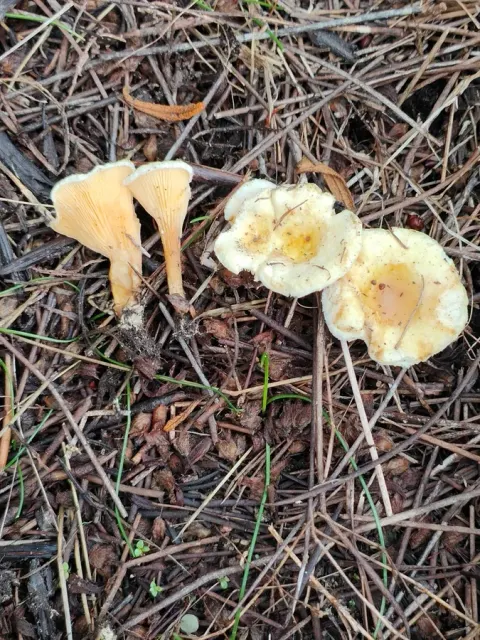
Foto yang diasosiasikan dengan Hygrophoropsis rufa pada iNaturalist. Identifikasi mengikuti sumber; bukan penentuan spesimen independen.
Kredit dan penggunaan
(c) Lucian Clanet, some rights reserved (CC BY)
Ukuran dan format gambar disesuaikan tanpa pemotongan, retus, atau penambahan skala. Lisensi sumber dipertahankan.
Sumber profil
- [1] Hygrophoropsis rufa — Wikipedia (en)
- [2] Catalogue of Life Base2026-09-11 — Hygrophoropsis rufa
- [3] Dokumentasi visual — Hygrophoropsis rufa
- [4] Dokumentasi visual — Hygrophoropsis rufa
Rujukan halaman ini
Fungi. Hygrophoropsis rufa. Rilis data fungi-2026-10-12-expansion-2. https://fungi-atlas.mgadib.chatgpt.site/jamur/hygrophoropsis-rufa/.
Status: impor sumber; pemeriksaan editorial per profil belum selesai. Untuk klaim biologis, gunakan rujukan pada bagian terkait dan periksa konteks sumber aslinya.