01 / Morfologi

Ciri dan struktur

The cap of H. eburneus is 2 to 7 cm broad, with a shape ranging from convex to flattened, sometimes with an umbo (a raised area in the center of the cap). In age the cap margin sometimes becomes elevated and the center of the cap depressed. The cap is pure white, and depending on the moisture in the environment, may be glutinous to sticky. The cap surface is smooth, the margin is even and in young specimens, rolled inward and covered with short fibrils. The flesh is soft and white, thick in the center of the cap but thinning toward the margin. The odor and taste are mild. The gills are somewhat arcuate-decurrent, meaning they are shaped like a bow, curving upward and then running down the stem for a short distance. In terms of spacing, they are subdistant to distant, so that space can be seen between them. The gills are moderately broad, broadest near the stem, narrowed in front, pure white, slightly yellowish or buff with age or when dried. The stem is 4 to 15 cm long, 0.2 to 1.5 cm thick, equal in width throughout its length to somewhat tapered downward When they are viewed in mass, such as with a spore print, the spores appear white. Observing with a light microscope reveals additional details: spores are ellipsoid, smooth, and measure 6–8 by 3.5–5 μm. They are pale yellow in Melzer's reagent. The basidia (spore-bearing cells) are 42–52 by 6-8 μm, and four-spored. There are no pleurocystidia or cheilocystidia. The gill tissue is made of branching hyphae about 7–12 μm wide. The cap cuticle is made of gelatinous, narrow (3–6 μm) hyphae which are repent (bent over) but typically with some erect free ends.

Sebagian uraian ditampilkan dalam bahasa sumber; terjemahannya belum tersedia atau belum lolos pemeriksaan.

Rujukan: [1]

Pengukuran mengikuti objek, spesimen atau kultur, dan metode yang disebutkan sumber. Baca uraian asli untuk konteks lengkap.

02 / Kehidupan

Habitat dan peran ekologis

The fruit bodies of H. eburneus grow on the soil, mostly in coniferous woods, thickets and grassy areas. Jamur lebih memilih tanah yang lembab, mesic, lembab dan berkalkar. Jamur ini tersebar luas di Amerika Utara. Ia juga ditemukan di Eropa (Poland and Portugal), Israel and Afrika Utara.

Sebagian uraian ditampilkan dalam bahasa sumber; terjemahannya belum tersedia atau belum lolos pemeriksaan.

Rujukan: [1]

Habitat atau konteks temuan
Informasi belum tersedia pada sumber rilis ini.
Substrat
Informasi belum tersedia pada sumber rilis ini.
Peran atau konteks
Belum dikategorikan pada rilis ini.
Temukan hubungan serupa
03 / Siklus hidup

Reproduksi

When they are viewed in mass, such as with a spore print, the spores appear white. Observing with a light microscope reveals additional details: spores are ellipsoid, smooth, and measure 6–8 by 3.5–5 μm. They are pale yellow in Melzer's reagent. The basidia (spore-bearing cells) are 42–52 by 6-8 μm, and four-spored. There are no pleurocystidia or cheilocystidia. The gill tissue is made of branching hyphae about 7–12 μm wide. The cap cuticle is made of gelatinous, narrow (3–6 μm) hyphae which are repent (bent over) but typically with some erect free ends. Clamp connections are present in the hyphae.

Sebagian uraian ditampilkan dalam bahasa sumber; terjemahannya belum tersedia atau belum lolos pemeriksaan.

Rujukan: [1]

Sinonim menurut acuan taksonomi rilis: Agaricus eburneus; Agaricus eburneus f. elongatus; Agaricus eburneus f. lutescens; Agaricus eburneus var. brevipes; Agaricus eburneus var. longipes; Agaricus eburneus var. pallens; Gymnopus eburneus; Limacium eburneum; Limacium eburneum var. lutescens
04 / Batas informasi

Catatan identitas dan cakupan

  • Nama diterima mengikuti Catalogue of Life Base2026-09-11; uraian mempertahankan konsep dan nama sumber aslinya.
  • Original geographic, specimen and life-cycle scope retained; source import awaits individual editorial review.
  • Impor dan terjemahan otomatis belum diperiksa editorial per profil. Struktur reproduktif yang disebutkan tidak membuktikan seluruh siklus hidup diketahui.
  • Pengukuran pada uraian mengikuti spesimen, kultur, dan metode sumber; angka tidak diperluas ke semua populasi.

Catatan distribusi dalam narasi mengikuti sumbernya. Dokumentasi spesimen atau foto mengikuti catatan sumber. Bukti wilayah Indonesia dan penilaian konservasi tidak disimpulkan dari gambar.

05 / Dokumentasi

Melihat dengan konteks

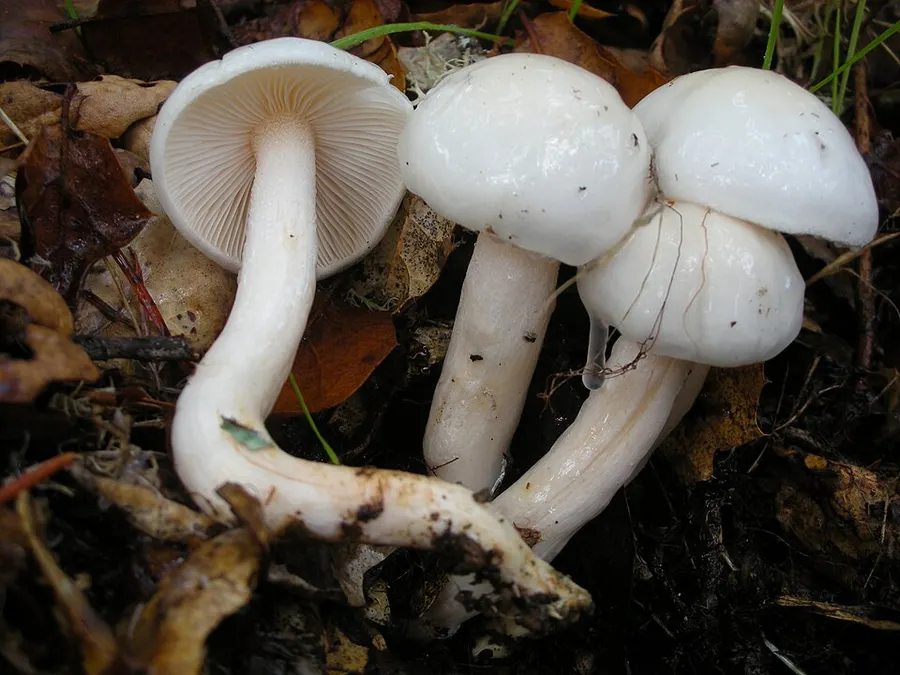
Dokumentasi Hygrophorus eburneus dari Wikimedia Commons. Hygrophorus eburneus , San Geronimo, California, USA. Identifikasi mengikuti record berkas sumber.

Jenis
Fotografi
Kredit
This image was created by user Ron Pastorino at Mushroom Observer , a source for mycological images. You can contact this user here .
Sumber media
Buka entri sumber

Gambar menunjukkan objek menurut identifikasi sumber, bukan verifikasi independen spesimen oleh Fungi. Tidak ada skala baru yang ditambahkan.

06 / Rujukan

Sumber profil

  1. [1] Hygrophorus eburneus — Wikipedia (en)Bagian sumber: Frozen revision 1301076387
    Tanggal penghimpunan sumber: 2026-10-12
    Teks sumber: CC BY-SA4.0 · Wikipedia contributors
  2. [2] Catalogue of Life Base2026-09-11 — Hygrophorus eburneusBagian sumber: ColDP NameUsage.tsv ID 3NBY4; accepted species; source 2073
    Tanggal penghimpunan sumber: 2026-10-12
  3. [3] Dokumentasi visual — Hygrophorus eburneusBagian sumber: Individual media record; identification follows the source, not independent determination
    Tanggal penghimpunan sumber: 2026-10-12
    Media sumber: CC BY-SA 3.0 · This image was created by user Ron Pastorino at Mushroom Observer , a source for mycological images. You can contact this user here .

Adaptasi teks: CC BY-SA 4.0. Wikipedia contributors — Hygrophorus eburneus — Wikipedia (en)

Uraian asli dan riwayat sumber

Riwayat atau halaman sumber

Ringkasan sumber

Hygrophorus eburneus, commonly known as the ivory waxy cap or the cowboy's handkerchief, is a species of edible mushroom in the waxgill family of fungi. Hygrophorus eburneus is the type species of the genus Hygrophorus. The fruit bodies are medium-sized, pure white, and when wet are covered in a layer of slime thick enough to make the mushroom difficult to pick up. The gills are broadly attached to the stem or running down it; as the family name suggests, they feel waxy when rubbed between the fingers.

Revisi sumber

Morfologi sumber

The cap of H. eburneus is 2 to 7 cm broad, with a shape ranging from convex to flattened, sometimes with an umbo (a raised area in the center of the cap). In age the cap margin sometimes becomes elevated and the center of the cap depressed. The cap is pure white, and depending on the moisture in the environment, may be glutinous to sticky. The cap surface is smooth, the margin is even and in young specimens, rolled inward and covered with short fibrils. The flesh is soft and white, thick in the center of the cap but thinning toward the margin. The odor and taste are mild. The gills are somewhat arcuate-decurrent, meaning they are shaped like a bow, curving upward and then running down the stem for a short distance. In terms of spacing, they are subdistant to distant, so that space can be seen between them. The gills are moderately broad, broadest near the stem, narrowed in front, pure white, slightly yellowish or buff with age or when dried. The stem is 4 to 15 cm long, 0.2 to 1.5 cm thick, equal in width throughout its length to somewhat tapered downward When they are viewed in mass, such as with a spore print, the spores appear white. Observing with a light microscope reveals additional details: spores are ellipsoid, smooth, and measure 6–8 by 3.5–5 μm. They are pale yellow in Melzer's reagent. The basidia (spore-bearing cells) are 42–52 by 6-8 μm, and four-spored. There are no pleurocystidia or cheilocystidia. The gill tissue is made of branching hyphae about 7–12 μm wide. The cap cuticle is made of gelatinous, narrow (3–6 μm) hyphae which are repent (bent over) but typically with some erect free ends.

Revisi sumber

Ekologi sumber

The fruit bodies of H. eburneus grow on the soil, mostly in coniferous woods, thickets and grassy areas. The fungus prefers soil that is moist, mesic, loamy and calcareous. The fungus is widely distributed in North America. It is also found in Europe (Poland and Portugal), Israel and North Africa.

Revisi sumber

Struktur reproduksi sumber

When they are viewed in mass, such as with a spore print, the spores appear white. Observing with a light microscope reveals additional details: spores are ellipsoid, smooth, and measure 6–8 by 3.5–5 μm. They are pale yellow in Melzer's reagent. The basidia (spore-bearing cells) are 42–52 by 6-8 μm, and four-spored. There are no pleurocystidia or cheilocystidia. The gill tissue is made of branching hyphae about 7–12 μm wide. The cap cuticle is made of gelatinous, narrow (3–6 μm) hyphae which are repent (bent over) but typically with some erect free ends. Clamp connections are present in the hyphae.

Revisi sumber

Rujukan halaman ini

Fungi. Hygrophorus eburneus. Rilis data fungi-2026-10-12-expansion-2. https://fungi-atlas.mgadib.chatgpt.site/jamur/hygrophorus-eburneus/.

Status: impor sumber; pemeriksaan editorial per profil belum selesai. Untuk klaim biologis, gunakan rujukan pada bagian terkait dan periksa konteks sumber aslinya.