Ciri dan struktur
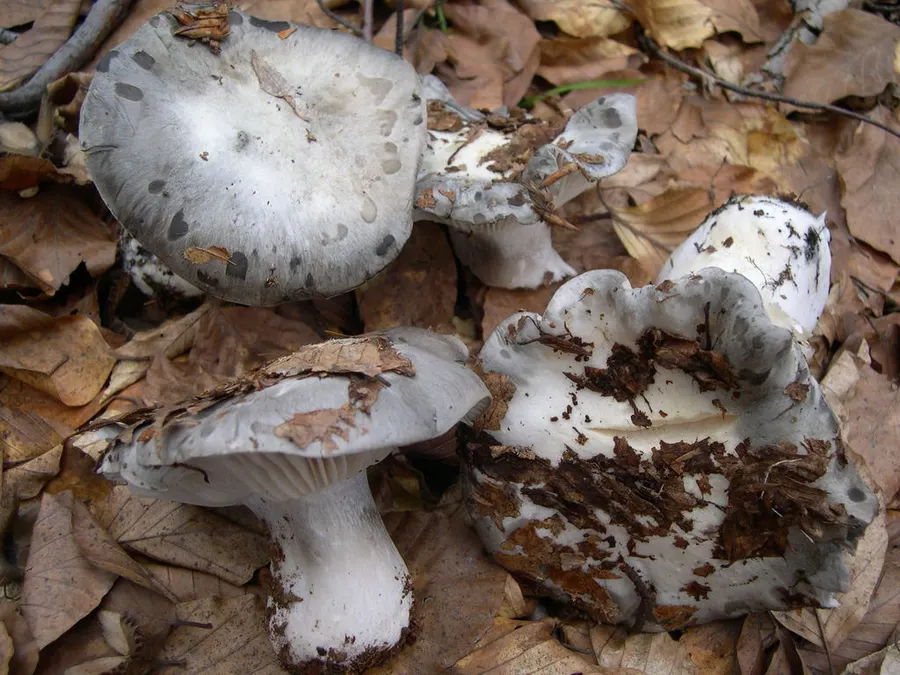
The fruit bodies have caps that are broadly convex, measuring 2.5 – 11 cm in diameter. Their surfaces are smooth and sticky, with a pale greyish-brown center and darker brown to blackish-grey margin. The distantly spaced, broad gills have an adnate to adnexed attachment to the stipe, and two tiers of intervening lamellulae (short gills). The gills are initially white before turning gray to bluish-gray in age. The whitish stipe measures 3 – 10 cm long by 1 – 2.5 cm thick, and is either equal in width throughout or tapers slightly towards the base. The stipe is smooth except for a few tufts of hairs near the top. Immediately underneath the cap cuticle, the flesh of the cap is water-soaked; elsewhere in the cap, it is gray-tinted with a sheen, while in the stipe it is dull white. It lacks any appreciable odor or taste. It is considered edible in Europe, where it is prized in some regions. The thin-walled, elliptical spores measure 6.5–8.5 by 4.5–5 μm. The basidia (spore-bearing cells) are narrowly club-shaped, four-spored, and measure 42–55 by 5.4–8.1 μm.
Habitat dan peran ekologis
Hygrophorus marzuolus adalah jamur mikoriza. Associations have ditandai dengan pohon Abies alba, dan kadang-kadang dengan Picea excelsa dan Pinus sylvestris. Fruit bodies tumbuh secara individual hingga beredar atau kadang-kadang dalam kelompok di lantai hutan dalam kerang atau lumut. It fruits under conifers, often fir and Engelmann spruce, typically at high elevations. Jamur snowbank, dikaitkan dengan salju meleleh, dan berbuah dimulai di bawah snowbanks. Jamur ini telah tercatat dari pegunungan Idaho, Montana, Oregon, Washington, Arizona utara, dan California utara. European distribution membentang dari bahasa Prancis Pyrenees to wilayah Praha. Di Asia, hal ini dilaporkan dari Pakistan.
- Habitat atau konteks temuan
- hutan
- Substrat
- Informasi belum tersedia pada sumber rilis ini.
- Peran atau konteks
- Mitra tumbuhan
Reproduksi
The thin-walled, elliptical spores measure 6.5–8.5 by 4.5–5 μm. The basidia (spore-bearing cells) are narrowly club-shaped, four-spored, and measure 42–55 by 5.4–8.1 μm.
Catatan identitas dan cakupan
- Nama diterima mengikuti Catalogue of Life Base2026-09-11; uraian mempertahankan konsep dan nama sumber aslinya.
- Original geographic, specimen and life-cycle scope retained; source import awaits individual editorial review.
- Impor dan terjemahan otomatis belum diperiksa editorial per profil. Struktur reproduktif yang disebutkan tidak membuktikan seluruh siklus hidup diketahui.
- Pengukuran pada uraian mengikuti spesimen, kultur, dan metode sumber; angka tidak diperluas ke semua populasi.
Catatan distribusi dalam narasi mengikuti sumbernya. Dokumentasi spesimen atau foto mengikuti catatan sumber. Bukti wilayah Indonesia dan penilaian konservasi tidak disimpulkan dari gambar.
Melihat dengan konteks
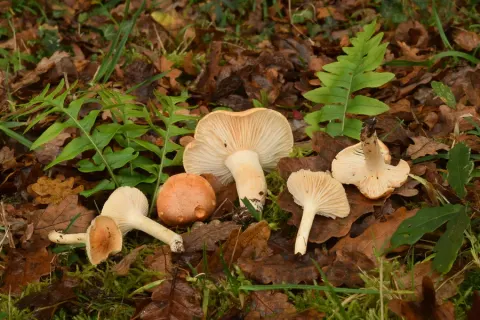
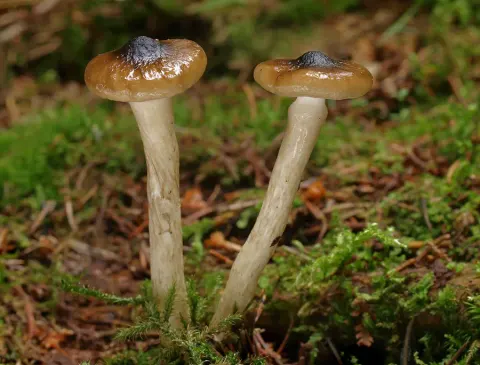
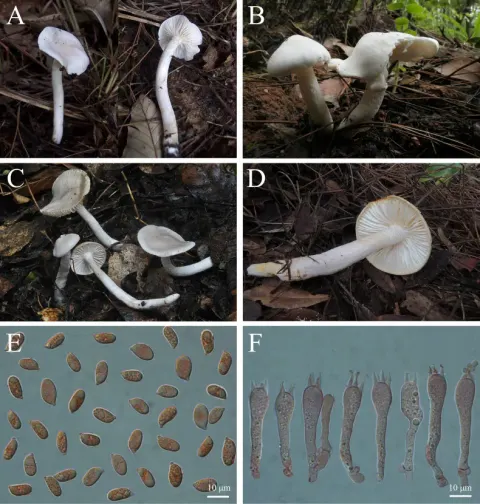
Dokumentasi Hygrophorus marzuolus menurut asosiasi foto pada record takson iNaturalist. Kredit: GLJIVARSKO DRUSTVO NIS. Identitas mengikuti sumber; bukan penentuan spesimen independen.
- Jenis
- Fotografi
- Kredit
- (c) GLJIVARSKO DRUSTVO NIS, bazı hakları saklıdır (CC BY)
- Lisensi
- CC BY 4.0
- Sumber media
- Buka entri sumber
Dokumentasi tambahan
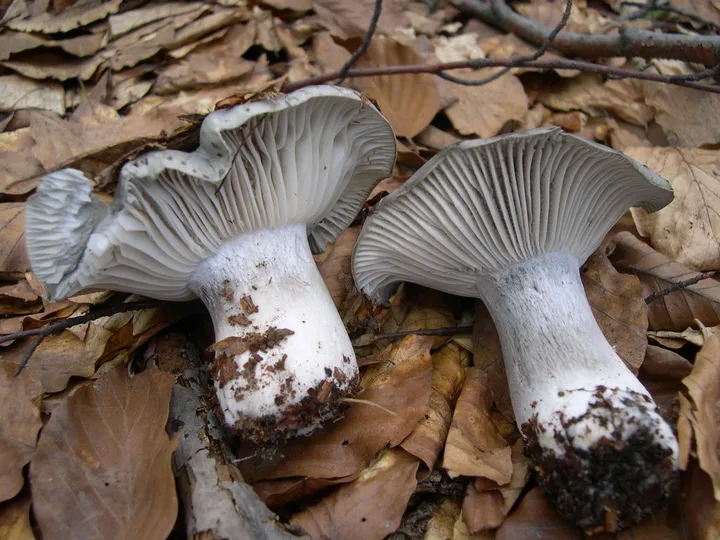
Foto yang diasosiasikan dengan Hygrophorus marzuolus pada iNaturalist. Identifikasi mengikuti sumber; bukan penentuan spesimen independen.
Kredit dan penggunaan
(c) GLJIVARSKO DRUSTVO NIS, some rights reserved (CC BY)
Ukuran dan format gambar disesuaikan tanpa pemotongan, retus, atau penambahan skala. Lisensi sumber dipertahankan.
Sumber profil
- [1] Hygrophorus marzuolus — Wikipedia (en)
- [2] Catalogue of Life Base2026-09-11 — Hygrophorus marzuolus
- [3] Dokumentasi visual — Hygrophorus marzuolus
- [4] Dokumentasi visual — Hygrophorus marzuolus
Rujukan halaman ini
Fungi. Hygrophorus marzuolus. Rilis data fungi-2026-10-12-expansion-2. https://fungi-atlas.mgadib.chatgpt.site/jamur/hygrophorus-marzuolus/.
Status: impor sumber; pemeriksaan editorial per profil belum selesai. Untuk klaim biologis, gunakan rujukan pada bagian terkait dan periksa konteks sumber aslinya.