Ciri dan struktur
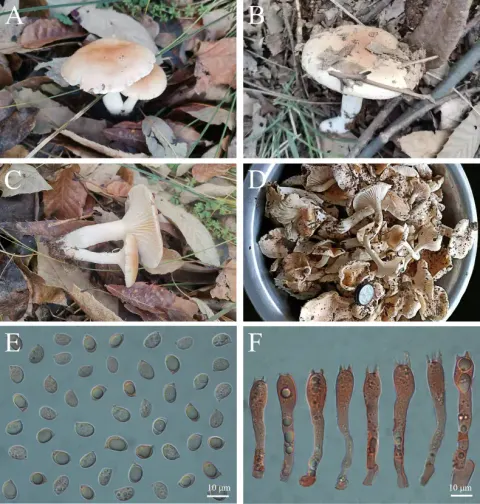
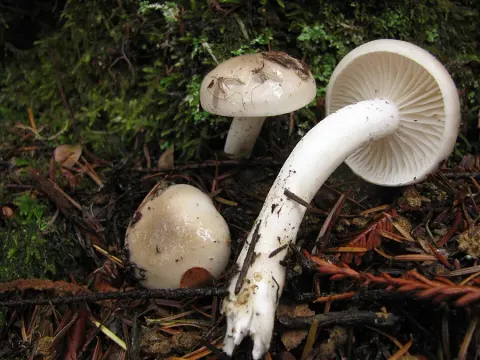
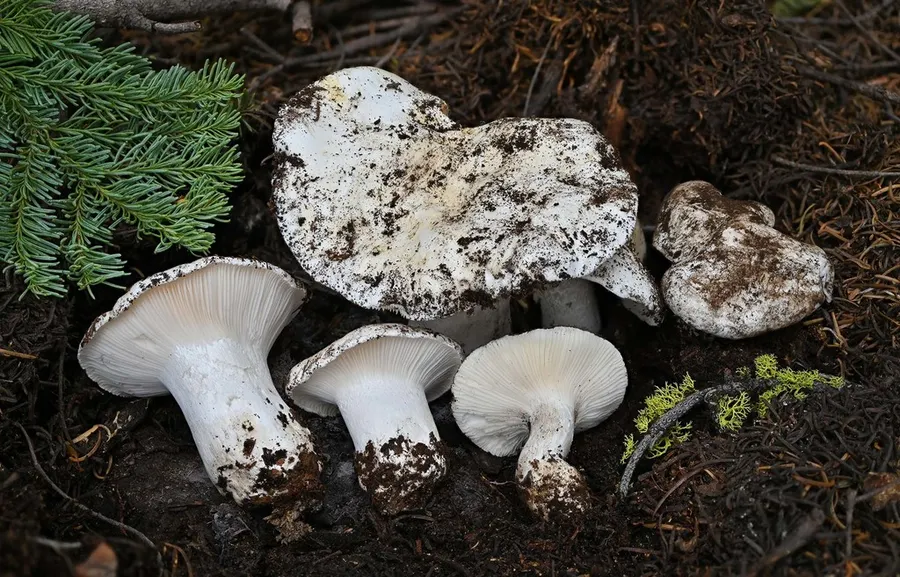
The cap is 4.5 to 13 cm wide, with a convex shape that becomes flattened in age; sometimes it develops a central umbo (a rounded elevation resembling a nipple). The cap is sticky, white, and the cap margin often has fragments of the veil adhering. The flesh is soft, thick and white. The gills, which are attached decurrently to the stipe (running down the length of the stipe), are narrow, packed closely together, and white-colored. The stipe is white, 3 to 4 cm long and 1 to 2 cm thick at the apex; when young the base of the stipe is bulbous but as it grows it thins and becomes almost the same width as at the top of the stem. A membranous annulus is present low on the stipe. The spores are white in deposit; microscopically, they are ellipsoid and smooth, with dimensions of 8–10 by 4.5–5 μm. There are no cystidia present in the gills of this species, and clamp connections are present on the hyphae.
Habitat dan peran ekologis
The fruit bodies of H. subalpinus grows in large clusters under conifers, often near snowbanks, and typically at high elevations, such as on mountains. Biasanya muncul setelah salju di daerah itu telah berkurang, kadang-kadang tumbuh sebagian di bawah tanah. Hal ini ditemukan di Amerika Utara, dari Rocky Mountains to di Pasifik Barat Laut.
- Habitat atau konteks temuan
- Informasi belum tersedia pada sumber rilis ini.
- Substrat
- Informasi belum tersedia pada sumber rilis ini.
- Peran atau konteks
- Belum dikategorikan pada rilis ini.
Reproduksi
The spores are white in deposit; microscopically, they are ellipsoid and smooth, with dimensions of 8–10 by 4.5–5 μm. There are no cystidia present in the gills of this species, and clamp connections are present on the hyphae.
Catatan identitas dan cakupan
- Nama diterima mengikuti Catalogue of Life Base2026-09-11; uraian mempertahankan konsep dan nama sumber aslinya.
- Original geographic, specimen and life-cycle scope retained; source import awaits individual editorial review.
- Impor dan terjemahan otomatis belum diperiksa editorial per profil. Struktur reproduktif yang disebutkan tidak membuktikan seluruh siklus hidup diketahui.
- Pengukuran pada uraian mengikuti spesimen, kultur, dan metode sumber; angka tidak diperluas ke semua populasi.
Catatan distribusi dalam narasi mengikuti sumbernya. Dokumentasi spesimen atau foto mengikuti catatan sumber. Bukti wilayah Indonesia dan penilaian konservasi tidak disimpulkan dari gambar.
Melihat dengan konteks
Dokumentasi Hygrophorus subalpinus menurut asosiasi foto pada record takson iNaturalist. Kredit: Alan Rockefeller. Identitas mengikuti sumber; bukan penentuan spesimen independen.
- Jenis
- Fotografi
- Kredit
- (c) Alan Rockefeller, some rights reserved (CC BY), uploaded by Alan Rockefeller
- Lisensi
- CC BY 4.0
- Sumber media
- Buka entri sumber
Dokumentasi tambahan
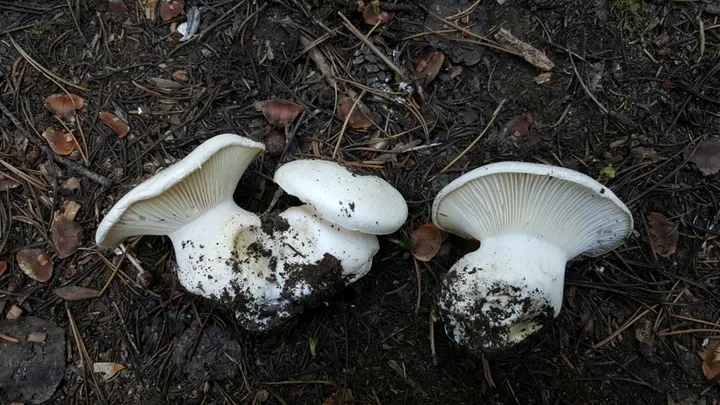
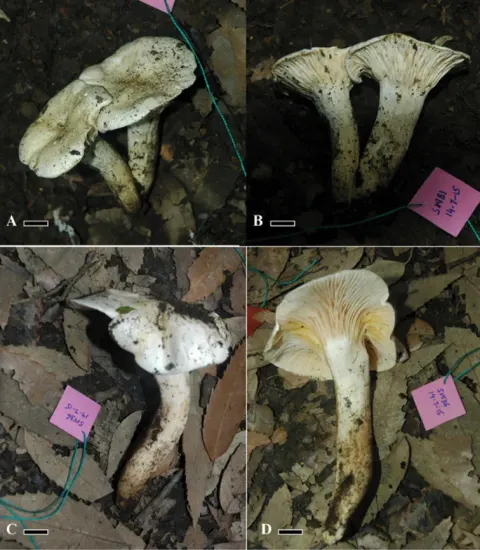
Foto yang diasosiasikan dengan Hygrophorus subalpinus pada iNaturalist. Identifikasi mengikuti sumber; bukan penentuan spesimen independen.
Kredit dan penggunaan
(c) Toby, some rights reserved (CC BY), uploaded by Toby
Ukuran dan format gambar disesuaikan tanpa pemotongan, retus, atau penambahan skala. Lisensi sumber dipertahankan.
Sumber profil
- [1] Hygrophorus subalpinus — Wikipedia (en)
- [2] Catalogue of Life Base2026-09-11 — Hygrophorus subalpinus
- [3] Dokumentasi visual — Hygrophorus subalpinus
- [4] Dokumentasi visual — Hygrophorus subalpinus
Rujukan halaman ini
Fungi. Hygrophorus subalpinus. Rilis data fungi-2026-10-12-expansion-2. https://fungi-atlas.mgadib.chatgpt.site/jamur/hygrophorus-subalpinus/.
Status: impor sumber; pemeriksaan editorial per profil belum selesai. Untuk klaim biologis, gunakan rujukan pada bagian terkait dan periksa konteks sumber aslinya.