01 / Morfologi

Ciri dan struktur

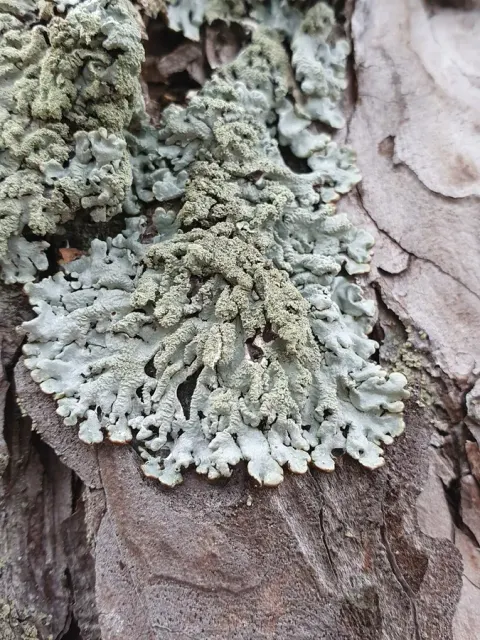
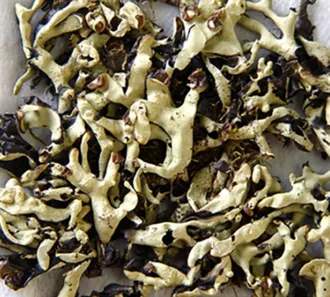
Hypogymnia enteromorpha is also known as the "budding tube lichen" and "gut lichen". It is a medium to large, foliose "tube lichen" with pale whitish-gray to pale greenish-gray lobes. The thallus is often about 5 – 15 cm across, with individual lobes commonly about 2 – 6 mm wide and sometimes reaching roughly 5 – 10 cm in length. The lobes are inflated and hollow, and they may either drape from the substrate or sit pressed against it. On more level surfaces the lobes are often shorter and rounder, while on vertical faces they commonly elongate. Branching is irregular, and the branches may pass back and forth between constricted segments and swollen ones. A cut lobe shows a dark inner lining to the hollow ("ceiling"), matching the generally dark interior. Many lobe ends broaden, and some finish in a small terminal opening. Small marginal outgrowths are often present, appearing as tiny round lobules or short bud-like side lobes that may be abundant or sparse on a given thallus. The underside is black, and it does not form soredia or isidia. Apothecia are frequently produced, and are typically brown. In chemical spot tests the medulla is reported as PD+ red (also described as P+ yellow turning red), K−, C−, and KC+ (pink to orange), consistent with protocetraric and physodic/physodalic chemistry alongside diffractaic acid.

Sebagian uraian ditampilkan dalam bahasa sumber; terjemahannya belum tersedia atau belum lolos pemeriksaan.

Rujukan: [1]

Pengukuran mengikuti objek, spesimen atau kultur, dan metode yang disebutkan sumber. Baca uraian asli untuk konteks lengkap.

02 / Kehidupan

Habitat dan peran ekologis

Hypogymnia enteromorpha grows on bark and wood, especially on conifers, and it may occur directly on conifer bark or across dry, weathered wood. It is associated with moist low- to mid-elevation forests, and it tolerates sites ranging from fairly exposed to more shaded situations on the bark or wood surface. In western North America it is described as common and conspicuous in many areas, with a documented range extending from Alaska south to California. It is very common in the western Cascade Range, but becomes uncommon to rare eastward toward the Continental Divide.

Sebagian uraian ditampilkan dalam bahasa sumber; terjemahannya belum tersedia atau belum lolos pemeriksaan.

Rujukan: [1]

Habitat atau konteks temuan
hutan
Substrat
Informasi belum tersedia pada sumber rilis ini.
Peran atau konteks
Pembentuk liken
Temukan hubungan serupa
03 / Siklus hidup

Reproduksi

Hypogymnia enteromorpha is also known as the "budding tube lichen" and "gut lichen". It is a medium to large, foliose "tube lichen" with pale whitish-gray to pale greenish-gray lobes. The thallus is often about 5 – 15 cm across, with individual lobes commonly about 2 – 6 mm wide and sometimes reaching roughly 5 – 10 cm in length. The lobes are inflated and hollow, and they may either drape from the substrate or sit pressed against it. On more level surfaces the lobes are often shorter and rounder, while on vertical faces they commonly elongate. Branching is irregular, and the branches may pass back and forth between constricted segments and swollen ones. A cut lobe shows a dark inner lining to the hollow ("ceiling"), matching the generally dark interior.

Sebagian uraian ditampilkan dalam bahasa sumber; terjemahannya belum tersedia atau belum lolos pemeriksaan.

Rujukan: [1]

Sinonim menurut acuan taksonomi rilis: Imbricaria physodes f. enteromorpha; Lichen diatrypus enteromorpha; Menegazzia enteromorpha; Parmelia enteromorpha; Parmelia physodes f. enteromorpha; Parmelia physodes subsp. enteromorpha; Parmelia physodes var. enteromorpha
04 / Batas informasi

Catatan identitas dan cakupan

  • Nama diterima mengikuti Catalogue of Life Base2026-09-11; uraian mempertahankan konsep dan nama sumber aslinya.
  • Original geographic, specimen and life-cycle scope retained; source import awaits individual editorial review.
  • Impor dan terjemahan otomatis belum diperiksa editorial per profil. Struktur reproduktif yang disebutkan tidak membuktikan seluruh siklus hidup diketahui.
  • Pengukuran pada uraian mengikuti spesimen, kultur, dan metode sumber; angka tidak diperluas ke semua populasi.

Catatan distribusi dalam narasi mengikuti sumbernya. Dokumentasi spesimen atau foto mengikuti catatan sumber. Bukti wilayah Indonesia dan penilaian konservasi tidak disimpulkan dari gambar.

05 / Dokumentasi

Melihat dengan konteks

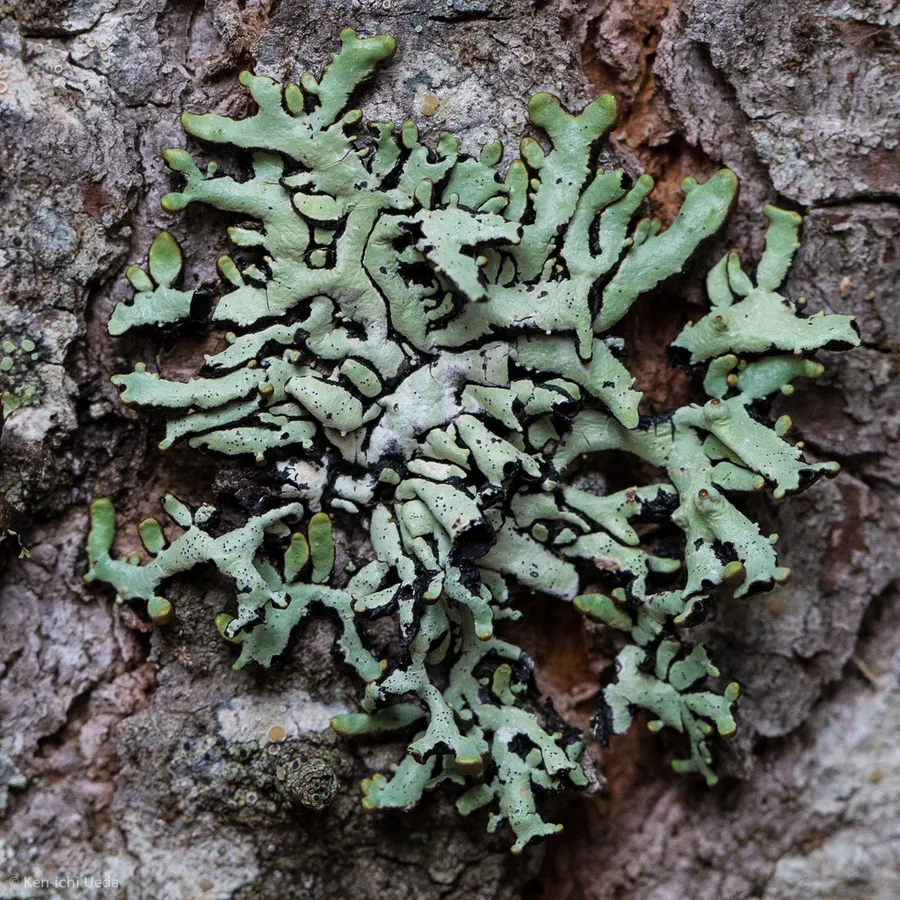
Dokumentasi Hypogymnia enteromorpha menurut asosiasi foto pada record takson iNaturalist. Kredit: Ken-ichi Ueda. Identitas mengikuti sumber; bukan penentuan spesimen independen.

Jenis
Fotografi
Kredit
(c) Ken-ichi Ueda, some rights reserved (CC BY), uploaded by Ken-ichi Ueda
Lisensi
CC BY 4.0
Sumber media
Buka entri sumber

Gambar menunjukkan objek menurut identifikasi sumber, bukan verifikasi independen spesimen oleh Fungi. Tidak ada skala baru yang ditambahkan.

06 / Rujukan

Sumber profil

  1. [1] Hypogymnia enteromorpha — Wikipedia (en)Bagian sumber: Frozen revision 1336815957
    Tanggal penghimpunan sumber: 2026-10-12
    Teks sumber: CC BY-SA4.0 · Wikipedia contributors
  2. [2] Catalogue of Life Base2026-09-11 — Hypogymnia enteromorphaBagian sumber: ColDP NameUsage.tsv ID 6N2S5; accepted species; source 2073
    Tanggal penghimpunan sumber: 2026-10-12
  3. [3] Dokumentasi visual — Hypogymnia enteromorphaBagian sumber: Individual media record; identification follows the source, not independent determination
    Tanggal penghimpunan sumber: 2026-10-12
    Media sumber: CC BY 4.0 · (c) Ken-ichi Ueda, some rights reserved (CC BY), uploaded by Ken-ichi Ueda

Adaptasi teks: CC BY-SA 4.0. Wikipedia contributors — Hypogymnia enteromorpha — Wikipedia (en)

Uraian asli dan riwayat sumber

Riwayat atau halaman sumber

Ringkasan sumber

Hypogymnia enteromorpha, the budding tube lichen or gut lichen, is a species of foliose lichen in the family Parmeliaceae. It is most often found in moist conifer forests of western North America, where it grows on bark and weathered wood. The species forms pale grey, hollow lobes with a black underside and commonly develops small bud-like outgrowths along the margins. It is one of the larger and more conspicuous members of its genus, and is frequently identified with chemical spot tests in addition to its characteristic growth form.

Revisi sumber

Morfologi sumber

Hypogymnia enteromorpha is also known as the "budding tube lichen" and "gut lichen". It is a medium to large, foliose "tube lichen" with pale whitish-gray to pale greenish-gray lobes. The thallus is often about 5 – 15 cm across, with individual lobes commonly about 2 – 6 mm wide and sometimes reaching roughly 5 – 10 cm in length. The lobes are inflated and hollow, and they may either drape from the substrate or sit pressed against it. On more level surfaces the lobes are often shorter and rounder, while on vertical faces they commonly elongate. Branching is irregular, and the branches may pass back and forth between constricted segments and swollen ones. A cut lobe shows a dark inner lining to the hollow ("ceiling"), matching the generally dark interior. Many lobe ends broaden, and some finish in a small terminal opening. Small marginal outgrowths are often present, appearing as tiny round lobules or short bud-like side lobes that may be abundant or sparse on a given thallus. The underside is black, and it does not form soredia or isidia. Apothecia are frequently produced, and are typically brown. In chemical spot tests the medulla is reported as PD+ red (also described as P+ yellow turning red), K−, C−, and KC+ (pink to orange), consistent with protocetraric and physodic/physodalic chemistry alongside diffractaic acid.

Revisi sumber

Ekologi sumber

Hypogymnia enteromorpha grows on bark and wood, especially on conifers, and it may occur directly on conifer bark or across dry, weathered wood. It is associated with moist low- to mid-elevation forests, and it tolerates sites ranging from fairly exposed to more shaded situations on the bark or wood surface. In western North America it is described as common and conspicuous in many areas, with a documented range extending from Alaska south to California. It is very common in the western Cascade Range, but becomes uncommon to rare eastward toward the Continental Divide.

Revisi sumber

Struktur reproduksi sumber

Hypogymnia enteromorpha is also known as the "budding tube lichen" and "gut lichen". It is a medium to large, foliose "tube lichen" with pale whitish-gray to pale greenish-gray lobes. The thallus is often about 5 – 15 cm across, with individual lobes commonly about 2 – 6 mm wide and sometimes reaching roughly 5 – 10 cm in length. The lobes are inflated and hollow, and they may either drape from the substrate or sit pressed against it. On more level surfaces the lobes are often shorter and rounder, while on vertical faces they commonly elongate. Branching is irregular, and the branches may pass back and forth between constricted segments and swollen ones. A cut lobe shows a dark inner lining to the hollow ("ceiling"), matching the generally dark interior.

Revisi sumber

Rujukan halaman ini

Fungi. Hypogymnia enteromorpha. Rilis data fungi-2026-10-12-expansion-2. https://fungi-atlas.mgadib.chatgpt.site/jamur/hypogymnia-enteromorpha/.

Status: impor sumber; pemeriksaan editorial per profil belum selesai. Untuk klaim biologis, gunakan rujukan pada bagian terkait dan periksa konteks sumber aslinya.