Ciri dan struktur
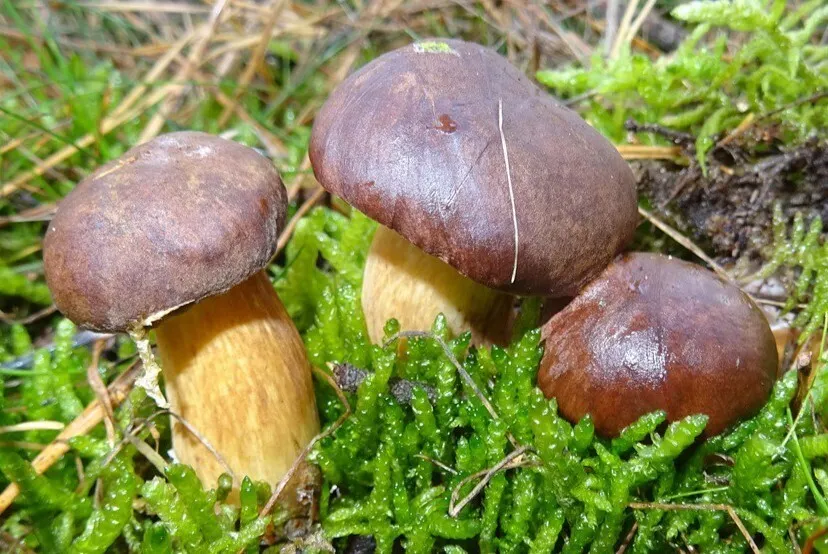
Imleria badia fruit bodies have a chestnut to dark brown cap, which is almost spherical in young specimens before broadening and flattening out to a diameter of up to 10 cm. The cap has an acute margin and a velvety surface when young, being slightly sticky when wet or old. The cap cuticle is difficult to separate from the flesh underneath. On the cap undersurface, the pores are initially cream to pale yellow, but become greenish yellow or olive with age. They stain dull blue to bluish-grey when bruised or cut, and are easily removed from the flesh. The pores are initially circular, becoming more angular with age, and number about one or two per millimetre. The tubes are 0.8–1.5 cm long, and are adnate to depressed around the area of attachment to the stipe. The flesh is mostly whitish or yellowish in some places; underneath the cap cuticle, it is brownish-pink or reddish brown. Initially firm, it begins to soften under the cap in older mushrooms. In some parts of the cap, such as the junction of the cap and the stipe, the flesh stains pale blue when injured or exposed to air, particularly in damp weather. This change is sometimes faint, and not persistent, as it eventually reverts to its original colour. The stipe is 4–9 cm long by 1–2 cm thick, and is similar in colour to the cap but paler, and sometimes with a rose-coloured tinge. Its surface has faint longitudinal ridges, a fine powdering, and fine reticulations (a net-like pattern of ridges) at the apex. It often has a whitish region at the base and the top, and white mycelium at the base. Unlike the bulbous stipe of many other boletes, the stipe of B. badius remains relatively slim and cylindrical.
Habitat dan peran ekologis
The bay bolete is common in coniferous and less commonly mixed woodlands in Europe, from the British Isles, where it is abundant throughout from August to November, east to the Black Sea Region in Turkey. In Asia, the species has been recorded from Jordan mainland China, and Taiwan. The North American distribution extends from eastern Canada west to Minnesota and south to North Carolina, where the mushroom fruits from July to November. It also grows in central Mexico. The variety B. b. macrostipitatus is found from eastern Canada south to Maine and New York state, while variety B. b. glaber is known from the Atlantic Maritime Ecozone of eastern Canada. Fruit bodies appear singly or scattered on the ground, or on decaying tree stumps, and can be well hidden by pine needles and ferns. Fruiting tends to peak three or four days after rain during warm weather. They can be prolific, especially in highland areas that are humid and shady. The species is commonly found under white pine, spruce, and hemlock, and also occurs under deciduous trees, especially beech. It can also occur in grassy or mossy areas at or near forest margins; Italian restaurateur and cook Antonio Carluccio recalled picking them in the grounds of Blenheim Palace.
- Habitat atau konteks temuan
- hutan
- Substrat
- tanah
- Peran atau konteks
- Belum dikategorikan pada rilis ini.
Reproduksi
The spore print is olive to olive-brown. The smooth spores are somewhat oblong to slightly ventricose (fattened in the middle), and measure 10–14 by 4–5 μm. The basidia (spore-bearing cells) are four-spored and measure 25–35 by 8–10 μm. Pleurocystidia (cystidia found on the faces of the tubes) are fuse-shaped and ventricose, with dimensions of 50–60 by 10–14 μm. Variety B. b. macrostipitatus differs from the main form by its grey-orange cap, shorter stipe measuring 5–7 cm, longer spores (15–18 by 4–5 μm), and longer pleurocystidia (30–55 by 10–14 μm). The variety B. b. glaber has a smooth (glabrous) stipe, and smaller pleurocystidia (35–40 by 10–15 μm) and cheilocystidia (25–30 by 9–12 μm).
Catatan identitas dan cakupan
- Nama diterima mengikuti Catalogue of Life Base2026-09-11; uraian mempertahankan konsep dan nama sumber aslinya.
- Original geographic, specimen and life-cycle scope retained; source import awaits individual editorial review.
- Impor dan terjemahan otomatis belum diperiksa editorial per profil. Struktur reproduktif yang disebutkan tidak membuktikan seluruh siklus hidup diketahui.
- Pengukuran pada uraian mengikuti spesimen, kultur, dan metode sumber; angka tidak diperluas ke semua populasi.
Catatan distribusi dalam narasi mengikuti sumbernya. Dokumentasi spesimen atau foto mengikuti catatan sumber. Bukti wilayah Indonesia dan penilaian konservasi tidak disimpulkan dari gambar.
Melihat dengan konteks
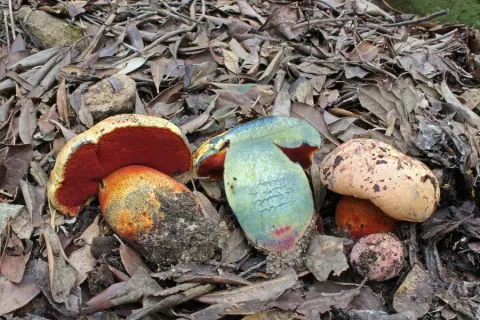
Dokumentasi Imleria badia menurut asosiasi foto pada record takson iNaturalist. Kredit: Andre Fischer. Identitas mengikuti sumber; bukan penentuan spesimen independen.
- Jenis
- Fotografi
- Kredit
- (c) Andre Fischer, some rights reserved (CC BY)
- Lisensi
- CC BY 4.0
- Sumber media
- Buka entri sumber
Dokumentasi tambahan
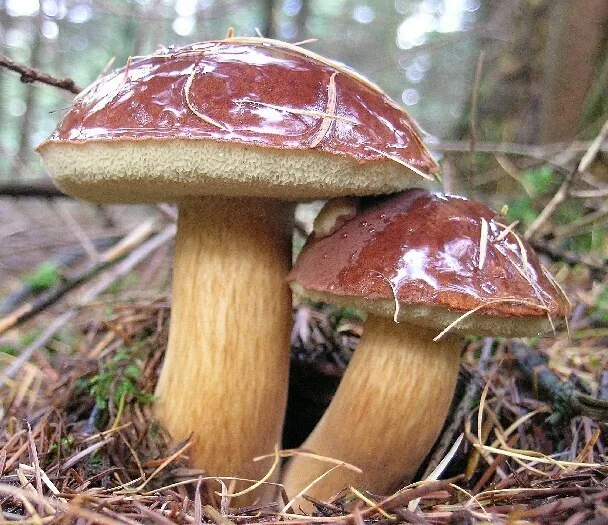
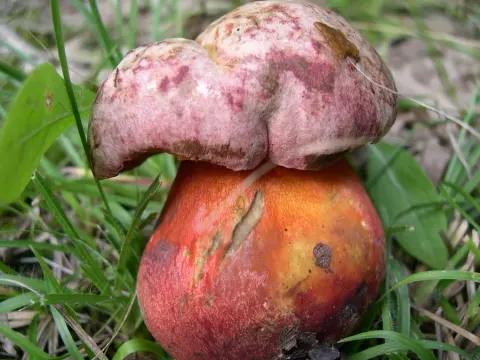
Foto yang diasosiasikan dengan Imleria badia pada iNaturalist. Identifikasi mengikuti sumber; bukan penentuan spesimen independen.
Kredit dan penggunaan
(c) Jörn Wildberger, some rights reserved (CC BY)
Ukuran dan format gambar disesuaikan tanpa pemotongan, retus, atau penambahan skala. Lisensi sumber dipertahankan.
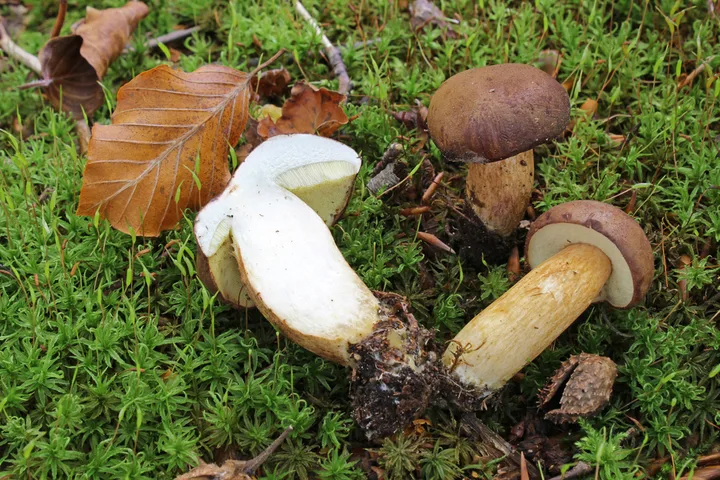
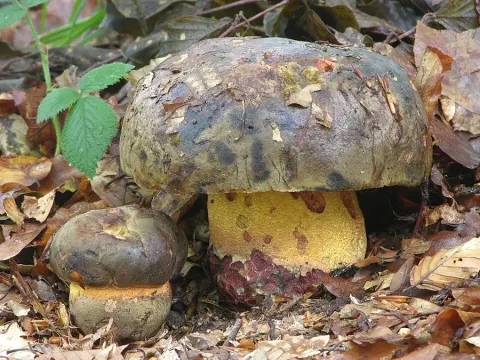
Foto yang diasosiasikan dengan Imleria badia pada iNaturalist. Identifikasi mengikuti sumber; bukan penentuan spesimen independen.
Kredit dan penggunaan
(c) Davide Puddu, some rights reserved (CC BY), uploaded by Davide Puddu
Ukuran dan format gambar disesuaikan tanpa pemotongan, retus, atau penambahan skala. Lisensi sumber dipertahankan.
Sumber profil
- [1] Imleria badia — Wikipedia (en)
- [2] Catalogue of Life Base2026-09-11 — Imleria badia
- [3] Dokumentasi visual — Imleria badia
- [4] Dokumentasi visual — Imleria badia
- [5] Dokumentasi visual — Imleria badia
Rujukan halaman ini
Fungi. Imleria badia. Rilis data fungi-2026-10-12-expansion-2. https://fungi-atlas.mgadib.chatgpt.site/jamur/imleria-badia/.
Status: impor sumber; pemeriksaan editorial per profil belum selesai. Untuk klaim biologis, gunakan rujukan pada bagian terkait dan periksa konteks sumber aslinya.