Ciri dan struktur
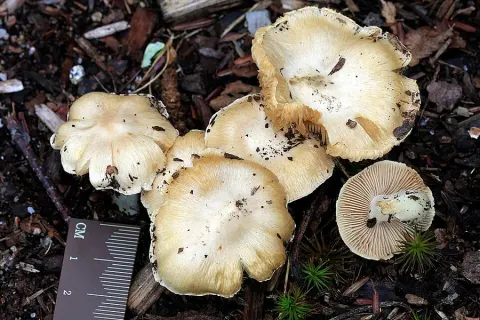
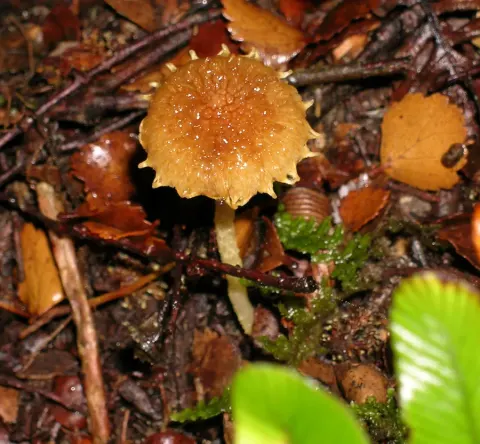
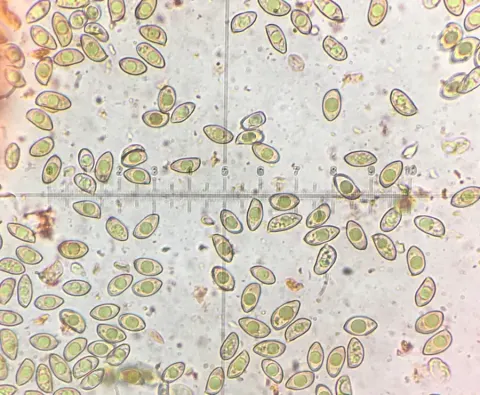
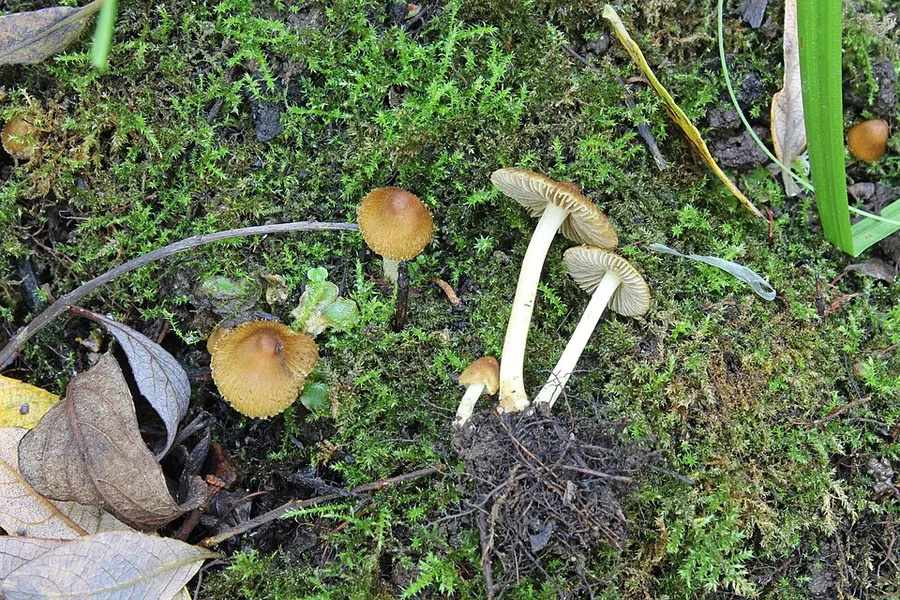
Inocybe salicis mushrooms have tawny to yellowish-brown caps of between 1 and 2.5 cm in diameter. Their surface can be cracked, covered in fibres or scaly. The caps change in shape as the mushrooms mature; while younger specimens have campanulate (bell-shaped) to conical caps, the caps of older specimens expand and flatten, with a broad umbo emerging. The cap cuticle forms a cutis. The gills are almost free, meaning that they only just connect to the stem, and are initially a pale grey, becoming an ochre-grey (or brownish) as they age. The stem has a white to honey-coloured surface entirely covered in powdery granules. The stem is 1.5 to 3.5 cm long by 0.4 to 1 cm thick. There is a well-defined "bulb" at the base of the stem. The white flesh smells spermatic, but the scent is not distinctive. Inocybe salicis produces spores of 9 to 11 by 6 to 8 micrometers (μm). In shape, they are elongated or curved, but they are covered with 10 to 15 distinctive blunt, semi-circular projections. The cystidia on the face and edge of the gills measure 50 to 70 by 12 to 25 μm with a cell wall 2 to 3 μm thick, and either taper at each end, or are shaped like swollen bottles, with the cheilocystidia (cystidia on the gill edge) more variable. The circumcystidia (cystidia on the margin of the cap) are club- or balloon-shaped, and caulocystidia can be found all the way down the stem.
Habitat dan peran ekologis
Inocybe salicis favours wet land in willow woodland and clearings. Although widespread throughout its range in Europe, it is not commonly encountered.
- Habitat atau konteks temuan
- hutan
- Substrat
- Informasi belum tersedia pada sumber rilis ini.
- Peran atau konteks
- Belum dikategorikan pada rilis ini.
Reproduksi
Inocybe salicis produces spores of 9 to 11 by 6 to 8 micrometers (μm). In shape, they are elongated or curved, but they are covered with 10 to 15 distinctive blunt, semi-circular projections. The cystidia on the face and edge of the gills measure 50 to 70 by 12 to 25 μm with a cell wall 2 to 3 μm thick, and either taper at each end, or are shaped like swollen bottles, with the cheilocystidia (cystidia on the gill edge) more variable. The circumcystidia (cystidia on the margin of the cap) are club- or balloon-shaped, and caulocystidia can be found all the way down the stem.
Catatan identitas dan cakupan
- Nama diterima mengikuti Catalogue of Life Base2026-09-11; uraian mempertahankan konsep dan nama sumber aslinya.
- Original geographic, specimen and life-cycle scope retained; source import awaits individual editorial review.
- Impor dan terjemahan otomatis belum diperiksa editorial per profil. Struktur reproduktif yang disebutkan tidak membuktikan seluruh siklus hidup diketahui.
- Pengukuran pada uraian mengikuti spesimen, kultur, dan metode sumber; angka tidak diperluas ke semua populasi.
Catatan distribusi dalam narasi mengikuti sumbernya. Dokumentasi spesimen atau foto mengikuti catatan sumber. Bukti wilayah Indonesia dan penilaian konservasi tidak disimpulkan dari gambar.
Melihat dengan konteks
Dokumentasi Inocybe salicis dari Wikimedia Commons. Inocybe salicis in Italy Identifikasi mengikuti record berkas sumber.
- Jenis
- Fotografi
- Kredit
- Davide Puddu
- Lisensi
- CC BY 4.0
- Sumber media
- Buka entri sumber
Sumber profil
- [1] Inocybe salicis — Wikipedia (en)
- [2] Catalogue of Life Base2026-09-11 — Inocybe salicis
- [3] Dokumentasi visual — Inocybe salicis
Rujukan halaman ini
Fungi. Inocybe salicis. Rilis data fungi-2026-10-12-expansion-2. https://fungi-atlas.mgadib.chatgpt.site/jamur/inocybe-salicis/.
Status: impor sumber; pemeriksaan editorial per profil belum selesai. Untuk klaim biologis, gunakan rujukan pada bagian terkait dan periksa konteks sumber aslinya.