Ciri dan struktur
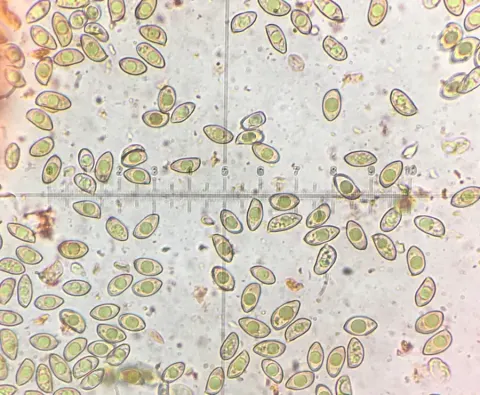
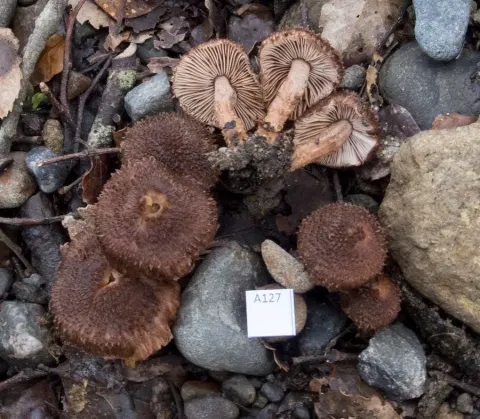
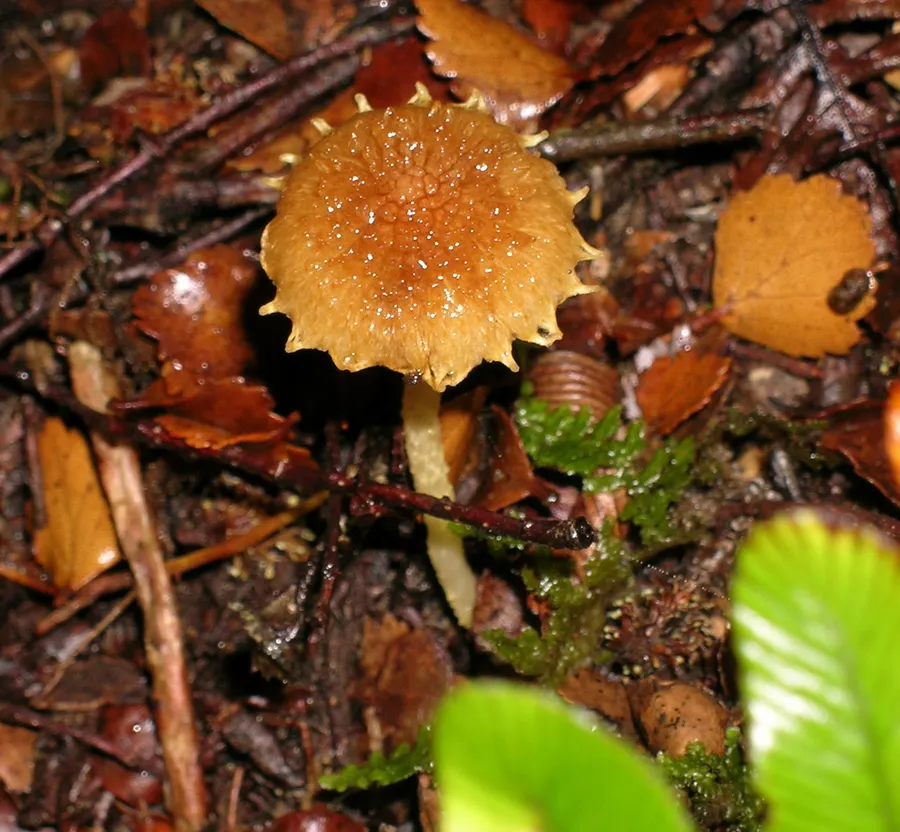
Pileus 10-40 mm diam., hemispherical when young soon convex, conico-convex or campanulate to umbonate-expanded; yellow brown, golden brown, at disc with red-brown to fulvous tinge (rarely black-brown); dry, centre covered with squarrose scales and squamules, fibrillose to rimose towards estriate margin, veil remnants absent. Lamellae adnexed to sinuate-adnate, ventricose, crowded (L -18, 1 -3); pallid or grey in young carpophores turning argillaceous or olive-brownish, edge concolorous or albofimbriate. Stipe 20-50 x 2.5-4 mm, cylindrical, equal; whitish yellowish to yellowish brownish, apex sub pubescent or fibrillose, towards base with concolorous sub-squarrose to woolly fibrils or squamules, veil remnants absent; dry, hollow, single and cespitose. Context pale brownish. Odour and taste not distinctive. Chemical reactions on pileus: KOH-negative. Spores 6.5-8.5 x 4-5 µm, amygdaliform, brown, smooth, suprahilar depression absent. Basidia 20-26 x 6-8 µm, 4-spored. Cheilo- and pleurocystidia 35-60 x 10-17 µm, fusoid to lageniform, metuloid ("2 µm diam. near apex), hyaline, encrusted with crystals. Caulocystidia clavate to subfusoid, thin-walled, with and without crystals. Cuticle a trichoderm of cylindrical hyphae (5-10 µm diam.), encrusted with yellow-brown (KOH) pigment. Clamp connections present.
Habitat dan peran ekologis
On soil among litter and moss (also Sphagnum) under Nothofagus (N. fusca, N. cliffortioides). New Zealand.
- Habitat atau konteks temuan
- Informasi belum tersedia pada sumber rilis ini.
- Substrat
- tanah
- Peran atau konteks
- Belum dikategorikan pada rilis ini.
Reproduksi
Pileus 10-40 mm diam., hemispherical when young soon convex, conico-convex or campanulate to umbonate-expanded; yellow brown, golden brown, at disc with red-brown to fulvous tinge (rarely black-brown); dry, centre covered with squarrose scales and squamules, fibrillose to rimose towards estriate margin, veil remnants absent. Lamellae adnexed to sinuate-adnate, ventricose, crowded (L -18, 1 -3); pallid or grey in young carpophores turning argillaceous or olive-brownish, edge concolorous or albofimbriate. Stipe 20-50 x 2.5-4 mm, cylindrical, equal; whitish yellowish to yellowish brownish, apex sub pubescent or fibrillose, towards base with concolorous sub-squarrose to woolly fibrils or squamules, veil remnants absent; dry, hollow, single and cespitose.
Catatan identitas dan cakupan
- Nama diterima mengikuti Catalogue of Life Base2026-09-11; uraian mempertahankan konsep dan nama sumber aslinya.
- Historical description as cited by BiotaNZ. Preserve explicit New Zealand/locality, host and specimen qualifiers. Distribution is the cited source scope, not a current global range.
- Impor dan terjemahan otomatis belum diperiksa editorial per profil. Struktur reproduktif yang disebutkan tidak membuktikan seluruh siklus hidup diketahui.
- Pengukuran pada uraian mengikuti spesimen, kultur, dan metode sumber; angka tidak diperluas ke semua populasi.
Catatan distribusi dalam narasi mengikuti sumbernya. Dokumentasi spesimen atau foto mengikuti catatan sumber. Bukti wilayah Indonesia dan penilaian konservasi tidak disimpulkan dari gambar.
Melihat dengan konteks
Dokumentasi Inocybe scabriuscula menurut asosiasi foto pada record takson iNaturalist. Kredit: Jerry Cooper. Identitas mengikuti sumber; bukan penentuan spesimen independen.
- Jenis
- Fotografi
- Kredit
- (c) Jerry Cooper, some rights reserved (CC BY), uploaded by Jerry Cooper
- Lisensi
- CC BY 4.0
- Sumber media
- Buka entri sumber
Sumber profil
- [1] Horak, E. 1978: Fungi Agaricini Novaezelandiae. VI. Inocybe (Fr.) Fr. and Astrosporina Schroeter. New Zealand Journal of Botany 15(4): 713–747. — Inocybe scabriuscula
- [2] Catalogue of Life Base2026-09-11 — Inocybe scabriuscula
- [3] Dokumentasi visual — Inocybe scabriuscula
Rujukan halaman ini
Fungi. Inocybe scabriuscula. Rilis data fungi-2026-10-12-expansion-2. https://fungi-atlas.mgadib.chatgpt.site/jamur/inocybe-scabriuscula/.
Status: impor sumber; pemeriksaan editorial per profil belum selesai. Untuk klaim biologis, gunakan rujukan pada bagian terkait dan periksa konteks sumber aslinya.