01 / Morfologi

Ciri dan struktur

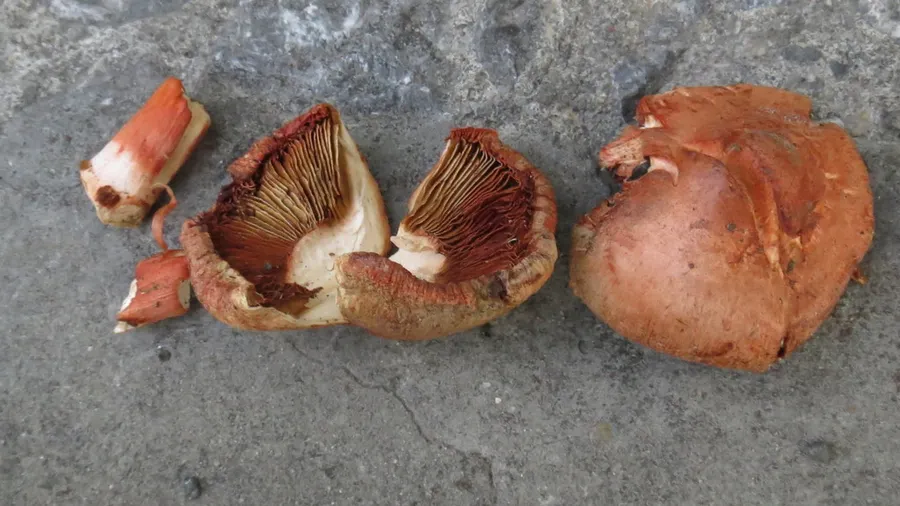
The cap is hemispherical before flattening out and can reach 8 cm (3.4 in) in diameter. It is variable in colour, initially white though becoming yellow or brownish with age, and stained with pink-white and red marks or lines. The edge of the cap is often irregular with split edges and rough texture. The adnexed gills are reddish-pink. The stipe, dark red-pink, is thin with no ring. The flesh is initially yellowish, later dark pink. The colour tends to fade in direct sunlight. It may be mistaken for Calocybe gambosa, though the latter does not stain red, Agaricus species or Cortinarius caperatus.

Sebagian uraian ditampilkan dalam bahasa sumber; terjemahannya belum tersedia atau belum lolos pemeriksaan.

Rujukan: [1]

Pengukuran mengikuti objek, spesimen atau kultur, dan metode yang disebutkan sumber. Baca uraian asli untuk konteks lengkap.

02 / Kehidupan

Habitat dan peran ekologis

It is commonest in beech woods and chalky soils, but grows in other broad-leaved woodland as well. It mainly grows on leaf litter usually during the spring and summer seasons. It is found in southern Europe and has been recorded from eastern Anatolia in Turkey. In Israel, I. erubescens grows under Palestine oak (Quercus calliprinos) and pines, with mushrooms still appearing in periods of little or no rain as they are mycorrhizal.

Sebagian uraian ditampilkan dalam bahasa sumber; terjemahannya belum tersedia atau belum lolos pemeriksaan.

Rujukan: [1]

Habitat atau konteks temuan
hutan
Substrat
Informasi belum tersedia pada sumber rilis ini.
Peran atau konteks
Belum dikategorikan pada rilis ini.
Temukan hubungan serupa
03 / Siklus hidup

Reproduksi

Inosperma erubescens (formerly Inocybe erubescens, also formerly named I. patouillardii), and also commonly known as the deadly fibrecap, brick-red tear mushroom or red-staining Inocybe, is a poisonous basidiomycete fungus, one of many in the original genus Inocybe and one of the few known to have caused death. It is found growing in small groups on leaf litter in association with beech. All mushroom guidebooks as well as mushroom hunters advise that the entire Inocybaceae should be avoided for consumption. The fruit bodies (i.e., the mushrooms) appear in spring and summer; the bell-shaped caps are generally pale pinkish in colour with red stains, which can also be seen on the stipe and gills.

Sebagian uraian ditampilkan dalam bahasa sumber; terjemahannya belum tersedia atau belum lolos pemeriksaan.

Rujukan: [1]

Sinonim menurut acuan taksonomi rilis: Inocybe erubescens; Inocybe patouillardii; Inocybe trinii var. rubescens
04 / Batas informasi

Catatan identitas dan cakupan

  • Nama diterima mengikuti Catalogue of Life Base2026-09-11; uraian mempertahankan konsep dan nama sumber aslinya.
  • Original geographic, specimen and life-cycle scope retained; source import awaits individual editorial review.
  • Impor dan terjemahan otomatis belum diperiksa editorial per profil. Struktur reproduktif yang disebutkan tidak membuktikan seluruh siklus hidup diketahui.
  • Pengukuran pada uraian mengikuti spesimen, kultur, dan metode sumber; angka tidak diperluas ke semua populasi.

Catatan distribusi dalam narasi mengikuti sumbernya. Dokumentasi spesimen atau foto mengikuti catatan sumber. Bukti wilayah Indonesia dan penilaian konservasi tidak disimpulkan dari gambar.

05 / Dokumentasi

Melihat dengan konteks

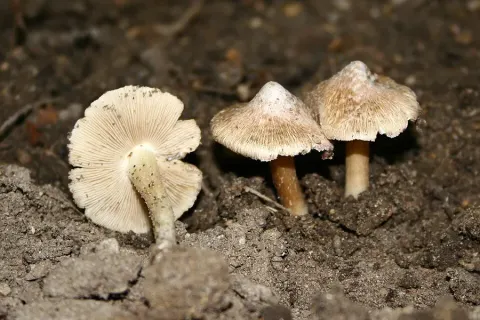
Dokumentasi Inosperma erubescens menurut asosiasi foto pada record takson iNaturalist. Kredit: Елена А. Кизилова. Identitas mengikuti sumber; bukan penentuan spesimen independen.

Jenis
Fotografi
Kredit
(c) Елена А. Кизилова, some rights reserved (CC BY), uploaded by Елена А. Кизилова
Lisensi
CC BY 4.0
Sumber media
Buka entri sumber

Gambar menunjukkan objek menurut identifikasi sumber, bukan verifikasi independen spesimen oleh Fungi. Tidak ada skala baru yang ditambahkan.

06 / Rujukan

Sumber profil

  1. [1] Inosperma erubescens — Wikipedia (en)Bagian sumber: Frozen revision 1352781715
    Tanggal penghimpunan sumber: 2026-10-12
    Teks sumber: CC BY-SA4.0 · Wikipedia contributors
  2. [2] Catalogue of Life Base2026-09-11 — Inosperma erubescensBagian sumber: ColDP NameUsage.tsv ID 3PS9K; accepted species; source 2073
    Tanggal penghimpunan sumber: 2026-10-12
  3. [3] Dokumentasi visual — Inosperma erubescensBagian sumber: Individual media record; identification follows the source, not independent determination
    Tanggal penghimpunan sumber: 2026-10-12
    Media sumber: CC BY 4.0 · (c) Елена А. Кизилова, some rights reserved (CC BY), uploaded by Елена А. Кизилова

Adaptasi teks: CC BY-SA 4.0. Wikipedia contributors — Inosperma erubescens — Wikipedia (en)

Uraian asli dan riwayat sumber

Riwayat atau halaman sumber

Ringkasan sumber

Inosperma erubescens (formerly Inocybe erubescens, also formerly named I. patouillardii), and also commonly known as the deadly fibrecap, brick-red tear mushroom or red-staining Inocybe, is a poisonous basidiomycete fungus, one of many in the original genus Inocybe and one of the few known to have caused death. It is found growing in small groups on leaf litter in association with beech. All mushroom guidebooks as well as mushroom hunters advise that the entire Inocybaceae should be avoided for consumption.

Revisi sumber

Morfologi sumber

The cap is hemispherical before flattening out and can reach 8 cm (3.4 in) in diameter. It is variable in colour, initially white though becoming yellow or brownish with age, and stained with pink-white and red marks or lines. The edge of the cap is often irregular with split edges and rough texture. The adnexed gills are reddish-pink. The stipe, dark red-pink, is thin with no ring. The flesh is initially yellowish, later dark pink. The colour tends to fade in direct sunlight. It may be mistaken for Calocybe gambosa, though the latter does not stain red, Agaricus species or Cortinarius caperatus.

Revisi sumber

Ekologi sumber

It is commonest in beech woods and chalky soils, but grows in other broad-leaved woodland as well. It mainly grows on leaf litter usually during the spring and summer seasons. It is found in southern Europe and has been recorded from eastern Anatolia in Turkey. In Israel, I. erubescens grows under Palestine oak (Quercus calliprinos) and pines, with mushrooms still appearing in periods of little or no rain as they are mycorrhizal.

Revisi sumber

Struktur reproduksi sumber

Inosperma erubescens (formerly Inocybe erubescens, also formerly named I. patouillardii), and also commonly known as the deadly fibrecap, brick-red tear mushroom or red-staining Inocybe, is a poisonous basidiomycete fungus, one of many in the original genus Inocybe and one of the few known to have caused death. It is found growing in small groups on leaf litter in association with beech. All mushroom guidebooks as well as mushroom hunters advise that the entire Inocybaceae should be avoided for consumption. The fruit bodies (i.e., the mushrooms) appear in spring and summer; the bell-shaped caps are generally pale pinkish in colour with red stains, which can also be seen on the stipe and gills.

Revisi sumber

Rujukan halaman ini

Fungi. Inosperma erubescens. Rilis data fungi-2026-10-12-expansion-2. https://fungi-atlas.mgadib.chatgpt.site/jamur/inosperma-erubescens/.

Status: impor sumber; pemeriksaan editorial per profil belum selesai. Untuk klaim biologis, gunakan rujukan pada bagian terkait dan periksa konteks sumber aslinya.