Ciri dan struktur
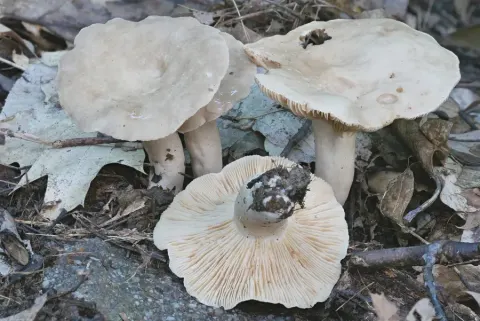
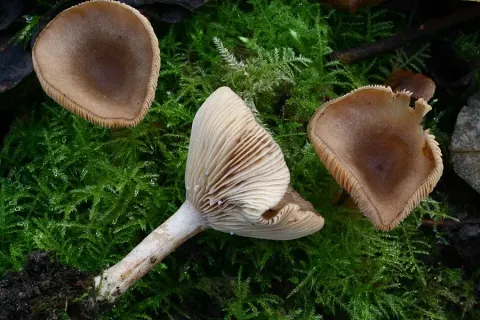
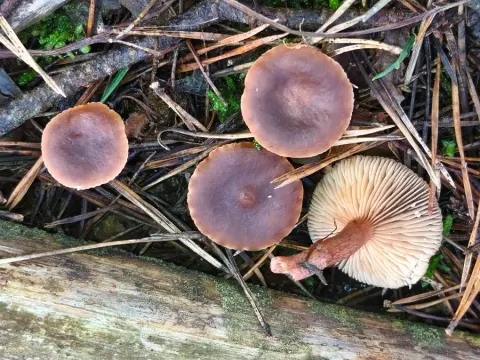
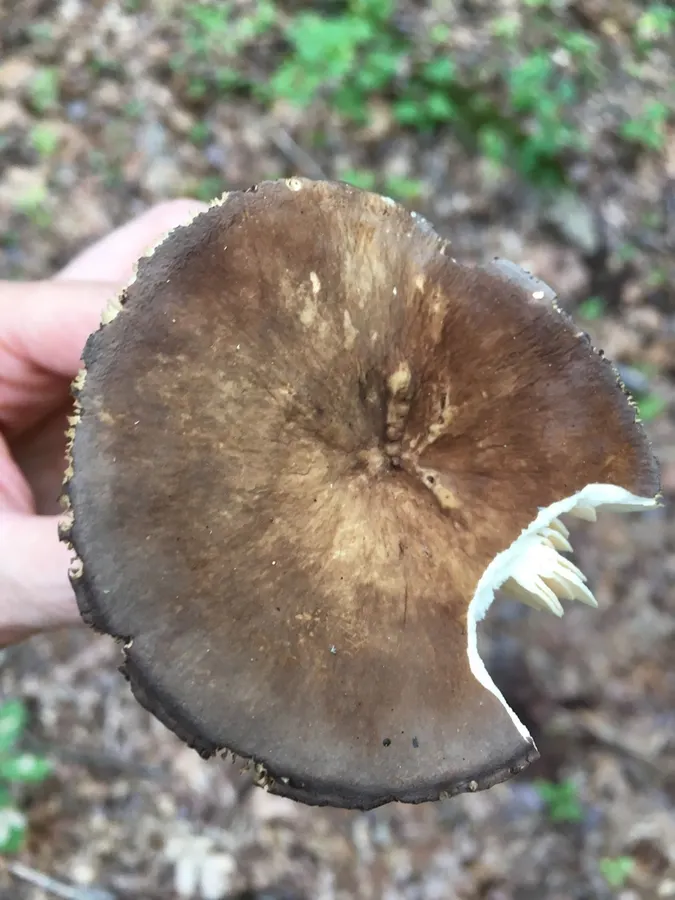
The cap is convex to flattened, sometimes with a small central depression, and measures 4.5 – 12.5 cm in diameter. The surface of the cap is dry, smooth, and has a velvety texture. It sometimes develops small wrinkles in the center, while the cap margin develops irregular grooves in maturity. Its colour is buff to grayish-brown to dark fawn, sometimes with darker spots and a lighter margin. The crowded gills have an adnate to slightly decurrent attachment to the stipe. They have an olive-buff to pinkish-buff colour, and stain pinkish. The cylindric stipe measures 4 – 8.5 cm long by 1 – 2 cm thick and tapers to the base. Its surface texture is similar to the cap, but is coloured paler, and is whitish near the top. The flesh is whitish, but stains pinkish where injured; it is thick and firm in the cap and stipe. It has no significant odor and a mild to slightly acrid taste. The mushroom's sparse latex is white but dries pinkish, imparting that colour when it stains the gills and flesh. Lactarius fuliginosus is not edible, and may be somewhat poisonous. The spore print is pinkish buff. The spores are spherical to broadly ellipsoid, measuring 7.4–9.2 by 6.6–8.4 μm. The spore surface is covered with an almost complete reticulum with narrow ridges up to about 1 μm high, and irregular warts that stain amyloid with Melzer's reagent. The basidia (spore-bearing cells) are somewhat club-shaped, four-spored, and measure 40–55 by 10–12 μm. The cap cuticle is in the form of a trichoepithelium measuring 50–100 μm thick comprising cylindric terminal hyphae measuring 20–45 by 5–8 μm.
Habitat dan peran ekologis
Lactarius fuliginosus is ectomycorrhizal with deciduous trees. Its fruit bodies grow on the ground in deciduous forests of Europe and North America. Di Asia, ia telah tercatat dari Kashmir Valley in India, China, dan Jepang.
- Habitat atau konteks temuan
- hutan
- Substrat
- tanah
- Peran atau konteks
- Mitra tumbuhan
Reproduksi
The spore print is pinkish buff. The spores are spherical to broadly ellipsoid, measuring 7.4–9.2 by 6.6–8.4 μm. The spore surface is covered with an almost complete reticulum with narrow ridges up to about 1 μm high, and irregular warts that stain amyloid with Melzer's reagent. The basidia (spore-bearing cells) are somewhat club-shaped, four-spored, and measure 40–55 by 10–12 μm. The cap cuticle is in the form of a trichoepithelium measuring 50–100 μm thick comprising cylindric terminal hyphae measuring 20–45 by 5–8 μm.
Catatan identitas dan cakupan
- Nama diterima mengikuti Catalogue of Life Base2026-09-11; uraian mempertahankan konsep dan nama sumber aslinya.
- Original geographic, specimen and life-cycle scope retained; source import awaits individual editorial review.
- Impor dan terjemahan otomatis belum diperiksa editorial per profil. Struktur reproduktif yang disebutkan tidak membuktikan seluruh siklus hidup diketahui.
- Pengukuran pada uraian mengikuti spesimen, kultur, dan metode sumber; angka tidak diperluas ke semua populasi.
Catatan distribusi dalam narasi mengikuti sumbernya. Dokumentasi spesimen atau foto mengikuti catatan sumber. Bukti wilayah Indonesia dan penilaian konservasi tidak disimpulkan dari gambar.
Melihat dengan konteks
Dokumentasi Lactarius fuliginosus menurut asosiasi foto pada record takson iNaturalist. Kredit: Sigrid Jakob. Identitas mengikuti sumber; bukan penentuan spesimen independen.
- Jenis
- Fotografi
- Kredit
- no rights reserved, uploaded by Sigrid Jakob
- Lisensi
- CC0 1.0
- Sumber media
- Buka entri sumber
Dokumentasi tambahan
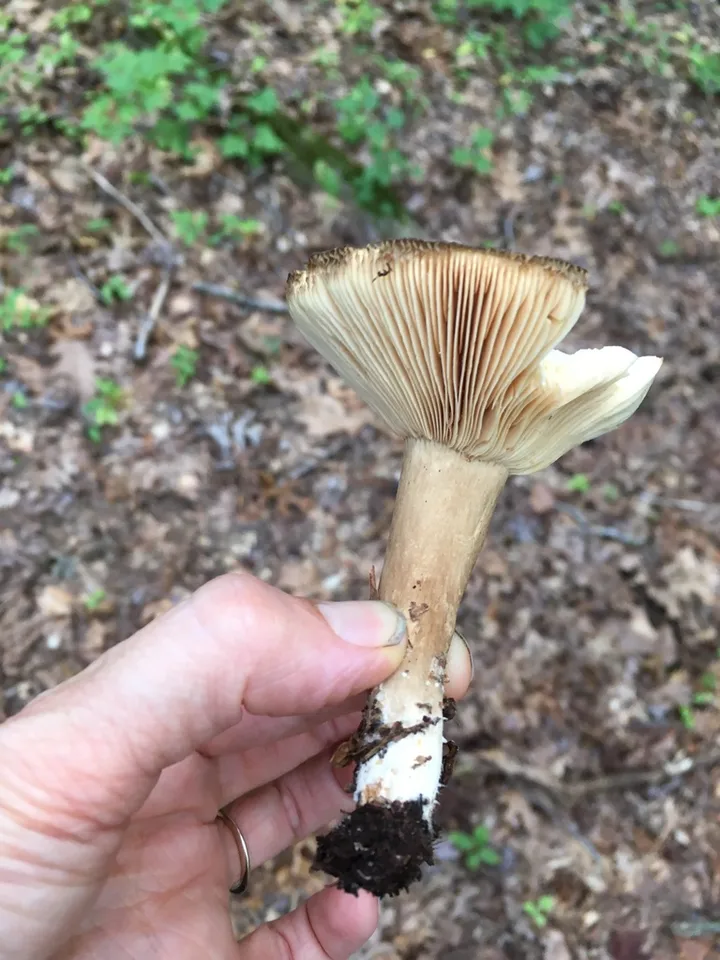
Foto yang diasosiasikan dengan Lactarius fuliginosus pada iNaturalist. Identifikasi mengikuti sumber; bukan penentuan spesimen independen.
Kredit dan penggunaan
no rights reserved, uploaded by Sigrid Jakob
Ukuran dan format gambar disesuaikan tanpa pemotongan, retus, atau penambahan skala. Lisensi sumber dipertahankan.
Sumber profil
- [1] Lactarius fuliginosus — Wikipedia (en)
- [2] Catalogue of Life Base2026-09-11 — Lactarius fuliginosus
- [3] Dokumentasi visual — Lactarius fuliginosus
- [4] Dokumentasi visual — Lactarius fuliginosus
Rujukan halaman ini
Fungi. Lactarius fuliginosus. Rilis data fungi-2026-10-12-expansion-2. https://fungi-atlas.mgadib.chatgpt.site/jamur/lactarius-fuliginosus/.
Status: impor sumber; pemeriksaan editorial per profil belum selesai. Untuk klaim biologis, gunakan rujukan pada bagian terkait dan periksa konteks sumber aslinya.