Ciri dan struktur
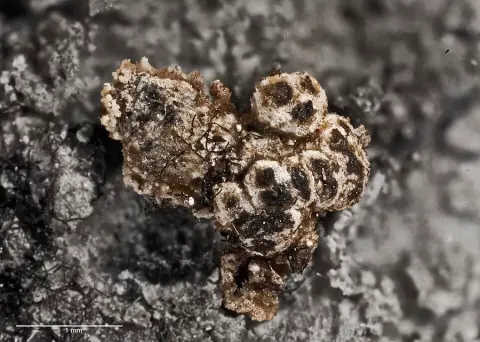
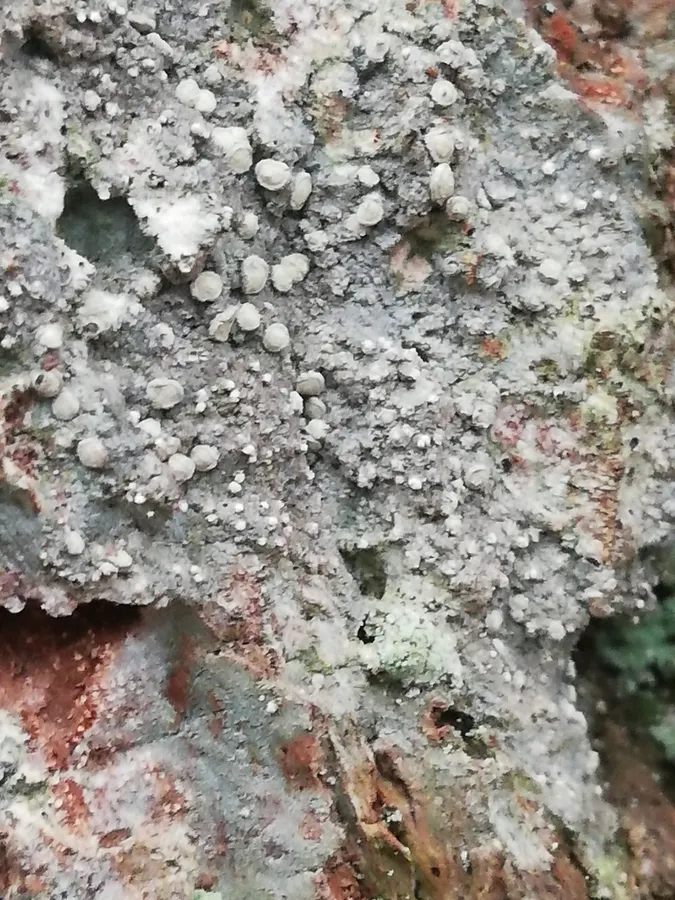
Lecanactis abietina forms a thin, (spreading) thallus that is mauve-grey to whitish grey. Sexual fruiting bodies (apothecia) are not always present. When they occur they are circular, 0.7–2 mm across, and sit on or are closely pressed to the surface ( to ). The brown-black is thickly dusted with a yellow-grey, frost-like bloom () and is bordered by a prominent, persistent rim of fungal tissue (a ). Ascospores are slender—spindle- to needle-shaped, usually slightly curved—and have 3 (occasionally 4) internal cross-walls, measuring 28–40 × 3–6 μm. Asexual structures (pycnidia) are numerous and evenly scattered as tiny, cylindrical, knob-like dots 0.2–0.3 mm in diameter with white-pruinose tips. Their walls are 25–50 μm thick, dark brown in water and turning green-black with potassium hydroxide solution (the K test). The spore-producing cells inside (conidiogenous cells) are 8–12 × 1.9–2.4 μm and release cylindrical conidia 12–17 × 2–3 μm. In standard spot tests, the pycnidial pruina reacts C+ (red), but is K−. The apothecial pruina and thallus are C−, K−, KC− and Pd−, yet show a bright blue fluorescence after K followed by ultraviolet (K/UV+). The inner tissue (medulla) fluoresces yellow to glaucous grey under long-wave UV, reflecting the presence of lecanoric and schizopeltic acids along with other UV-reactive substances. Among the corticolous (bark-dwelling) species of the genus, Lecanactis abietina is distinguished by the combination of schizopeltic acid in the thallus, conspicuous cylindrical pycnidia with C+ (red) apices, and relatively long, narrow, 3-septate ascospores.
Habitat dan peran ekologis
Lecanactis abietina grows on both deciduous and coniferous trees, typically in shaded, humid habitats, and is characteristic of old trees and old forests in cool temperate regions. In Norway it behaves as a mainly coastal, suboceanic species, being especially frequent in humid coastal spruce forests. Although it often grows on the shaded bases of mature spruce trunks, it also commonly occurs on mossy rock beneath overhangs, where it forms a more cushion-like thallus than it does on bark. It has been recorded on decorticate (barkless) stumps and on sheltered wood, and more occasionally on birch. More rarely it occurs on alder, hazel, pine, and oak, although in southern Scandinavia and England it has mainly been found on oak. In Tasmania, it occurs most often on the dry, flaky bark of mature Nothofagus cunninghamii in cool temperate rainforest, where it grows alongside Lecanactis mollis and a diverse assemblage of crustose lichens, including taxa. In lowland eastern and east-central Europe, L. abietina is associated with older forests that have remained continuously wooded for long periods. Within that region it is concentrated in maritime areas but becomes more scattered inland, where it is even more closely confined to old-growth stands.
- Habitat atau konteks temuan
- hutan
- Substrat
- kulit kayu
- Peran atau konteks
- Pembentuk liken
Reproduksi
Lecanactis abietina forms a thin, (spreading) thallus that is mauve-grey to whitish grey. Sexual fruiting bodies (apothecia) are not always present. When they occur they are circular, 0.7–2 mm across, and sit on or are closely pressed to the surface ( to ). The brown-black is thickly dusted with a yellow-grey, frost-like bloom () and is bordered by a prominent, persistent rim of fungal tissue (a ). Ascospores are slender—spindle- to needle-shaped, usually slightly curved—and have 3 (occasionally 4) internal cross-walls, measuring 28–40 × 3–6 μm. Asexual structures (pycnidia) are numerous and evenly scattered as tiny, cylindrical, knob-like dots 0.2–0.3 mm in diameter with white-pruinose tips.
Catatan identitas dan cakupan
- Nama diterima mengikuti Catalogue of Life Base2026-09-11; uraian mempertahankan konsep dan nama sumber aslinya.
- Original geographic, specimen and life-cycle scope retained; source import awaits individual editorial review.
- Impor dan terjemahan otomatis belum diperiksa editorial per profil. Struktur reproduktif yang disebutkan tidak membuktikan seluruh siklus hidup diketahui.
- Pengukuran pada uraian mengikuti spesimen, kultur, dan metode sumber; angka tidak diperluas ke semua populasi.
Catatan distribusi dalam narasi mengikuti sumbernya. Dokumentasi spesimen atau foto mengikuti catatan sumber. Bukti wilayah Indonesia dan penilaian konservasi tidak disimpulkan dari gambar.
Melihat dengan konteks
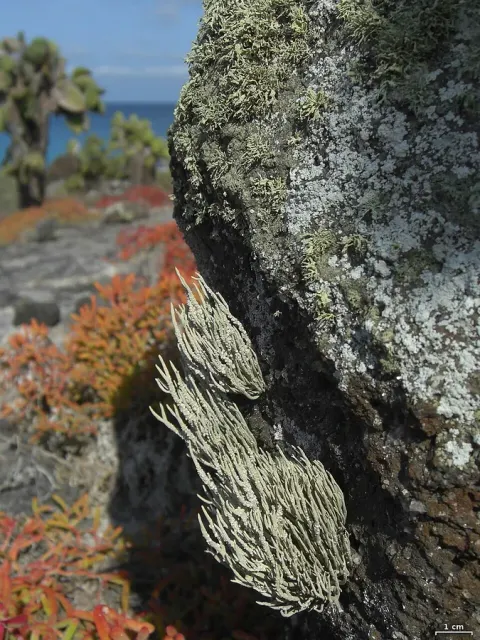
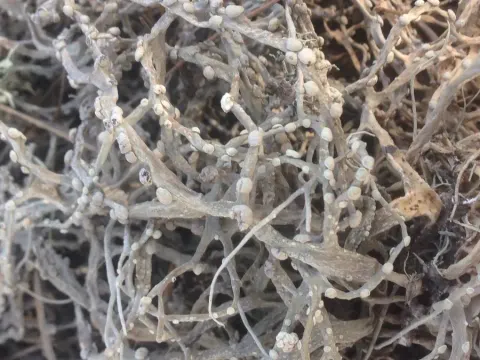
Dokumentasi Lecanactis abietina menurut asosiasi foto pada record takson iNaturalist. Kredit: Ditte Grube Barild. Identitas mengikuti sumber; bukan penentuan spesimen independen.
- Jenis
- Fotografi
- Kredit
- (c) Ditte Grube Barild, some rights reserved (CC BY), uploaded by Ditte Grube Barild
- Lisensi
- CC BY 4.0
- Sumber media
- Buka entri sumber
Sumber profil
- [1] Lecanactis abietina — Wikipedia (en)
- [2] Catalogue of Life Base2026-09-11 — Lecanactis abietina
- [3] Dokumentasi visual — Lecanactis abietina
Rujukan halaman ini
Fungi. Lecanactis abietina. Rilis data fungi-2026-10-12-expansion-2. https://fungi-atlas.mgadib.chatgpt.site/jamur/lecanactis-abietina/.
Status: impor sumber; pemeriksaan editorial per profil belum selesai. Untuk klaim biologis, gunakan rujukan pada bagian terkait dan periksa konteks sumber aslinya.