Ciri dan struktur
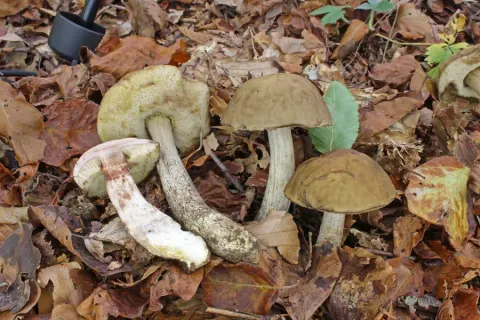
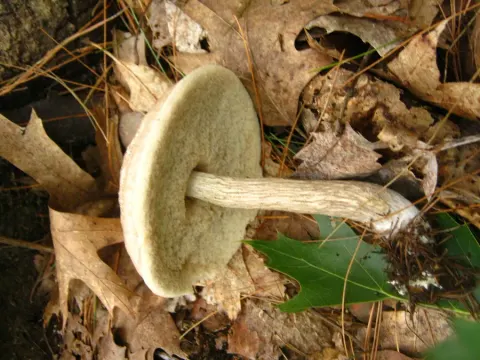
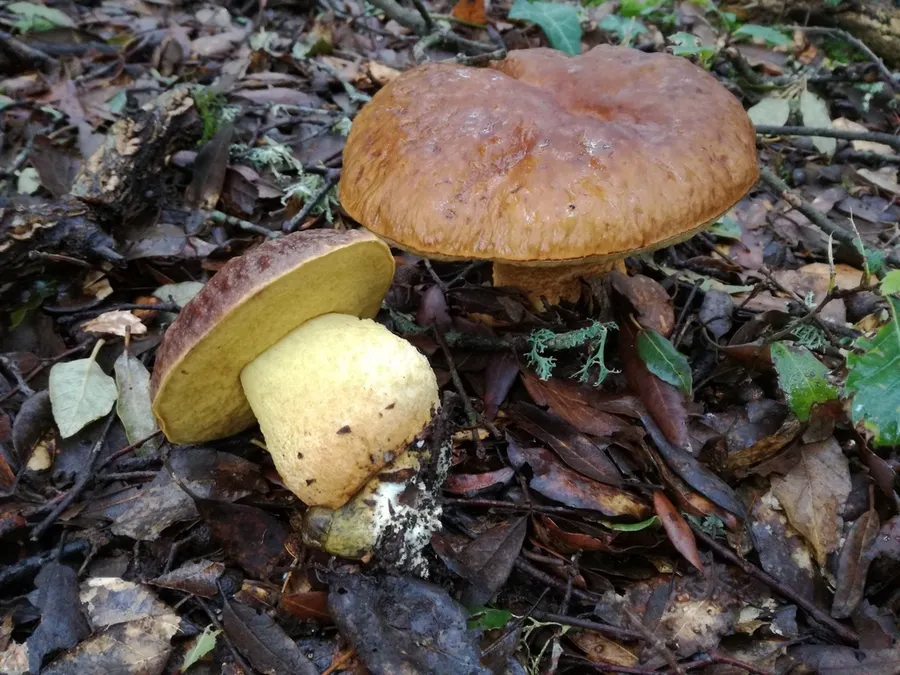
Leccinellum lepidum produces large, fleshy fruit bodies. The cap is at first hemispherical, gradually becoming convex or convex-flat as the fungus expands, reaching a diameter of 6 to 20 cm. The cap cuticle is smooth to somewhat lobed and often with a "hammered" appearance, moderately to strongly viscid in wet weather, ranging in colour from ochraceous yellow to ochraceous brown, chestnut-brown, or in very old specimens blackish brown. The tubes are more or less free from the stem, 1 to 2 cm long and pale yellow to ochraceous yellow. The pores are small and rounded, concolorous with the tubes, slowly staining rusty-brown and finally greyish brown when handled or with age. The stem is 5 to 15 cm long by 2 to 6 cm wide, usually stout and short-ventricose at first, but gradually becoming longer and clavate to cylindrical, ranging in colour from ochraceous yellow to pale yellow, straw-coloured, or dirty white. Its surface is covered in tiny pustules (scabrosities), concolorous with the stem surface at first, but often staining rusty-brown or grey-brown with age and sometimes coalescing to form an incomplete pseudoreticulum (false net). The flesh is thick and dull yellow to straw-coloured. When cut or exposed to the air it very slowly discoloures orange or violaceous-grey in parts, and after a few hours darkens to greyish-brown or grey-black. The smell is weakly fungoid in young specimens, becoming stronger in old specimens, while the taste is mild to somewhat astringent. The spores are tobacco-brown in mass. Under the microscope, the spores appear narrowly ellipsoid to fusiform (spinde-shaped) and measure 13.5–22 × 5–6 μm.
Habitat dan peran ekologis
The species is widespread in the Mediterranean region, where it forms ectomycorrhizal associations with various species of oak. It is most commonly associated with evergreen members of the "Ilex" group, particularly the holm oak (Quercus ilex), It is indifferent to the substrate and occurs abundantly on both calcareous and acidic soil. Although a southern species, the fungus is notable for its late fruiting season and tolerance to low temperatures. In a 10-year study from the island of Cyprus, L. lepidum was the most frequently recorded bolete, accounting for over half (61%) of all Boletaceae collections found during the winter months (December–February).
- Habitat atau konteks temuan
- Informasi belum tersedia pada sumber rilis ini.
- Substrat
- Informasi belum tersedia pada sumber rilis ini.
- Peran atau konteks
- Mitra tumbuhan
Reproduksi
The flesh is thick and dull yellow to straw-coloured. When cut or exposed to the air it very slowly discoloures orange or violaceous-grey in parts, and after a few hours darkens to greyish-brown or grey-black. The smell is weakly fungoid in young specimens, becoming stronger in old specimens, while the taste is mild to somewhat astringent. The spores are tobacco-brown in mass. Under the microscope, the spores appear narrowly ellipsoid to fusiform (spinde-shaped) and measure 13.5–22 × 5–6 μm. The cap cuticle is a trichodermium of septate cylindrical hyphae, often finely incrusted.
Catatan identitas dan cakupan
- Nama diterima mengikuti Catalogue of Life Base2026-09-11; uraian mempertahankan konsep dan nama sumber aslinya.
- Original geographic, specimen and life-cycle scope retained; source import awaits individual editorial review.
- Impor dan terjemahan otomatis belum diperiksa editorial per profil. Struktur reproduktif yang disebutkan tidak membuktikan seluruh siklus hidup diketahui.
- Pengukuran pada uraian mengikuti spesimen, kultur, dan metode sumber; angka tidak diperluas ke semua populasi.
Catatan distribusi dalam narasi mengikuti sumbernya. Dokumentasi spesimen atau foto mengikuti catatan sumber. Bukti wilayah Indonesia dan penilaian konservasi tidak disimpulkan dari gambar.
Melihat dengan konteks
Dokumentasi Leccinellum lepidum menurut asosiasi foto pada record takson iNaturalist. Kredit: Davide Puddu. Identitas mengikuti sumber; bukan penentuan spesimen independen.
- Jenis
- Fotografi
- Kredit
- (c) Davide Puddu, some rights reserved (CC BY), uploaded by Davide Puddu
- Lisensi
- CC BY 4.0
- Sumber media
- Buka entri sumber
Dokumentasi tambahan
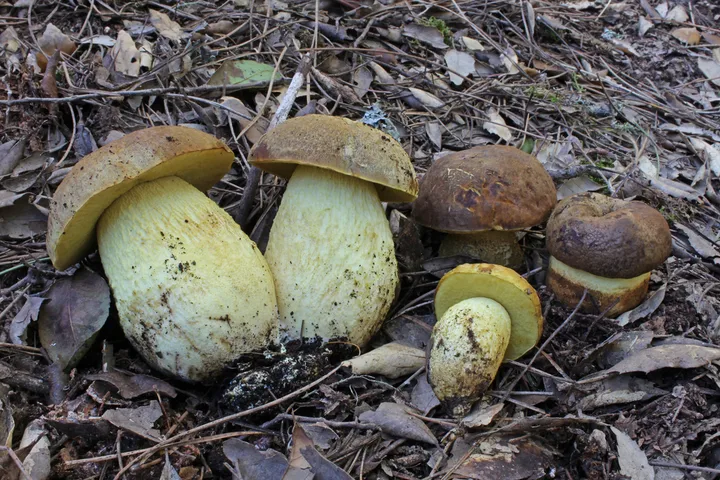
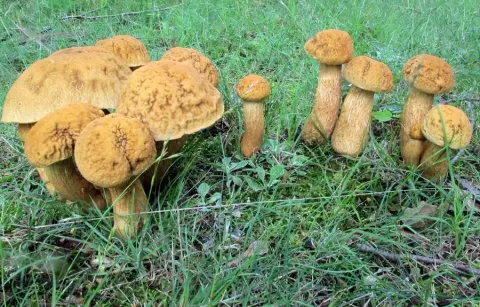
Foto yang diasosiasikan dengan Leccinellum lepidum pada iNaturalist. Identifikasi mengikuti sumber; bukan penentuan spesimen independen.
Kredit dan penggunaan
(c) Davide Puddu, some rights reserved (CC BY), uploaded by Davide Puddu
Ukuran dan format gambar disesuaikan tanpa pemotongan, retus, atau penambahan skala. Lisensi sumber dipertahankan.
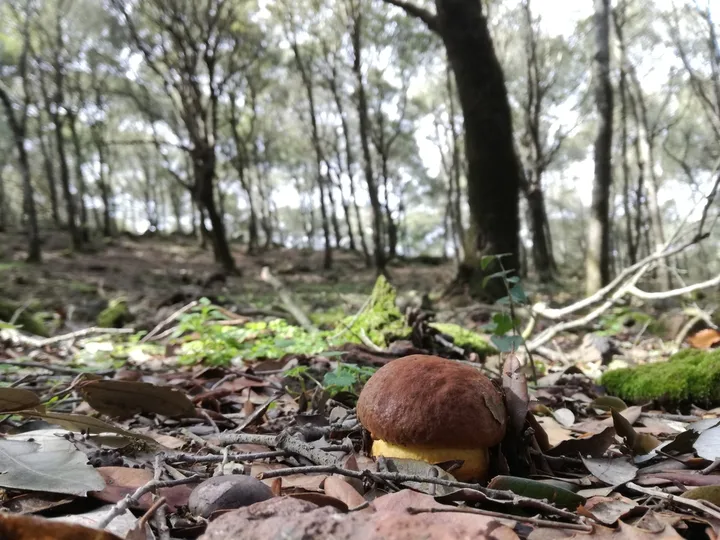
Foto yang diasosiasikan dengan Leccinellum lepidum pada iNaturalist. Identifikasi mengikuti sumber; bukan penentuan spesimen independen.
Kredit dan penggunaan
(c) Davide Puddu, some rights reserved (CC BY), uploaded by Davide Puddu
Ukuran dan format gambar disesuaikan tanpa pemotongan, retus, atau penambahan skala. Lisensi sumber dipertahankan.
Sumber profil
- [1] Leccinellum lepidum — Wikipedia (en)
- [2] Catalogue of Life Base2026-09-11 — Leccinellum lepidum
- [3] Dokumentasi visual — Leccinellum lepidum
- [4] Dokumentasi visual — Leccinellum lepidum
- [5] Dokumentasi visual — Leccinellum lepidum
Rujukan halaman ini
Fungi. Leccinellum lepidum. Rilis data fungi-2026-10-12-expansion-2. https://fungi-atlas.mgadib.chatgpt.site/jamur/leccinellum-lepidum/.
Status: impor sumber; pemeriksaan editorial per profil belum selesai. Untuk klaim biologis, gunakan rujukan pada bagian terkait dan periksa konteks sumber aslinya.