Ciri dan struktur
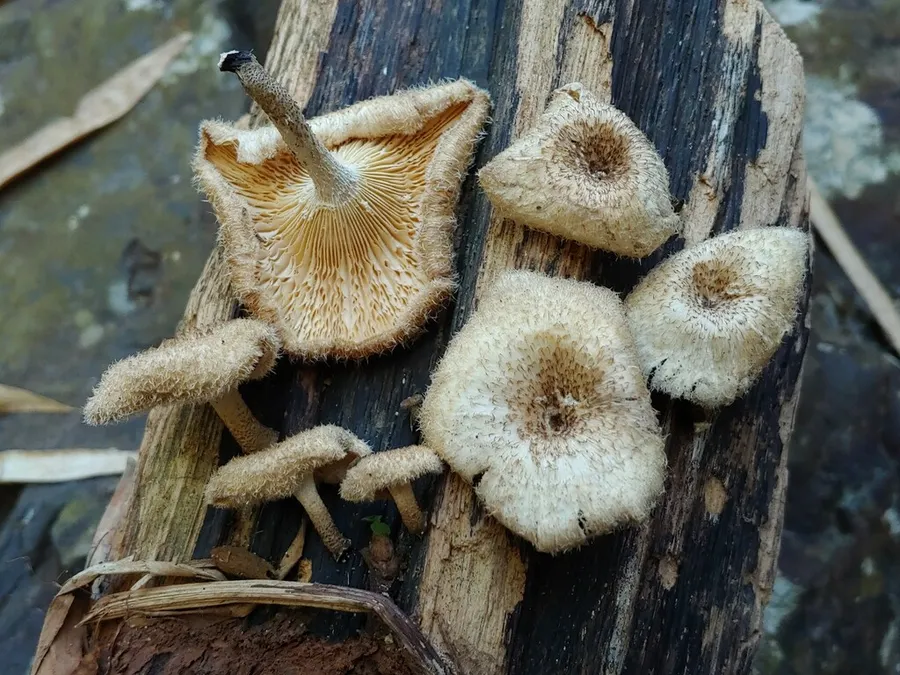
The fruiting bodies commonly grow in irregular, clustered formations. The cap is 2–5 cm wide and ranges in shape from flat or slightly convex to depressed in the center or funnel-shaped (infundibuliform). Its surface is whitish when young, maturing to yellowish-brown. It is covered with a brownish scruff which can wear away. The margin is often rolled inward when young and flattens with age. The basidiospores are white in and usually range between 5.5 and 8.0 × 1.8–3.0. The spores are rounded but may have a subtle point on one end that is off center and pointing right or left. The spores are not textured/smooth. These spores do not react with Meltzer's reagent. The spore print is white. L. crinitus has a monomitic hyphae system with clamp connections. This fungi has generative hyphae and skeleton-ligators which differs from skeletal hyphae. Skeletal hyphae are generally thick-walled, non-septate and unbranched or sparsely branched while skeletal-ligators are highly branched and more flexible but still provide more structure and rigidity than generative hyphae alone. Skeletal-ligative hyphae help with connecting and binding other hyphal types, contributing to both strength and flexibility.
Habitat dan peran ekologis
Lentinus crinitus is a white rot fungus; it is saprotrophic and is able to break down lignin and cellulose and use it for energy. It can be found on decaying logs Lentinus crinitus is distributed across 27 countries. In South America, it can be found in Brazil, Colombia, Peru, Ecuador, Venezuela, French Guiana, Guyana, and Argentina. In North America, it occurs in the United States and Mexico. Its range in Central America includes the Dominican Republic, Belize, Costa Rica, Bahamas, Jamaica, Cuba, Haiti, Martinique, Guatemala, Panama, Honduras, Nicaragua, Trinidad and Tobago, and the Cayman Islands. It is also found in Africa, specifically in the Congo and Ethiopia, as well as in Asia, in the Philippines. It is most often found in April to July in the Northern Hemisphere, and from September to December in the Southern Hemisphere. This means that this fungi is best suited to warmer and wetter climates so it is found in the summer months during the rainy season. It is known to be a potential host of the parasitic fungus Hypomyces aurantius (Pers.) Fuckel 1870, Hypomyces aurantius is known to parasitize many species in the family Polyporaceae. There are potential interactions with animals which may be attracted to the mushroom for food.
- Habitat atau konteks temuan
- Informasi belum tersedia pada sumber rilis ini.
- Substrat
- kayu
- Peran atau konteks
- Pengurai
Reproduksi
The basidiospores are white in and usually range between 5.5 and 8.0 × 1.8–3.0. The spores are rounded but may have a subtle point on one end that is off center and pointing right or left. The spores are not textured/smooth. These spores do not react with Meltzer's reagent. The spore print is white.
Catatan identitas dan cakupan
- Nama diterima mengikuti Catalogue of Life Base2026-09-11; uraian mempertahankan konsep dan nama sumber aslinya.
- Original geographic, specimen and life-cycle scope retained; source import awaits individual editorial review.
- Impor dan terjemahan otomatis belum diperiksa editorial per profil. Struktur reproduktif yang disebutkan tidak membuktikan seluruh siklus hidup diketahui.
- Pengukuran pada uraian mengikuti spesimen, kultur, dan metode sumber; angka tidak diperluas ke semua populasi.
Catatan distribusi dalam narasi mengikuti sumbernya. Dokumentasi spesimen atau foto mengikuti catatan sumber. Bukti wilayah Indonesia dan penilaian konservasi tidak disimpulkan dari gambar.
Melihat dengan konteks
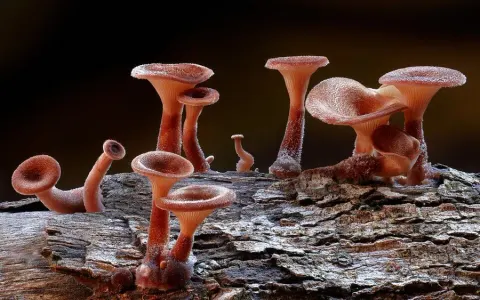
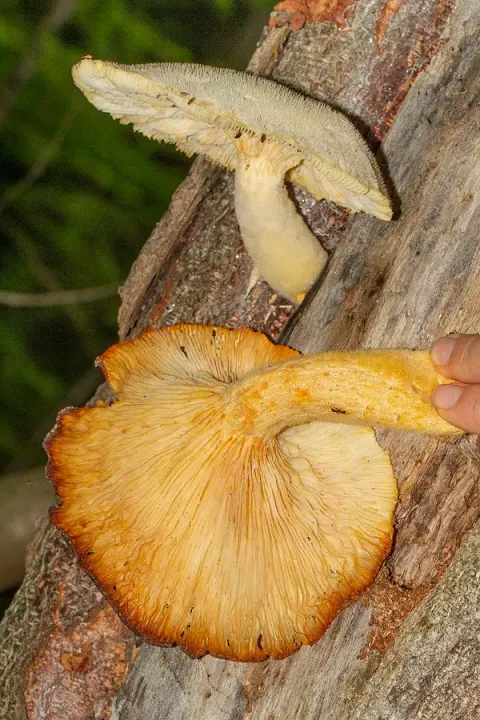
Dokumentasi Lentinus crinitus menurut asosiasi foto pada record takson iNaturalist. Kredit: Kurt Miller. Identitas mengikuti sumber; bukan penentuan spesimen independen.
- Jenis
- Fotografi
- Kredit
- (c) Kurt Miller, some rights reserved (CC BY-SA), uploaded by Kurt Miller
- Lisensi
- CC BY-SA 4.0
- Sumber media
- Buka entri sumber
Dokumentasi tambahan
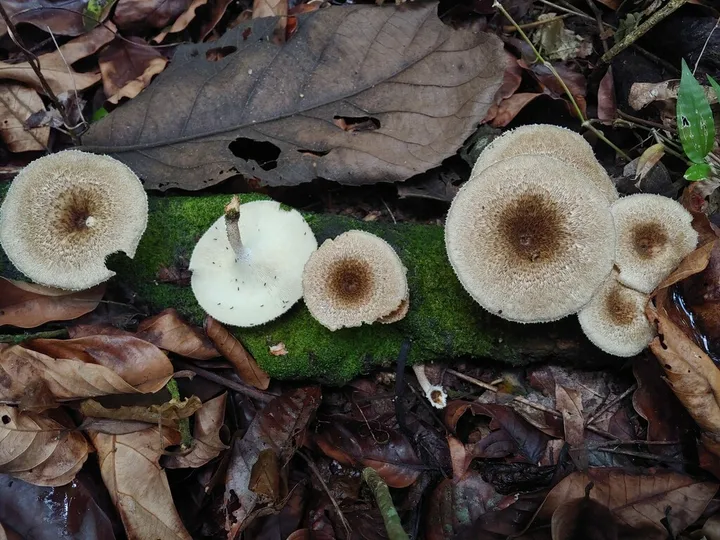
Foto yang diasosiasikan dengan Lentinus crinitus pada iNaturalist. Identifikasi mengikuti sumber; bukan penentuan spesimen independen.
Kredit dan penggunaan
(c) Kurt Miller, some rights reserved (CC BY-SA), uploaded by Kurt Miller
Ukuran dan format gambar disesuaikan tanpa pemotongan, retus, atau penambahan skala. Lisensi sumber dipertahankan.
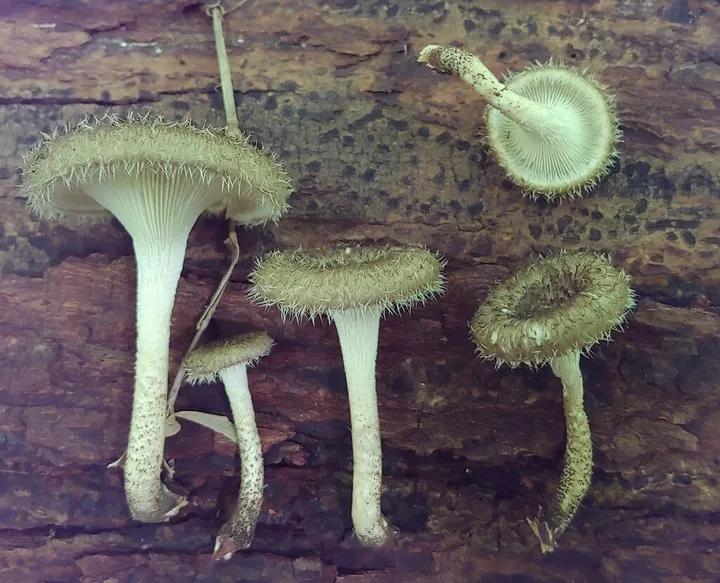
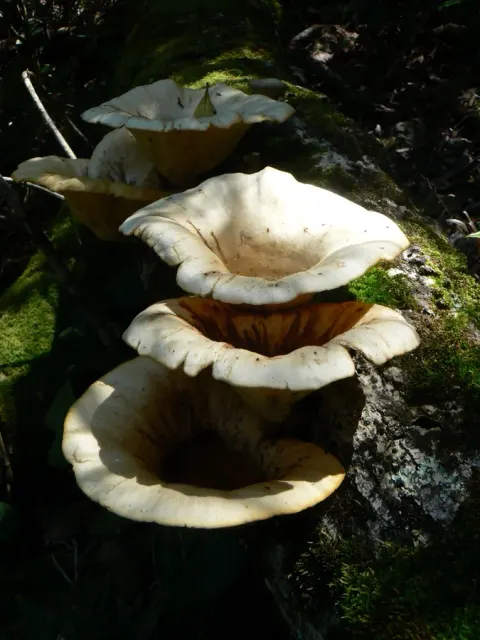
Foto yang diasosiasikan dengan Lentinus crinitus pada iNaturalist. Identifikasi mengikuti sumber; bukan penentuan spesimen independen.
Kredit dan penggunaan
(c) Kurt Miller, some rights reserved (CC BY-SA), uploaded by Kurt Miller
Ukuran dan format gambar disesuaikan tanpa pemotongan, retus, atau penambahan skala. Lisensi sumber dipertahankan.
Sumber profil
- [1] Lentinus crinitus — Wikipedia (en)
- [2] Catalogue of Life Base2026-09-11 — Lentinus crinitus
- [3] Dokumentasi visual — Lentinus crinitus
- [4] Dokumentasi visual — Lentinus crinitus
- [5] Dokumentasi visual — Lentinus crinitus
Rujukan halaman ini
Fungi. Lentinus crinitus. Rilis data fungi-2026-10-12-expansion-2. https://fungi-atlas.mgadib.chatgpt.site/jamur/lentinus-crinitus/.
Status: impor sumber; pemeriksaan editorial per profil belum selesai. Untuk klaim biologis, gunakan rujukan pada bagian terkait dan periksa konteks sumber aslinya.